

Motmot

Rock Dove vs Speckled Pigeon

Columba livia versus Columba guinea

Play a quiz with Rock Dove and Speckled Pigeon
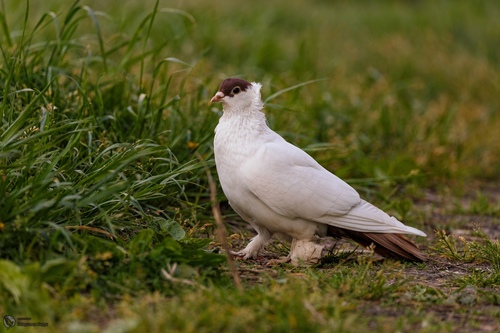
Rock Dove (Columba livia) Rock Dove
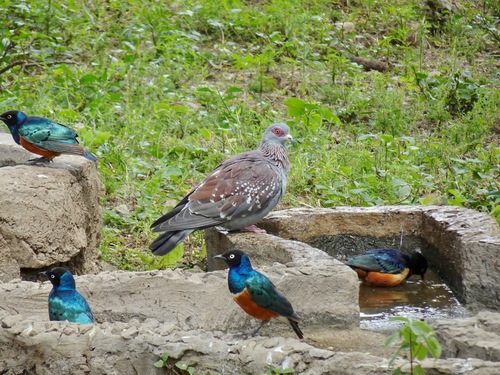
Speckled Pigeon (Columba guinea) Speckled Pigeon

Media

Loading…

In short

The most reliable field mark between Rock Dove and Speckled Pigeon is the wing and back coloration: Rock Dove shows a uniform pale grey wing with two sharp black bars, while Speckled Pigeon has rufous wings heavily speckled with white spots and a rufous back. In flight or perched, Speckled Pigeon’s red bare skin around the eye and white speckling on the wings are unmistakable, whereas Rock Dove has a plain grey head and no bare red skin. Immature Speckled Pigeons lack the red eye patch but are still browner and more speckled than any Rock Dove. Both are similar in size, but their plumage and facial features make confusion unlikely with good views.

Identification tips

  1. Wing and back pattern (all ages): Rock Dove always shows two sharp black bars on a uniform pale grey wing and a white lower back; Speckled Pigeon has rufous wings and back with dense white speckling on the wing coverts and no black bars.
  2. Facial features (adults): Speckled Pigeon has conspicuous red bare skin around the eye, lacking in Rock Dove, which has a plain grey face and a small pale cere at the bill base.
  3. Head and neck color: Rock Dove’s head, neck, and chest are dark bluish-grey with greenish or purplish iridescence; Speckled Pigeon’s head is grey, neck brownish and streaked with white, with no iridescence.
  4. Juvenile/immature plumage: Immature Speckled Pigeons are browner than adults and lack the red eye patch but still show rufous and white-speckled wings, unlike any Rock Dove.
  5. Tail pattern: Rock Dove has a grey tail with a black terminal band and white edges; Speckled Pigeon’s tail is less distinctly marked.
  6. Leg color: Both have red legs, not useful for separation.
  7. Flight jizz: Both are strong fliers, but Rock Dove often glides and may clap its wings at takeoff; Speckled Pigeon’s flight is described as quick with regular beats and sharp flicks.
  8. Vocalization: Rock Dove’s coo is soft and wavering; Speckled Pigeon’s call is a loud, repeated "doo-doo-doo".
  9. Habitat context: In sub-Saharan Africa, both may be near settlements, but Speckled Pigeon is more likely in open country and on buildings; Rock Dove (wild type) is now rare outside remote cliffs, but feral forms are ubiquitous in cities worldwide.
  10. Size: Speckled Pigeon is slightly heavier, but size overlap is extensive and not reliable in the field.
  11. Iris and eye ring: Rock Dove has a red-brown iris and a very narrow bluish-grey to grey-white eye ring; Speckled Pigeon’s red eye patch is bare skin, not an eye ring.
  12. Bill: Rock Dove’s bill is grey-black with a small off-white cere; Speckled Pigeon’s bill is not described as having a prominent cere.
  13. Sex differences: Both species are similar between sexes; Rock Dove females have less neck iridescence, and young females are duller, but these are subtle and not useful for separation.
  14. Pitfalls with feral pigeons: Many feral/domestic Rock Doves show variable plumage, but the wild type (uniform pale grey, black bars) is still distinct from the rufous, speckled Speckled Pigeon.
  15. Geographic context: Outside Africa, a rufous, white-speckled pigeon is almost certainly not a Speckled Pigeon; in Africa, always check for the red eye patch and wing speckling to confirm Speckled Pigeon.

Size

Both species are medium-sized pigeons, with Speckled Pigeon being slightly heavier (Rock Dove average body mass 280.5 g, Speckled Pigeon 328 g [wikidata]). Length is similar (Rock Dove 30–35 cm, Speckled Pigeon 32–35 cm [wikipedia]). In the field, size alone is not a reliable separator, as overlap is substantial and both are robust pigeons.

Plumage

Juvenile and immature birds are most easily separated by the wing and back pattern: Rock Dove (all ages) is pale grey with two crisp black bars on the folded or spread wing and a white lower back, while Speckled Pigeon (all ages) has rufous wings and back with dense white speckling on the wing coverts. Immature Speckled Pigeons are browner overall and lack the red bare skin around the eye, but still show the white speckling and rufous tones absent in Rock Dove. Adult Rock Doves have a dark bluish-grey head, neck, and chest with greenish or purplish iridescence, and a plain face; Speckled Pigeon adults have a grey head with conspicuous red bare skin around the eye, a brownish neck streaked with white, and blue-grey underparts. The tail of Rock Dove is grey with a black terminal band and white edges, while Speckled Pigeon’s tail is less distinctly patterned. Both have red legs, but only Rock Dove shows a small pale cere at the bill base.

Behaviour

Both species are gregarious and may be seen in flocks, especially near food sources. Rock Dove often takes off with a noisy wing clap and is a strong flier, frequently gliding. Speckled Pigeon also flies with regular beats and occasional sharp flicks, typical of pigeons. Both species may be found near human habitation, but Speckled Pigeon is more likely to nest on buildings or rocky outcrops in open country, while Rock Dove (in its wild form) prefers cliffs and coastal areas, though feral birds are ubiquitous in cities.

Habitat

Rock Dove in its wild form is now mostly restricted to remote cliffs in the far north and west of Scotland, but feral and domestic forms are widespread in urban and rural areas worldwide. Speckled Pigeon is resident in much of sub-Saharan Africa, favoring open habitats, cultivated land, and urban areas, often seen around buildings and rocky outcrops. If you are outside Africa, a heavily speckled, rufous-winged pigeon is unlikely to be Speckled Pigeon. In Africa, both may occur near settlements, but the habitat overlap is partial.

Voice

Rock Dove gives a soft, slightly wavering coo ("crruoo-u") and various grunts and hisses, especially when alarmed. Speckled Pigeon’s call is a loud, repeated "doo-doo-doo". Voice is not the best separator unless the birds are calling, but Rock Dove is generally quieter and more subdued in tone.

Submit a better description

Use the same sections as the comparison. Your text is published immediately.

The most reliable field mark between Rock Dove and Speckled Pigeon is the wing and back coloration: Rock Dove shows a uniform pale grey wing with two sharp black bars, while Speckled Pigeon has rufous wings heavily speckled with white spots and a rufous back. In flight or perched, Speckled Pigeon’s red bare skin around the eye and white speckling on the wings are unmistakable, whereas Rock Dove has a plain grey head and no bare red skin. Immature Speckled Pigeons lack the red eye patch but are still browner and more speckled than any Rock Dove. Both are similar in size, but their plumage and facial features make confusion unlikely with good views.

  1. Wing and back pattern (all ages): Rock Dove always shows two sharp black bars on a uniform pale grey wing and a white lower back; Speckled Pigeon has rufous wings and back with dense white speckling on the wing coverts and no black bars.
  2. Facial features (adults): Speckled Pigeon has conspicuous red bare skin around the eye, lacking in Rock Dove, which has a plain grey face and a small pale cere at the bill base.
  3. Head and neck color: Rock Dove’s head, neck, and chest are dark bluish-grey with greenish or purplish iridescence; Speckled Pigeon’s head is grey, neck brownish and streaked with white, with no iridescence.
  4. Juvenile/immature plumage: Immature Speckled Pigeons are browner than adults and lack the red eye patch but still show rufous and white-speckled wings, unlike any Rock Dove.
  5. Tail pattern: Rock Dove has a grey tail with a black terminal band and white edges; Speckled Pigeon’s tail is less distinctly marked.
  6. Leg color: Both have red legs, not useful for separation.
  7. Flight jizz: Both are strong fliers, but Rock Dove often glides and may clap its wings at takeoff; Speckled Pigeon’s flight is described as quick with regular beats and sharp flicks.
  8. Vocalization: Rock Dove’s coo is soft and wavering; Speckled Pigeon’s call is a loud, repeated "doo-doo-doo".
  9. Habitat context: In sub-Saharan Africa, both may be near settlements, but Speckled Pigeon is more likely in open country and on buildings; Rock Dove (wild type) is now rare outside remote cliffs, but feral forms are ubiquitous in cities worldwide.
  10. Size: Speckled Pigeon is slightly heavier, but size overlap is extensive and not reliable in the field.
  11. Iris and eye ring: Rock Dove has a red-brown iris and a very narrow bluish-grey to grey-white eye ring; Speckled Pigeon’s red eye patch is bare skin, not an eye ring.
  12. Bill: Rock Dove’s bill is grey-black with a small off-white cere; Speckled Pigeon’s bill is not described as having a prominent cere.
  13. Sex differences: Both species are similar between sexes; Rock Dove females have less neck iridescence, and young females are duller, but these are subtle and not useful for separation.
  14. Pitfalls with feral pigeons: Many feral/domestic Rock Doves show variable plumage, but the wild type (uniform pale grey, black bars) is still distinct from the rufous, speckled Speckled Pigeon.
  15. Geographic context: Outside Africa, a rufous, white-speckled pigeon is almost certainly not a Speckled Pigeon; in Africa, always check for the red eye patch and wing speckling to confirm Speckled Pigeon.

Both species are medium-sized pigeons, with Speckled Pigeon being slightly heavier (Rock Dove average body mass 280.5 g, Speckled Pigeon 328 g [wikidata]). Length is similar (Rock Dove 30–35 cm, Speckled Pigeon 32–35 cm [wikipedia]). In the field, size alone is not a reliable separator, as overlap is substantial and both are robust pigeons.

Juvenile and immature birds are most easily separated by the wing and back pattern: Rock Dove (all ages) is pale grey with two crisp black bars on the folded or spread wing and a white lower back, while Speckled Pigeon (all ages) has rufous wings and back with dense white speckling on the wing coverts. Immature Speckled Pigeons are browner overall and lack the red bare skin around the eye, but still show the white speckling and rufous tones absent in Rock Dove. Adult Rock Doves have a dark bluish-grey head, neck, and chest with greenish or purplish iridescence, and a plain face; Speckled Pigeon adults have a grey head with conspicuous red bare skin around the eye, a brownish neck streaked with white, and blue-grey underparts. The tail of Rock Dove is grey with a black terminal band and white edges, while Speckled Pigeon’s tail is less distinctly patterned. Both have red legs, but only Rock Dove shows a small pale cere at the bill base.

Both species are gregarious and may be seen in flocks, especially near food sources. Rock Dove often takes off with a noisy wing clap and is a strong flier, frequently gliding. Speckled Pigeon also flies with regular beats and occasional sharp flicks, typical of pigeons. Both species may be found near human habitation, but Speckled Pigeon is more likely to nest on buildings or rocky outcrops in open country, while Rock Dove (in its wild form) prefers cliffs and coastal areas, though feral birds are ubiquitous in cities.

Rock Dove in its wild form is now mostly restricted to remote cliffs in the far north and west of Scotland, but feral and domestic forms are widespread in urban and rural areas worldwide. Speckled Pigeon is resident in much of sub-Saharan Africa, favoring open habitats, cultivated land, and urban areas, often seen around buildings and rocky outcrops. If you are outside Africa, a heavily speckled, rufous-winged pigeon is unlikely to be Speckled Pigeon. In Africa, both may occur near settlements, but the habitat overlap is partial.

Rock Dove gives a soft, slightly wavering coo ("crruoo-u") and various grunts and hisses, especially when alarmed. Speckled Pigeon’s call is a loud, repeated "doo-doo-doo". Voice is not the best separator unless the birds are calling, but Rock Dove is generally quieter and more subdued in tone.

Discard your changes?

You have unsaved edits. If you leave now, those changes will be lost.

Rock Dove · Speckled Pigeon · My Tricky Birds