
Motmot

Roadside Hawk vs White-tailed Hawk

Rupornis magnirostris versus Geranoaetus albicaudatus

Play a quiz with Roadside Hawk and White-tailed Hawk
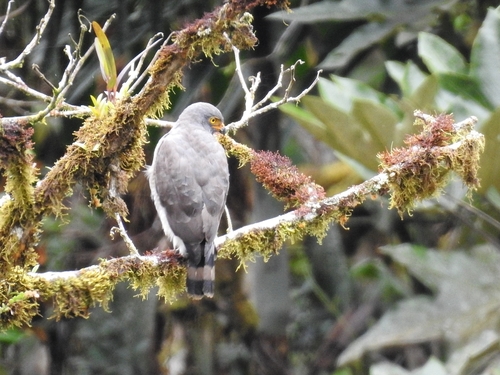
Roadside Hawk (Rupornis magnirostris) Roadside Hawk
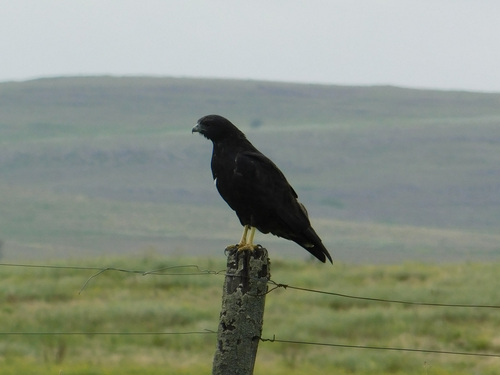
White-tailed Hawk (Geranoaetus albicaudatus) White-tailed Hawk

Media

Loading…

In short

The most reliable field mark between Roadside Hawk and White-tailed Hawk is size and tail pattern in flight: White-tailed Hawk is much larger and shows a striking white tail with a single black band near the tip, while Roadside Hawk is smaller, with a longer, banded tail. Immature White-tailed Hawks lack the adult's rusty shoulder patch and their wing linings are boldly spotted black-and-white, a pattern never shown by Roadside Hawk of any age. Roadside Hawk often shows a touch of rufous on the wings in flight and has barred brown-and-white underparts, while adult White-tailed Hawk is mostly white below with faint barring. Structural differences are also key: White-tailed Hawk is bulkier, with broader wings and a shorter tail, while Roadside Hawk is more slender with relatively short wings and a long tail. Both may soar, but White-tailed Hawk often hovers, unlike Roadside Hawk.

Identification tips

  1. Size: White-tailed Hawk is much larger and bulkier than Roadside Hawk. If you see a raptor that seems similar in shape but is clearly larger than a typical Buteo, suspect White-tailed Hawk.
  2. Tail pattern in flight (all ages): Adult White-tailed Hawk shows a white tail with a single, narrow black band near the tip—very bold and diagnostic. Roadside Hawk always shows a tail with multiple grey bars, never a clean white tail with a single band.
  3. Immature wing lining (immature White-tailed Hawk): Immature White-tailed Hawks have black-and-white spotted wing linings, visible from below in flight. Roadside Hawk immatures never show this pattern.
  4. Shoulder patch (adult White-tailed Hawk): Adult White-tailed Hawk has a rusty-red shoulder patch, visible when perched with wings closed. Roadside Hawk never shows this feature.
  5. Underparts (adults): Roadside Hawk has brown-and-white barring on the lower breast and belly; White-tailed Hawk is mostly white below with only faint pale grey or rufous barring.
  6. Upperparts: Adult White-tailed Hawk is grey above with a white rump; Roadside Hawk is brown or grey above, depending on subspecies, and lacks a white rump.
  7. Rufous on wings (Roadside Hawk): Roadside Hawk often shows a touch of rufous on the wings in flight, especially in some subspecies. White-tailed Hawk may show rufous only as faint barring below, not as a patch on the wing.
  8. Wing and tail proportions: Roadside Hawk has relatively short wings and a long tail, giving it a more slender, accipiter-like silhouette in flight. White-tailed Hawk has broader wings and a shorter tail, classic Buteo proportions.
  9. Flight style: White-tailed Hawk often hovers while hunting; Roadside Hawk does not hover but frequently soars.
  10. Eye color: Adult Roadside Hawk has whitish or yellow eyes; White-tailed Hawk has hazel eyes. This is subtle but may help at close range.
  11. Bill size: Roadside Hawk has a relatively large bill for its size, but this is not a strong field mark compared to other features.
  12. Vocalizations: Roadside Hawk is much more vocal, with a high-pitched squeak. White-tailed Hawk is usually silent or gives less distinctive calls.
  13. Habitat context: Roadside Hawk is common along roadsides, forest edges, and even urban areas; White-tailed Hawk prefers open grasslands and savannas.
  14. Perched posture: White-tailed Hawk appears bulkier and more upright when perched; Roadside Hawk is slimmer and more compact.
  15. Reaction of small birds: Mixed-species flocks are more alarmed by White-tailed Hawk, treating it as a greater threat to birds, while Roadside Hawk is less feared by small birds.

Size

White-tailed Hawk is dramatically larger: adults are 44–60 cm long with a wingspan of 118–143 cm and weigh 865–1,240 g [wikipedia], [avonet]. Roadside Hawk is much smaller, at 31–41 cm in length and 250–300 g [wikipedia], [avonet]. Even at a distance, White-tailed Hawk appears bulkier and heavier-bodied, with broader wings and a shorter tail relative to body size. Roadside Hawk is noticeably more compact, with a slimmer build and a proportionally longer tail. Males of Roadside Hawk are about 20% smaller than females, but both sexes are still dwarfed by any White-tailed Hawk.

Plumage

Immature White-tailed Hawks are darker overall than adults, sometimes nearly black in poor light, and lack the rusty shoulder patch. Their wing linings are conspicuously spotted black-and-white, a unique mark for immatures. The tail in young birds is brown with several dark bars, becoming greyish with a hazy dark band as they mature; adults have a white tail with a single narrow black band near the tip, very obvious in flight. Adults are grey above, white below, with faint pale grey or rufous barring, and a rusty-red shoulder patch visible when perched. Roadside Hawk, in contrast, is mainly brown or grey (depending on subspecies), with brown-and-white barring on the lower breast and underparts, and a tail with four or five grey bars. In flight, Roadside Hawk often shows a touch of rufous on the wings but never the bold white tail or shoulder patch of White-tailed Hawk. The eyes of adult Roadside Hawk are whitish or yellow, while adult White-tailed Hawk has a hazel iris. Juvenile/immature Roadside Hawks do not show the bold black-and-white wing lining of immature White-tailed Hawk.

Behaviour

White-tailed Hawk often hunts by hovering and scanning for prey, then gliding to a new spot if nothing is found. Roadside Hawk frequently soars but does not hover. Both species may be seen perched in open areas, but White-tailed Hawk's hunting style is more reminiscent of a large Buteo, while Roadside Hawk is more active and agile, often seen in pursuit of insects or small vertebrates. Mixed-species flocks are more alarmed by White-tailed Hawk, treating it as a greater threat to birds, while Roadside Hawk is considered less dangerous by small birds.

Habitat

Both species occur in open or semi-open habitats in the Americas, but Roadside Hawk is often the most common raptor in its range, especially along roadsides, forest edges, and open woodlands. White-tailed Hawk favors tropical and subtropical open habitats, including savannas and grasslands. In the cerrado of Brazil, both may occur, but White-tailed Hawk is more associated with wide-open spaces and less likely to be found in more wooded or urbanized areas where Roadside Hawk thrives.

Voice

Roadside Hawk is notably vocal, with a very high-pitched, piercing squeak. White-tailed Hawk is generally less vocal and does not share this distinctive call. If you hear a repeated, sharp squeak, Roadside Hawk is much more likely.

Submit a better description

Use the same sections as the comparison. Your text is published immediately.

The most reliable field mark between Roadside Hawk and White-tailed Hawk is size and tail pattern in flight: White-tailed Hawk is much larger and shows a striking white tail with a single black band near the tip, while Roadside Hawk is smaller, with a longer, banded tail. Immature White-tailed Hawks lack the adult's rusty shoulder patch and their wing linings are boldly spotted black-and-white, a pattern never shown by Roadside Hawk of any age. Roadside Hawk often shows a touch of rufous on the wings in flight and has barred brown-and-white underparts, while adult White-tailed Hawk is mostly white below with faint barring. Structural differences are also key: White-tailed Hawk is bulkier, with broader wings and a shorter tail, while Roadside Hawk is more slender with relatively short wings and a long tail. Both may soar, but White-tailed Hawk often hovers, unlike Roadside Hawk.

  1. Size: White-tailed Hawk is much larger and bulkier than Roadside Hawk. If you see a raptor that seems similar in shape but is clearly larger than a typical Buteo, suspect White-tailed Hawk.
  2. Tail pattern in flight (all ages): Adult White-tailed Hawk shows a white tail with a single, narrow black band near the tip—very bold and diagnostic. Roadside Hawk always shows a tail with multiple grey bars, never a clean white tail with a single band.
  3. Immature wing lining (immature White-tailed Hawk): Immature White-tailed Hawks have black-and-white spotted wing linings, visible from below in flight. Roadside Hawk immatures never show this pattern.
  4. Shoulder patch (adult White-tailed Hawk): Adult White-tailed Hawk has a rusty-red shoulder patch, visible when perched with wings closed. Roadside Hawk never shows this feature.
  5. Underparts (adults): Roadside Hawk has brown-and-white barring on the lower breast and belly; White-tailed Hawk is mostly white below with only faint pale grey or rufous barring.
  6. Upperparts: Adult White-tailed Hawk is grey above with a white rump; Roadside Hawk is brown or grey above, depending on subspecies, and lacks a white rump.
  7. Rufous on wings (Roadside Hawk): Roadside Hawk often shows a touch of rufous on the wings in flight, especially in some subspecies. White-tailed Hawk may show rufous only as faint barring below, not as a patch on the wing.
  8. Wing and tail proportions: Roadside Hawk has relatively short wings and a long tail, giving it a more slender, accipiter-like silhouette in flight. White-tailed Hawk has broader wings and a shorter tail, classic Buteo proportions.
  9. Flight style: White-tailed Hawk often hovers while hunting; Roadside Hawk does not hover but frequently soars.
  10. Eye color: Adult Roadside Hawk has whitish or yellow eyes; White-tailed Hawk has hazel eyes. This is subtle but may help at close range.
  11. Bill size: Roadside Hawk has a relatively large bill for its size, but this is not a strong field mark compared to other features.
  12. Vocalizations: Roadside Hawk is much more vocal, with a high-pitched squeak. White-tailed Hawk is usually silent or gives less distinctive calls.
  13. Habitat context: Roadside Hawk is common along roadsides, forest edges, and even urban areas; White-tailed Hawk prefers open grasslands and savannas.
  14. Perched posture: White-tailed Hawk appears bulkier and more upright when perched; Roadside Hawk is slimmer and more compact.
  15. Reaction of small birds: Mixed-species flocks are more alarmed by White-tailed Hawk, treating it as a greater threat to birds, while Roadside Hawk is less feared by small birds.

White-tailed Hawk is dramatically larger: adults are 44–60 cm long with a wingspan of 118–143 cm and weigh 865–1,240 g [wikipedia], [avonet]. Roadside Hawk is much smaller, at 31–41 cm in length and 250–300 g [wikipedia], [avonet]. Even at a distance, White-tailed Hawk appears bulkier and heavier-bodied, with broader wings and a shorter tail relative to body size. Roadside Hawk is noticeably more compact, with a slimmer build and a proportionally longer tail. Males of Roadside Hawk are about 20% smaller than females, but both sexes are still dwarfed by any White-tailed Hawk.

Immature White-tailed Hawks are darker overall than adults, sometimes nearly black in poor light, and lack the rusty shoulder patch. Their wing linings are conspicuously spotted black-and-white, a unique mark for immatures. The tail in young birds is brown with several dark bars, becoming greyish with a hazy dark band as they mature; adults have a white tail with a single narrow black band near the tip, very obvious in flight. Adults are grey above, white below, with faint pale grey or rufous barring, and a rusty-red shoulder patch visible when perched. Roadside Hawk, in contrast, is mainly brown or grey (depending on subspecies), with brown-and-white barring on the lower breast and underparts, and a tail with four or five grey bars. In flight, Roadside Hawk often shows a touch of rufous on the wings but never the bold white tail or shoulder patch of White-tailed Hawk. The eyes of adult Roadside Hawk are whitish or yellow, while adult White-tailed Hawk has a hazel iris. Juvenile/immature Roadside Hawks do not show the bold black-and-white wing lining of immature White-tailed Hawk.

White-tailed Hawk often hunts by hovering and scanning for prey, then gliding to a new spot if nothing is found. Roadside Hawk frequently soars but does not hover. Both species may be seen perched in open areas, but White-tailed Hawk's hunting style is more reminiscent of a large Buteo, while Roadside Hawk is more active and agile, often seen in pursuit of insects or small vertebrates. Mixed-species flocks are more alarmed by White-tailed Hawk, treating it as a greater threat to birds, while Roadside Hawk is considered less dangerous by small birds.

Both species occur in open or semi-open habitats in the Americas, but Roadside Hawk is often the most common raptor in its range, especially along roadsides, forest edges, and open woodlands. White-tailed Hawk favors tropical and subtropical open habitats, including savannas and grasslands. In the cerrado of Brazil, both may occur, but White-tailed Hawk is more associated with wide-open spaces and less likely to be found in more wooded or urbanized areas where Roadside Hawk thrives.

Roadside Hawk is notably vocal, with a very high-pitched, piercing squeak. White-tailed Hawk is generally less vocal and does not share this distinctive call. If you hear a repeated, sharp squeak, Roadside Hawk is much more likely.

Discard your changes?

You have unsaved edits. If you leave now, those changes will be lost.

Roadside Hawk · White-tailed Hawk · My Tricky Birds