
River Warbler vs Savi's Warbler
Locustella fluviatilis versus Locustella luscinioides
Play a quiz with River Warbler and Savi's Warbler
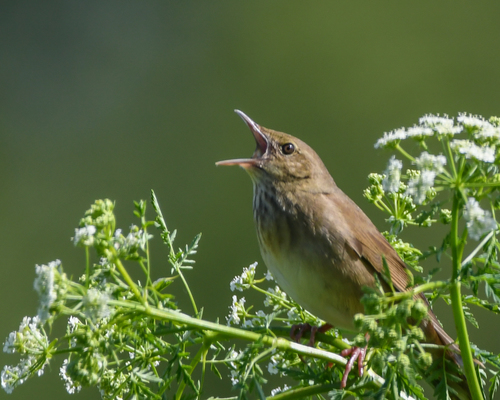 River Warbler
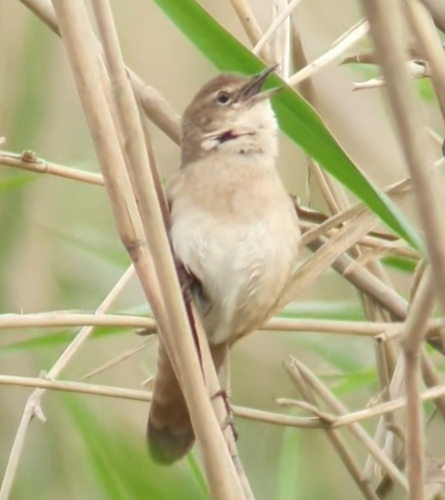 Savi's Warbler
In short
The most reliable field mark to separate River Warbler from Savi's Warbler is the River Warbler's white-tipped undertail coverts, which create a contrasting pattern against a darker undertail—this is visible on adults and most immatures, though some River Warblers can show reduced dark on the undertail. Savi's Warbler, in contrast, has a uniform dark reddish-brown upperpart and lacks the River Warbler's white undertail pattern. Juvenile River Warblers are yellower below, while Savi's Warbler underparts are sandy or buff. Both species are secretive, but Savi's Warbler is more likely to sing from exposed reed tops, whereas River Warbler is more skulking. Their songs are similar but differ subtly in quality and delivery.
Identification tips
- Undertail pattern: Look for white-tipped undertail coverts on River Warbler, creating a strong contrast with the darker undertail; Savi's Warbler lacks this, showing a uniform undertail. This is the single most reliable mark for adults and most immatures.
- Upperparts color: River Warbler has a grey-brown, unstreaked back; Savi's Warbler is a uniform dark reddish-brown above, sometimes with a greenish tinge. This difference is subtle in poor light but can be diagnostic in good viewing conditions.
- Underparts: River Warbler adults are whitish-grey below, while Savi's Warbler is sandy brown to whitish-buff. Juvenile River Warblers are yellower below than Savi's Warbler.
- Breast streaking: River Warbler typically shows faint streaking on the breast (especially in birds with reduced undertail contrast), while Savi's Warbler does not.
- Eye-stripe and lores: Savi's Warbler has a faint buff eye-stripe and dark lores; River Warbler lacks a strong eye-stripe and has a plainer face.
- Song quality: River Warbler's song is a long, mechanical, sewing machine-like reel, usually at dusk and often from cover. Savi's Warbler's song is a lower-pitched trill, less prolonged, often starting with ticks, and usually delivered from an exposed perch.
- Singing behavior: Savi's Warbler often sings from the top of reeds in full view, while River Warbler usually remains hidden in low vegetation.
- Habitat context: In extensive, open reedbeds, especially with singing birds on reed tops, suspect Savi's Warbler. In dense riverside vegetation or woodland edge, especially if the bird is skulking, consider River Warbler.
- Flight views: No distinctive upperwing or flight marks are described for either species, so rely on undertail and body coloration if glimpsed in flight.
- Seasonal context: Both species are migratory and overlap in breeding range in parts of Europe, but River Warbler is more eastern and central, while Savi's Warbler is more widespread in western and southern Europe.
- Sex and age: Both sexes are similar in both species; juvenile River Warblers are yellower below, which can help in late summer.
- Plumage pitfalls: Some River Warblers can have reduced dark on the undertail, making them closer to Savi's Warbler in appearance, but they usually retain a streaked breast and more olive-toned upperparts.
- Bill and legs: Savi's Warbler has a slender brown bill and brown legs, but these features are not distinctive enough for reliable separation in the field.
- Exposure: If the bird is seen singing openly on a reed, especially in a large reedbed, favor Savi's Warbler; if it is creeping low and rarely seen, favor River Warbler.
- Local abundance: Check local eBird reports for recent sightings, as River Warbler is much rarer in western Europe than Savi's Warbler.
Size
River Warbler is a largish Locustella warbler with a body mass of about 18.8g [wikidata], but no direct mass data is available for Savi's Warbler. Savi's Warbler is around 14 cm in length [wikipedia], which is typical for the genus. In the field, size differences are subtle and not a reliable separation point between these two, as both appear similarly sized through binoculars.
Plumage
- Juvenile/immature plumage: River Warbler juveniles are yellower below, while Savi's Warbler has sandy or buff underparts at all ages. No distinctive upperwing or flight marks are described for either species at any age; separation relies on body and undertail pattern.
- Adults: River Warbler adults have an unstreaked grey-brown back, whitish-grey underparts, and a darker undertail with conspicuous white feather tips, creating a strong contrast. Savi's Warbler adults are uniformly dark reddish-brown above (sometimes with a greenish tinge), with indistinct buff eye-stripes, dark lores, and pale brown ear-coverts. Their underparts are sandy brown to whitish-buff, without the River Warbler's sharply contrasting undertail pattern. Both sexes are similar in both species.
- Undertail: The River Warbler's white-tipped undertail coverts are the key field mark, though some individuals may show reduced dark markings and thus appear closer to Savi's Warbler. Savi's Warbler lacks this feature entirely.
Behaviour
River Warbler is extremely skulking, creeping through grass and low foliage, and is rarely seen except when singing. Savi's Warbler is also secretive but, once territory is established, often sings from exposed reed stems, making it more visible during the breeding season. Both species are difficult to see when not singing, but Savi's Warbler's habit of climbing reeds to sing can be a behavioral clue.
Habitat
Both species breed in wetland habitats, but River Warbler favors dense vegetation along rivers and damp woodland edges in eastern and central Europe, while Savi's Warbler is more strictly associated with extensive reedbeds, marshes, and lagoons throughout Europe and the western Palearctic. Savi's Warbler is more likely to be found in large, open reedbeds, sometimes with scattered bushes, whereas River Warbler prefers areas with more ground cover and less open water. Both winter in Africa, but River Warbler winters further south (inland southern Africa), while Savi's Warbler winters in northern and sub-Saharan Africa.
Voice
Both species have a reeling, insect-like song. River Warbler's song is a monotonous, mechanical reel with a sewing machine quality, often delivered for long periods and typically at dusk. Savi's Warbler's song is a slightly lower-pitched trill, less prolonged than River Warbler, and often starts with a series of low ticks that merge into the trill. Savi's Warbler sings from exposed reed tops, while River Warbler usually sings from cover.