

Ring-necked Dove vs Pied Crow
Streptopelia capicola versus Corvus albus
Play a quiz with Ring-necked Dove and Pied Crow
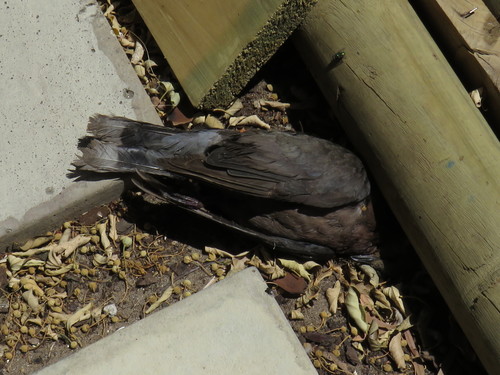 Ring-necked Dove
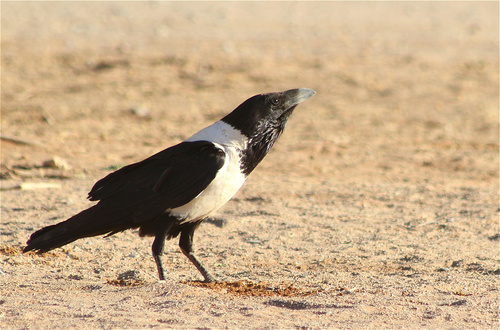 Pied Crow
In short
The most reliable way to separate Ring-necked Dove from Pied Crow is by overall structure and plumage contrast: Pied Crow is a much larger, longer-legged bird with a striking black-and-white pattern, while Ring-necked Dove is a compact, soft-toned dove with a distinctive semi-collar. Immature Ring-necked Doves are duller and lack the adult's collar, but never show the bold white breast and shoulder patch of Pied Crow. In flight, the dove's white-tipped tail is obvious, while the crow's tail is all black. If seen perched, bill size and shape are instantly different: the crow's is large and heavy, the dove's is short and fine. Voice is also a giveaway, with the dove's rhythmic cooing contrasting with the crow's harsh calls.
Identification tips
- Size and shape: Pied Crow is nearly twice the length and several times the mass of Ring-necked Dove. If you see a bird with a large, heavy bill and long legs, it's the crow.
- Bill shape: The dove's bill is short, fine, and delicate; the crow's is thick, long, and powerful. This is obvious even at a distance when perched.
- Plumage pattern (adults): Ring-necked Dove is soft grey-brown above, pale below, with a neat black half-collar on the neck and white-tipped tail. Pied Crow is glossy black with a huge white patch across the breast and shoulders—no dove ever shows this bold contrast.
- Plumage pattern (immatures): Immature doves are duller, lack the collar, and have buff-edged upperparts, but still lack any black-and-white pattern. Young crows may have some black in the white area but are always boldly patterned compared to doves.
- Tail in flight: Dove shows a slate grey tail with conspicuous white tips, especially visible during display flights. Pied Crow's tail is all black and longer proportionally.
- Wing shape and flight: Doves have a fast, direct flight with rapid wingbeats and audible clapping; crows have slower, deeper wingbeats and often glide.
- Leg length: Crow's legs are much longer and more obvious when walking or perched; doves appear short-legged.
- Eye color: Dove's eye is nearly black; crow's is dark brown, but this is rarely diagnostic in the field.
- Voice: Dove gives a rhythmic, three-syllable coo; crow gives harsh caws. If you hear a coo, it's a dove.
- Habitat and context: Doves are more likely in bush or savanna, crows in any open area, including urban and roadside settings. Crows often perch on poles or scavenge.
- Social behavior: Doves are usually alone or in pairs, sometimes in flocks at water; crows are social, often in groups, and may mob raptors.
- Display behavior: Dove males perform steep display flights with spread tail and wings; crows do not display in this way.
- Feeding: Crows are often seen scavenging or investigating rubbish; doves feed quietly on the ground or in trees.
- Variation: Dove plumage varies from pale to sooty, but never approaches the crow's black-and-white. Crows may have some black in the white area as immatures, but always show strong contrast.
- Pitfalls: Dull juvenile doves can lack the collar, but never show the crow's pattern or size. No age of crow is small or soft-toned enough to be confused with a dove except at extreme distance or in poor light.
Size
Pied Crow is dramatically larger and heavier than Ring-necked Dove. Pied Crow measures 46–52 cm in length and weighs around 520 g, with a large, thick bill and long legs. Ring-necked Dove is much smaller at 25–26.5 cm and about 153.5 g in mass, with a delicate build and small, slim bill. Even at a distance, the crow's size and proportions are obvious, especially when both species are seen near each other.
Plumage
Juvenile and immature Ring-necked Doves are duller than adults, lacking the black semi-collar and showing buff edges to upperparts and wing coverts, but still have a uniform pale belly and white-tipped tail. Adults have a soft grey-brown upperbody with lavender nape, pale underparts with a pinkish wash, and a neat black half-collar on the neck. The tail is slate grey with conspicuous white tips, especially visible in flight. Pied Crow of all ages is boldly patterned: glossy black head, neck, wings, and tail, with a large white patch from the shoulders down to the lower breast. Immature crows may have some black mixed into the white, but the contrast remains strong. The crow's bill is always black and massive, while the dove's is slim and black. The dove's eye is nearly black; the crow's is dark brown. No age of Ring-necked Dove ever shows the crow's black-and-white pattern.
Behaviour
Ring-necked Doves are usually seen alone or in pairs, sometimes gathering in noisy flocks at water or roosts. Their flight is direct and often accompanied by loud wing claps. Males display by flying steeply upward, then spiraling down with spread wings and tail. Pied Crows are social, often in pairs or small groups, but can gather in large numbers at food sources. They are bold, sometimes mobbing raptors, and walk with a confident, striding gait. Their flight is strong and direct, with slow, deep wingbeats and a longer glide phase than the dove.
Habitat
Both species are widespread in Africa, but Ring-necked Dove favors a variety of open habitats, often in drier regions, and is usually seen in bush, savanna, or near settlements. Pied Crow is highly adaptable and found in almost any open or semi-open environment, including towns, villages, farmland, and along roads. The crow is more likely to be seen scavenging or perching on structures, while the dove prefers trees or wires.
Voice
Ring-necked Dove gives a rhythmic, three-syllabled crooning: 'uk-carrroooo,' often repeated for long periods and heard year-round. Pairs may give a double coo with a drawn-out second note. Pied Crow has a harsh, cawing voice, typical of corvids, with no resemblance to the dove's cooing. If you hear a classic dove coo, it's not a Pied Crow.