

Motmot

Red-legged Partridge vs Eurasian Skylark

Alectoris rufa versus Alauda arvensis

Play a quiz with Red-legged Partridge and Eurasian Skylark
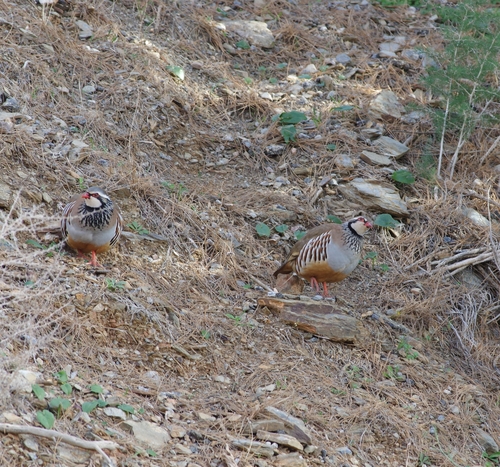
Red-legged Partridge (Alectoris rufa) Red-legged Partridge
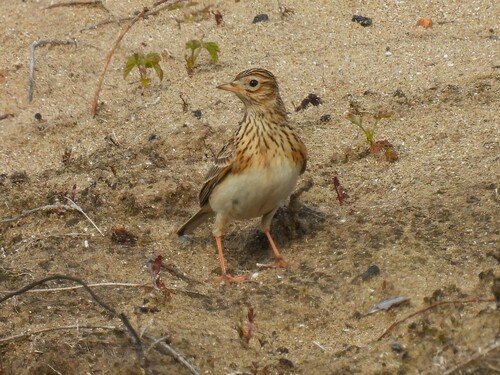
Eurasian Skylark (Alauda arvensis) Eurasian Skylark

Media

Loading…

In short

The most reliable field mark is overall structure and size: Red-legged Partridge is a chunky, chicken-like gamebird with a thick red bill and legs, while Eurasian Skylark is a much smaller, slender, brownish songbird with a fine bill and a short crest. In flight, Skylark shows a short tail with white edges and broad, rounded wings, whereas Red-legged Partridge has a short, rounded tail and plain upperwings. Plumage is also diagnostic: Partridge has bold black, rufous, and white face and flank patterns, while Skylark is streaky brown above and pale below. Skylark’s song, delivered in hovering flight, is a key behavioral clue. These species are unlikely to be confused in the field except at a great distance or in poor light, but confusion can arise with brief, distant views of a partridge flushed from cover or a skylark on the ground.

Identification tips

  1. Size and structure: Red-legged Partridge is much larger and bulkier than Eurasian Skylark. If you see a bird that looks chicken-like or pigeon-sized, it is a partridge; a sparrow-sized, slender bird is a skylark.
  2. Bill and legs: Partridge has a thick, bright red bill and pinkish-red legs, obvious even at some distance. Skylark has a fine, pointed bill and dull legs, not brightly colored.
  3. Face pattern: Partridge shows a striking black-and-white face with a red eye-ring and a bold black gorget; skylark’s face is plain brown with a faint supercilium and sometimes a short crest.
  4. Flank and underpart pattern: Partridge has bold rufous and black bars on the flanks and a pinkish-buff belly; skylark is pale below with fine streaking on the breast, no bold flank bars.
  5. Upperparts: Partridge’s back and upperparts are plain sandy-brown; skylark is streaky brown above, blending with the ground.
  6. Tail and wing pattern in flight: Skylark shows white edges to the tail and rear wing, especially visible when flying away; partridge has a plain, short, rounded tail with no white.
  7. Crest: Skylark may show a short, pointed crest, especially when alert; partridge lacks any crest.
  8. Flight style: Partridge flushes with a noisy, whirring, low flight, quickly dropping back to cover. Skylark’s flight is fluttery and buoyant, often ascending high and hovering.
  9. Song and calls: Skylark sings a long, musical, bubbling song in flight; partridge does not sing, but gives harsh, chattering calls on the ground or when flushed.
  10. Habitat context: Both species can be found in open farmland, but partridge is more likely near cover or field edges, while skylark is often in the open center of fields.
  11. Group size: Partridges are often in small groups or pairs; skylarks are usually solitary or in loose flocks outside the breeding season.
  12. Behavior on the ground: Partridge walks or runs upright, often pausing to look around; skylark creeps or hops, often less conspicuous on the ground.
  13. Perched views: Partridge rarely perches in the open; skylark may perch on low posts or clods, but is most often seen on the ground or in flight.
  14. Seasonal confusion: No major seasonal or age-related plumage changes complicate separation; both species look similar year-round, and juveniles are not described as being particularly confusing.
  15. Common pitfalls: Distant, brief views of a flushed partridge may appear as a brown bird with a short tail, but the size and lack of white in the tail/wing should rule out skylark. Conversely, a skylark on the ground may seem plump, but the fine bill, streaky plumage, and lack of bold face pattern are diagnostic.

Size

Red-legged Partridge is a robust, medium-sized gamebird, much larger and bulkier than Eurasian Skylark. Partridge has a thickset body, short neck, and strong legs, standing upright when alert. Eurasian Skylark is a small passerine, about 18–19 cm in length, with a much lighter, more delicate build and a fine bill. The partridge is roughly twice the bulk of a skylark, and its proportions are more reminiscent of a small chicken, while the skylark is sparrow-like but longer-winged and longer-tailed for its size. If seen together, the size difference is obvious.

Plumage

No age-specific upperwing or flight marks are described for Red-legged Partridge; its upperparts are plain sandy-brown, and the tail is pinkish-rufous. Eurasian Skylark, in all ages, shows white edges to the tail and rear wing (visible in flight, especially when flying away), and its upperparts are streaky brown. The partridge’s plumage is much more patterned on the face and flanks: adults have a bold black-and-white face, a black gorget, and rufous-barred flanks. The skylark is overall dull brown above with pale underparts and fine streaking, and a short, sometimes-raised crest. The partridge’s bill and legs are bright red or pinkish, while the skylark’s are dull and inconspicuous. No seasonal or sex-based plumage differences are highlighted for either species in the notes.

Behaviour

Red-legged Partridge is typically seen walking or running on the ground, often in small groups, and flushes with a whirring, low flight when disturbed, quickly dropping back into cover. It rarely perches in the open. Eurasian Skylark is often seen on the ground in open fields, but its most distinctive behavior is the male’s display flight: ascending high while singing, hovering, and then parachuting down. Skylark flight is fluttery and buoyant, with frequent hovering, while partridge flight is direct, low, and heavy. Skylark rarely flushes in the same explosive way as a partridge.

Habitat

Red-legged Partridge prefers open farmland, grassy fields, and lightly wooded or scrubby areas, often near hedgerows or field edges. It is a ground-dwelling bird, usually found in agricultural landscapes. Eurasian Skylark also favors open country, especially farmland, meadows, and heath, but is more likely to be found in the middle of large open fields, often away from cover. Both can occur in similar habitats, but partridge is more often near cover, while skylark is more associated with open expanses.

Voice

Eurasian Skylark is famous for its long, continuous, bubbling warbling song, delivered in sustained display flights high above the ground. The song can last several minutes and is often the first clue to the bird’s presence. Red-legged Partridge does not sing; its calls are harsh, chattering, or clucking sounds, usually given on the ground or when flushed. If you hear a long, musical song from above, it is a skylark; if you hear clucking or chattering from the ground, it is likely a partridge.

Submit a better description

Use the same sections as the comparison. Your text is published immediately.

The most reliable field mark is overall structure and size: Red-legged Partridge is a chunky, chicken-like gamebird with a thick red bill and legs, while Eurasian Skylark is a much smaller, slender, brownish songbird with a fine bill and a short crest. In flight, Skylark shows a short tail with white edges and broad, rounded wings, whereas Red-legged Partridge has a short, rounded tail and plain upperwings. Plumage is also diagnostic: Partridge has bold black, rufous, and white face and flank patterns, while Skylark is streaky brown above and pale below. Skylark’s song, delivered in hovering flight, is a key behavioral clue. These species are unlikely to be confused in the field except at a great distance or in poor light, but confusion can arise with brief, distant views of a partridge flushed from cover or a skylark on the ground.

  1. Size and structure: Red-legged Partridge is much larger and bulkier than Eurasian Skylark. If you see a bird that looks chicken-like or pigeon-sized, it is a partridge; a sparrow-sized, slender bird is a skylark.
  2. Bill and legs: Partridge has a thick, bright red bill and pinkish-red legs, obvious even at some distance. Skylark has a fine, pointed bill and dull legs, not brightly colored.
  3. Face pattern: Partridge shows a striking black-and-white face with a red eye-ring and a bold black gorget; skylark’s face is plain brown with a faint supercilium and sometimes a short crest.
  4. Flank and underpart pattern: Partridge has bold rufous and black bars on the flanks and a pinkish-buff belly; skylark is pale below with fine streaking on the breast, no bold flank bars.
  5. Upperparts: Partridge’s back and upperparts are plain sandy-brown; skylark is streaky brown above, blending with the ground.
  6. Tail and wing pattern in flight: Skylark shows white edges to the tail and rear wing, especially visible when flying away; partridge has a plain, short, rounded tail with no white.
  7. Crest: Skylark may show a short, pointed crest, especially when alert; partridge lacks any crest.
  8. Flight style: Partridge flushes with a noisy, whirring, low flight, quickly dropping back to cover. Skylark’s flight is fluttery and buoyant, often ascending high and hovering.
  9. Song and calls: Skylark sings a long, musical, bubbling song in flight; partridge does not sing, but gives harsh, chattering calls on the ground or when flushed.
  10. Habitat context: Both species can be found in open farmland, but partridge is more likely near cover or field edges, while skylark is often in the open center of fields.
  11. Group size: Partridges are often in small groups or pairs; skylarks are usually solitary or in loose flocks outside the breeding season.
  12. Behavior on the ground: Partridge walks or runs upright, often pausing to look around; skylark creeps or hops, often less conspicuous on the ground.
  13. Perched views: Partridge rarely perches in the open; skylark may perch on low posts or clods, but is most often seen on the ground or in flight.
  14. Seasonal confusion: No major seasonal or age-related plumage changes complicate separation; both species look similar year-round, and juveniles are not described as being particularly confusing.
  15. Common pitfalls: Distant, brief views of a flushed partridge may appear as a brown bird with a short tail, but the size and lack of white in the tail/wing should rule out skylark. Conversely, a skylark on the ground may seem plump, but the fine bill, streaky plumage, and lack of bold face pattern are diagnostic.

Red-legged Partridge is a robust, medium-sized gamebird, much larger and bulkier than Eurasian Skylark. Partridge has a thickset body, short neck, and strong legs, standing upright when alert. Eurasian Skylark is a small passerine, about 18–19 cm in length, with a much lighter, more delicate build and a fine bill. The partridge is roughly twice the bulk of a skylark, and its proportions are more reminiscent of a small chicken, while the skylark is sparrow-like but longer-winged and longer-tailed for its size. If seen together, the size difference is obvious.

No age-specific upperwing or flight marks are described for Red-legged Partridge; its upperparts are plain sandy-brown, and the tail is pinkish-rufous. Eurasian Skylark, in all ages, shows white edges to the tail and rear wing (visible in flight, especially when flying away), and its upperparts are streaky brown. The partridge’s plumage is much more patterned on the face and flanks: adults have a bold black-and-white face, a black gorget, and rufous-barred flanks. The skylark is overall dull brown above with pale underparts and fine streaking, and a short, sometimes-raised crest. The partridge’s bill and legs are bright red or pinkish, while the skylark’s are dull and inconspicuous. No seasonal or sex-based plumage differences are highlighted for either species in the notes.

Red-legged Partridge is typically seen walking or running on the ground, often in small groups, and flushes with a whirring, low flight when disturbed, quickly dropping back into cover. It rarely perches in the open. Eurasian Skylark is often seen on the ground in open fields, but its most distinctive behavior is the male’s display flight: ascending high while singing, hovering, and then parachuting down. Skylark flight is fluttery and buoyant, with frequent hovering, while partridge flight is direct, low, and heavy. Skylark rarely flushes in the same explosive way as a partridge.

Red-legged Partridge prefers open farmland, grassy fields, and lightly wooded or scrubby areas, often near hedgerows or field edges. It is a ground-dwelling bird, usually found in agricultural landscapes. Eurasian Skylark also favors open country, especially farmland, meadows, and heath, but is more likely to be found in the middle of large open fields, often away from cover. Both can occur in similar habitats, but partridge is more often near cover, while skylark is more associated with open expanses.

Eurasian Skylark is famous for its long, continuous, bubbling warbling song, delivered in sustained display flights high above the ground. The song can last several minutes and is often the first clue to the bird’s presence. Red-legged Partridge does not sing; its calls are harsh, chattering, or clucking sounds, usually given on the ground or when flushed. If you hear a long, musical song from above, it is a skylark; if you hear clucking or chattering from the ground, it is likely a partridge.

Discard your changes?

You have unsaved edits. If you leave now, those changes will be lost.

Red-legged Partridge · Eurasian Skylark · My Tricky Birds