

Motmot

Red Knot vs Curlew Sandpiper

Calidris canutus versus Calidris ferruginea

Play a quiz with Red Knot and Curlew Sandpiper
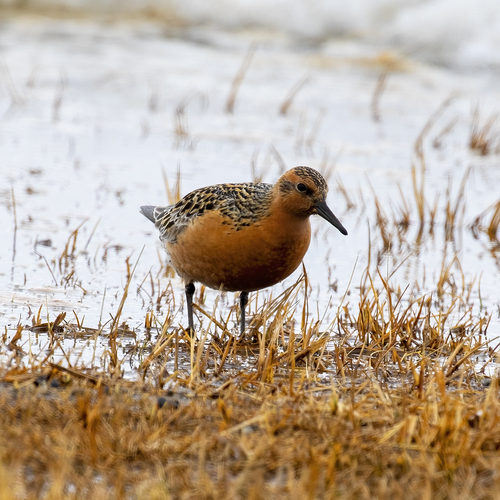
Red Knot (Calidris canutus) Red Knot
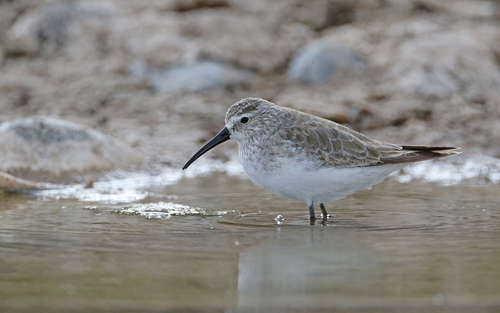
Curlew Sandpiper (Calidris ferruginea) Curlew Sandpiper

Media

Loading…

In short

The most reliable field mark between Red Knot and Curlew Sandpiper is size and structure: Red Knot is distinctly larger and bulkier, with a shorter, straight bill, while Curlew Sandpiper is smaller, slimmer, and has a noticeably longer, downcurved bill. In flight, both show a white wing bar, but Curlew Sandpiper has a more prominent white rump patch, whereas Red Knot’s rump and tail are grey. Juvenile and non-breeding plumages can be confusingly similar, but Red Knot always appears more robust and 'low-slung' with shorter legs. Breeding plumages are both reddish below, but Red Knot is deeper brick-red and more uniformly colored, while Curlew Sandpiper is patchier and has a white vent. Bill shape and body proportions are the most practical field clues at any season.

Identification tips

  1. Size and structure are the most reliable clues: Red Knot is much larger and bulkier than Curlew Sandpiper. Use this especially when birds are side by side or with other Calidris for scale.
  2. Bill shape is key: Curlew Sandpiper has a long, slender, and distinctly downcurved bill, while Red Knot’s bill is straight, medium-length, and never longer than the head. This holds for all ages and seasons.
  3. Leg length and posture: Red Knot has short, dark legs and a 'low-slung', squat look when feeding. Curlew Sandpiper stands taller and appears more delicate.
  4. In flight, check the rump: Curlew Sandpiper shows a large white rump patch (sometimes with red barring in adults), while Red Knot’s rump and tail are grey. This is one of the best flight marks for all ages.
  5. Wing bar: Both species show a white wing bar in flight, so this is not a good separator.
  6. Juvenile/first-winter upperparts: Curlew Sandpiper juveniles are scaly and buff-tinged with a strong white supercilium; Red Knot juveniles are plainer, with brown coverts and submarginal lines but lack the strong eyebrow.
  7. Breeding plumage color: Red Knot is deep brick-red below, with color extending further back on the belly and flanks; Curlew Sandpiper is also reddish but patchier, with a white vent and undertail, and the red is less extensive.
  8. Non-breeding plumage: Both are pale grey above and white below, but Curlew Sandpiper often looks more mottled above and has a more obvious white eyebrow.
  9. Supercilium (eyebrow): Curlew Sandpiper has a distinct white supercilium in all plumages, especially obvious in juveniles and non-breeding birds; Red Knot lacks this feature.
  10. Tail shape and length: Curlew Sandpiper has slimmer tail feathers, especially in juveniles, while Red Knot’s tail is broader and grey.
  11. Feeding behavior: Red Knot feeds with a hunched, compact look; Curlew Sandpiper is more upright and active.
  12. Flock structure: Red Knot often forms denser, more cohesive flocks; Curlew Sandpiper flocks are looser or mixed with other small waders.
  13. Voice: Red Knot gives a low 'knutt' or 'knuup-knuup' in flight; Curlew Sandpiper’s calls are not distinctive in this context.
  14. Habitat overlap: Both can occur together on mudflats, so do not rely on habitat alone for separation.
  15. Sex and subspecies variation: Red Knot females are slightly paler in breeding plumage, but this is subtle and not reliable for field separation. Curlew Sandpiper males are more richly colored in breeding plumage, but overlap is extensive.

Size

Red Knot is substantially larger and heavier (body mass ~137 g, length 23–26 cm, wingspan 47–53 cm) than Curlew Sandpiper (length 18–23 cm, wingspan 38–46 cm, mass 44–117 g). In the field, Red Knot looks chunky and deep-chested, with a short neck and compact build, while Curlew Sandpiper is noticeably more slender and delicate. The bill of Curlew Sandpiper is longer (32–44 mm) and distinctly decurved, whereas Red Knot’s bill is straight, medium-length, and never longer than the head. Leg length is also a clue: Red Knot’s legs are short and dark, giving a squatter look, while Curlew Sandpiper’s legs are longer and dark grey to black.

Plumage

Juvenile and first-winter birds: Both species show pale grey upperparts and white underparts in non-breeding and juvenile plumages, but Curlew Sandpiper juveniles have a more scaly, buff-tinged, and evenly fringed appearance, with a distinct white supercilium (eyebrow) and slimmer tail feathers. Red Knot juveniles have brown coverts and submarginal lines, but appear plainer overall. In flight, both show a white wing bar, but Curlew Sandpiper has a large white rump patch (sometimes with red barring in adults), while Red Knot’s rump and tail are grey. Breeding plumage: Red Knot is deep brick-red below, with color extending onto the belly and flanks, and a mottled grey upperpart; Curlew Sandpiper is also reddish below but patchier, with a white vent and undertail, and the red is less extensive and more variable. Non-breeding adults of both are pale grey above and white below, but Red Knot is more uniform and lacks the strong supercilium of Curlew Sandpiper. Bill and leg color are not strongly different in plumage but are structurally distinct.

Behaviour

Red Knot typically feeds in a low, squat posture, often appearing 'hunched' due to its short legs and neck. It moves steadily and methodically, probing mud or sand for prey. Curlew Sandpiper is more active and graceful, feeding with a more upright stance and using its longer, downcurved bill to probe deeper. In flight, Red Knot appears more robust and direct, while Curlew Sandpiper is lighter and more agile. Both species may be found in mixed flocks, but Red Knot often forms tighter, denser groups.

Habitat

Both species are long-distance migrants breeding in Arctic tundra, but their wintering and migration habitats overlap mainly on coastal mudflats and saltpans. Red Knot is more likely to be found in larger, denser flocks on open tidal flats, while Curlew Sandpiper may be more dispersed or mixed with other small waders. In some regions, Curlew Sandpiper is more common in brackish or saline lagoons and saltpans, but habitat alone is rarely diagnostic where both occur.

Voice

Red Knot calls are generally low, monosyllabic 'knutt' in flight, or a disyllabic 'knuup-knuup' on migration. Curlew Sandpiper’s calls are not described in detail in the provided notes, but voice is not a primary separation feature between these two in the field. Display songs and calls are rarely heard outside breeding grounds.

Submit a better description

Use the same sections as the comparison. Your text is published immediately.

The most reliable field mark between Red Knot and Curlew Sandpiper is size and structure: Red Knot is distinctly larger and bulkier, with a shorter, straight bill, while Curlew Sandpiper is smaller, slimmer, and has a noticeably longer, downcurved bill. In flight, both show a white wing bar, but Curlew Sandpiper has a more prominent white rump patch, whereas Red Knot’s rump and tail are grey. Juvenile and non-breeding plumages can be confusingly similar, but Red Knot always appears more robust and 'low-slung' with shorter legs. Breeding plumages are both reddish below, but Red Knot is deeper brick-red and more uniformly colored, while Curlew Sandpiper is patchier and has a white vent. Bill shape and body proportions are the most practical field clues at any season.

  1. Size and structure are the most reliable clues: Red Knot is much larger and bulkier than Curlew Sandpiper. Use this especially when birds are side by side or with other Calidris for scale.
  2. Bill shape is key: Curlew Sandpiper has a long, slender, and distinctly downcurved bill, while Red Knot’s bill is straight, medium-length, and never longer than the head. This holds for all ages and seasons.
  3. Leg length and posture: Red Knot has short, dark legs and a 'low-slung', squat look when feeding. Curlew Sandpiper stands taller and appears more delicate.
  4. In flight, check the rump: Curlew Sandpiper shows a large white rump patch (sometimes with red barring in adults), while Red Knot’s rump and tail are grey. This is one of the best flight marks for all ages.
  5. Wing bar: Both species show a white wing bar in flight, so this is not a good separator.
  6. Juvenile/first-winter upperparts: Curlew Sandpiper juveniles are scaly and buff-tinged with a strong white supercilium; Red Knot juveniles are plainer, with brown coverts and submarginal lines but lack the strong eyebrow.
  7. Breeding plumage color: Red Knot is deep brick-red below, with color extending further back on the belly and flanks; Curlew Sandpiper is also reddish but patchier, with a white vent and undertail, and the red is less extensive.
  8. Non-breeding plumage: Both are pale grey above and white below, but Curlew Sandpiper often looks more mottled above and has a more obvious white eyebrow.
  9. Supercilium (eyebrow): Curlew Sandpiper has a distinct white supercilium in all plumages, especially obvious in juveniles and non-breeding birds; Red Knot lacks this feature.
  10. Tail shape and length: Curlew Sandpiper has slimmer tail feathers, especially in juveniles, while Red Knot’s tail is broader and grey.
  11. Feeding behavior: Red Knot feeds with a hunched, compact look; Curlew Sandpiper is more upright and active.
  12. Flock structure: Red Knot often forms denser, more cohesive flocks; Curlew Sandpiper flocks are looser or mixed with other small waders.
  13. Voice: Red Knot gives a low 'knutt' or 'knuup-knuup' in flight; Curlew Sandpiper’s calls are not distinctive in this context.
  14. Habitat overlap: Both can occur together on mudflats, so do not rely on habitat alone for separation.
  15. Sex and subspecies variation: Red Knot females are slightly paler in breeding plumage, but this is subtle and not reliable for field separation. Curlew Sandpiper males are more richly colored in breeding plumage, but overlap is extensive.

Red Knot is substantially larger and heavier (body mass ~137 g, length 23–26 cm, wingspan 47–53 cm) than Curlew Sandpiper (length 18–23 cm, wingspan 38–46 cm, mass 44–117 g). In the field, Red Knot looks chunky and deep-chested, with a short neck and compact build, while Curlew Sandpiper is noticeably more slender and delicate. The bill of Curlew Sandpiper is longer (32–44 mm) and distinctly decurved, whereas Red Knot’s bill is straight, medium-length, and never longer than the head. Leg length is also a clue: Red Knot’s legs are short and dark, giving a squatter look, while Curlew Sandpiper’s legs are longer and dark grey to black.

Juvenile and first-winter birds: Both species show pale grey upperparts and white underparts in non-breeding and juvenile plumages, but Curlew Sandpiper juveniles have a more scaly, buff-tinged, and evenly fringed appearance, with a distinct white supercilium (eyebrow) and slimmer tail feathers. Red Knot juveniles have brown coverts and submarginal lines, but appear plainer overall. In flight, both show a white wing bar, but Curlew Sandpiper has a large white rump patch (sometimes with red barring in adults), while Red Knot’s rump and tail are grey. Breeding plumage: Red Knot is deep brick-red below, with color extending onto the belly and flanks, and a mottled grey upperpart; Curlew Sandpiper is also reddish below but patchier, with a white vent and undertail, and the red is less extensive and more variable. Non-breeding adults of both are pale grey above and white below, but Red Knot is more uniform and lacks the strong supercilium of Curlew Sandpiper. Bill and leg color are not strongly different in plumage but are structurally distinct.

Red Knot typically feeds in a low, squat posture, often appearing 'hunched' due to its short legs and neck. It moves steadily and methodically, probing mud or sand for prey. Curlew Sandpiper is more active and graceful, feeding with a more upright stance and using its longer, downcurved bill to probe deeper. In flight, Red Knot appears more robust and direct, while Curlew Sandpiper is lighter and more agile. Both species may be found in mixed flocks, but Red Knot often forms tighter, denser groups.

Both species are long-distance migrants breeding in Arctic tundra, but their wintering and migration habitats overlap mainly on coastal mudflats and saltpans. Red Knot is more likely to be found in larger, denser flocks on open tidal flats, while Curlew Sandpiper may be more dispersed or mixed with other small waders. In some regions, Curlew Sandpiper is more common in brackish or saline lagoons and saltpans, but habitat alone is rarely diagnostic where both occur.

Red Knot calls are generally low, monosyllabic 'knutt' in flight, or a disyllabic 'knuup-knuup' on migration. Curlew Sandpiper’s calls are not described in detail in the provided notes, but voice is not a primary separation feature between these two in the field. Display songs and calls are rarely heard outside breeding grounds.

Discard your changes?

You have unsaved edits. If you leave now, those changes will be lost.

Red Knot · Curlew Sandpiper · My Tricky Birds