
Red-breasted Flycatcher vs Collared Flycatcher
Ficedula parva versus Ficedula albicollis
Play a quiz with Red-breasted Flycatcher and Collared Flycatcher
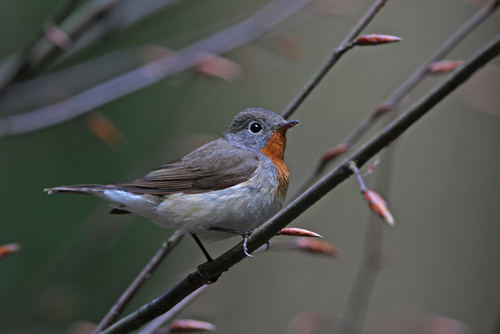 Red-breasted Flycatcher
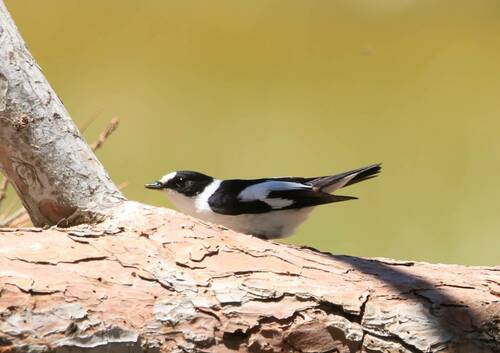 Collared Flycatcher
In short
The most reliable field mark between Red-breasted Flycatcher and Collared Flycatcher is the presence of a bright orange throat patch on adult male Red-breasted Flycatchers in breeding plumage, versus the bold white collar and large white wing patch of adult male Collared Flycatchers. Immature and female birds of both species can be very similar, but Collared Flycatcher is generally larger and bulkier, with a more prominent white forehead patch and, in breeding males, a striking black-and-white contrast. Red-breasted Flycatcher is smaller, with a warmer brown upperpart tone and a distinctive tail pattern: all plumages show a black tail with white at the base of the outer feathers. In flight or at rest, Collared Flycatcher’s white wing patch and white tail sides (in some males) are key, while Red-breasted Flycatcher lacks these features. When in doubt, focus on throat color, wing and tail pattern, and overall size and structure.
Identification tips
- Adult breeding males: Red-breasted Flycatcher shows a bright orange throat patch, grey head, and warm brown upperparts; Collared Flycatcher has a glossy black upperpart, bold white collar, large white wing patch, and white forehead patch.
- Juveniles and females: Both can be brown above and pale below, but Red-breasted Flycatcher always shows a black tail with white at the base of the outer feathers (visible when tail is spread or flicked), while Collared Flycatcher lacks this pattern and may show some white on the tail sides (mainly in males).
- Wing pattern: Collared Flycatcher adult males have a large, obvious white wing patch; Red-breasted Flycatcher lacks any strong wing panel or patch in all ages and sexes.
- Tail pattern: Red-breasted Flycatcher’s tail is black with white at the base of the outer feathers in all plumages; Collared Flycatcher’s tail is black, sometimes with white sides in males, but not at the feather bases.
- Eyering: Both species have a white eyering, but it is more prominent and set off by the warmer brown tones in Red-breasted Flycatcher.
- Bill color: Red-breasted Flycatcher has a black bill with a more extensive pale pinkish base, especially in fresh plumage; Collared Flycatcher’s bill is black with little or no pale base.
- Size and structure: Collared Flycatcher is noticeably larger and bulkier, with a longer body and more robust build; Red-breasted Flycatcher is smaller and more delicate.
- Perched behavior: Red-breasted Flycatcher often flicks its tail upwards and droops its wingtips; Collared Flycatcher is less prone to tail-flicking.
- Habitat: Collared Flycatcher is strongly associated with mature deciduous woodland and old trees; Red-breasted Flycatcher is more flexible in habitat choice, especially on migration.
- Song: Red-breasted Flycatcher sings a sweet, whistled song with a descending sequence; Collared Flycatcher’s song is a slow, strained whistle. Song is only useful in spring and for adult males.
- Geographic context: Collared Flycatcher is a rare vagrant in western Europe, while Red-breasted Flycatcher is a regular passage migrant there. Collared Flycatcher winters in Africa, Red-breasted in South Asia.
- Plumage pitfalls: Non-breeding males, females, and juveniles of both species can be very similar; always check tail and wing pattern, and use size and structure as supporting clues.
- White forehead patch: Only Collared Flycatcher adult males show a large white forehead patch; Red-breasted Flycatcher never does.
- White collar: Only Collared Flycatcher adult males have a broad white collar; Red-breasted Flycatcher lacks this feature in all plumages.
- When in doubt: If the bird is small, warm brown above, with a black tail and white at the base of the outer feathers, it is Red-breasted Flycatcher. If it is larger, with a bold white wing patch, white collar, and white forehead patch (in males), it is Collared Flycatcher.
Size
Red-breasted Flycatcher is the smaller of the two, measuring about 11–12 cm in length, only slightly larger than a Eurasian Wren. Collared Flycatcher is larger, at 12–13.5 cm, and appears noticeably bulkier in direct comparison. Both are small flycatchers, but Collared Flycatcher’s greater length and more robust build can be apparent with experience, especially when seen side by side or with good references. Bill shape is similar (broad, pointed, black), but Red-breasted Flycatcher often shows a paler pinkish base to the bill, which is more extensive than on Collared Flycatcher.
Plumage
Juveniles and non-breeding birds of both species are tricky, as both can be dull brown above and pale below, lacking the bold male breeding marks. However, Red-breasted Flycatcher of all ages and sexes shows a distinctive tail pattern: black with white at the base of the outer feathers, best seen when the tail is spread or flicked. Collared Flycatcher juveniles and females lack this tail pattern and instead may show some white on the tail sides (mainly in males), but not the same base-of-feather pattern. In adult breeding plumage, male Collared Flycatcher is unmistakable: glossy black above, white below, with a broad white collar, large white wing patch, white forehead patch, and sometimes white tail sides. Red-breasted Flycatcher breeding males are muted brown above, white below, with a grey head and a bright orange throat patch (females and immatures lack the orange). Both species have a white eyering, but it is more pronounced and set off by the warmer tones in Red-breasted Flycatcher. Collared Flycatcher’s wing patch is always large and obvious in adult males, while Red-breasted Flycatcher lacks any strong wing panel or patch.
Behaviour
Both species are active aerial insectivores, sallying from perches to catch insects. Red-breasted Flycatcher often flicks its tail upwards and holds its wingtips down while perched, and may inspect leaves and trunks in a warbler-like manner. Collared Flycatcher also hunts caterpillars among foliage and takes berries, but is less noted for tail-flicking. Both forage in the canopy and shrubs, but Collared Flycatcher is more likely to be seen in mature deciduous woodland with old trees, while Red-breasted Flycatcher can be found in a broader range of wooded habitats.
Habitat
Red-breasted Flycatcher breeds in eastern Europe and Central Asia, wintering in South Asia, and is a regular passage migrant in western Europe. Collared Flycatcher breeds in southeast Europe, parts of the Baltic, and east France to Ukraine, wintering in Sub-Saharan Africa, and is a rare vagrant in western Europe. Collared Flycatcher prefers mature deciduous woodland, parks, and gardens with old trees for nesting, while Red-breasted Flycatcher is less tied to old-growth and can be found in a wider variety of wooded habitats, especially during migration.
Voice
Red-breasted Flycatcher’s song is a sweet, far-carrying series of whistles, less melodious than European Pied Flycatcher, often preceded by soft zit or tsi-it notes and followed by a descending sequence. Its call is a short, rattling zrrrt, slower than that of Taiga Flycatcher. Collared Flycatcher’s song consists of slow, strained whistles, quite unlike Pied Flycatcher, and is not described as similar to Red-breasted Flycatcher. Song is most useful for males in spring; both species are largely silent in winter.
Red-breasted Flycatcher · Collared Flycatcher · My Tricky Birds