

Motmot

Puna Plover vs Snowy Egret

Anarhynchus alticola versus Egretta thula

Play a quiz with Puna Plover and Snowy Egret
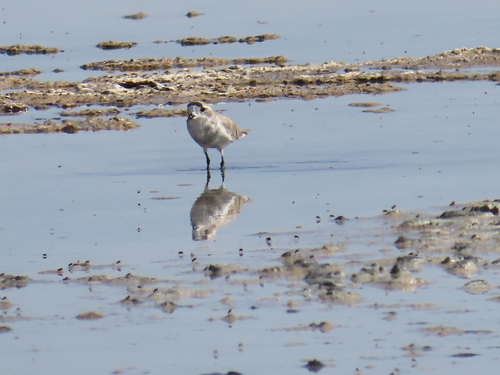
Puna Plover (Anarhynchus alticola) Puna Plover
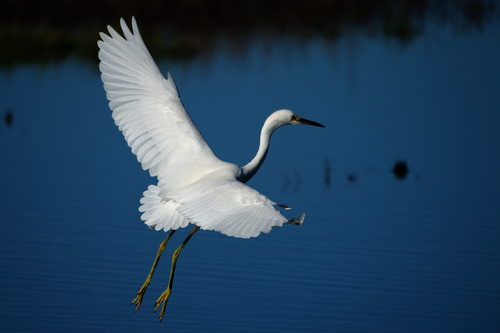
Snowy Egret (Egretta thula) Snowy Egret

Media

Loading…

In short

The most reliable field mark is overall color: Snowy Egret is entirely white at all ages, while Puna Plover is brown above and white below as a juvenile, and adults show a mix of brown, white, and chestnut with distinct dark facial and breast markings. Snowy Egret is much larger, with a long neck, long black legs, and yellow feet, while Puna Plover is a compact, short-necked shorebird with black legs and a short bill. In flight or at rest, the egret’s long, elegant proportions and pure white plumage are unmistakable compared to the plover’s dumpier build and earth-toned pattern. Even immature Snowy Egrets are always white, so any brown or chestnut tones immediately rule out egret.

Identification tips

  1. Plumage color is the fastest check: Any bird with brown upperparts or chestnut on the head/breast is Puna Plover; Snowy Egret is always pure white at all ages.
  2. Size and structure: Snowy Egret is much larger, with a long neck, long legs, and a slender, pointed black bill. Puna Plover is small, compact, with a short thick neck and short bill.
  3. Leg color: Both can show black legs, but Snowy Egret adults have bright yellow feet (immatures duller); Puna Plover’s legs and feet are entirely black.
  4. Bill shape: Egret’s bill is long, straight, and dagger-like; plover’s is short and stubby.
  5. Facial pattern: Adult male Puna Plover has a black bar on the forecrown and black behind the eye, plus a white face; female is duller but may show brownish facial markings. Snowy Egret has no dark facial markings, only yellow lores.
  6. Breast band: Adult Puna Plover shows a chestnut (male) or grayish (female) breast band; Snowy Egret’s breast is always pure white.
  7. Juvenile confusion: Juvenile Puna Plover is brown above, white below, with little to no black or chestnut; Snowy Egret juveniles are still pure white, never brown.
  8. Flight silhouette: Snowy Egret flies with neck retracted, long legs trailing, and broad, rounded wings; Puna Plover is compact with short neck and legs, and rapid, shallow wingbeats typical of plovers.
  9. Habitat context: High Andean lakes and wetlands strongly favor Puna Plover; lowland marshes, estuaries, and shallow ponds are Snowy Egret territory.
  10. Behavior: Egret is often seen wading, stalking, or running in water, sometimes in groups; plover runs and stops on mud or sand, rarely wades deeply.
  11. Soft part color in immatures: Immature Snowy Egrets have greenish legs, but still white plumage; Puna Plover immatures are brown above.
  12. Breeding plumes: Snowy Egret in breeding season has long, lacy plumes on nape and back; Puna Plover never shows these.
  13. Group association: Snowy Egret may be seen with other herons and ibises; Puna Plover is found with other small shorebirds.
  14. Voice: Not diagnostic from these notes.
  15. Seasonal overlap: Both species could be present in the Andes, but only egret is found at lowland sites; check elevation and habitat for context.

Size

Snowy Egret is dramatically larger: 56–66 cm (22.1–26.0 in) in length and about 370 g (13.1 oz) in weight, with a wingspan of 100 cm (39.4 in) [wikipedia]. Puna Plover is much smaller, only 16.5–17.5 cm (6.5–6.9 in) long and 41–49 g (1.4–1.7 oz) [wikipedia]. The egret’s long neck, legs, and bill make it appear even more outsized next to the short-necked, short-billed plover.

Plumage

Juvenile Puna Plovers are brown above and white below, lacking the black and chestnut markings of adults; this brown upperpart is never shown by Snowy Egret at any age, which is always entirely white. Adult male Puna Plovers have a white face with a black bar on the forecrown, black behind the eye, and a pale chestnut crown, hindneck, and breast band; females are duller with brownish or grayish breast bands. Snowy Egret adults and immatures are pure white, with no dark or chestnut markings anywhere. The egret’s only color comes from soft parts: yellow lores, black bill, black legs, and bright yellow feet in adults (immatures have duller, greenish legs). In all ages and seasons, the egret’s white plumage and long, shaggy nape plumes in breeding birds are unique among these two.

Behaviour

Snowy Egret is an active, often conspicuous feeder, stalking, running, shuffling feet, and sometimes hovering or dip-fishing in shallow water. It may hunt in mixed-species groups and is often seen standing tall or moving with neck extended. Puna Plover, in contrast, behaves like a typical small plover: foraging on mudflats or shorelines, running in short bursts, pausing, and picking at the ground. The plover’s movements are more compact and less fluid than the egret’s, and it is rarely seen wading in deeper water.

Habitat

Puna Plover is restricted to high Andean wetlands and lakes in Argentina, Bolivia, Chile, and Peru [wikipedia], usually at high elevation. Snowy Egret is widespread in lowland wetlands, marshes, ponds, and estuaries, and is rarely found at the high elevations favored by Puna Plover. If you are at a high-altitude Andean lake, Puna Plover is expected; in lowland marshes or coastal areas, Snowy Egret is far more likely.

Submit a better description

Use the same sections as the comparison. Your text is published immediately.

The most reliable field mark is overall color: Snowy Egret is entirely white at all ages, while Puna Plover is brown above and white below as a juvenile, and adults show a mix of brown, white, and chestnut with distinct dark facial and breast markings. Snowy Egret is much larger, with a long neck, long black legs, and yellow feet, while Puna Plover is a compact, short-necked shorebird with black legs and a short bill. In flight or at rest, the egret’s long, elegant proportions and pure white plumage are unmistakable compared to the plover’s dumpier build and earth-toned pattern. Even immature Snowy Egrets are always white, so any brown or chestnut tones immediately rule out egret.

  1. Plumage color is the fastest check: Any bird with brown upperparts or chestnut on the head/breast is Puna Plover; Snowy Egret is always pure white at all ages.
  2. Size and structure: Snowy Egret is much larger, with a long neck, long legs, and a slender, pointed black bill. Puna Plover is small, compact, with a short thick neck and short bill.
  3. Leg color: Both can show black legs, but Snowy Egret adults have bright yellow feet (immatures duller); Puna Plover’s legs and feet are entirely black.
  4. Bill shape: Egret’s bill is long, straight, and dagger-like; plover’s is short and stubby.
  5. Facial pattern: Adult male Puna Plover has a black bar on the forecrown and black behind the eye, plus a white face; female is duller but may show brownish facial markings. Snowy Egret has no dark facial markings, only yellow lores.
  6. Breast band: Adult Puna Plover shows a chestnut (male) or grayish (female) breast band; Snowy Egret’s breast is always pure white.
  7. Juvenile confusion: Juvenile Puna Plover is brown above, white below, with little to no black or chestnut; Snowy Egret juveniles are still pure white, never brown.
  8. Flight silhouette: Snowy Egret flies with neck retracted, long legs trailing, and broad, rounded wings; Puna Plover is compact with short neck and legs, and rapid, shallow wingbeats typical of plovers.
  9. Habitat context: High Andean lakes and wetlands strongly favor Puna Plover; lowland marshes, estuaries, and shallow ponds are Snowy Egret territory.
  10. Behavior: Egret is often seen wading, stalking, or running in water, sometimes in groups; plover runs and stops on mud or sand, rarely wades deeply.
  11. Soft part color in immatures: Immature Snowy Egrets have greenish legs, but still white plumage; Puna Plover immatures are brown above.
  12. Breeding plumes: Snowy Egret in breeding season has long, lacy plumes on nape and back; Puna Plover never shows these.
  13. Group association: Snowy Egret may be seen with other herons and ibises; Puna Plover is found with other small shorebirds.
  14. Voice: Not diagnostic from these notes.
  15. Seasonal overlap: Both species could be present in the Andes, but only egret is found at lowland sites; check elevation and habitat for context.

Snowy Egret is dramatically larger: 56–66 cm (22.1–26.0 in) in length and about 370 g (13.1 oz) in weight, with a wingspan of 100 cm (39.4 in) [wikipedia]. Puna Plover is much smaller, only 16.5–17.5 cm (6.5–6.9 in) long and 41–49 g (1.4–1.7 oz) [wikipedia]. The egret’s long neck, legs, and bill make it appear even more outsized next to the short-necked, short-billed plover.

Juvenile Puna Plovers are brown above and white below, lacking the black and chestnut markings of adults; this brown upperpart is never shown by Snowy Egret at any age, which is always entirely white. Adult male Puna Plovers have a white face with a black bar on the forecrown, black behind the eye, and a pale chestnut crown, hindneck, and breast band; females are duller with brownish or grayish breast bands. Snowy Egret adults and immatures are pure white, with no dark or chestnut markings anywhere. The egret’s only color comes from soft parts: yellow lores, black bill, black legs, and bright yellow feet in adults (immatures have duller, greenish legs). In all ages and seasons, the egret’s white plumage and long, shaggy nape plumes in breeding birds are unique among these two.

Snowy Egret is an active, often conspicuous feeder, stalking, running, shuffling feet, and sometimes hovering or dip-fishing in shallow water. It may hunt in mixed-species groups and is often seen standing tall or moving with neck extended. Puna Plover, in contrast, behaves like a typical small plover: foraging on mudflats or shorelines, running in short bursts, pausing, and picking at the ground. The plover’s movements are more compact and less fluid than the egret’s, and it is rarely seen wading in deeper water.

Puna Plover is restricted to high Andean wetlands and lakes in Argentina, Bolivia, Chile, and Peru [wikipedia], usually at high elevation. Snowy Egret is widespread in lowland wetlands, marshes, ponds, and estuaries, and is rarely found at the high elevations favored by Puna Plover. If you are at a high-altitude Andean lake, Puna Plover is expected; in lowland marshes or coastal areas, Snowy Egret is far more likely.

Discard your changes?

You have unsaved edits. If you leave now, those changes will be lost.

Puna Plover · Snowy Egret · My Tricky Birds