
Motmot

Polynesian Storm-Petrel vs Mottled Petrel

Nesofregetta fuliginosa versus Pterodroma inexpectata

Play a quiz with Polynesian Storm-Petrel and Mottled Petrel
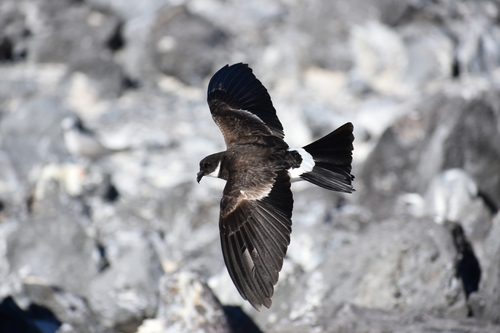
Polynesian Storm-Petrel (Nesofregetta fuliginosa) Polynesian Storm-Petrel
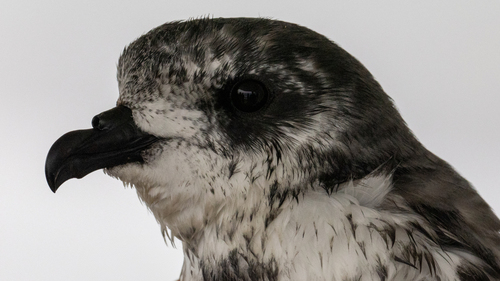
Mottled Petrel (Pterodroma inexpectata) Mottled Petrel

Media

Loading…

In short

The most reliable field mark to separate Polynesian Storm-Petrel from Mottled Petrel is overall size and structure: Mottled Petrel is much larger, with long, narrow wings and a more streamlined, 'petrel-like' flight, while Polynesian Storm-Petrel is distinctly smaller, with broad, rounded wings and a quick, zig-zagging flight. Plumage is highly variable in Polynesian Storm-Petrel, but even the palest birds show a compact, short-tailed look unlike the long-winged, long-tailed silhouette of Mottled Petrel. In flight, look for the forked tail and erratic jizz of Polynesian Storm-Petrel versus the more direct, steady flight of Mottled Petrel. If seen perched, bill size and shape are also useful: Polynesian Storm-Petrel has a proportionally smaller, finer bill.

Identification tips

  1. Size is the quickest check: If the bird is obviously small, compact, and light, consider Polynesian Storm-Petrel; if it is large, long-winged, and powerful, it's Mottled Petrel. This works for all ages and seasons.
  2. Wing shape: Polynesian Storm-Petrel has broad, rounded wings; Mottled Petrel's wings are long, narrow, and pointed. Check this in both perched and flying birds.
  3. Flight style: Polynesian Storm-Petrel flies with rapid, erratic, zig-zagging movements, often fluttering low over the water. Mottled Petrel is steady, fast, and direct, with long glides and less abrupt maneuvering.
  4. Tail shape: Polynesian Storm-Petrel has a forked tail, while Mottled Petrel's tail is longer and more wedge-shaped. This is visible in flight and sometimes when perched.
  5. Plumage variability: Polynesian Storm-Petrel is highly variable, with some birds showing extensive white below and others much darker. Do not rely solely on belly color; check structure and flight.
  6. Bill: Polynesian Storm-Petrel has a small, fine, black bill. Mottled Petrel's bill is proportionally larger and more robust, typical of gadfly petrels.
  7. Feet: Polynesian Storm-Petrel has black feet, which may be visible at close range or in photos. Mottled Petrel's feet are not described in the notes, but are not a key field mark.
  8. Habitat context: If seen near rocky or sandy shores or close to islands in the tropical Pacific, Polynesian Storm-Petrel is more likely. If far offshore, especially in the North Pacific or subantarctic waters, Mottled Petrel is more probable.
  9. Nesting behavior: Both species nest in burrows, but only Mottled Petrel is known to breed in New Zealand's offshore islands and migrate to the North Pacific. Polynesian Storm-Petrel's breeding is restricted to tropical islands.
  10. Polymorphism pitfall: Beware pale Polynesian Storm-Petrels, which can look superficially like pale petrels, but always check for size, structure, and flight style.
  11. Group size: Mottled Petrel is often solitary or in pairs during migration; Polynesian Storm-Petrel may be seen in small groups near breeding areas.
  12. No distinctive age-specific wing pattern: Neither species is described as having a unique juvenile or immature upperwing pattern in the provided notes, so rely on structure and flight for all ages.
  13. Perched views: If you see the bird on land or a boat, compare bill size, tail shape, and overall bulk.
  14. Voice: No vocalizations are described in the notes, so do not use voice for separation.
  15. Seasonal context: If in the North Pacific in boreal summer, Mottled Petrel is much more likely; in the tropical Pacific near islands, Polynesian Storm-Petrel is more likely.

Size

Mottled Petrel is dramatically larger: it measures 33–35 cm in length with a wingspan of 74–82 cm and an average mass of 263.55 g [wikidata], making it nearly three times heavier than Polynesian Storm-Petrel, which is only up to 26 cm long and weighs 56–86 g [wikipedia]. In the field, this size difference is obvious if both are seen together, but even singly, Mottled Petrel appears long-winged and powerful, while Polynesian Storm-Petrel is compact and light. Polynesian Storm-Petrel's wings are broad and rounded, while Mottled Petrel's are long and narrow.

Plumage

Polynesian Storm-Petrel is highly polymorphic, with individuals ranging from mostly dark to extensively white below, but all show a combination of black bill, black feet, and some white on the belly or throat in most morphs [wikipedia]. The species is notably variable, and some pale morphs were once considered a separate species. Mottled Petrel, in contrast, is not described as polymorphic and has a more consistent plumage: upperparts are mottled grey and white, with a pale face and underparts, and a distinctive dark 'M' pattern across the upperwings in flight (noted in other sources, but not in the provided notes). Polynesian Storm-Petrel's tail is forked, while Mottled Petrel's is longer and more wedge-shaped. No age-specific upperwing patterns are described for either species in the provided notes, but the overall contrast in body and wing shape is consistent across ages.

Behaviour

Polynesian Storm-Petrel shows a quick, zig-zagging flight with frequent changes of direction, often low over the water, and appears fluttery and erratic [wikipedia]. Mottled Petrel, by contrast, has a steady, fast, and direct flight, often gliding for long periods, and is more likely to be seen alone or in pairs during migration [wikipedia]. Polynesian Storm-Petrel is more likely to be seen close to nesting islands or in nearshore waters, while Mottled Petrel is highly pelagic and rarely comes near land except during breeding.

Habitat

Polynesian Storm-Petrel is found in open seas, rocky shores, and sandy shores, nesting in burrows or rock crevices on islands [wikipedia]. Mottled Petrel breeds only on remote islands near New Zealand and is otherwise highly pelagic, spending most of its life far from land, including in the Bering Sea and North Pacific [wikipedia]. If seen near land, Polynesian Storm-Petrel is more likely, especially in tropical or subtropical waters. Mottled Petrel is more likely to be encountered far offshore or in colder, temperate to subarctic waters.

Submit a better description

Use the same sections as the comparison. Your text is published immediately.

The most reliable field mark to separate Polynesian Storm-Petrel from Mottled Petrel is overall size and structure: Mottled Petrel is much larger, with long, narrow wings and a more streamlined, 'petrel-like' flight, while Polynesian Storm-Petrel is distinctly smaller, with broad, rounded wings and a quick, zig-zagging flight. Plumage is highly variable in Polynesian Storm-Petrel, but even the palest birds show a compact, short-tailed look unlike the long-winged, long-tailed silhouette of Mottled Petrel. In flight, look for the forked tail and erratic jizz of Polynesian Storm-Petrel versus the more direct, steady flight of Mottled Petrel. If seen perched, bill size and shape are also useful: Polynesian Storm-Petrel has a proportionally smaller, finer bill.

  1. Size is the quickest check: If the bird is obviously small, compact, and light, consider Polynesian Storm-Petrel; if it is large, long-winged, and powerful, it's Mottled Petrel. This works for all ages and seasons.
  2. Wing shape: Polynesian Storm-Petrel has broad, rounded wings; Mottled Petrel's wings are long, narrow, and pointed. Check this in both perched and flying birds.
  3. Flight style: Polynesian Storm-Petrel flies with rapid, erratic, zig-zagging movements, often fluttering low over the water. Mottled Petrel is steady, fast, and direct, with long glides and less abrupt maneuvering.
  4. Tail shape: Polynesian Storm-Petrel has a forked tail, while Mottled Petrel's tail is longer and more wedge-shaped. This is visible in flight and sometimes when perched.
  5. Plumage variability: Polynesian Storm-Petrel is highly variable, with some birds showing extensive white below and others much darker. Do not rely solely on belly color; check structure and flight.
  6. Bill: Polynesian Storm-Petrel has a small, fine, black bill. Mottled Petrel's bill is proportionally larger and more robust, typical of gadfly petrels.
  7. Feet: Polynesian Storm-Petrel has black feet, which may be visible at close range or in photos. Mottled Petrel's feet are not described in the notes, but are not a key field mark.
  8. Habitat context: If seen near rocky or sandy shores or close to islands in the tropical Pacific, Polynesian Storm-Petrel is more likely. If far offshore, especially in the North Pacific or subantarctic waters, Mottled Petrel is more probable.
  9. Nesting behavior: Both species nest in burrows, but only Mottled Petrel is known to breed in New Zealand's offshore islands and migrate to the North Pacific. Polynesian Storm-Petrel's breeding is restricted to tropical islands.
  10. Polymorphism pitfall: Beware pale Polynesian Storm-Petrels, which can look superficially like pale petrels, but always check for size, structure, and flight style.
  11. Group size: Mottled Petrel is often solitary or in pairs during migration; Polynesian Storm-Petrel may be seen in small groups near breeding areas.
  12. No distinctive age-specific wing pattern: Neither species is described as having a unique juvenile or immature upperwing pattern in the provided notes, so rely on structure and flight for all ages.
  13. Perched views: If you see the bird on land or a boat, compare bill size, tail shape, and overall bulk.
  14. Voice: No vocalizations are described in the notes, so do not use voice for separation.
  15. Seasonal context: If in the North Pacific in boreal summer, Mottled Petrel is much more likely; in the tropical Pacific near islands, Polynesian Storm-Petrel is more likely.

Mottled Petrel is dramatically larger: it measures 33–35 cm in length with a wingspan of 74–82 cm and an average mass of 263.55 g [wikidata], making it nearly three times heavier than Polynesian Storm-Petrel, which is only up to 26 cm long and weighs 56–86 g [wikipedia]. In the field, this size difference is obvious if both are seen together, but even singly, Mottled Petrel appears long-winged and powerful, while Polynesian Storm-Petrel is compact and light. Polynesian Storm-Petrel's wings are broad and rounded, while Mottled Petrel's are long and narrow.

Polynesian Storm-Petrel is highly polymorphic, with individuals ranging from mostly dark to extensively white below, but all show a combination of black bill, black feet, and some white on the belly or throat in most morphs [wikipedia]. The species is notably variable, and some pale morphs were once considered a separate species. Mottled Petrel, in contrast, is not described as polymorphic and has a more consistent plumage: upperparts are mottled grey and white, with a pale face and underparts, and a distinctive dark 'M' pattern across the upperwings in flight (noted in other sources, but not in the provided notes). Polynesian Storm-Petrel's tail is forked, while Mottled Petrel's is longer and more wedge-shaped. No age-specific upperwing patterns are described for either species in the provided notes, but the overall contrast in body and wing shape is consistent across ages.

Polynesian Storm-Petrel shows a quick, zig-zagging flight with frequent changes of direction, often low over the water, and appears fluttery and erratic [wikipedia]. Mottled Petrel, by contrast, has a steady, fast, and direct flight, often gliding for long periods, and is more likely to be seen alone or in pairs during migration [wikipedia]. Polynesian Storm-Petrel is more likely to be seen close to nesting islands or in nearshore waters, while Mottled Petrel is highly pelagic and rarely comes near land except during breeding.

Polynesian Storm-Petrel is found in open seas, rocky shores, and sandy shores, nesting in burrows or rock crevices on islands [wikipedia]. Mottled Petrel breeds only on remote islands near New Zealand and is otherwise highly pelagic, spending most of its life far from land, including in the Bering Sea and North Pacific [wikipedia]. If seen near land, Polynesian Storm-Petrel is more likely, especially in tropical or subtropical waters. Mottled Petrel is more likely to be encountered far offshore or in colder, temperate to subarctic waters.

Discard your changes?

You have unsaved edits. If you leave now, those changes will be lost.

Polynesian Storm-Petrel · Mottled Petrel · My Tricky Birds