

Motmot

Piping Cisticola vs Cloud Cisticola

Cisticola fulvicapilla versus Cisticola textrix

Play a quiz with Piping Cisticola and Cloud Cisticola
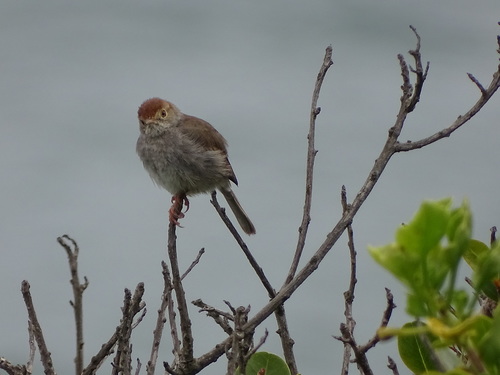
Piping Cisticola (Cisticola fulvicapilla) Piping Cisticola
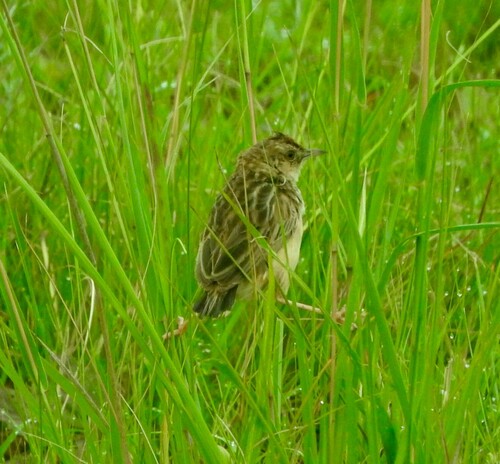
Cloud Cisticola (Cisticola textrix) Cloud Cisticola

Media

Loading…

In short

The most reliable field mark to separate Piping Cisticola from Cloud Cisticola is the presence of a reddish cap and plain back on Piping Cisticola, which is not shared by Cloud Cisticola. Piping Cisticola also tends to show buff underparts with a darker breast, and in its southern form, a distinctive greyish face and underparts. Both species are small, brownish cisticolas, but Piping Cisticola prefers light woodlands and shrublands, while Cloud Cisticola is found in open dry grasslands. Juvenile Piping Cisticolas are yellower below, which can help in age-specific identification. Structure and jizz are similar, but subtle differences in tail length and habitat preference can assist in the field.

Identification tips

  1. Reddish cap: Piping Cisticola shows a distinct reddish cap, visible in good light both perched and sometimes in flight. Cloud Cisticola lacks this feature.
  2. Plain back: Piping Cisticola's back is plain, not streaked or patterned, which can help rule out Cloud Cisticola if the latter shows any pattern (not described here, but absence of cap is key).
  3. Buff underparts with darker breast: On Piping Cisticola, look for buffy underparts that shade darker on the breast; Cloud Cisticola is not described as having this contrast.
  4. Southern form (greyish face and underparts): In southern South Africa, Piping Cisticola can show a greyish face and underparts with a greyish-brown back, a combination not matched by Cloud Cisticola.
  5. Juvenile color: Young Piping Cisticolas are yellower below, which may help if you see a particularly yellowish juvenile.
  6. Tail length: Piping Cisticola's tail is not as short as some cisticolas, but no direct comparison to Cloud Cisticola is given; tail shape is not a primary separator here.
  7. Bill and legs: Piping Cisticola has a short, straight brown bill and pinkish-brown legs; Cloud Cisticola is likely similar, so this is not a strong separator.
  8. Eye color: Piping Cisticola has a light brown eye, but this is subtle and not likely diagnostic in the field.
  9. Habitat: Use habitat as a supporting clue—Piping Cisticola in shrubland/woodland, Cloud Cisticola in open grassland.
  10. Sexes similar: Both sexes look alike in Piping Cisticola, so do not rely on sex-based differences.
  11. No strong wing pattern: Neither species is described as having a distinctive upperwing or flight pattern, so focus on head and underpart color.
  12. Vocalizations: Not described here; do not rely on song or call for separation with current information.
  13. Context: If in doubt, check for reddish cap and habitat context as your primary field marks.
  14. Seasonal plumage: No seasonal differences are described; plumage is consistent year-round for field purposes.
  15. Overlap: Where both species occur, be extra cautious and prioritize the reddish cap and underpart color for Piping Cisticola.

Size

Both species are small cisticolas, with Piping Cisticola described as 11 cm in length. There is no direct measurement for Cloud Cisticola in the provided notes, but both are similar in size and structure, so size alone is not a reliable separator.

Plumage

For all ages, Piping Cisticola is best recognized by its reddish cap and plain back, with buff underparts that are darker on the breast. Juveniles are yellower below, which may contrast with the less distinctly colored young Cloud Cisticolas (not described in detail). The southern form of Piping Cisticola is distinctive for its greyish face and underparts, and greyish-brown back, which is not matched by Cloud Cisticola. Cloud Cisticola lacks mention of a reddish cap or greyish plumage, so a plain brown appearance without the cap is expected. No age-specific upperwing or flight pattern marks are described for either species, so focus on head and underpart color.

Behaviour

No behavioral differences are described in the notes. Both species are likely to be active and vocal in their respective habitats, but behavior is not a reliable separator with the current information.

Habitat

Piping Cisticola is most often found in light woodlands and shrublands of the subtropics and temperate regions of southern Africa, while Cloud Cisticola prefers subtropical or tropical dry lowland grassland. If you find a cisticola in open, grassy areas, Cloud Cisticola is more likely; in shrubby or lightly wooded areas, Piping Cisticola is favored. Overlap is possible, especially at ecotones, so habitat should support but not solely determine the identification.

Submit a better description

Use the same sections as the comparison. Your text is published immediately.

The most reliable field mark to separate Piping Cisticola from Cloud Cisticola is the presence of a reddish cap and plain back on Piping Cisticola, which is not shared by Cloud Cisticola. Piping Cisticola also tends to show buff underparts with a darker breast, and in its southern form, a distinctive greyish face and underparts. Both species are small, brownish cisticolas, but Piping Cisticola prefers light woodlands and shrublands, while Cloud Cisticola is found in open dry grasslands. Juvenile Piping Cisticolas are yellower below, which can help in age-specific identification. Structure and jizz are similar, but subtle differences in tail length and habitat preference can assist in the field.

  1. Reddish cap: Piping Cisticola shows a distinct reddish cap, visible in good light both perched and sometimes in flight. Cloud Cisticola lacks this feature.
  2. Plain back: Piping Cisticola's back is plain, not streaked or patterned, which can help rule out Cloud Cisticola if the latter shows any pattern (not described here, but absence of cap is key).
  3. Buff underparts with darker breast: On Piping Cisticola, look for buffy underparts that shade darker on the breast; Cloud Cisticola is not described as having this contrast.
  4. Southern form (greyish face and underparts): In southern South Africa, Piping Cisticola can show a greyish face and underparts with a greyish-brown back, a combination not matched by Cloud Cisticola.
  5. Juvenile color: Young Piping Cisticolas are yellower below, which may help if you see a particularly yellowish juvenile.
  6. Tail length: Piping Cisticola's tail is not as short as some cisticolas, but no direct comparison to Cloud Cisticola is given; tail shape is not a primary separator here.
  7. Bill and legs: Piping Cisticola has a short, straight brown bill and pinkish-brown legs; Cloud Cisticola is likely similar, so this is not a strong separator.
  8. Eye color: Piping Cisticola has a light brown eye, but this is subtle and not likely diagnostic in the field.
  9. Habitat: Use habitat as a supporting clue—Piping Cisticola in shrubland/woodland, Cloud Cisticola in open grassland.
  10. Sexes similar: Both sexes look alike in Piping Cisticola, so do not rely on sex-based differences.
  11. No strong wing pattern: Neither species is described as having a distinctive upperwing or flight pattern, so focus on head and underpart color.
  12. Vocalizations: Not described here; do not rely on song or call for separation with current information.
  13. Context: If in doubt, check for reddish cap and habitat context as your primary field marks.
  14. Seasonal plumage: No seasonal differences are described; plumage is consistent year-round for field purposes.
  15. Overlap: Where both species occur, be extra cautious and prioritize the reddish cap and underpart color for Piping Cisticola.

Both species are small cisticolas, with Piping Cisticola described as 11 cm in length. There is no direct measurement for Cloud Cisticola in the provided notes, but both are similar in size and structure, so size alone is not a reliable separator.

For all ages, Piping Cisticola is best recognized by its reddish cap and plain back, with buff underparts that are darker on the breast. Juveniles are yellower below, which may contrast with the less distinctly colored young Cloud Cisticolas (not described in detail). The southern form of Piping Cisticola is distinctive for its greyish face and underparts, and greyish-brown back, which is not matched by Cloud Cisticola. Cloud Cisticola lacks mention of a reddish cap or greyish plumage, so a plain brown appearance without the cap is expected. No age-specific upperwing or flight pattern marks are described for either species, so focus on head and underpart color.

No behavioral differences are described in the notes. Both species are likely to be active and vocal in their respective habitats, but behavior is not a reliable separator with the current information.

Piping Cisticola is most often found in light woodlands and shrublands of the subtropics and temperate regions of southern Africa, while Cloud Cisticola prefers subtropical or tropical dry lowland grassland. If you find a cisticola in open, grassy areas, Cloud Cisticola is more likely; in shrubby or lightly wooded areas, Piping Cisticola is favored. Overlap is possible, especially at ecotones, so habitat should support but not solely determine the identification.

Discard your changes?

You have unsaved edits. If you leave now, those changes will be lost.

Piping Cisticola · Cloud Cisticola · My Tricky Birds