

Motmot

Pin-tailed Snipe vs Common Snipe

Gallinago stenura versus Gallinago gallinago

Play a quiz with Pin-tailed Snipe and Common Snipe
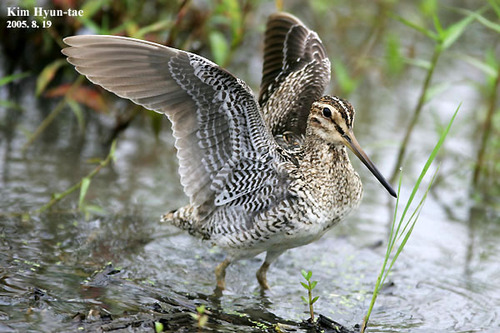
Pin-tailed Snipe (Gallinago stenura) Pin-tailed Snipe
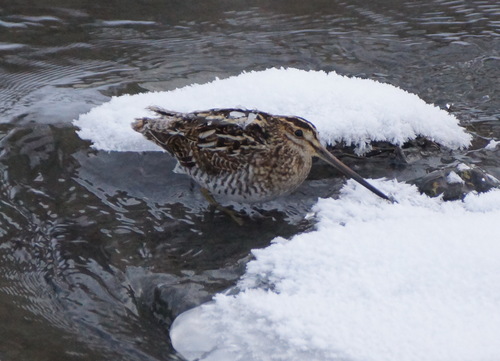
Common Snipe (Gallinago gallinago) Common Snipe

Media

Loading…

In short

The most reliable field mark to separate Pin-tailed Snipe from Common Snipe is the presence or absence of a white trailing edge on the wing in flight: Common Snipe shows a clear white trailing edge to the secondaries, while Pin-tailed Snipe lacks this mark. In flight, Pin-tailed Snipe also appears to have a shorter tail and a flatter, more direct flight path compared to the longer-tailed, more zigzagging Common Snipe. Both species are extremely similar in size and ground plumage, but subtle differences in wing shape, tail length, and flight behavior are key. Vocalizations and display sounds differ, but are not always easy to use in the field. Immature and adult birds are best separated by wing and tail pattern in flight.

Identification tips

  1. White trailing edge to wing (flight, all ages): Common Snipe shows a clear white trailing edge to the secondaries in flight; Pin-tailed Snipe lacks this, so the wing appears more uniformly dark. This is the single most reliable field mark when the bird is airborne.
  2. Tail length and shape (flight/perched): Common Snipe has a noticeably longer tail, often extending beyond the wing tips when perched; Pin-tailed Snipe's tail is shorter and may appear more squared-off. In males, Pin-tailed Snipe's pin-like outer tail feathers can sometimes be seen, especially during display.
  3. Flight pattern when flushed: Common Snipe typically flushes with a zigzag, erratic flight and gains height quickly; Pin-tailed Snipe tends to fly in a flatter, more direct line, often without the same zigzagging.
  4. Bill length: Common Snipe has a slightly longer bill, but this is subtle and not usually diagnostic in the field.
  5. Wing shape: Pin-tailed Snipe has less pointed wings compared to the more pointed wings of Common Snipe, but this is subtle and best seen in direct comparison.
  6. Display sounds: If heard, Pin-tailed Snipe males produce a loud, repetitive 'tcheka' song with fizzing and whistling, while Common Snipe males create a 'drumming' or 'winnowing' sound during display flights. These are most useful during the breeding season.
  7. Flush call: Common Snipe gives a sharp 'scape' call when flushed; Pin-tailed Snipe gives a weaker 'squik.' Calls can be hard to hear in windy or noisy conditions.
  8. Back stripes: Both species have pale stripes down the back, so this is not a separator.
  9. Facial pattern: Both show a dark eye-stripe with pale lines above and below; not useful for separation.
  10. Underparts: Both have a streaked buff breast and white belly; not diagnostic.
  11. Leg color: Both have short greenish-grey legs; not a separator.
  12. Sex and age differences: Sexes are similar in both species; immatures differ only in minor plumage details, so rely on flight marks for young birds.
  13. Habitat: Both use similar wetland habitats; not a useful separator.
  14. Behavior on the ground: Both are shy, well-camouflaged, and flush only when closely approached; behavior on the ground is not diagnostic.
  15. Season: Display sounds and group display behavior (Pin-tailed Snipe) are most likely in the breeding season; otherwise, rely on visual flight marks.

Size

Both species are nearly identical in size, with Pin-tailed Snipe averaging 116.5 g and Common Snipe 119.5 g in body mass. Both are 25–27 cm in length. Bill length is slightly longer in Common Snipe, but this is subtle and not easily judged in the field. Overall, size is not a useful separator between these two.

Plumage

The most diagnostic plumage difference is seen in the wing pattern during flight: Common Snipe of all ages shows a distinct white trailing edge to the secondaries, visible as a bright line along the rear edge of the wing; Pin-tailed Snipe lacks this white trailing edge, so the wing appears more uniformly dark. Both species have mottled brown upperparts with pale stripes down the back, a dark eye-stripe with pale supercilium and subocular lines, and a streaked buff breast with a white belly. Tail length and shape differ: Common Snipe has a longer tail, while Pin-tailed Snipe's tail is shorter and has unique pin-like outer feathers (especially in males, visible during display or if seen well from behind). Immature birds are very similar in ground plumage, with only minor differences, so flight marks are critical.

Behaviour

When flushed, Common Snipe typically takes off with a sharp 'scape' call and flies in a zigzag pattern, often gaining height rapidly. Pin-tailed Snipe tends to flush with a weaker 'squik' call and flies in a flatter, more direct path, often not zigzagging as much as Common Snipe. During display, male Pin-tailed Snipes often gather in groups and produce a variety of fizzing, buzzing, and whistling sounds with their pin-like tail feathers, while Common Snipe males perform solo 'winnowing' displays with a drumming sound. Both species are shy and well-camouflaged, usually flushing only when closely approached.

Habitat

Both species occupy similar wetland habitats: marshes, bogs, wet meadows, and tundra. There is significant overlap in habitat use, and context is not a reliable separator. Both forage in soft mud for invertebrates and plant material.

Voice

Common Snipe gives a sharp 'scape, scape' call when flushed and produces a 'drumming' or 'winnowing' sound during display flights, created by vibrating two tail feathers. Pin-tailed Snipe's normal call is a weaker 'squik'; displaying males produce a loud, repetitive 'tcheka' song with a crescendo of fizzing, buzzing, and whistling noises, the latter due to their unique pin-like outer tail feathers. These display sounds are most useful during the breeding season or when birds are displaying.

Submit a better description

Use the same sections as the comparison. Your text is published immediately.

The most reliable field mark to separate Pin-tailed Snipe from Common Snipe is the presence or absence of a white trailing edge on the wing in flight: Common Snipe shows a clear white trailing edge to the secondaries, while Pin-tailed Snipe lacks this mark. In flight, Pin-tailed Snipe also appears to have a shorter tail and a flatter, more direct flight path compared to the longer-tailed, more zigzagging Common Snipe. Both species are extremely similar in size and ground plumage, but subtle differences in wing shape, tail length, and flight behavior are key. Vocalizations and display sounds differ, but are not always easy to use in the field. Immature and adult birds are best separated by wing and tail pattern in flight.

  1. White trailing edge to wing (flight, all ages): Common Snipe shows a clear white trailing edge to the secondaries in flight; Pin-tailed Snipe lacks this, so the wing appears more uniformly dark. This is the single most reliable field mark when the bird is airborne.
  2. Tail length and shape (flight/perched): Common Snipe has a noticeably longer tail, often extending beyond the wing tips when perched; Pin-tailed Snipe's tail is shorter and may appear more squared-off. In males, Pin-tailed Snipe's pin-like outer tail feathers can sometimes be seen, especially during display.
  3. Flight pattern when flushed: Common Snipe typically flushes with a zigzag, erratic flight and gains height quickly; Pin-tailed Snipe tends to fly in a flatter, more direct line, often without the same zigzagging.
  4. Bill length: Common Snipe has a slightly longer bill, but this is subtle and not usually diagnostic in the field.
  5. Wing shape: Pin-tailed Snipe has less pointed wings compared to the more pointed wings of Common Snipe, but this is subtle and best seen in direct comparison.
  6. Display sounds: If heard, Pin-tailed Snipe males produce a loud, repetitive 'tcheka' song with fizzing and whistling, while Common Snipe males create a 'drumming' or 'winnowing' sound during display flights. These are most useful during the breeding season.
  7. Flush call: Common Snipe gives a sharp 'scape' call when flushed; Pin-tailed Snipe gives a weaker 'squik.' Calls can be hard to hear in windy or noisy conditions.
  8. Back stripes: Both species have pale stripes down the back, so this is not a separator.
  9. Facial pattern: Both show a dark eye-stripe with pale lines above and below; not useful for separation.
  10. Underparts: Both have a streaked buff breast and white belly; not diagnostic.
  11. Leg color: Both have short greenish-grey legs; not a separator.
  12. Sex and age differences: Sexes are similar in both species; immatures differ only in minor plumage details, so rely on flight marks for young birds.
  13. Habitat: Both use similar wetland habitats; not a useful separator.
  14. Behavior on the ground: Both are shy, well-camouflaged, and flush only when closely approached; behavior on the ground is not diagnostic.
  15. Season: Display sounds and group display behavior (Pin-tailed Snipe) are most likely in the breeding season; otherwise, rely on visual flight marks.

Both species are nearly identical in size, with Pin-tailed Snipe averaging 116.5 g and Common Snipe 119.5 g in body mass. Both are 25–27 cm in length. Bill length is slightly longer in Common Snipe, but this is subtle and not easily judged in the field. Overall, size is not a useful separator between these two.

The most diagnostic plumage difference is seen in the wing pattern during flight: Common Snipe of all ages shows a distinct white trailing edge to the secondaries, visible as a bright line along the rear edge of the wing; Pin-tailed Snipe lacks this white trailing edge, so the wing appears more uniformly dark. Both species have mottled brown upperparts with pale stripes down the back, a dark eye-stripe with pale supercilium and subocular lines, and a streaked buff breast with a white belly. Tail length and shape differ: Common Snipe has a longer tail, while Pin-tailed Snipe's tail is shorter and has unique pin-like outer feathers (especially in males, visible during display or if seen well from behind). Immature birds are very similar in ground plumage, with only minor differences, so flight marks are critical.

When flushed, Common Snipe typically takes off with a sharp 'scape' call and flies in a zigzag pattern, often gaining height rapidly. Pin-tailed Snipe tends to flush with a weaker 'squik' call and flies in a flatter, more direct path, often not zigzagging as much as Common Snipe. During display, male Pin-tailed Snipes often gather in groups and produce a variety of fizzing, buzzing, and whistling sounds with their pin-like tail feathers, while Common Snipe males perform solo 'winnowing' displays with a drumming sound. Both species are shy and well-camouflaged, usually flushing only when closely approached.

Both species occupy similar wetland habitats: marshes, bogs, wet meadows, and tundra. There is significant overlap in habitat use, and context is not a reliable separator. Both forage in soft mud for invertebrates and plant material.

Common Snipe gives a sharp 'scape, scape' call when flushed and produces a 'drumming' or 'winnowing' sound during display flights, created by vibrating two tail feathers. Pin-tailed Snipe's normal call is a weaker 'squik'; displaying males produce a loud, repetitive 'tcheka' song with a crescendo of fizzing, buzzing, and whistling noises, the latter due to their unique pin-like outer tail feathers. These display sounds are most useful during the breeding season or when birds are displaying.

Discard your changes?

You have unsaved edits. If you leave now, those changes will be lost.

Pin-tailed Snipe · Common Snipe · My Tricky Birds