
Motmot

Pied Cuckoo vs Dideric Cuckoo

Clamator jacobinus versus Chrysococcyx caprius

Play a quiz with Pied Cuckoo and Dideric Cuckoo
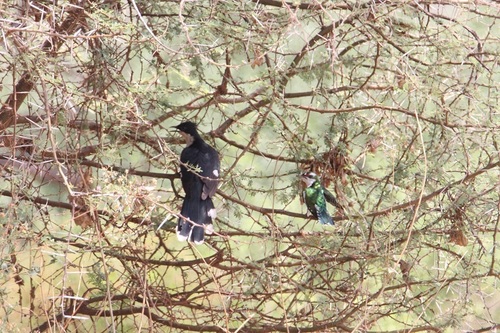
Pied Cuckoo (Clamator jacobinus) Pied Cuckoo
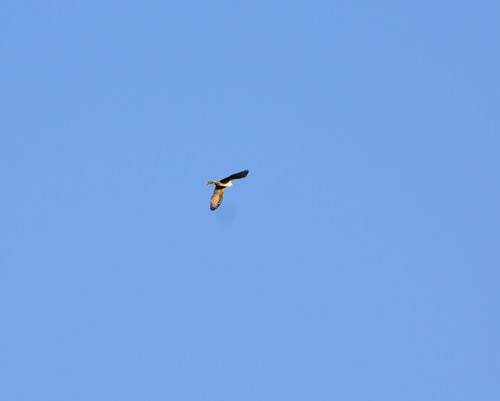
Dideric Cuckoo (Chrysococcyx caprius) Dideric Cuckoo

Media

Loading…

In short

The most reliable field mark is the bold black-and-white contrast and prominent white wing patch of the Pied Cuckoo, which is visible even in flight and on perched birds of all ages. In contrast, the Dideric Cuckoo is smaller, with a glossy green and copper sheen above, white underparts, and multiple small white spots on the wing and tail rather than a single large wing patch. Juvenile Dideric Cuckoos are browner with a streaky throat and a white wing-bar, which can cause confusion, but they lack the Pied Cuckoo's strong crest and striking black-and-white pattern. Structure and size also help: Pied Cuckoo is larger and more elongated, while Dideric is compact. Voice and habitat can help in context, but plumage and structure are the best field clues.

Identification tips

  1. White wing patch vs. white spots: Pied Cuckoo of all ages shows a large, bold white patch on otherwise black wings, visible both perched and in flight. Dideric Cuckoo has several small white spots on the inner vanes of the remiges and a narrow white wing-bar in juveniles, but never a large patch.
  2. Crested vs. smooth crown: Pied Cuckoo always shows a noticeable crest, giving it a crested, elongated look. Dideric Cuckoo lacks a crest and has a smooth crown.
  3. Overall color contrast: Pied Cuckoo is sharply black above and white below (pied phase), or all black except for the white wing patch (black phase). Dideric Cuckoo is glossy green with coppery sheen above and white below, sometimes with brownish or coppery flanks in females and juveniles.
  4. Juvenile confusion: Juvenile Dideric Cuckoo is browner above, with a streaky throat, red bill, and a white wing-bar, but still lacks the Pied Cuckoo's bold black-and-white pattern and crest. Juvenile Pied Cuckoo resembles adults in pattern.
  5. Tail pattern: Dideric Cuckoo's outer tail feathers are tipped and spotted white, while Pied Cuckoo's tail is more uniformly dark with less obvious white.
  6. Size and shape: Pied Cuckoo is larger, longer-winged, and more elongated in jizz. Dideric Cuckoo is smaller and more compact.
  7. Bill color: Juvenile Dideric Cuckoo has a red bill, a useful mark if seen well. Pied Cuckoo's bill is dark.
  8. Eye-stripe: Dideric Cuckoo has a broken white eye-stripe and a short green malar stripe; Pied Cuckoo lacks these facial marks.
  9. Flight style: Pied Cuckoo may show slow, pigeon-like clapping flight in display; Dideric Cuckoo flies more directly and is less likely to display.
  10. Habitat context: In Asia, only Pied Cuckoo occurs. In Africa, both may occur, but Dideric Cuckoo is more likely in open woodland and savanna, while Pied Cuckoo may be found in more varied habitats.
  11. Vocalizations: Pied Cuckoo gives a whistled 'piu-piu' series; Dideric Cuckoo gives a repetitive 'deed-deed-deed-deed-er-ick' call. Listen for these if the bird is vocal.
  12. Sexual/seasonal variation: Female and juvenile Dideric Cuckoos show more copper and brown below, but always lack the strong black-and-white contrast and crest of Pied Cuckoo.
  13. Perched posture: Pied Cuckoo often perches upright and prominent, showing off its crest and long tail. Dideric Cuckoo is more likely to be seen moving quietly or perched less conspicuously.
  14. Pitfalls: Beware of juvenile Dideric Cuckoo's white wing-bar and brownish underparts, which can suggest a less contrasting cuckoo, but the lack of a crest and overall green/copper tones are distinctive.
  15. Host associations: If seen being fed by babblers (especially Turdoides), suspect Pied Cuckoo; if with weavers or bishops, suspect Dideric Cuckoo.

Size

The Pied Cuckoo is noticeably larger and slimmer than the Dideric Cuckoo. While the Dideric Cuckoo averages about 33 g in mass and is 18–20 cm in length [wikidata][wikipedia], the Pied Cuckoo is medium-sized for a cuckoo and appears longer-winged and more elongated in silhouette. The Dideric Cuckoo is compact and smallish, which is especially apparent when both species are seen in the same region. The Pied Cuckoo's longer wings and tail give it a more stretched appearance, especially in flight.

Plumage

Juvenile Dideric Cuckoos are brownish above with a copper tinge, a red bill, streaked throat, and a white wing-bar, plus brown blotches on the flanks. They lack the bold black-and-white contrast of any age Pied Cuckoo. Adult Dideric Cuckoos are glossy green above with coppery areas, white underparts, a broken white eye-stripe, and several small white spots on the inner vanes of the wing feathers; the outer tail feathers are tipped and spotted white. Female Dideric Cuckoos show more copper above and coppery barring on the flanks, with underparts sometimes washed brownish. In contrast, Pied Cuckoo of all ages and sexes is black above and white below, with a prominent white wing patch on otherwise black wings, and a distinctive crest. African Pied Cuckoos may show a black phase (all black except white wing patch) or a pied phase (white below), but always with the bold wing patch. The Dideric Cuckoo's white wing-bar is much narrower and less striking than the Pied Cuckoo's large white wing patch. The Pied Cuckoo's crest is always present; Dideric Cuckoo lacks a crest.

Behaviour

Pied Cuckoos are often conspicuous, calling from prominent perches and engaging in slow, pigeon-like clapping flight during the breeding season. They may chase each other in display. Dideric Cuckoos are more solitary and less showy, typically moving quietly through open woodland and savanna, and are less likely to be seen in groups or performing display flights. Both are brood parasites, but the Pied Cuckoo is more likely to be seen interacting with babblers, while Dideric Cuckoo targets weavers and bishops.

Habitat

Pied Cuckoo is found in Africa and Asia, often as a partial migrant, and in India is associated with the monsoon. It frequents open country, scrub, and areas with scattered trees. Dideric Cuckoo is a common resident breeder in Sub-Saharan Africa and the southern Arabian Peninsula, favoring open woodland, savanna, and riverside bushes. Both species may overlap in Africa, but Dideric Cuckoo is more strictly tied to African open habitats, while Pied Cuckoo has a broader range including Asia.

Voice

Pied Cuckoo gives a ringing series of whistling 'piu-piu' notes, which are rapid and slightly mellower in the nominate form. The Dideric Cuckoo is very vocal, with a persistent, loud 'deed-deed-deed-deed-er-ick' call—usually four clear, similar notes followed by a twitter. The Dideric's call is more repetitive and metallic, while the Pied Cuckoo's is more whistled and less mechanical.

Submit a better description

Use the same sections as the comparison. Your text is published immediately.

The most reliable field mark is the bold black-and-white contrast and prominent white wing patch of the Pied Cuckoo, which is visible even in flight and on perched birds of all ages. In contrast, the Dideric Cuckoo is smaller, with a glossy green and copper sheen above, white underparts, and multiple small white spots on the wing and tail rather than a single large wing patch. Juvenile Dideric Cuckoos are browner with a streaky throat and a white wing-bar, which can cause confusion, but they lack the Pied Cuckoo's strong crest and striking black-and-white pattern. Structure and size also help: Pied Cuckoo is larger and more elongated, while Dideric is compact. Voice and habitat can help in context, but plumage and structure are the best field clues.

  1. White wing patch vs. white spots: Pied Cuckoo of all ages shows a large, bold white patch on otherwise black wings, visible both perched and in flight. Dideric Cuckoo has several small white spots on the inner vanes of the remiges and a narrow white wing-bar in juveniles, but never a large patch.
  2. Crested vs. smooth crown: Pied Cuckoo always shows a noticeable crest, giving it a crested, elongated look. Dideric Cuckoo lacks a crest and has a smooth crown.
  3. Overall color contrast: Pied Cuckoo is sharply black above and white below (pied phase), or all black except for the white wing patch (black phase). Dideric Cuckoo is glossy green with coppery sheen above and white below, sometimes with brownish or coppery flanks in females and juveniles.
  4. Juvenile confusion: Juvenile Dideric Cuckoo is browner above, with a streaky throat, red bill, and a white wing-bar, but still lacks the Pied Cuckoo's bold black-and-white pattern and crest. Juvenile Pied Cuckoo resembles adults in pattern.
  5. Tail pattern: Dideric Cuckoo's outer tail feathers are tipped and spotted white, while Pied Cuckoo's tail is more uniformly dark with less obvious white.
  6. Size and shape: Pied Cuckoo is larger, longer-winged, and more elongated in jizz. Dideric Cuckoo is smaller and more compact.
  7. Bill color: Juvenile Dideric Cuckoo has a red bill, a useful mark if seen well. Pied Cuckoo's bill is dark.
  8. Eye-stripe: Dideric Cuckoo has a broken white eye-stripe and a short green malar stripe; Pied Cuckoo lacks these facial marks.
  9. Flight style: Pied Cuckoo may show slow, pigeon-like clapping flight in display; Dideric Cuckoo flies more directly and is less likely to display.
  10. Habitat context: In Asia, only Pied Cuckoo occurs. In Africa, both may occur, but Dideric Cuckoo is more likely in open woodland and savanna, while Pied Cuckoo may be found in more varied habitats.
  11. Vocalizations: Pied Cuckoo gives a whistled 'piu-piu' series; Dideric Cuckoo gives a repetitive 'deed-deed-deed-deed-er-ick' call. Listen for these if the bird is vocal.
  12. Sexual/seasonal variation: Female and juvenile Dideric Cuckoos show more copper and brown below, but always lack the strong black-and-white contrast and crest of Pied Cuckoo.
  13. Perched posture: Pied Cuckoo often perches upright and prominent, showing off its crest and long tail. Dideric Cuckoo is more likely to be seen moving quietly or perched less conspicuously.
  14. Pitfalls: Beware of juvenile Dideric Cuckoo's white wing-bar and brownish underparts, which can suggest a less contrasting cuckoo, but the lack of a crest and overall green/copper tones are distinctive.
  15. Host associations: If seen being fed by babblers (especially Turdoides), suspect Pied Cuckoo; if with weavers or bishops, suspect Dideric Cuckoo.

The Pied Cuckoo is noticeably larger and slimmer than the Dideric Cuckoo. While the Dideric Cuckoo averages about 33 g in mass and is 18–20 cm in length [wikidata][wikipedia], the Pied Cuckoo is medium-sized for a cuckoo and appears longer-winged and more elongated in silhouette. The Dideric Cuckoo is compact and smallish, which is especially apparent when both species are seen in the same region. The Pied Cuckoo's longer wings and tail give it a more stretched appearance, especially in flight.

Juvenile Dideric Cuckoos are brownish above with a copper tinge, a red bill, streaked throat, and a white wing-bar, plus brown blotches on the flanks. They lack the bold black-and-white contrast of any age Pied Cuckoo. Adult Dideric Cuckoos are glossy green above with coppery areas, white underparts, a broken white eye-stripe, and several small white spots on the inner vanes of the wing feathers; the outer tail feathers are tipped and spotted white. Female Dideric Cuckoos show more copper above and coppery barring on the flanks, with underparts sometimes washed brownish. In contrast, Pied Cuckoo of all ages and sexes is black above and white below, with a prominent white wing patch on otherwise black wings, and a distinctive crest. African Pied Cuckoos may show a black phase (all black except white wing patch) or a pied phase (white below), but always with the bold wing patch. The Dideric Cuckoo's white wing-bar is much narrower and less striking than the Pied Cuckoo's large white wing patch. The Pied Cuckoo's crest is always present; Dideric Cuckoo lacks a crest.

Pied Cuckoos are often conspicuous, calling from prominent perches and engaging in slow, pigeon-like clapping flight during the breeding season. They may chase each other in display. Dideric Cuckoos are more solitary and less showy, typically moving quietly through open woodland and savanna, and are less likely to be seen in groups or performing display flights. Both are brood parasites, but the Pied Cuckoo is more likely to be seen interacting with babblers, while Dideric Cuckoo targets weavers and bishops.

Pied Cuckoo is found in Africa and Asia, often as a partial migrant, and in India is associated with the monsoon. It frequents open country, scrub, and areas with scattered trees. Dideric Cuckoo is a common resident breeder in Sub-Saharan Africa and the southern Arabian Peninsula, favoring open woodland, savanna, and riverside bushes. Both species may overlap in Africa, but Dideric Cuckoo is more strictly tied to African open habitats, while Pied Cuckoo has a broader range including Asia.

Pied Cuckoo gives a ringing series of whistling 'piu-piu' notes, which are rapid and slightly mellower in the nominate form. The Dideric Cuckoo is very vocal, with a persistent, loud 'deed-deed-deed-deed-er-ick' call—usually four clear, similar notes followed by a twitter. The Dideric's call is more repetitive and metallic, while the Pied Cuckoo's is more whistled and less mechanical.

Discard your changes?

You have unsaved edits. If you leave now, those changes will be lost.

Pied Cuckoo · Dideric Cuckoo · My Tricky Birds