

Motmot

Pallid Swift vs White-rumped Swift

Apus pallidus versus Apus caffer

Play a quiz with Pallid Swift and White-rumped Swift
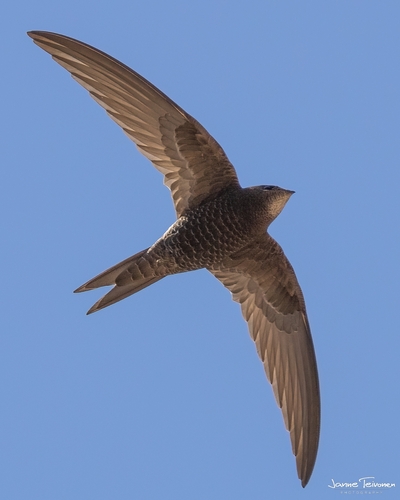
Pallid Swift (Apus pallidus) Pallid Swift
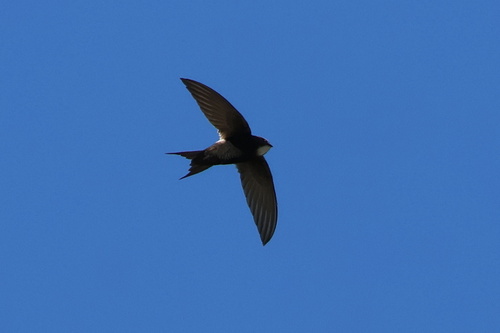
White-rumped Swift (Apus caffer) White-rumped Swift

Media

Loading…

In short

The most reliable way to separate Pallid Swift from White-rumped Swift is by looking for the distinctive white rump patch: White-rumped Swift always shows a narrow, crisp white band across the rump in all ages, while Pallid Swift never does. Both species have a pale throat patch, but Pallid Swift is chunkier, browner, and shows a more scaly belly and contrasting paler flight feathers and rump, whereas White-rumped Swift is slimmer, darker, and has a more deeply forked tail. Size is also a clue: Pallid Swift is noticeably heavier and longer-winged. In flight, focus on the rump and overall contrast to avoid confusion.

Identification tips

  1. White rump patch (all ages): White-rumped Swift always shows a narrow, crisp white band across the rump, visible in flight and often even at a distance. Pallid Swift never shows a white rump—if you see this mark, it's White-rumped Swift.
  2. Throat patch: Both species have a pale throat, but Pallid Swift's is larger and more obvious, often visible from a distance. White-rumped Swift's throat patch is smaller and less conspicuous.
  3. Underpart contrast: Pallid Swift shows paler, browner underparts with a scaly or mottled appearance, especially on the belly. White-rumped Swift is darker and more uniform below, lacking the scaly look.
  4. Flight feather contrast: Pallid Swift has slightly paler flight feathers and rump, giving a more contrasting appearance in good light. White-rumped Swift is darker overall, with less contrast except for the white rump.
  5. Tail shape: Both have forked tails, but White-rumped Swift's tail is more deeply forked, which may be visible in good views or photos. Pallid Swift's tail is shorter and less obviously forked.
  6. Body structure: Pallid Swift is chunkier and heavier-bodied, with broader wings and a more robust appearance. White-rumped Swift is slimmer, lighter, and more streamlined.
  7. Size: Pallid Swift is noticeably larger and heavier (41.3g vs 22.1g; 16–17 cm vs 14–15.5 cm). In mixed flocks or with experience, the size difference can be apparent.
  8. Overall color tone: Pallid Swift is browner, especially on the underparts and flight feathers, while White-rumped Swift is darker and more sooty overall.
  9. Flight style: White-rumped Swift may appear more agile and rapid due to its slimmer build, while Pallid Swift is steadier and heavier on the wing. This is subtle and best used with other marks.
  10. No white rump = not White-rumped Swift: If the rump is uniformly dark or only slightly paler, rule out White-rumped Swift.
  11. No age-specific wing pattern marks: Neither species shows distinctive juvenile or immature upperwing triangles, W-shapes, or panels, so focus on rump and underpart contrast for all ages.
  12. Voice is not diagnostic: Both have loud, dry swift screams; do not rely on call for separation.
  13. Habitat overlap: Both species can occur in the same aerial habitats; do not use context alone for identification.
  14. Pitfall—confusing with House Martin: White-rumped Swift's white rump may cause confusion with House Martin, but swifts have longer, more swept-back wings and a different flight style.
  15. Pitfall—bad light: In poor light, the white rump may be hard to see; look for structural and underpart clues if rump color is ambiguous.

Size

Pallid Swift is significantly larger and heavier, with a body mass of about 41.3g compared to the White-rumped Swift's 22.1g. In length, Pallid Swift measures 16–17 cm, while White-rumped Swift is smaller at 14–15.5 cm. This size difference is often visible in direct comparison or with experience, with Pallid Swift appearing chunkier and more robust, and White-rumped Swift slimmer and more agile.

Plumage

No age-specific wing or upperwing pattern marks are noted for either species, so focus on rump and underpart contrast. White-rumped Swift of all ages shows a narrow, clean white rump band that stands out in flight and is diagnostic. Pallid Swift never shows a white rump; instead, it is overall dark with a large white throat patch and a slightly paler rump and underparts, giving a more contrasting and 'scaly' look below. Both have pale throat patches, but Pallid Swift's is larger and more obvious at a distance. Pallid Swift's flight feathers and underparts are browner and paler, adding to the contrast, while White-rumped Swift is darker overall with a more uniform tone except for the white rump and throat.

Behaviour

Both species are highly aerial, rarely landing except to cling to vertical surfaces. White-rumped Swift is described as slimmer and more agile, which may translate into a slightly more buoyant or rapid flight style. Pallid Swift is chunkier and may appear steadier or heavier on the wing. Both drink and feed on the wing and are rarely seen perched.

Habitat

No diagnostic habitat differences are noted in the sources. Both species occur in similar aerial habitats and may overlap in range, especially in southern Europe and North Africa. White-rumped Swift is noted for nest parasitism of swallows and little swifts, but this is not a reliable field separation.

Voice

Both species have loud, dry screams typical of swifts. Pallid Swift's call is described as a loud, dry scream, possibly more disyllabic than its relatives, but no specific vocal differences are detailed for White-rumped Swift. Voice is not a reliable separator with the available information.

Submit a better description

Use the same sections as the comparison. Your text is published immediately.

The most reliable way to separate Pallid Swift from White-rumped Swift is by looking for the distinctive white rump patch: White-rumped Swift always shows a narrow, crisp white band across the rump in all ages, while Pallid Swift never does. Both species have a pale throat patch, but Pallid Swift is chunkier, browner, and shows a more scaly belly and contrasting paler flight feathers and rump, whereas White-rumped Swift is slimmer, darker, and has a more deeply forked tail. Size is also a clue: Pallid Swift is noticeably heavier and longer-winged. In flight, focus on the rump and overall contrast to avoid confusion.

  1. White rump patch (all ages): White-rumped Swift always shows a narrow, crisp white band across the rump, visible in flight and often even at a distance. Pallid Swift never shows a white rump—if you see this mark, it's White-rumped Swift.
  2. Throat patch: Both species have a pale throat, but Pallid Swift's is larger and more obvious, often visible from a distance. White-rumped Swift's throat patch is smaller and less conspicuous.
  3. Underpart contrast: Pallid Swift shows paler, browner underparts with a scaly or mottled appearance, especially on the belly. White-rumped Swift is darker and more uniform below, lacking the scaly look.
  4. Flight feather contrast: Pallid Swift has slightly paler flight feathers and rump, giving a more contrasting appearance in good light. White-rumped Swift is darker overall, with less contrast except for the white rump.
  5. Tail shape: Both have forked tails, but White-rumped Swift's tail is more deeply forked, which may be visible in good views or photos. Pallid Swift's tail is shorter and less obviously forked.
  6. Body structure: Pallid Swift is chunkier and heavier-bodied, with broader wings and a more robust appearance. White-rumped Swift is slimmer, lighter, and more streamlined.
  7. Size: Pallid Swift is noticeably larger and heavier (41.3g vs 22.1g; 16–17 cm vs 14–15.5 cm). In mixed flocks or with experience, the size difference can be apparent.
  8. Overall color tone: Pallid Swift is browner, especially on the underparts and flight feathers, while White-rumped Swift is darker and more sooty overall.
  9. Flight style: White-rumped Swift may appear more agile and rapid due to its slimmer build, while Pallid Swift is steadier and heavier on the wing. This is subtle and best used with other marks.
  10. No white rump = not White-rumped Swift: If the rump is uniformly dark or only slightly paler, rule out White-rumped Swift.
  11. No age-specific wing pattern marks: Neither species shows distinctive juvenile or immature upperwing triangles, W-shapes, or panels, so focus on rump and underpart contrast for all ages.
  12. Voice is not diagnostic: Both have loud, dry swift screams; do not rely on call for separation.
  13. Habitat overlap: Both species can occur in the same aerial habitats; do not use context alone for identification.
  14. Pitfall—confusing with House Martin: White-rumped Swift's white rump may cause confusion with House Martin, but swifts have longer, more swept-back wings and a different flight style.
  15. Pitfall—bad light: In poor light, the white rump may be hard to see; look for structural and underpart clues if rump color is ambiguous.

Pallid Swift is significantly larger and heavier, with a body mass of about 41.3g compared to the White-rumped Swift's 22.1g. In length, Pallid Swift measures 16–17 cm, while White-rumped Swift is smaller at 14–15.5 cm. This size difference is often visible in direct comparison or with experience, with Pallid Swift appearing chunkier and more robust, and White-rumped Swift slimmer and more agile.

No age-specific wing or upperwing pattern marks are noted for either species, so focus on rump and underpart contrast. White-rumped Swift of all ages shows a narrow, clean white rump band that stands out in flight and is diagnostic. Pallid Swift never shows a white rump; instead, it is overall dark with a large white throat patch and a slightly paler rump and underparts, giving a more contrasting and 'scaly' look below. Both have pale throat patches, but Pallid Swift's is larger and more obvious at a distance. Pallid Swift's flight feathers and underparts are browner and paler, adding to the contrast, while White-rumped Swift is darker overall with a more uniform tone except for the white rump and throat.

Both species are highly aerial, rarely landing except to cling to vertical surfaces. White-rumped Swift is described as slimmer and more agile, which may translate into a slightly more buoyant or rapid flight style. Pallid Swift is chunkier and may appear steadier or heavier on the wing. Both drink and feed on the wing and are rarely seen perched.

No diagnostic habitat differences are noted in the sources. Both species occur in similar aerial habitats and may overlap in range, especially in southern Europe and North Africa. White-rumped Swift is noted for nest parasitism of swallows and little swifts, but this is not a reliable field separation.

Both species have loud, dry screams typical of swifts. Pallid Swift's call is described as a loud, dry scream, possibly more disyllabic than its relatives, but no specific vocal differences are detailed for White-rumped Swift. Voice is not a reliable separator with the available information.

Discard your changes?

You have unsaved edits. If you leave now, those changes will be lost.

Pallid Swift · White-rumped Swift · My Tricky Birds