
Motmot

Pallas's Warbler vs Dusky Warbler

Phylloscopus proregulus versus Phylloscopus fuscatus

Play a quiz with Pallas's Warbler and Dusky Warbler
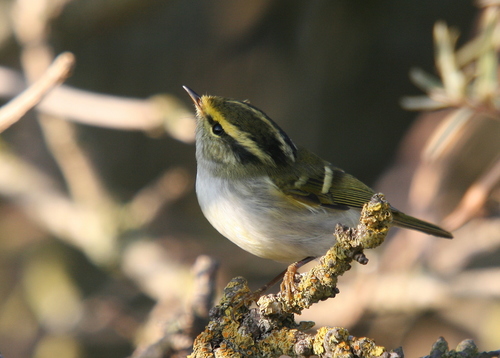
Pallas's Warbler (Phylloscopus proregulus) Pallas's Warbler
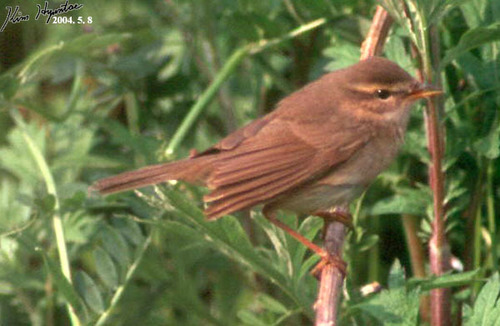
Dusky Warbler (Phylloscopus fuscatus) Dusky Warbler

Media

Loading…

In short

The most reliable way to separate Pallas's Warbler from Dusky Warbler is by plumage: Pallas's shows bold yellow double wingbars, a bright yellow supercilium and central crown stripe, and a lemon-yellow rump (often visible in flight or when hovering), while Dusky Warbler is plain brown above with only a whitish supercilium and no wingbars or yellow tones. Juvenile and adult Pallas's Warblers both retain these yellow markings, though juveniles are duller. Dusky Warbler always lacks wingbars and yellow, appearing more uniformly brown or olive. Structurally, Pallas's is slightly smaller and shorter-tailed, but this is subtle. Both species can occur as vagrants in Europe in autumn, especially as first-year birds. Voice is also helpful: Pallas's has a soft, two-part 'dju-ee' call, while Dusky gives a sharp, single 'tack.'

Identification tips

  1. Yellow wingbars (Pallas's only): Look for two bold yellow wingbars on the coverts; these are present in all ages of Pallas's Warbler and never shown by Dusky Warbler.
  2. Yellow central crown stripe (Pallas's only): Pallas's has a clear yellow stripe running down the center of the crown, visible in good light or close views; Dusky Warbler's crown is plain brown or olive.
  3. Lemon-yellow rump (Pallas's only): When the bird hovers or fans its tail, look for a bright yellow rump patch on Pallas's; Dusky Warbler's rump is concolorous with the back.
  4. Supercilium color and shape: Pallas's shows a bold, bright yellow supercilium, while Dusky's is whitish and less striking. Juvenile Pallas's may have a duller supercilium but it remains yellowish, not white.
  5. Absence of wingbars/yellow (Dusky only): Any bird lacking wingbars and yellow tones on the head or rump is not a Pallas's Warbler; this is a key mark for Dusky Warbler.
  6. Overall coloration: Pallas's is greenish above and white below, with yellow highlights; Dusky is plain brown above and buff below, sometimes with an olive tinge in juveniles.
  7. Bill color: Pallas's has a blackish-brown bill with yellowish cutting edges and base of lower mandible; Dusky's bill is fine, pointed, and lacks this yellow tinge.
  8. Leg color: Pallas's legs are brown with a green or greyish tinge; Dusky's leg color is not distinctive in this comparison.
  9. Size and structure: Pallas's is slightly smaller and shorter-tailed, with a proportionally larger head; Dusky is more similar to chiffchaff in size and shape, but this is subtle in the field.
  10. Behavior: Pallas's may hover or show its yellow rump while feeding; Dusky is more skulking and less likely to hover.
  11. Call: Listen for a soft, two-part 'dju-ee' from Pallas's versus a sharp, single 'tack' from Dusky; this is often the quickest way to separate them if heard.
  12. Age pitfalls: Juvenile Pallas's are duller but still show yellow wingbars and crown stripe; juvenile Dusky are more olive above but never show yellow or wingbars.
  13. Sex differences: Both species are sexually monomorphic; do not use sex as a separator.
  14. Seasonal context: Most Pallas's and Dusky Warblers in Europe are first-year autumn birds; use juvenile/adult marks accordingly.
  15. Habitat: Both can occur in similar habitats during migration; do not rely on habitat for separation.

Size

Pallas's Warbler is one of the smallest warblers, with a body mass around 6 g and a length of 9–10 cm, making it slightly smaller and more compact than Dusky Warbler, which is similar in size and shape to a chiffchaff (exact mass not given, but typically larger than Pallas's). The size difference is subtle in the field and best used as supporting evidence rather than a primary separator.

Plumage

Age-specific marks are critical: Pallas's Warbler, in all plumages (including juveniles and non-breeding birds), shows two bold yellow wingbars, a yellow central crown stripe, and a lemon-yellow rump. Juveniles are duller, with a brown tinge above and a less vivid supercilium, but still show the wingbars and crown stripe. Non-breeding adults are brighter green above with broad, bright feather fringes. Dusky Warbler, by contrast, is always plain above: adults are unstreaked brown with buff underparts and a prominent whitish supercilium, while juveniles are more olive-tinged above but still lack any wingbars, yellow rump, or crown stripe. The absence of any yellow or wingbars is diagnostic for Dusky Warbler at all ages. In flight, Pallas's can show the yellow rump and wingbars, while Dusky looks uniformly brown with no contrasting marks.

Behaviour

Both species are active, insectivorous leaf warblers, often foraging in dense foliage. Pallas's Warbler may hover or flit low in vegetation, sometimes exposing its yellow rump, while Dusky Warbler tends to skulk more, moving through undergrowth and low bushes. Neither species shows distinctive behavior that is diagnostic on its own, but Pallas's may appear more restless and showy, especially when hovering.

Habitat

Both breed in the east Palearctic, often in mountain forests (Pallas's) or similar wooded habitats (Dusky). As vagrants in Europe, both are most often found in coastal bushes, parks, or scrub during autumn migration. Habitat is not a strong separator between the two, especially in migration or vagrancy contexts.

Voice

Pallas's Warbler gives a soft, two-part 'dju-ee' call and a strong, varied song with whistles and trills, sometimes reminiscent of a canary. Dusky Warbler's call is a sharp, single 'tack,' quite different from Pallas's. Song is rarely heard in Europe, but the call is a useful field mark: Pallas's is softer and two-part, Dusky's is sharper and monosyllabic.

Submit a better description

Use the same sections as the comparison. Your text is published immediately.

The most reliable way to separate Pallas's Warbler from Dusky Warbler is by plumage: Pallas's shows bold yellow double wingbars, a bright yellow supercilium and central crown stripe, and a lemon-yellow rump (often visible in flight or when hovering), while Dusky Warbler is plain brown above with only a whitish supercilium and no wingbars or yellow tones. Juvenile and adult Pallas's Warblers both retain these yellow markings, though juveniles are duller. Dusky Warbler always lacks wingbars and yellow, appearing more uniformly brown or olive. Structurally, Pallas's is slightly smaller and shorter-tailed, but this is subtle. Both species can occur as vagrants in Europe in autumn, especially as first-year birds. Voice is also helpful: Pallas's has a soft, two-part 'dju-ee' call, while Dusky gives a sharp, single 'tack.'

  1. Yellow wingbars (Pallas's only): Look for two bold yellow wingbars on the coverts; these are present in all ages of Pallas's Warbler and never shown by Dusky Warbler.
  2. Yellow central crown stripe (Pallas's only): Pallas's has a clear yellow stripe running down the center of the crown, visible in good light or close views; Dusky Warbler's crown is plain brown or olive.
  3. Lemon-yellow rump (Pallas's only): When the bird hovers or fans its tail, look for a bright yellow rump patch on Pallas's; Dusky Warbler's rump is concolorous with the back.
  4. Supercilium color and shape: Pallas's shows a bold, bright yellow supercilium, while Dusky's is whitish and less striking. Juvenile Pallas's may have a duller supercilium but it remains yellowish, not white.
  5. Absence of wingbars/yellow (Dusky only): Any bird lacking wingbars and yellow tones on the head or rump is not a Pallas's Warbler; this is a key mark for Dusky Warbler.
  6. Overall coloration: Pallas's is greenish above and white below, with yellow highlights; Dusky is plain brown above and buff below, sometimes with an olive tinge in juveniles.
  7. Bill color: Pallas's has a blackish-brown bill with yellowish cutting edges and base of lower mandible; Dusky's bill is fine, pointed, and lacks this yellow tinge.
  8. Leg color: Pallas's legs are brown with a green or greyish tinge; Dusky's leg color is not distinctive in this comparison.
  9. Size and structure: Pallas's is slightly smaller and shorter-tailed, with a proportionally larger head; Dusky is more similar to chiffchaff in size and shape, but this is subtle in the field.
  10. Behavior: Pallas's may hover or show its yellow rump while feeding; Dusky is more skulking and less likely to hover.
  11. Call: Listen for a soft, two-part 'dju-ee' from Pallas's versus a sharp, single 'tack' from Dusky; this is often the quickest way to separate them if heard.
  12. Age pitfalls: Juvenile Pallas's are duller but still show yellow wingbars and crown stripe; juvenile Dusky are more olive above but never show yellow or wingbars.
  13. Sex differences: Both species are sexually monomorphic; do not use sex as a separator.
  14. Seasonal context: Most Pallas's and Dusky Warblers in Europe are first-year autumn birds; use juvenile/adult marks accordingly.
  15. Habitat: Both can occur in similar habitats during migration; do not rely on habitat for separation.

Pallas's Warbler is one of the smallest warblers, with a body mass around 6 g and a length of 9–10 cm, making it slightly smaller and more compact than Dusky Warbler, which is similar in size and shape to a chiffchaff (exact mass not given, but typically larger than Pallas's). The size difference is subtle in the field and best used as supporting evidence rather than a primary separator.

Age-specific marks are critical: Pallas's Warbler, in all plumages (including juveniles and non-breeding birds), shows two bold yellow wingbars, a yellow central crown stripe, and a lemon-yellow rump. Juveniles are duller, with a brown tinge above and a less vivid supercilium, but still show the wingbars and crown stripe. Non-breeding adults are brighter green above with broad, bright feather fringes. Dusky Warbler, by contrast, is always plain above: adults are unstreaked brown with buff underparts and a prominent whitish supercilium, while juveniles are more olive-tinged above but still lack any wingbars, yellow rump, or crown stripe. The absence of any yellow or wingbars is diagnostic for Dusky Warbler at all ages. In flight, Pallas's can show the yellow rump and wingbars, while Dusky looks uniformly brown with no contrasting marks.

Both species are active, insectivorous leaf warblers, often foraging in dense foliage. Pallas's Warbler may hover or flit low in vegetation, sometimes exposing its yellow rump, while Dusky Warbler tends to skulk more, moving through undergrowth and low bushes. Neither species shows distinctive behavior that is diagnostic on its own, but Pallas's may appear more restless and showy, especially when hovering.

Both breed in the east Palearctic, often in mountain forests (Pallas's) or similar wooded habitats (Dusky). As vagrants in Europe, both are most often found in coastal bushes, parks, or scrub during autumn migration. Habitat is not a strong separator between the two, especially in migration or vagrancy contexts.

Pallas's Warbler gives a soft, two-part 'dju-ee' call and a strong, varied song with whistles and trills, sometimes reminiscent of a canary. Dusky Warbler's call is a sharp, single 'tack,' quite different from Pallas's. Song is rarely heard in Europe, but the call is a useful field mark: Pallas's is softer and two-part, Dusky's is sharper and monosyllabic.

Discard your changes?

You have unsaved edits. If you leave now, those changes will be lost.

Pallas's Warbler · Dusky Warbler · My Tricky Birds