

Pallas's Gull vs Black-tailed Gull
Ichthyaetus ichthyaetus versus Larus crassirostris
Play a quiz with Pallas's Gull and Black-tailed Gull
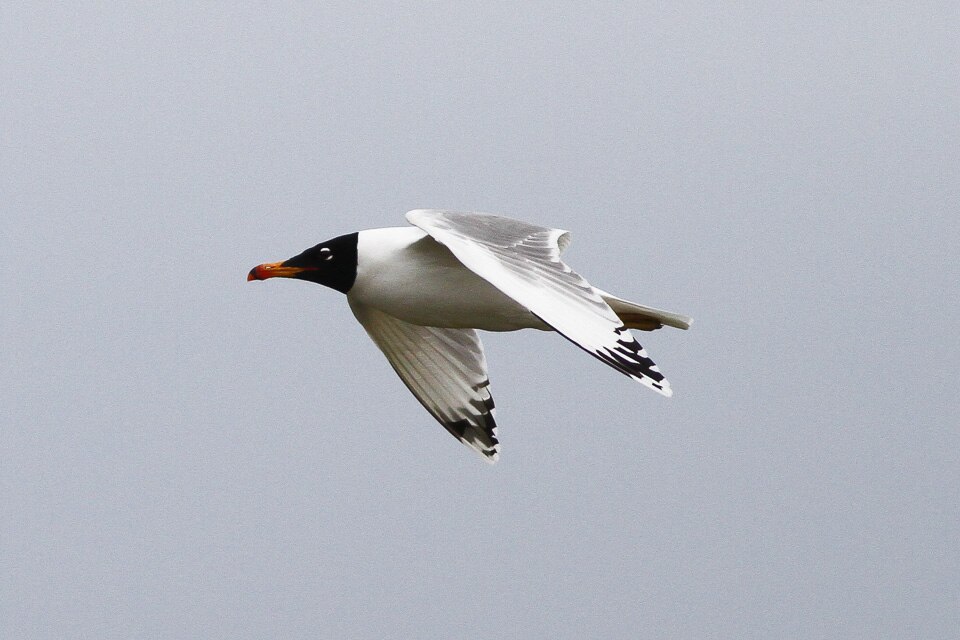 Pallas's Gull
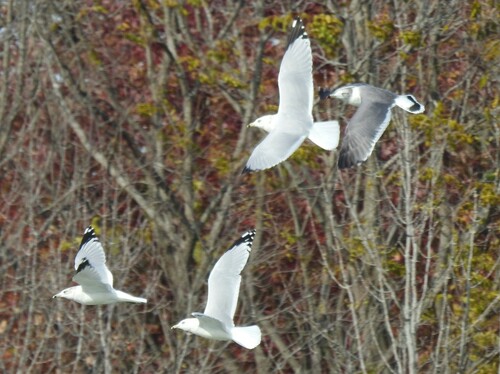 Black-tailed Gull
In short
The most reliable field mark is size: Pallas's Gull is much larger and bulkier than Black-tailed Gull, with a massive bill and broad wings. Adult Pallas's Gull in summer is unmistakable due to its huge size and solid black hood, while Black-tailed Gull is medium-sized, lacks a full black hood, and shows a diagnostic black tail band. In nonbreeding and immature plumages, look for Pallas's Gull's larger structure, vestigial dark mask, and heavier bill versus the Black-tailed Gull's more delicate build and distinctive black tail. Immature wing and tail patterns are key in flight, especially when the head pattern is ambiguous.
Identification tips
- Size is the quickest separator: Pallas's Gull is nearly twice as heavy and much bulkier than Black-tailed Gull. If you see a truly massive gull with a thick bill, think Pallas's.
- Bill structure: Pallas's Gull has a thick, orangey-yellow bill with a red tip; Black-tailed Gull's bill is slimmer, yellow with a red and black spot at the tip. This is visible at close range.
- Leg color: Both have yellow legs, so this is not diagnostic.
- Adult summer head pattern: Only Pallas's Gull has a full black hood in breeding plumage. Black-tailed Gull never shows a solid black hood.
- Nonbreeding/immature head pattern: Pallas's Gull shows a dark mask through the eye, a remnant of the hood, in all nonbreeding and immature plumages. Black-tailed Gull does not show a mask.
- Tail pattern (all ages): Black-tailed Gull always shows a clear black band across the tail tip, visible in flight or when perched with tail spread. Pallas's Gull lacks this feature at all ages.
- Upperwing pattern: Pallas's Gull adults have grey wings with conspicuous white 'mirrors' at the tips. Black-tailed Gull's upperwing is more uniform and lacks such large white mirrors.
- Body shape in flight: Pallas's Gull is broad-winged and heavy, with a deep chest and large head. Black-tailed Gull is more slender and agile.
- Voice: A deep, harsh 'aargh' is Pallas's Gull; a high, cat-like 'mew' is Black-tailed Gull.
- Habitat and context: In East Asia, Black-tailed Gull is common and often seen in dense colonies or around harbors. Pallas's Gull is more likely inland or in Eurasian wetlands, rarely in the same numbers as Black-tailed Gull in its core range.
- Behavior: Black-tailed Gull is often tame and approachable in Japanese colonies; Pallas's Gull is less likely to be seen in such close association with people.
- Sex and age: Both species take four years to reach maturity, so immature birds can be confusing. Focus on size, tail band, and head pattern for all ages.
- Bill color in immatures: Both species' immatures have duller bills, but Pallas's is always thicker relative to head size.
- Plumage pitfalls: In poor light, the dark mask of Pallas's Gull can be missed, and the black tail band of Black-tailed Gull may be obscured if the tail is not visible. Try to get a flight view or wait for preening.
- Mixed flocks: If both species are present, Pallas's Gull will stand out as the largest, most imposing gull, often dominating feeding or roosting sites.
Size
Pallas's Gull is dramatically larger: average body mass is about 1394 g compared to 556.5 g for Black-tailed Gull. Pallas's Gull measures 55–72 cm in length with a 142–170 cm wingspan, while Black-tailed Gull is 46 cm long with a 126–128 cm wingspan. The difference is obvious even at a distance—Pallas's Gull appears bulkier, with a longer, thicker bill and more robust legs. Black-tailed Gull is medium-sized, more slender, and proportionally shorter-billed.
Plumage
- Juvenile/Immature plumage (first 1–3 years): Pallas's Gull immatures quickly develop largely grey upperparts and show a dark mask through the eye, a vestige of the adult hood. Black-tailed Gull immatures are not described in detail here, but all ages show a diagnostic black tail band, which Pallas's Gull lacks. In flight, look for the black tail on Black-tailed Gull and the overall paler, larger look of Pallas's Gull.
- Adult breeding: Pallas's Gull is unique among large gulls for its solid black hood, grey back, and white wing tips with prominent 'mirrors.' Black-tailed Gull adults have a plain white head, grey back, and the namesake black tail band.
- Adult nonbreeding: Pallas's Gull loses the full hood but retains a dark mask through the eye. Black-tailed Gull does not show a mask but always keeps the black tail band. Both have yellow legs, but Pallas's Gull's bill is thicker and orangey-yellow with a red tip, while Black-tailed Gull's bill is slimmer with a red and black spot at the tip.
Behaviour
Both species are colonial nesters and often seen in flocks, but Pallas's Gull is more likely to be seen as a dominant, imposing presence among other gulls due to its size. Black-tailed Gull is known for its tameness in some Japanese colonies and is often seen following fishing boats. Both species can be opportunistic feeders, but Black-tailed Gull is more likely to be seen in very large, dense colonies and is famous for its cat-like calls and approachable behavior at tourist sites.
Habitat
Pallas's Gull is typically found in inland and coastal wetlands across Eurasia, favoring large lakes and rivers as well as coastal areas. Black-tailed Gull is a shoreline specialist of East Asia, breeding in large colonies on islands and coastal cliffs, and is much more likely to be encountered in Japan, Korea, and eastern China. Outside of East Asia, Black-tailed Gull is rare, while Pallas's Gull is more widespread in its range. Both may be seen near fishing activity, but Black-tailed Gull is especially associated with human settlements and harbors in its core range.
Voice
Pallas's Gull gives a deep, rough 'aargh' call, which is lower and more guttural than the Black-tailed Gull's voice. Black-tailed Gull is famous for its cat-like 'mew' call, which is high-pitched and distinctive, often described as sounding like a meowing cat. If you hear a cat-like call, it's Black-tailed Gull; a deep, harsh cry points to Pallas's Gull.