

Motmot

Pale-vented Pigeon vs Grey-fronted Dove

Patagioenas cayennensis versus Leptotila rufaxilla

Play a quiz with Pale-vented Pigeon and Grey-fronted Dove
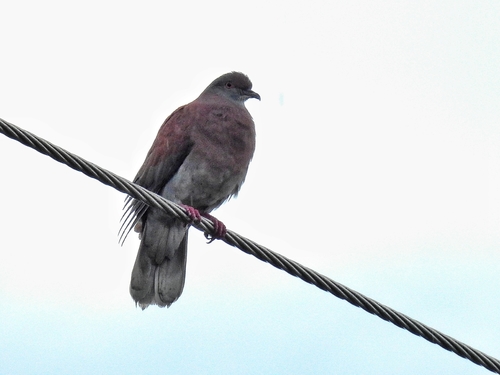
Pale-vented Pigeon (Patagioenas cayennensis) Pale-vented Pigeon
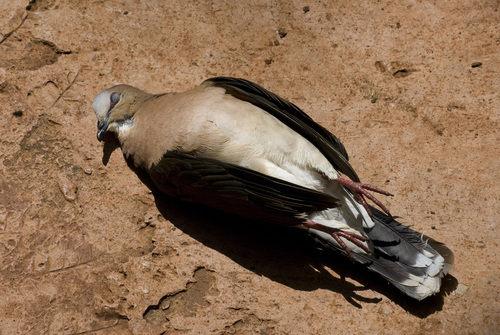
Grey-fronted Dove (Leptotila rufaxilla) Grey-fronted Dove

Media

Loading…

In short

The most reliable field mark between Pale-vented Pigeon and Grey-fronted Dove is size and structure: Pale-vented Pigeon is noticeably larger and bulkier, with a heavier build and more robust jizz, while Grey-fronted Dove is smaller, more delicate, and compact. In flight or perched, Pale-vented Pigeon shows a uniform dull purple to grey plumage with a pale vent and dark tail, whereas Grey-fronted Dove has olive-brown upperparts, a contrasting grayish-pink breast, and white-tipped outer tail feathers. Juvenile Grey-fronted Doves show rusty-edged feathers and barred breasts, which Pale-vented Pigeon immatures lack. Both species have reddish legs and eyering, but face pattern and overall color tone are key. Vocalizations and habitat overlap, but Pale-vented is more likely in open areas, while Grey-fronted prefers denser cover.

Identification tips

  1. Size and bulk: Pale-vented Pigeon is much larger and heavier than Grey-fronted Dove. If the bird looks big and chunky, especially compared to other doves, it's likely Pale-vented.
  2. Structure and jizz: Pale-vented has a robust, broad-chested look with a longer tail and larger bill. Grey-fronted Dove is more compact, with a shorter, squarer tail and finer bill.
  3. Juvenile/immature plumage: Juvenile Grey-fronted Doves show rusty edges on upperparts and rust/drab brown bars on the breast. Pale-vented Pigeon immatures are plain, dull grey-brown without barring or rusty edges.
  4. Tail pattern: Grey-fronted Dove has blackish outer tail feathers with obvious white tips, visible in flight or when fanned. Pale-vented Pigeon has a more uniform dark grey tail without white tips.
  5. Head and face pattern: Grey-fronted Dove adults have a grayish to bluish forehead and crown, with a pinkish white throat and buff/pinkish face. Pale-vented Pigeon has a dull purple head and breast, with a whitish throat but no strong contrast on the face.
  6. Upperparts color: Grey-fronted Dove is olive-brown above with faint bronze or purplish on the mantle, while Pale-vented Pigeon is mainly dull purple above with copper gloss on the nape.
  7. Underparts: Pale-vented Pigeon has pale grey (or white in southern birds) lower underparts, while Grey-fronted Dove has a grayish-pink breast grading to white on the belly.
  8. Eye and eyering: Both have red eyering, but Grey-fronted Dove's eye is yellow or brown, surrounded by bare red skin and pinkish white feathers, creating a more complex facial pattern.
  9. Leg color: Both species have red legs and feet, so this is not a useful separator.
  10. Flight style: Pale-vented Pigeon flies high, fast, and direct, often in the open. Grey-fronted Dove flies low and is more secretive, usually staying close to cover.
  11. Perched posture: Pale-vented Pigeon often perches high and exposed; Grey-fronted Dove prefers to stay low or on the ground, rarely perching openly.
  12. Habitat: Open areas, forest edge, and riverbanks favor Pale-vented Pigeon; dense forest, thick undergrowth, and shaded areas favor Grey-fronted Dove.
  13. Display behavior: Only Pale-vented Pigeon is noted for a semi-circular glide display; Grey-fronted Dove is not known for aerial displays.
  14. Vocalization: If heard, Pale-vented Pigeon's kuk kuk croo-ooos with a short initial kuk is distinctive. Grey-fronted Dove's voice is not described here.
  15. Sex and seasonal variation: Female and immature Grey-fronted Doves are browner and more olive, but still show the face pattern and white tail tips. Female Pale-vented Pigeons are duller than males but otherwise similar.

Size

Pale-vented Pigeon is significantly larger: 30–32 cm in length and 230–250 g in weight [wikipedia], compared to Grey-fronted Dove at about 28 cm and 115–183 g [wikipedia]. The pigeon appears much bulkier and more robust, with a proportionally larger head and longer tail. Grey-fronted Dove is more slender and compact, with a smaller bill and finer structure. Size is often obvious when both are seen together or with familiar species for scale.

Plumage

Juvenile and immature plumage is a key separator: young Grey-fronted Doves have rusty-edged upperpart feathers and rust/drab brown barring on the breast, which is never shown by Pale-vented Pigeon immatures (which are just dull, greyish-brown overall). In adults, Pale-vented Pigeon males are mostly dull purple on head, breast, and upperparts with a coppery nape gloss, pale grey lower underparts (white in some southern birds), and a dark grey lower back and tail. Grey-fronted Dove adults have a grayish to bluish forehead, bluish gray crown, iridescent grayish-purple nape, olive-brown upperparts, and a grayish-pink breast fading to white on the belly. The dove's outer tail feathers are blackish with obvious white tips, while Pale-vented Pigeon has a more uniform dark grey tail. Female and immature Grey-fronted Doves are browner and more olive, with green-tinged upperparts, but still show the face pattern and white tail tips. Both species have red legs and eyering, but the dove's eye is yellow or brown, surrounded by bare red skin and pinkish white feathering.

Behaviour

Pale-vented Pigeon is often seen flying high and fast in the open, sometimes away from forests, and may perch conspicuously in trees at forest edge or open country. It is fairly solitary but may gather in small groups at water. Its flight is strong, with regular beats and occasional sharp flicks. Grey-fronted Dove is more secretive, typically foraging on the ground or low in dense undergrowth, rarely flying high or perching in the open. It is usually solitary or in pairs and walks with a more delicate, bobbing gait. Display flights are not noted for the dove, but Pale-vented Pigeon may perform a semi-circular glide during breeding displays.

Habitat

Pale-vented Pigeon favors forest edges, riverbanks, and other partially open areas with scattered trees, and is often seen in more open country than Grey-fronted Dove. Grey-fronted Dove prefers denser habitats, such as forest interiors, thick undergrowth, and shaded areas, though it can be found at forest edge as well. Both occur on Trinidad and mainland South America (except Chile), but Pale-vented is more likely in open or edge habitats, while Grey-fronted is more tied to cover.

Voice

Pale-vented Pigeon gives a series of soft kuk kuk croo-ooos, with the initial short kuk being distinctive for its group. Its song is intermediate between those of Plain and Red-billed Pigeons. Grey-fronted Dove's voice is not described in the provided notes, so vocalization is not a reliable separator based on current information.

Submit a better description

Use the same sections as the comparison. Your text is published immediately.

The most reliable field mark between Pale-vented Pigeon and Grey-fronted Dove is size and structure: Pale-vented Pigeon is noticeably larger and bulkier, with a heavier build and more robust jizz, while Grey-fronted Dove is smaller, more delicate, and compact. In flight or perched, Pale-vented Pigeon shows a uniform dull purple to grey plumage with a pale vent and dark tail, whereas Grey-fronted Dove has olive-brown upperparts, a contrasting grayish-pink breast, and white-tipped outer tail feathers. Juvenile Grey-fronted Doves show rusty-edged feathers and barred breasts, which Pale-vented Pigeon immatures lack. Both species have reddish legs and eyering, but face pattern and overall color tone are key. Vocalizations and habitat overlap, but Pale-vented is more likely in open areas, while Grey-fronted prefers denser cover.

  1. Size and bulk: Pale-vented Pigeon is much larger and heavier than Grey-fronted Dove. If the bird looks big and chunky, especially compared to other doves, it's likely Pale-vented.
  2. Structure and jizz: Pale-vented has a robust, broad-chested look with a longer tail and larger bill. Grey-fronted Dove is more compact, with a shorter, squarer tail and finer bill.
  3. Juvenile/immature plumage: Juvenile Grey-fronted Doves show rusty edges on upperparts and rust/drab brown bars on the breast. Pale-vented Pigeon immatures are plain, dull grey-brown without barring or rusty edges.
  4. Tail pattern: Grey-fronted Dove has blackish outer tail feathers with obvious white tips, visible in flight or when fanned. Pale-vented Pigeon has a more uniform dark grey tail without white tips.
  5. Head and face pattern: Grey-fronted Dove adults have a grayish to bluish forehead and crown, with a pinkish white throat and buff/pinkish face. Pale-vented Pigeon has a dull purple head and breast, with a whitish throat but no strong contrast on the face.
  6. Upperparts color: Grey-fronted Dove is olive-brown above with faint bronze or purplish on the mantle, while Pale-vented Pigeon is mainly dull purple above with copper gloss on the nape.
  7. Underparts: Pale-vented Pigeon has pale grey (or white in southern birds) lower underparts, while Grey-fronted Dove has a grayish-pink breast grading to white on the belly.
  8. Eye and eyering: Both have red eyering, but Grey-fronted Dove's eye is yellow or brown, surrounded by bare red skin and pinkish white feathers, creating a more complex facial pattern.
  9. Leg color: Both species have red legs and feet, so this is not a useful separator.
  10. Flight style: Pale-vented Pigeon flies high, fast, and direct, often in the open. Grey-fronted Dove flies low and is more secretive, usually staying close to cover.
  11. Perched posture: Pale-vented Pigeon often perches high and exposed; Grey-fronted Dove prefers to stay low or on the ground, rarely perching openly.
  12. Habitat: Open areas, forest edge, and riverbanks favor Pale-vented Pigeon; dense forest, thick undergrowth, and shaded areas favor Grey-fronted Dove.
  13. Display behavior: Only Pale-vented Pigeon is noted for a semi-circular glide display; Grey-fronted Dove is not known for aerial displays.
  14. Vocalization: If heard, Pale-vented Pigeon's kuk kuk croo-ooos with a short initial kuk is distinctive. Grey-fronted Dove's voice is not described here.
  15. Sex and seasonal variation: Female and immature Grey-fronted Doves are browner and more olive, but still show the face pattern and white tail tips. Female Pale-vented Pigeons are duller than males but otherwise similar.

Pale-vented Pigeon is significantly larger: 30–32 cm in length and 230–250 g in weight [wikipedia], compared to Grey-fronted Dove at about 28 cm and 115–183 g [wikipedia]. The pigeon appears much bulkier and more robust, with a proportionally larger head and longer tail. Grey-fronted Dove is more slender and compact, with a smaller bill and finer structure. Size is often obvious when both are seen together or with familiar species for scale.

Juvenile and immature plumage is a key separator: young Grey-fronted Doves have rusty-edged upperpart feathers and rust/drab brown barring on the breast, which is never shown by Pale-vented Pigeon immatures (which are just dull, greyish-brown overall). In adults, Pale-vented Pigeon males are mostly dull purple on head, breast, and upperparts with a coppery nape gloss, pale grey lower underparts (white in some southern birds), and a dark grey lower back and tail. Grey-fronted Dove adults have a grayish to bluish forehead, bluish gray crown, iridescent grayish-purple nape, olive-brown upperparts, and a grayish-pink breast fading to white on the belly. The dove's outer tail feathers are blackish with obvious white tips, while Pale-vented Pigeon has a more uniform dark grey tail. Female and immature Grey-fronted Doves are browner and more olive, with green-tinged upperparts, but still show the face pattern and white tail tips. Both species have red legs and eyering, but the dove's eye is yellow or brown, surrounded by bare red skin and pinkish white feathering.

Pale-vented Pigeon is often seen flying high and fast in the open, sometimes away from forests, and may perch conspicuously in trees at forest edge or open country. It is fairly solitary but may gather in small groups at water. Its flight is strong, with regular beats and occasional sharp flicks. Grey-fronted Dove is more secretive, typically foraging on the ground or low in dense undergrowth, rarely flying high or perching in the open. It is usually solitary or in pairs and walks with a more delicate, bobbing gait. Display flights are not noted for the dove, but Pale-vented Pigeon may perform a semi-circular glide during breeding displays.

Pale-vented Pigeon favors forest edges, riverbanks, and other partially open areas with scattered trees, and is often seen in more open country than Grey-fronted Dove. Grey-fronted Dove prefers denser habitats, such as forest interiors, thick undergrowth, and shaded areas, though it can be found at forest edge as well. Both occur on Trinidad and mainland South America (except Chile), but Pale-vented is more likely in open or edge habitats, while Grey-fronted is more tied to cover.

Pale-vented Pigeon gives a series of soft kuk kuk croo-ooos, with the initial short kuk being distinctive for its group. Its song is intermediate between those of Plain and Red-billed Pigeons. Grey-fronted Dove's voice is not described in the provided notes, so vocalization is not a reliable separator based on current information.

Discard your changes?

You have unsaved edits. If you leave now, those changes will be lost.

Pale-vented Pigeon · Grey-fronted Dove · My Tricky Birds