

Motmot

Oak Titmouse vs Juniper Titmouse

Baeolophus inornatus versus Baeolophus ridgwayi

Play a quiz with Oak Titmouse and Juniper Titmouse
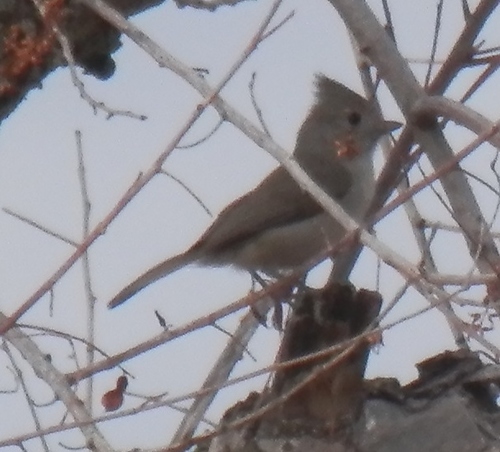
Oak Titmouse (Baeolophus inornatus) Oak Titmouse
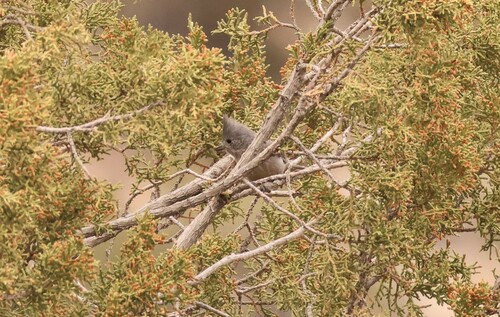
Juniper Titmouse (Baeolophus ridgwayi) Juniper Titmouse

Media

Loading…

In short

The most reliable field mark between Oak Titmouse and Juniper Titmouse is subtle but consistent: Oak Titmouse shows a browner-tinged gray back, while Juniper Titmouse is a colder, plainer gray overall. Both are small, crested birds with plain faces and similar structure, making separation tricky without close study. Voice is a strong separator—Oak Titmouse gives a series of paired high/low notes, while Juniper Titmouse sings a rapid, even-pitched series. Habitat is also helpful: Oak Titmouse is tied to oak woodlands west of the Sierra Nevada, while Juniper Titmouse prefers pinyon-juniper and desert woodlands further inland. In areas of range overlap, careful attention to back color and song is essential, as plumage differences are subtle and age/sex differences are minimal.

Identification tips

  1. Back color: Oak Titmouse has a browner-tinged gray back, giving a warmer look; Juniper Titmouse is a colder, more uniform gray. This is subtle but consistent in good light and is the main visual field mark.
  2. Overall tone: Oak Titmouse often looks slightly warmer or duskier, especially on the back and crown; Juniper Titmouse is plainer, colder gray throughout.
  3. Crest: Both have a small, pointed crest; crest shape and size are not useful for separation.
  4. Face pattern: Both species have plain, unmarked faces—do not rely on facial features to separate them.
  5. Underparts: Both show pale gray underparts with little contrast; no diagnostic difference.
  6. Wing pattern: Neither species shows bold wing bars or distinctive juvenile/immature upperwing marks; flight views are not helpful for separation.
  7. Tail: Both have short, square tails; tail shape and length are not useful for ID.
  8. Sex and age: Sexes and ages are visually alike in both species; no sexual dimorphism or age-specific marks are described.
  9. Song: Oak Titmouse sings a series of paired high/low notes (e.g., "peter-peter-peter"); Juniper Titmouse gives a rapid, even-pitched series. Learning these songs is the best way to separate them where ranges overlap.
  10. Call: Juniper Titmouse's call is a raspy "tschick-adee"; Oak Titmouse's call is less well described but is different in quality.
  11. Habitat: Oak Titmouse is found in oak and oak-pine woodlands west of the Sierra Nevada; Juniper Titmouse is in pinyon-juniper and desert woodlands of the interior West. Use habitat as a strong supporting clue.
  12. Range: Ranges overlap only narrowly in California; elsewhere, range alone is often sufficient for ID.
  13. Behavior: Both species forage acrobatically in trees and shrubs, often hanging upside down; foraging behavior is not a separator.
  14. Feeder visits: Both species come to feeders for suet, peanut butter, and seeds; feeder behavior does not help with identification.
  15. Pitfalls: In poor light or at a distance, back color differences can be hard to judge. In areas of overlap, rely on song and habitat as primary clues, and do not expect plumage differences to be obvious.

Size

Both species are very similar in size and structure, with no meaningful difference in length, mass, or proportions noted in the sources. Both have small, compact bodies, short tails, and a modest crest. Sexes are alike in both species, and size is not a reliable field mark for separation.

Plumage

There are no age-specific wing or flight pattern differences described between Oak and Juniper Titmouse—juveniles and adults of both species look much alike, lacking bold wing bars or distinctive upperwing marks. The main plumage difference is the back color: Oak Titmouse has a brownish-tinged gray back, giving it a warmer overall tone, while Juniper Titmouse is a colder, more uniform gray. Both have plain faces, small crests, and pale gray underparts. No seasonal or sex-based differences are noted; both species are essentially monomorphic year-round.

Behaviour

Behavior is broadly similar: both species forage actively in trees and shrubs, often hanging upside down or hammering seeds against branches. They may join mixed-species flocks after breeding season, but do not form large titmouse-only flocks. Both sleep in cavities or dense foliage and visit feeders for suet, peanut butter, and seeds. Foraging style and posture are not useful for separation.

Habitat

Habitat is a strong clue: Oak Titmouse is found in oak and oak-pine woodlands west of the Sierra Nevada, especially in California and southern Oregon, closely tied to Quercus species. Juniper Titmouse is resident in the Great Basin and southwestern US, favoring pinyon-juniper, juniper, and desert riparian woods, ranging from southeast Oregon and Colorado south to Arizona, New Mexico, west Texas, and northeastern Sonora. Their ranges overlap only narrowly in California. If you are in classic oak woodland, Oak Titmouse is expected; in pinyon-juniper or desert woodland, Juniper Titmouse is much more likely.

Voice

Song is a key separator: Oak Titmouse gives a series of three to seven syllables, each a paired low and high note (e.g., "peter-peter-peter" with a rising/falling pattern). Juniper Titmouse sings a rapid, rolling series of notes all on the same pitch, lacking the paired high/low structure. Juniper Titmouse's call is a raspy "tschick-adee." If you hear the song well, identification is straightforward.

Submit a better description

Use the same sections as the comparison. Your text is published immediately.

The most reliable field mark between Oak Titmouse and Juniper Titmouse is subtle but consistent: Oak Titmouse shows a browner-tinged gray back, while Juniper Titmouse is a colder, plainer gray overall. Both are small, crested birds with plain faces and similar structure, making separation tricky without close study. Voice is a strong separator—Oak Titmouse gives a series of paired high/low notes, while Juniper Titmouse sings a rapid, even-pitched series. Habitat is also helpful: Oak Titmouse is tied to oak woodlands west of the Sierra Nevada, while Juniper Titmouse prefers pinyon-juniper and desert woodlands further inland. In areas of range overlap, careful attention to back color and song is essential, as plumage differences are subtle and age/sex differences are minimal.

  1. Back color: Oak Titmouse has a browner-tinged gray back, giving a warmer look; Juniper Titmouse is a colder, more uniform gray. This is subtle but consistent in good light and is the main visual field mark.
  2. Overall tone: Oak Titmouse often looks slightly warmer or duskier, especially on the back and crown; Juniper Titmouse is plainer, colder gray throughout.
  3. Crest: Both have a small, pointed crest; crest shape and size are not useful for separation.
  4. Face pattern: Both species have plain, unmarked faces—do not rely on facial features to separate them.
  5. Underparts: Both show pale gray underparts with little contrast; no diagnostic difference.
  6. Wing pattern: Neither species shows bold wing bars or distinctive juvenile/immature upperwing marks; flight views are not helpful for separation.
  7. Tail: Both have short, square tails; tail shape and length are not useful for ID.
  8. Sex and age: Sexes and ages are visually alike in both species; no sexual dimorphism or age-specific marks are described.
  9. Song: Oak Titmouse sings a series of paired high/low notes (e.g., "peter-peter-peter"); Juniper Titmouse gives a rapid, even-pitched series. Learning these songs is the best way to separate them where ranges overlap.
  10. Call: Juniper Titmouse's call is a raspy "tschick-adee"; Oak Titmouse's call is less well described but is different in quality.
  11. Habitat: Oak Titmouse is found in oak and oak-pine woodlands west of the Sierra Nevada; Juniper Titmouse is in pinyon-juniper and desert woodlands of the interior West. Use habitat as a strong supporting clue.
  12. Range: Ranges overlap only narrowly in California; elsewhere, range alone is often sufficient for ID.
  13. Behavior: Both species forage acrobatically in trees and shrubs, often hanging upside down; foraging behavior is not a separator.
  14. Feeder visits: Both species come to feeders for suet, peanut butter, and seeds; feeder behavior does not help with identification.
  15. Pitfalls: In poor light or at a distance, back color differences can be hard to judge. In areas of overlap, rely on song and habitat as primary clues, and do not expect plumage differences to be obvious.

Both species are very similar in size and structure, with no meaningful difference in length, mass, or proportions noted in the sources. Both have small, compact bodies, short tails, and a modest crest. Sexes are alike in both species, and size is not a reliable field mark for separation.

There are no age-specific wing or flight pattern differences described between Oak and Juniper Titmouse—juveniles and adults of both species look much alike, lacking bold wing bars or distinctive upperwing marks. The main plumage difference is the back color: Oak Titmouse has a brownish-tinged gray back, giving it a warmer overall tone, while Juniper Titmouse is a colder, more uniform gray. Both have plain faces, small crests, and pale gray underparts. No seasonal or sex-based differences are noted; both species are essentially monomorphic year-round.

Behavior is broadly similar: both species forage actively in trees and shrubs, often hanging upside down or hammering seeds against branches. They may join mixed-species flocks after breeding season, but do not form large titmouse-only flocks. Both sleep in cavities or dense foliage and visit feeders for suet, peanut butter, and seeds. Foraging style and posture are not useful for separation.

Habitat is a strong clue: Oak Titmouse is found in oak and oak-pine woodlands west of the Sierra Nevada, especially in California and southern Oregon, closely tied to Quercus species. Juniper Titmouse is resident in the Great Basin and southwestern US, favoring pinyon-juniper, juniper, and desert riparian woods, ranging from southeast Oregon and Colorado south to Arizona, New Mexico, west Texas, and northeastern Sonora. Their ranges overlap only narrowly in California. If you are in classic oak woodland, Oak Titmouse is expected; in pinyon-juniper or desert woodland, Juniper Titmouse is much more likely.

Song is a key separator: Oak Titmouse gives a series of three to seven syllables, each a paired low and high note (e.g., "peter-peter-peter" with a rising/falling pattern). Juniper Titmouse sings a rapid, rolling series of notes all on the same pitch, lacking the paired high/low structure. Juniper Titmouse's call is a raspy "tschick-adee." If you hear the song well, identification is straightforward.

Discard your changes?

You have unsaved edits. If you leave now, those changes will be lost.

Oak Titmouse · Juniper Titmouse · My Tricky Birds