

Northern Bobwhite vs Carolina Chickadee
Colinus virginianus versus Poecile carolinensis
Play a quiz with Northern Bobwhite and Carolina Chickadee
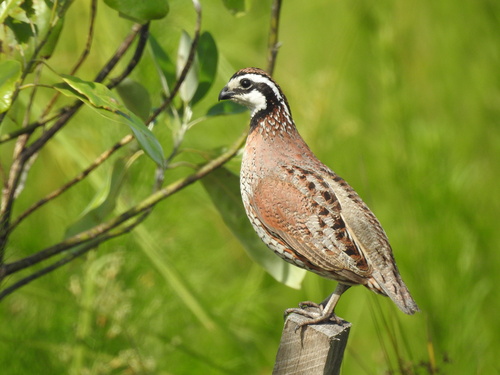 Northern Bobwhite
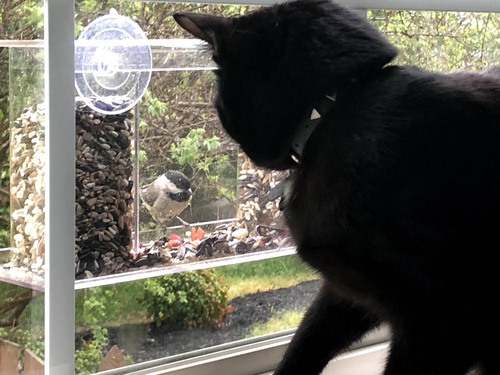 Carolina Chickadee
In short
Northern Bobwhite and Carolina Chickadee are extremely different in size, structure, and overall appearance, but confusion can arise with brief or distant views, especially when both are on or near the ground. The most reliable field mark is size: Northern Bobwhite is a chunky, ground-dwelling quail, while Carolina Chickadee is a tiny, active songbird. Bobwhite shows a boldly patterned face (especially in males), rufous and gray body, and a rounded shape, while Carolina Chickadee is gray-backed with a black cap and bib, white cheeks, and a much smaller, slimmer build. In flight or perched, differences in bill shape, tail length, and posture are also clear. Voice, habitat, and behavior further reinforce the identification.
Identification tips
- Size is the single most reliable field mark: Bobwhite is much larger and heavier than chickadee; even at a distance, the quail’s bulk is obvious. Chickadee is sparrow-sized or smaller.
- Structure: Bobwhite is rounded, chunky, and short-tailed with a thick neck and short, stout, curved bill. Chickadee is slim, long-tailed for its size, and has a tiny, straight bill.
- Face pattern: Male bobwhite shows a bold white throat and brow stripe bordered by black; female is duller but still patterned. Chickadee always has a simple black cap, white cheek, and black bib—never stripes or contrasting facial borders.
- Plumage color: Bobwhite is rufous and gray with white and black scalloping; chickadee is gray above, white below, with rusty flanks and no rufous or extensive patterning.
- Tail: Bobwhite’s tail is short and rounded; chickadee’s is longer, more square-ended, and often flicked.
- Bill shape: Bobwhite’s bill is thick, short, and curved (quail-like); chickadee’s is tiny, straight, and pointed (songbird-like).
- Posture: Bobwhite walks upright on the ground, often in groups; chickadee is restless, often hanging upside down or hovering in trees.
- Flight: Bobwhite explodes in a rapid, low, whirring flight when flushed; chickadee has a bounding, undulating flight between trees.
- Habitat: Bobwhite is found in open fields, grasslands, and edges, almost always on the ground. Chickadee is in trees and shrubs, rarely on the ground except at feeders.
- Voice: Bobwhite’s clear, whistled "bob-WHITE" is unmistakable; chickadee’s "chick-a-dee-dee-dee" is rapid and buzzy.
- Behavior in flocks: Bobwhite forms coveys on the ground; chickadee joins mixed-species flocks in trees.
- Seasonal confusion: No significant seasonal or age-related plumage overlap; both species retain diagnostic features year-round.
- Sex differences: Only male bobwhite has the bold white facial stripes, but even females are much larger and differently patterned than any chickadee.
- Common pitfalls: Distant or brief views of a bobwhite on a branch or a chickadee on the ground (e.g., at a feeder) can cause confusion, but size and face pattern should resolve it.
- Juvenile confusion: No distinctive juvenile wing or flight marks described for either species; all ages are separable by size, structure, and face pattern.
Size
Northern Bobwhite is dramatically larger and heavier (body mass ~171 g) than Carolina Chickadee (typically 8–12 g). Bobwhite measures 24–28 cm in length with a wingspan of 33–38 cm, while Carolina Chickadee is only 10–12 cm long with a 15–20 cm wingspan. The bobwhite is a robust, rounded bird with a short tail and thick neck, whereas the chickadee is petite, slim, and long-tailed for its size. Even at a distance, the bobwhite's bulk and quail-like proportions are unmistakable compared to the dainty chickadee.
Plumage
No age-specific wing or flight pattern marks are described for either species, so focus is on adult plumage. Northern Bobwhite males are striking with a white throat and brow stripe bordered by black, rufous overall plumage, gray mottling on the wings, and white scalloped flanks. Females are similar but duller and lack the bold white facial markings. The tail is gray and relatively short. Carolina Chickadee adults are gray-backed with a black cap and bib, white cheeks, and white underparts with rusty brown flanks. Their wings are grayish-brown, lacking any bold pattern, and the tail is moderately long and square-ended. In any plumage, the chickadee’s face pattern is simple (black cap, white cheek, black bib) and never shows the complex, contrasting facial stripes of the bobwhite. There is no overlap in plumage: bobwhite is rufous and patterned, chickadee is gray, black, and white.
Behaviour
Northern Bobwhite is a ground-dwelling bird, typically seen walking or running through grass or open woodland, often in small coveys. When flushed, it explodes into a short, whirring flight, then drops back to cover. Carolina Chickadee is an agile, acrobatic forager, usually seen flitting through trees and shrubs, often hanging upside down or hovering briefly. Chickadees join mixed-species flocks in winter and are rarely seen on the ground except at feeders. Bobwhite’s terrestrial, secretive behavior is very different from the arboreal, active chickadee.
Habitat
Northern Bobwhite prefers open habitats: agricultural fields, grasslands, open woodlands, and edges. It is almost always found on or near the ground in these settings. Carolina Chickadee inhabits woodlands, forest edges, and suburban areas, foraging mostly in trees and shrubs. While both can occur at woodland edges, bobwhite is tied to ground cover and open spaces, while chickadee is associated with tree canopies and midstory.
Voice
Northern Bobwhite’s call is a loud, clear, rising whistle: "bob-WHITE" or "bob-bob-WHITE," with widely spaced, slow syllables. It also gives lisps, peeps, and rapid warning calls. Carolina Chickadee gives a rapid, buzzy "chick-a-dee-dee-dee" call and high, thin "see" notes. The two species’ vocalizations are entirely different and diagnostic if heard.