
Motmot

Moltoni's Warbler vs Eastern Subalpine Warbler

Curruca subalpina versus Curruca cantillans

Play a quiz with Moltoni's Warbler and Eastern Subalpine Warbler
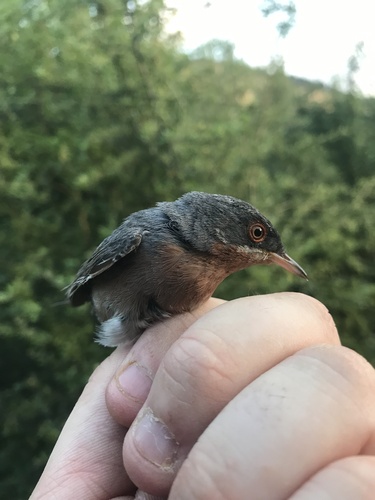
Moltoni's Warbler (Curruca subalpina) Moltoni's Warbler
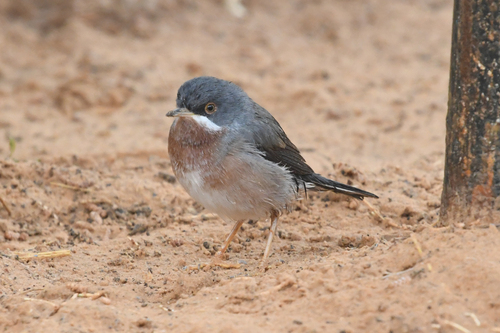
Eastern Subalpine Warbler (Curruca cantillans) Eastern Subalpine Warbler

Media

Loading…

In short

The most reliable field mark between Moltoni's Warbler and Eastern Subalpine Warbler is the color and distribution of the underparts in adult males: Moltoni's shows a salmon-pink wash, while Eastern Subalpine Warbler has brick-red confined to the throat and breast, sharply demarcated from a white belly. Females and juveniles are extremely similar and difficult to separate visually; vocalizations are often the only clue in these cases. Both species are small, active warblers with similar structure, but their ranges only overlap slightly. When in doubt, prioritize song and call, especially outside the breeding season or with non-adult males.

Identification tips

  1. Adult male underparts: In spring and summer, check the color and extent of reddish on the underparts. Moltoni's Warbler males have a uniform salmon-pink wash, while Eastern Subalpine Warbler males have brick-red limited to throat and breast, sharply cut off from a white belly.
  2. Adult male head pattern: Eastern Subalpine Warbler males show a deeper blue-grey head and back, a blackish mask on the lores and ear-coverts, and a broader white submoustachial stripe. Moltoni's lacks the strong mask and has a softer head pattern.
  3. Female and juvenile plumage: Both are brownish above, greyer on the head, and whitish below with a pink flush. There are no reliable visual differences—do not attempt separation on plumage alone for these ages.
  4. Upperwing and flight pattern: No distinctive age-specific upperwing or flight marks are described for either species. In flight, both appear plain-winged and lack contrasting panels or edges.
  5. Vocalizations: If you hear the bird, Moltoni's has a higher-pitched, faster, insect-like song with a dry 'trill zerr' call. Eastern Subalpine's song is fast and rattling but lower-pitched and more like Lesser Whitethroat. Use voice as the primary clue for females, juveniles, or silent birds in ambiguous plumage.
  6. Range and context: Moltoni's is restricted to Italy and Tyrrhenian islands; Eastern Subalpine is more widespread in southernmost continental Europe. If you are outside Italy or its islands, Moltoni's is unlikely.
  7. Habitat: Both favor dry, open country with low shrubs. Habitat is not diagnostic where ranges overlap, but Moltoni's is more insular.
  8. Structure and size: Both are similar in size and structure, with no reliable differences in bill, tail, or wing length. Do not use structure for separation.
  9. Seasonal confusion: In autumn and winter, or outside the breeding season, adult males lose some color intensity, making separation even harder. Prioritize vocalizations and location.
  10. Pitfalls with subspecies: Eastern Subalpine Warbler is itself variable, and some populations may show intermediate features. Always use a combination of marks and context.
  11. Do not rely on eye-ring or malar area: Both species have naked eye-rings and white malar areas; these are not diagnostic between them.
  12. Behavior: Both are active, often skulking, and behave similarly in the field. Do not use behavior for separation.
  13. Juvenile confusion: Young birds are essentially inseparable visually. Only voice or location may help.
  14. Mixed flocks: If you encounter a group, check for singing males to confirm species. Silent birds in mixed flocks are best left unidentified unless context is strong.
  15. Photographic review: For ambiguous birds, especially females and juveniles, photographs are unlikely to resolve the ID without vocal or range evidence.

Size

Both species are small warblers in the Curruca group, and there is no meaningful difference in size or proportions noted in the available sources. Expect similar length, mass, and overall structure in the field.

Plumage

Adult males are most reliably separated by underpart coloration: Moltoni's Warbler has salmon-pink underparts, while Eastern Subalpine Warbler males show brick-red limited to the throat and breast, with a sharp boundary to a mostly white belly and paler flanks. Both have grey heads and backs, but Eastern Subalpine Warbler males often show a deeper blue-grey tone, a blackish mask on the lores and ear-coverts, and a broader white submoustachial stripe. Females and juveniles of both species are very similar: brownish above, greyer head, and whitish below with a pinkish flush. No distinctive age-specific upperwing or flight pattern marks are described for either species, so separation of non-adult males is extremely challenging on plumage alone.

Behaviour

Both species behave like typical small warblers: active, often skulking in low shrubs or gorse, and quick to move through cover. No behavioral differences are described that would reliably separate them in the field.

Habitat

Moltoni's Warbler is restricted to Italy and islands of the Tyrrhenian Sea, while Eastern Subalpine Warbler breeds in the southernmost parts of continental Europe. Both prefer dry, open country with bushes or low shrubs for nesting. Habitat alone is not diagnostic where ranges approach, but Moltoni's is more insular and localized.

Voice

Vocalizations are the most reliable way to separate these species, especially for females and juveniles. Moltoni's Warbler has a faster-paced, higher-pitched song with a rapid succession of insect-like notes, often including a dry 'trill zerr' call. Eastern Subalpine Warbler's song is fast and rattling, similar to Lesser Whitethroat, but lower-pitched and less insect-like than Moltoni's. Calls and songs should be prioritized when plumage is ambiguous.

Submit a better description

Use the same sections as the comparison. Your text is published immediately.

The most reliable field mark between Moltoni's Warbler and Eastern Subalpine Warbler is the color and distribution of the underparts in adult males: Moltoni's shows a salmon-pink wash, while Eastern Subalpine Warbler has brick-red confined to the throat and breast, sharply demarcated from a white belly. Females and juveniles are extremely similar and difficult to separate visually; vocalizations are often the only clue in these cases. Both species are small, active warblers with similar structure, but their ranges only overlap slightly. When in doubt, prioritize song and call, especially outside the breeding season or with non-adult males.

  1. Adult male underparts: In spring and summer, check the color and extent of reddish on the underparts. Moltoni's Warbler males have a uniform salmon-pink wash, while Eastern Subalpine Warbler males have brick-red limited to throat and breast, sharply cut off from a white belly.
  2. Adult male head pattern: Eastern Subalpine Warbler males show a deeper blue-grey head and back, a blackish mask on the lores and ear-coverts, and a broader white submoustachial stripe. Moltoni's lacks the strong mask and has a softer head pattern.
  3. Female and juvenile plumage: Both are brownish above, greyer on the head, and whitish below with a pink flush. There are no reliable visual differences—do not attempt separation on plumage alone for these ages.
  4. Upperwing and flight pattern: No distinctive age-specific upperwing or flight marks are described for either species. In flight, both appear plain-winged and lack contrasting panels or edges.
  5. Vocalizations: If you hear the bird, Moltoni's has a higher-pitched, faster, insect-like song with a dry 'trill zerr' call. Eastern Subalpine's song is fast and rattling but lower-pitched and more like Lesser Whitethroat. Use voice as the primary clue for females, juveniles, or silent birds in ambiguous plumage.
  6. Range and context: Moltoni's is restricted to Italy and Tyrrhenian islands; Eastern Subalpine is more widespread in southernmost continental Europe. If you are outside Italy or its islands, Moltoni's is unlikely.
  7. Habitat: Both favor dry, open country with low shrubs. Habitat is not diagnostic where ranges overlap, but Moltoni's is more insular.
  8. Structure and size: Both are similar in size and structure, with no reliable differences in bill, tail, or wing length. Do not use structure for separation.
  9. Seasonal confusion: In autumn and winter, or outside the breeding season, adult males lose some color intensity, making separation even harder. Prioritize vocalizations and location.
  10. Pitfalls with subspecies: Eastern Subalpine Warbler is itself variable, and some populations may show intermediate features. Always use a combination of marks and context.
  11. Do not rely on eye-ring or malar area: Both species have naked eye-rings and white malar areas; these are not diagnostic between them.
  12. Behavior: Both are active, often skulking, and behave similarly in the field. Do not use behavior for separation.
  13. Juvenile confusion: Young birds are essentially inseparable visually. Only voice or location may help.
  14. Mixed flocks: If you encounter a group, check for singing males to confirm species. Silent birds in mixed flocks are best left unidentified unless context is strong.
  15. Photographic review: For ambiguous birds, especially females and juveniles, photographs are unlikely to resolve the ID without vocal or range evidence.

Both species are small warblers in the Curruca group, and there is no meaningful difference in size or proportions noted in the available sources. Expect similar length, mass, and overall structure in the field.

Adult males are most reliably separated by underpart coloration: Moltoni's Warbler has salmon-pink underparts, while Eastern Subalpine Warbler males show brick-red limited to the throat and breast, with a sharp boundary to a mostly white belly and paler flanks. Both have grey heads and backs, but Eastern Subalpine Warbler males often show a deeper blue-grey tone, a blackish mask on the lores and ear-coverts, and a broader white submoustachial stripe. Females and juveniles of both species are very similar: brownish above, greyer head, and whitish below with a pinkish flush. No distinctive age-specific upperwing or flight pattern marks are described for either species, so separation of non-adult males is extremely challenging on plumage alone.

Both species behave like typical small warblers: active, often skulking in low shrubs or gorse, and quick to move through cover. No behavioral differences are described that would reliably separate them in the field.

Moltoni's Warbler is restricted to Italy and islands of the Tyrrhenian Sea, while Eastern Subalpine Warbler breeds in the southernmost parts of continental Europe. Both prefer dry, open country with bushes or low shrubs for nesting. Habitat alone is not diagnostic where ranges approach, but Moltoni's is more insular and localized.

Vocalizations are the most reliable way to separate these species, especially for females and juveniles. Moltoni's Warbler has a faster-paced, higher-pitched song with a rapid succession of insect-like notes, often including a dry 'trill zerr' call. Eastern Subalpine Warbler's song is fast and rattling, similar to Lesser Whitethroat, but lower-pitched and less insect-like than Moltoni's. Calls and songs should be prioritized when plumage is ambiguous.

Discard your changes?

You have unsaved edits. If you leave now, those changes will be lost.

Moltoni's Warbler · Eastern Subalpine Warbler · My Tricky Birds