
Motmot

Mediterranean Gull vs Common Gull

Ichthyaetus melanocephalus versus Larus canus

Play a quiz with Mediterranean Gull and Common Gull
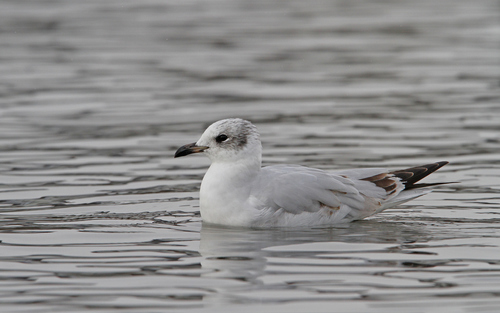
Mediterranean Gull (Ichthyaetus melanocephalus) Mediterranean Gull
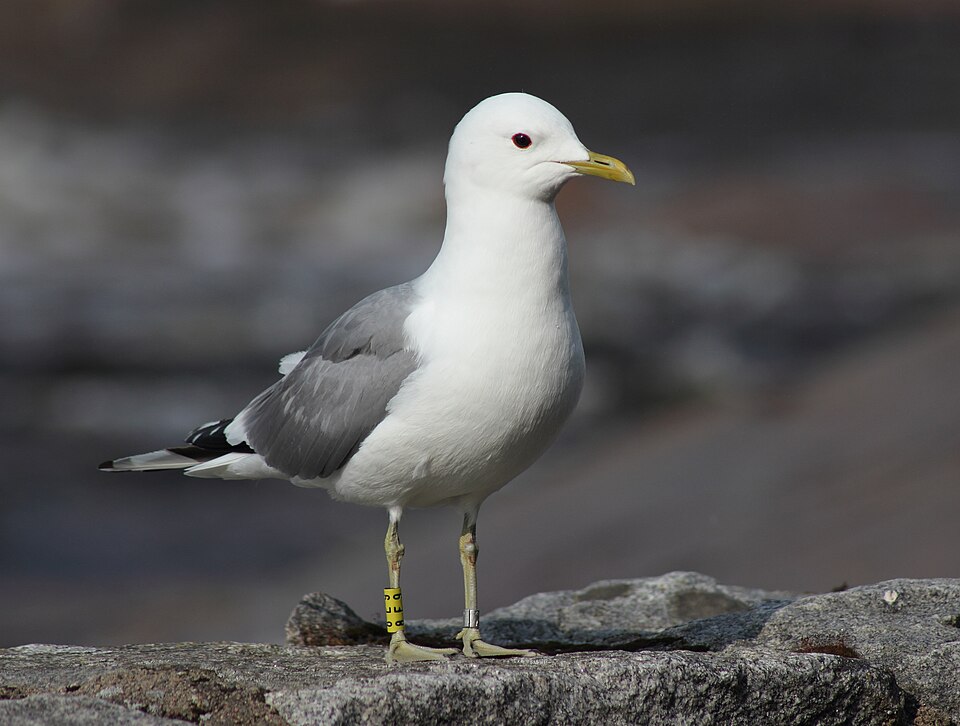
Common Gull (Larus canus) Common Gull

Media

Loading…

In short

The most reliable field mark between Mediterranean Gull and Common Gull, especially in flight, is the pattern of the upperwings and tail in immatures and the wingtip color in adults. Mediterranean Gull immatures show a black terminal tail band and more extensive black on the upperwings, while adults have pure white wingtips with no black, unlike Common Gull. Common Gull immatures have a neater, scaly brown upperwing and adults always show black wingtips with white 'mirrors.' Structure also helps: Mediterranean Gull is bulkier with a heavier, parallel-sided red bill and longer, darker legs, while Common Gull is slimmer with a shorter, more tapered yellowish bill and yellow or dull legs. Head pattern and bill color shift with age and season, but the wing and tail patterns are the most decisive clues.

Identification tips

  1. Immature upperwing pattern: First-year Mediterranean Gulls show a black terminal tail band and extensive black in the upperwings, with pale underwings. Common Gull immatures have a neat, scaly brown pattern and lack the strong black tail band.
  2. Adult wingtip color: Mediterranean Gull adults have pure white wingtips with no black, while Common Gull adults always show black wingtips with large white mirrors on the outer primaries (p9 and p10).
  3. Bill shape and color: Mediterranean Gull has a heavier, parallel-sided, dark red bill with a black subterminal band (especially in breeding plumage). Common Gull has a shorter, more tapered yellowish bill, unmarked in breeding season, and sometimes with a faint blackish band in winter.
  4. Leg color: Mediterranean Gull has longer, darker (often reddish) legs, while Common Gull has yellow legs in breeding season, becoming duller or greyish in winter and pinkish in immatures.
  5. Head pattern (breeding): Mediterranean Gull shows a full black hood extending down the nape with distinct white eye crescents. Common Gull has a white head in breeding plumage.
  6. Head pattern (non-breeding): Mediterranean Gull's hood reduces to a dusky 'bandit' mask through the eye, while Common Gull's head becomes streaked grey.
  7. Mantle color: Mediterranean Gull has a very pale grey mantle, almost white, while Common Gull's mantle is a standard medium grey.
  8. Tail pattern (immature): Mediterranean Gull first-years have a black terminal tail band; Common Gull immatures do not.
  9. Underwing color (immature): Mediterranean Gull immatures have pale underwings, contrasting with the darker upperwing pattern.
  10. Structure and jizz: Mediterranean Gull is bulkier, with a deeper chest and longer legs, while Common Gull is slimmer and more delicate.
  11. Flight silhouette: Mediterranean Gull appears more robust in flight, with broader wings and a heavier head and bill profile.
  12. Seasonal context: In southern Europe and the Mediterranean basin, Mediterranean Gull is more likely, but Common Gull can occur as a winter visitor.
  13. Bill color in immatures: Mediterranean Gull immatures show a dark red bill with a black band, while Common Gull immatures have a duller, less colorful bill.
  14. Primary mirrors: Common Gull adults have large white mirrors on the outer primaries (p9 and p10), but always with adjacent black; Mediterranean Gull lacks black in the primaries entirely as an adult.
  15. Flock composition: Mediterranean Gull may be found in single-species flocks or mixed with Black-headed Gulls, while Common Gull is often in mixed flocks with other medium-sized gulls.

Size

Both species are medium-sized gulls, but Mediterranean Gull is slightly larger and bulkier than Common Gull. The Common Gull averages about 386.5g in body mass [wikidata], and is noticeably smaller than Herring Gull but only slightly smaller than Ring-billed Gull. Mediterranean Gull appears heavier and more robust, with a deeper chest and longer legs, but the difference is subtle at a distance. In mixed flocks, Mediterranean Gull often stands out as the chunkier bird with a more substantial bill.

Plumage

Immature (first-year) Mediterranean Gulls show a black terminal tail band and extensive black in the upperwings, with pale underwings. By contrast, Common Gull immatures have scaly black-brown upperparts, a neat and tidy wing pattern, and pink legs that turn greyish in the second year. By first winter, Common Gull shows a white head and belly with fine streaks and greyish feathers on the saddle. Adult Mediterranean Gulls in breeding plumage are strikingly white with a pure white wing (no black tips), a very pale grey mantle, and a black hood extending down the nape with white eye crescents. Their bill is dark red with a black subterminal band. In non-breeding season, the hood is reduced to a dusky mask. Adult Common Gulls have a grey mantle, white underparts, black wingtips with large white mirrors on the outer primaries, and a yellowish, unmarked bill in breeding season. In winter, their head is streaked grey and the bill may show a faint blackish band near the tip.

Behaviour

Both species are omnivorous and opportunistic, often seen scavenging or foraging in flocks. Mediterranean Gull may appear more robust and assertive, especially when feeding, due to its bulkier build. Common Gull is often seen in mixed gull flocks and may be less aggressive than larger gulls. Both species are commonly found near water, but Mediterranean Gull can sometimes be seen in more urban or agricultural settings during migration and winter.

Habitat

Common Gull breeds in cool temperate regions across the Palearctic and winters further south, including the Mediterranean basin, where it may overlap with Mediterranean Gull. Mediterranean Gull is more restricted to southern and coastal regions, especially around the Mediterranean Sea. In winter, both can be found in similar habitats such as estuaries, coastal lagoons, and inland lakes, but Mediterranean Gull is more likely in southern Europe and coastal Mediterranean areas, while Common Gull is widespread and can occur further north and inland.

Voice

Common Gull gives a high-pitched 'laughing' cry, which is distinctive among medium-sized gulls. Mediterranean Gull's voice is not described in the provided notes, so vocalization is not a reliable separator based on this information.

Submit a better description

Use the same sections as the comparison. Your text is published immediately.

The most reliable field mark between Mediterranean Gull and Common Gull, especially in flight, is the pattern of the upperwings and tail in immatures and the wingtip color in adults. Mediterranean Gull immatures show a black terminal tail band and more extensive black on the upperwings, while adults have pure white wingtips with no black, unlike Common Gull. Common Gull immatures have a neater, scaly brown upperwing and adults always show black wingtips with white 'mirrors.' Structure also helps: Mediterranean Gull is bulkier with a heavier, parallel-sided red bill and longer, darker legs, while Common Gull is slimmer with a shorter, more tapered yellowish bill and yellow or dull legs. Head pattern and bill color shift with age and season, but the wing and tail patterns are the most decisive clues.

  1. Immature upperwing pattern: First-year Mediterranean Gulls show a black terminal tail band and extensive black in the upperwings, with pale underwings. Common Gull immatures have a neat, scaly brown pattern and lack the strong black tail band.
  2. Adult wingtip color: Mediterranean Gull adults have pure white wingtips with no black, while Common Gull adults always show black wingtips with large white mirrors on the outer primaries (p9 and p10).
  3. Bill shape and color: Mediterranean Gull has a heavier, parallel-sided, dark red bill with a black subterminal band (especially in breeding plumage). Common Gull has a shorter, more tapered yellowish bill, unmarked in breeding season, and sometimes with a faint blackish band in winter.
  4. Leg color: Mediterranean Gull has longer, darker (often reddish) legs, while Common Gull has yellow legs in breeding season, becoming duller or greyish in winter and pinkish in immatures.
  5. Head pattern (breeding): Mediterranean Gull shows a full black hood extending down the nape with distinct white eye crescents. Common Gull has a white head in breeding plumage.
  6. Head pattern (non-breeding): Mediterranean Gull's hood reduces to a dusky 'bandit' mask through the eye, while Common Gull's head becomes streaked grey.
  7. Mantle color: Mediterranean Gull has a very pale grey mantle, almost white, while Common Gull's mantle is a standard medium grey.
  8. Tail pattern (immature): Mediterranean Gull first-years have a black terminal tail band; Common Gull immatures do not.
  9. Underwing color (immature): Mediterranean Gull immatures have pale underwings, contrasting with the darker upperwing pattern.
  10. Structure and jizz: Mediterranean Gull is bulkier, with a deeper chest and longer legs, while Common Gull is slimmer and more delicate.
  11. Flight silhouette: Mediterranean Gull appears more robust in flight, with broader wings and a heavier head and bill profile.
  12. Seasonal context: In southern Europe and the Mediterranean basin, Mediterranean Gull is more likely, but Common Gull can occur as a winter visitor.
  13. Bill color in immatures: Mediterranean Gull immatures show a dark red bill with a black band, while Common Gull immatures have a duller, less colorful bill.
  14. Primary mirrors: Common Gull adults have large white mirrors on the outer primaries (p9 and p10), but always with adjacent black; Mediterranean Gull lacks black in the primaries entirely as an adult.
  15. Flock composition: Mediterranean Gull may be found in single-species flocks or mixed with Black-headed Gulls, while Common Gull is often in mixed flocks with other medium-sized gulls.

Both species are medium-sized gulls, but Mediterranean Gull is slightly larger and bulkier than Common Gull. The Common Gull averages about 386.5g in body mass [wikidata], and is noticeably smaller than Herring Gull but only slightly smaller than Ring-billed Gull. Mediterranean Gull appears heavier and more robust, with a deeper chest and longer legs, but the difference is subtle at a distance. In mixed flocks, Mediterranean Gull often stands out as the chunkier bird with a more substantial bill.

Immature (first-year) Mediterranean Gulls show a black terminal tail band and extensive black in the upperwings, with pale underwings. By contrast, Common Gull immatures have scaly black-brown upperparts, a neat and tidy wing pattern, and pink legs that turn greyish in the second year. By first winter, Common Gull shows a white head and belly with fine streaks and greyish feathers on the saddle. Adult Mediterranean Gulls in breeding plumage are strikingly white with a pure white wing (no black tips), a very pale grey mantle, and a black hood extending down the nape with white eye crescents. Their bill is dark red with a black subterminal band. In non-breeding season, the hood is reduced to a dusky mask. Adult Common Gulls have a grey mantle, white underparts, black wingtips with large white mirrors on the outer primaries, and a yellowish, unmarked bill in breeding season. In winter, their head is streaked grey and the bill may show a faint blackish band near the tip.

Both species are omnivorous and opportunistic, often seen scavenging or foraging in flocks. Mediterranean Gull may appear more robust and assertive, especially when feeding, due to its bulkier build. Common Gull is often seen in mixed gull flocks and may be less aggressive than larger gulls. Both species are commonly found near water, but Mediterranean Gull can sometimes be seen in more urban or agricultural settings during migration and winter.

Common Gull breeds in cool temperate regions across the Palearctic and winters further south, including the Mediterranean basin, where it may overlap with Mediterranean Gull. Mediterranean Gull is more restricted to southern and coastal regions, especially around the Mediterranean Sea. In winter, both can be found in similar habitats such as estuaries, coastal lagoons, and inland lakes, but Mediterranean Gull is more likely in southern Europe and coastal Mediterranean areas, while Common Gull is widespread and can occur further north and inland.

Common Gull gives a high-pitched 'laughing' cry, which is distinctive among medium-sized gulls. Mediterranean Gull's voice is not described in the provided notes, so vocalization is not a reliable separator based on this information.

Discard your changes?

You have unsaved edits. If you leave now, those changes will be lost.

Mediterranean Gull · Common Gull · My Tricky Birds