

Motmot

Masked Tityra vs Bobolink

Tityra semifasciata versus Dolichonyx oryzivorus

Play a quiz with Masked Tityra and Bobolink
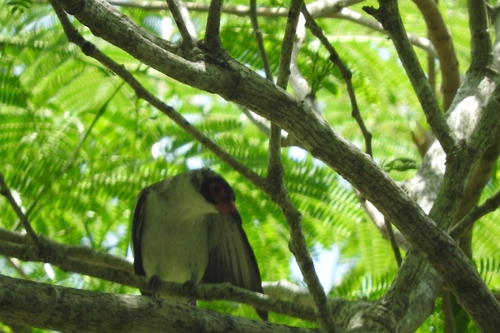
Masked Tityra (Tityra semifasciata) Masked Tityra
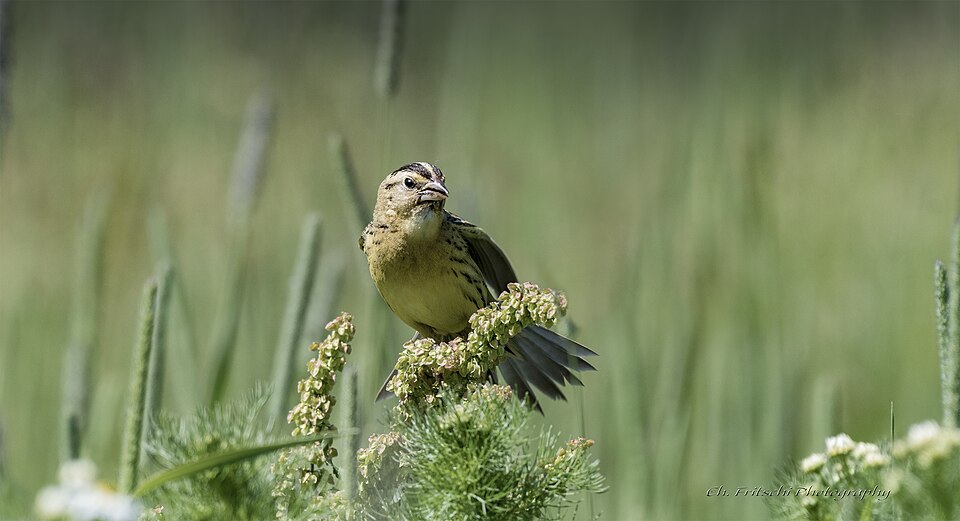
Bobolink (Dolichonyx oryzivorus) Bobolink

Media

Loading…

In short

The most reliable field mark between Masked Tityra and Bobolink is overall structure and bill shape: Masked Tityra is a much larger, heavier-bodied bird with a thick, slightly hooked, rosy-red bill, while Bobolink is smaller and more slender with a short, conical finch-like bill. Adult male Bobolinks in breeding plumage are unmistakable with their black bodies, pale napes, and white scapulars and rumps, but females and non-breeding males are streaky brown and can be confused with other passerines. Masked Tityra males show pale grayish upperparts with a black facial mask and bare red skin around the bill and eye, while females are grayer-brown with a dingier mask. In flight or perched, the Tityra’s size, pale coloration, and facial skin stand out, while Bobolink is always smaller and never shows red facial skin or a hooked bill. Juvenile and female Bobolinks are especially likely to be confused with other streaky brown birds, but not with Masked Tityra if bill and size are checked.

Identification tips

  1. Size and Structure: Masked Tityra is much larger and heavier than Bobolink; use this as a first check, especially if seen with other birds for scale. Tityra has a thick, slightly hooked bill, while Bobolink’s bill is short and conical.
  2. Facial Skin and Mask: Tityra of both sexes has bare rosy red skin from the bill to around the eye, a unique feature never shown by Bobolink. Adult male Tityra also has a black mask wrapping behind the eye; females lack the black but still show the red skin.
  3. Bill Shape and Color: Tityra’s bill is thick, slightly hooked, and rosy red with a black tip; Bobolink’s is short, conical, and dark, typical of a seed-eating blackbird.
  4. Adult Male Plumage: Breeding male Bobolink is black with a pale nape and white scapulars and rump—very different from any Tityra. If you see a black bird with a pale nape in a field, it is a Bobolink.
  5. Female/Non-breeding Plumage: Female and non-breeding Bobolinks are streaky brown with dark head stripes and lack any facial skin or mask. Female Tityra is plain grayish with brown smudges, not streaky, and still shows the red facial skin.
  6. Wing and Tail Pattern: Tityra’s wings are mostly black with pale tertials; tail is grayish white with a wide black band. Bobolink’s wings and tail are darker brown in females/non-breeding males, with no pale tertials or subterminal black band.
  7. Iris Color: Tityra has a reddish brown to brick-red iris, which may be visible at close range; Bobolink’s iris is dark.
  8. Perched Posture: Tityra often perches upright on exposed branches high in trees; Bobolink is more likely to be seen on the ground or on low vegetation in open fields.
  9. Habitat: Tityra is a forest and woodland edge species, rarely in open country. Bobolink is found in open grasslands, hayfields, and agricultural areas.
  10. Flight Behavior: Bobolink often flies in flocks with undulating, bouncy flight over fields; Tityra’s flight is more direct and solitary, usually between trees.
  11. Vocalizations: Listen for Tityra’s buzzy, nasal, croaking calls versus Bobolink’s musical, bubbling song (breeding males) or simple calls in migration.
  12. Geographic Range: Tityra is resident from Mexico to northern/central South America (not in the Guianas); Bobolink breeds in North America and winters in South America, so overlap is mostly during migration or on wintering grounds.
  13. Sexual Dimorphism: Both species are sexually dimorphic, but in different ways: Bobolink males are boldly patterned in breeding season, females streaky brown; Tityra males have a black mask, females are plainer but both have red facial skin.
  14. Confusion Risk: Female/immature Bobolink could be confused with other streaky brown birds, but not with Tityra if facial skin and bill are checked. Tityra’s unique combination of size, bill, and facial skin is diagnostic.
  15. Seasonality: Bobolink is present in North America in summer, migrates through Central/South America; Tityra is resident year-round in its range. If seen in North America outside migration, it is almost certainly not a Tityra.

Size

Masked Tityra is substantially larger and heavier than Bobolink. Tityra measures 20–24 cm in length and weighs 77–88 g [wikidata], giving it a robust, almost jay-like presence. Bobolink is much smaller at 16–18 cm and about 28 g [wikipedia], with a more delicate, sparrow-like build. The Tityra’s thick, hooked bill is much larger and bulkier than the Bobolink’s short, conical finch bill. In the field, Tityra will look noticeably bigger and more powerful, especially when seen side by side with other passerines.

Plumage

There are no distinctive juvenile or immature upperwing patterns described for either species that would allow for a quick flight separation. For adults, Masked Tityra males are pale grayish above with a bold black mask (forecrown wrapping behind the eye) and bare rosy red skin from the bill to around the eye. Their wings are mostly black with pale tertials, and the tail is grayish white with a wide black subterminal band. Females are darker gray with brown streaks and lack the black mask, but still show the red facial skin. Bobolink adult males in breeding plumage are striking: black overall with a creamy nape and white scapulars, lower back, and rump. Females and non-breeding males are light brown with black streaks on the back and flanks, and dark stripes on the head; their wings and tails are darker brown. Bobolink never shows red facial skin or a hooked bill. In all plumages, Bobolink is streakier and browner, while Tityra is cleaner gray or grayish-white with a distinctive facial pattern.

Behaviour

Masked Tityra is typically seen perched upright on exposed branches high in the forest canopy, often sitting still for long periods or making short sallies. It may display by running along branches with wings drooped. Bobolink is more likely to be seen in open fields or grasslands, often foraging on the ground or making fluttery, undulating flights over vegetation. During migration, Bobolinks may form flocks and feed in agricultural fields. Tityra’s behavior is more arboreal and less gregarious than the flocking, ground-foraging Bobolink.

Habitat

Masked Tityra is found in forested habitats from Mexico through Central America and into northern and central South America, typically in woodland, forest edges, and tall secondary growth. It is rarely found in open fields. Bobolink, by contrast, breeds in open grasslands, hayfields, and prairies in North America, and during migration and winter is found in open country, cultivated fields, and grasslands. If you are in a closed forest or woodland canopy, Tityra is far more likely; in open fields or grasslands, Bobolink is the expected species.

Voice

Masked Tityra gives a variety of buzzy, nasal, and croaking calls, including 'zzzu rrk', 'querrp', and grunting or pig-like notes. Its calls are generally dry, staccato, and insect-like, sometimes rhythmic. Bobolink’s song is a bubbly, musical, and complex series of notes, but this is mostly given by males on the breeding grounds. Calls of Bobolink are less distinctive in migration and winter, but do not resemble the harsh, nasal quality of Tityra. If you hear a dry, croaking or pig-like call, suspect Tityra; a musical, warbling song points to Bobolink.

Submit a better description

Use the same sections as the comparison. Your text is published immediately.

The most reliable field mark between Masked Tityra and Bobolink is overall structure and bill shape: Masked Tityra is a much larger, heavier-bodied bird with a thick, slightly hooked, rosy-red bill, while Bobolink is smaller and more slender with a short, conical finch-like bill. Adult male Bobolinks in breeding plumage are unmistakable with their black bodies, pale napes, and white scapulars and rumps, but females and non-breeding males are streaky brown and can be confused with other passerines. Masked Tityra males show pale grayish upperparts with a black facial mask and bare red skin around the bill and eye, while females are grayer-brown with a dingier mask. In flight or perched, the Tityra’s size, pale coloration, and facial skin stand out, while Bobolink is always smaller and never shows red facial skin or a hooked bill. Juvenile and female Bobolinks are especially likely to be confused with other streaky brown birds, but not with Masked Tityra if bill and size are checked.

  1. Size and Structure: Masked Tityra is much larger and heavier than Bobolink; use this as a first check, especially if seen with other birds for scale. Tityra has a thick, slightly hooked bill, while Bobolink’s bill is short and conical.
  2. Facial Skin and Mask: Tityra of both sexes has bare rosy red skin from the bill to around the eye, a unique feature never shown by Bobolink. Adult male Tityra also has a black mask wrapping behind the eye; females lack the black but still show the red skin.
  3. Bill Shape and Color: Tityra’s bill is thick, slightly hooked, and rosy red with a black tip; Bobolink’s is short, conical, and dark, typical of a seed-eating blackbird.
  4. Adult Male Plumage: Breeding male Bobolink is black with a pale nape and white scapulars and rump—very different from any Tityra. If you see a black bird with a pale nape in a field, it is a Bobolink.
  5. Female/Non-breeding Plumage: Female and non-breeding Bobolinks are streaky brown with dark head stripes and lack any facial skin or mask. Female Tityra is plain grayish with brown smudges, not streaky, and still shows the red facial skin.
  6. Wing and Tail Pattern: Tityra’s wings are mostly black with pale tertials; tail is grayish white with a wide black band. Bobolink’s wings and tail are darker brown in females/non-breeding males, with no pale tertials or subterminal black band.
  7. Iris Color: Tityra has a reddish brown to brick-red iris, which may be visible at close range; Bobolink’s iris is dark.
  8. Perched Posture: Tityra often perches upright on exposed branches high in trees; Bobolink is more likely to be seen on the ground or on low vegetation in open fields.
  9. Habitat: Tityra is a forest and woodland edge species, rarely in open country. Bobolink is found in open grasslands, hayfields, and agricultural areas.
  10. Flight Behavior: Bobolink often flies in flocks with undulating, bouncy flight over fields; Tityra’s flight is more direct and solitary, usually between trees.
  11. Vocalizations: Listen for Tityra’s buzzy, nasal, croaking calls versus Bobolink’s musical, bubbling song (breeding males) or simple calls in migration.
  12. Geographic Range: Tityra is resident from Mexico to northern/central South America (not in the Guianas); Bobolink breeds in North America and winters in South America, so overlap is mostly during migration or on wintering grounds.
  13. Sexual Dimorphism: Both species are sexually dimorphic, but in different ways: Bobolink males are boldly patterned in breeding season, females streaky brown; Tityra males have a black mask, females are plainer but both have red facial skin.
  14. Confusion Risk: Female/immature Bobolink could be confused with other streaky brown birds, but not with Tityra if facial skin and bill are checked. Tityra’s unique combination of size, bill, and facial skin is diagnostic.
  15. Seasonality: Bobolink is present in North America in summer, migrates through Central/South America; Tityra is resident year-round in its range. If seen in North America outside migration, it is almost certainly not a Tityra.

Masked Tityra is substantially larger and heavier than Bobolink. Tityra measures 20–24 cm in length and weighs 77–88 g [wikidata], giving it a robust, almost jay-like presence. Bobolink is much smaller at 16–18 cm and about 28 g [wikipedia], with a more delicate, sparrow-like build. The Tityra’s thick, hooked bill is much larger and bulkier than the Bobolink’s short, conical finch bill. In the field, Tityra will look noticeably bigger and more powerful, especially when seen side by side with other passerines.

There are no distinctive juvenile or immature upperwing patterns described for either species that would allow for a quick flight separation. For adults, Masked Tityra males are pale grayish above with a bold black mask (forecrown wrapping behind the eye) and bare rosy red skin from the bill to around the eye. Their wings are mostly black with pale tertials, and the tail is grayish white with a wide black subterminal band. Females are darker gray with brown streaks and lack the black mask, but still show the red facial skin. Bobolink adult males in breeding plumage are striking: black overall with a creamy nape and white scapulars, lower back, and rump. Females and non-breeding males are light brown with black streaks on the back and flanks, and dark stripes on the head; their wings and tails are darker brown. Bobolink never shows red facial skin or a hooked bill. In all plumages, Bobolink is streakier and browner, while Tityra is cleaner gray or grayish-white with a distinctive facial pattern.

Masked Tityra is typically seen perched upright on exposed branches high in the forest canopy, often sitting still for long periods or making short sallies. It may display by running along branches with wings drooped. Bobolink is more likely to be seen in open fields or grasslands, often foraging on the ground or making fluttery, undulating flights over vegetation. During migration, Bobolinks may form flocks and feed in agricultural fields. Tityra’s behavior is more arboreal and less gregarious than the flocking, ground-foraging Bobolink.

Masked Tityra is found in forested habitats from Mexico through Central America and into northern and central South America, typically in woodland, forest edges, and tall secondary growth. It is rarely found in open fields. Bobolink, by contrast, breeds in open grasslands, hayfields, and prairies in North America, and during migration and winter is found in open country, cultivated fields, and grasslands. If you are in a closed forest or woodland canopy, Tityra is far more likely; in open fields or grasslands, Bobolink is the expected species.

Masked Tityra gives a variety of buzzy, nasal, and croaking calls, including 'zzzu rrk', 'querrp', and grunting or pig-like notes. Its calls are generally dry, staccato, and insect-like, sometimes rhythmic. Bobolink’s song is a bubbly, musical, and complex series of notes, but this is mostly given by males on the breeding grounds. Calls of Bobolink are less distinctive in migration and winter, but do not resemble the harsh, nasal quality of Tityra. If you hear a dry, croaking or pig-like call, suspect Tityra; a musical, warbling song points to Bobolink.

Discard your changes?

You have unsaved edits. If you leave now, those changes will be lost.

Masked Tityra · Bobolink · My Tricky Birds