

Manx Shearwater vs Boyd's Shearwater
Puffinus puffinus versus Puffinus boydi
Play a quiz with Manx Shearwater and Boyd's Shearwater
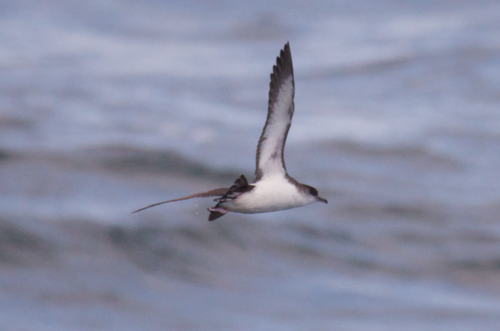 Manx Shearwater
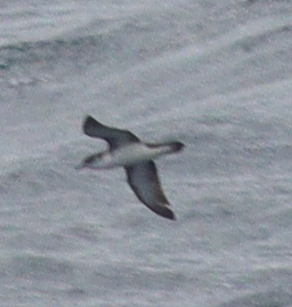 Boyd's Shearwater
In short
The most reliable way to separate Manx Shearwater from Boyd's Shearwater is by size: Manx is distinctly larger and heavier-bodied, with a more robust, long-winged look in flight. Both are black-and-white shearwaters with similar overall patterns, but Manx Shearwater is medium-sized, while Boyd's is much smaller and more delicate. If seen together, the difference is striking, but lone birds at sea can be tricky—especially immatures. Focus on overall bulk, wing length, and flight style, as plumage differences are subtle and not well-documented for immatures in these sources.
Identification tips
- Size is the most reliable field mark: Manx Shearwater is much larger and heavier-bodied than Boyd's. If you have a reference or see multiple birds, look for the bulkier, longer-winged individual for Manx.
- Flight style: Manx typically flies with stiff, straight wings, banking and gliding low over the water, often looking cross-shaped. Boyd's, being smaller, may appear more fluttery and less powerful in flight, though this is subtle without direct comparison.
- Plumage pattern: Both species are black above and white below, with sharp contrast. There are no documented age-specific upperwing patterns or distinctive juvenile marks to separate them in the field based on current sources.
- Bill and structure: While not detailed in the sources, Manx's larger size generally means a proportionally stouter bill and longer wings compared to the daintier, shorter-winged Boyd's.
- Habitat and range: Location is key. Manx Shearwater breeds and is most often seen in the North Atlantic and adjacent waters, while Boyd's is endemic to Cape Verde. Birds seen far from these core ranges should be scrutinized carefully.
- Perched views: Both species are rarely seen perched except at breeding colonies, but Manx would appear larger and longer-bodied if observed on land.
- Seasonal context: Manx Shearwaters leave their breeding colonies from July to March and migrate to the South Atlantic. Boyd's is resident in Cape Verde. Timing and location together can help eliminate confusion.
- Flock composition: If you see a mixed flock, look for size differences. Manx will stand out as the larger bird.
- No reliable vocal differences: The sources do not provide vocalizations for field separation.
- Immature birds: There are no documented distinctive marks for immatures of either species in these sources. Rely on size and structure.
- Pitfalls: Single birds at sea are hardest to identify. Without size reference or clear range context, be cautious—plumage is not diagnostic.
- Sex and age: No sexual dimorphism or age-specific field marks are described for these two species.
- Lighting and distance: At long range, both appear as black-and-white shearwaters. Use size, flight style, and range as your main clues.
- Migration: Manx migrates long distances and may rarely appear outside its usual range, but Boyd's is much more range-restricted.
- Summary for field use: Prioritize size, structure, and range. If you cannot judge size or are outside the known range, identification may be uncertain.
Size
Manx Shearwater is substantially larger, with a body mass around 521 g [wikidata], compared to the much smaller Boyd's Shearwater (no direct mass given, but described as 'small' [wikipedia]). Manx measures 30–38 cm in length with a 76–89 cm wingspan, while Boyd's is a 'small shearwater' and would be noticeably lighter and shorter-winged. In the field, Manx appears more robust and elongated, while Boyd's is more petite and compact.
Plumage
No detailed age-specific or upperwing pattern differences are described in the sources for these two species. Both show the classic black upperparts and white underparts typical of Puffinus shearwaters. Manx Shearwater is described as having a sharp black-and-white contrast, with the black upperparts and white undersides flashing as it banks low over the sea. There is no mention of distinctive juvenile or immature wing patterns (such as triangles or W-shapes) for either species. Therefore, plumage alone is not a reliable separator in most field views, especially for immatures.
Behaviour
Manx Shearwater is noted for its 'shearing' flight, gliding low over the water with stiff, straight wings held at right angles to the body, often appearing cross-shaped. It rarely flaps, instead banking and dipping with wingtips close to the surface. Boyd's Shearwater, while not described in detail, is likely to have a similar flight style but with a lighter, more fluttery action due to its smaller size. Manx's flight is more powerful and direct, reflecting its greater bulk and longer wings.
Habitat
Manx Shearwater breeds on North Atlantic islands (UK, Ireland, Iceland, Faroes, France, Azores, Canaries, Madeira) and migrates to the South Atlantic for winter. Boyd's Shearwater is restricted to the Cape Verde archipelago off West Africa. Thus, location is a strong clue: any Puffinus shearwater seen in the Cape Verde region is likely Boyd's, while birds in the North Atlantic are almost certainly Manx. Overlap at sea is extremely rare.