

Motmot

Mallard vs Hermit Thrush

Anas platyrhynchos versus Catharus guttatus

Play a quiz with Mallard and Hermit Thrush
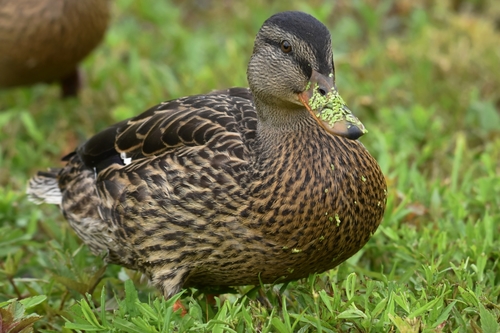
Mallard (Anas platyrhynchos) Mallard
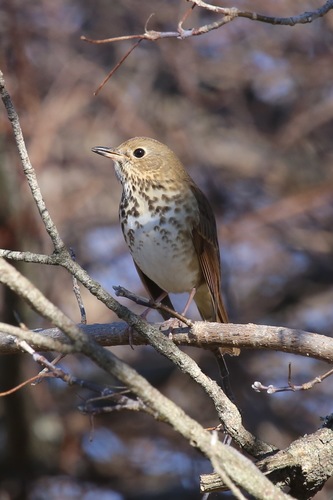
Hermit Thrush (Catharus guttatus) Hermit Thrush

Media

Loading…

In short

The most reliable field mark is overall structure and size: Mallard is a large, heavy-bodied duck with a broad bill and long neck, while Hermit Thrush is a small, slender songbird with a thin bill and upright posture. In flight, Mallards show broad wings with a blue speculum bordered by white, whereas Hermit Thrushes have compact wings and a reddish tail. Female and juvenile Mallards can be confusingly brown, but they are always much larger and have a different bill shape and wing pattern than any thrush. Hermit Thrushes are never seen swimming and have spotted breasts and a distinctive reddish tail, unlike any plumage of Mallard.

Identification tips

  1. Size is the first check: Mallard is over three times the length and many times the weight of Hermit Thrush. If the bird is sparrow- or robin-sized, it cannot be a Mallard.
  2. Bill shape: Mallard has a broad, flat, spatulate bill (yellow in males, orange/black in females); Hermit Thrush has a thin, pointed bill suited for eating insects and berries.
  3. Legs and feet: Mallard has orange webbed feet for swimming; Hermit Thrush has thin, pink legs and no webbing.
  4. Wing pattern in flight: Mallard (all ages/sexes) shows a blue speculum bordered with white on the upperwing; Hermit Thrush never shows any blue or iridescent on the wings, but instead has a subtle white-dark-white underwing pattern (all ages).
  5. Tail color: Hermit Thrush always has a reddish tail contrasting with brown upperparts; Mallard never shows this pattern at any age.
  6. Breast pattern: Hermit Thrush has bold dark spots on a white breast; Mallard females/juveniles are streaked and mottled, not spotted, and males have a solid chestnut breast in breeding plumage.
  7. Eye ring: Hermit Thrush has a prominent white eye ring; Mallard lacks any eye ring.
  8. Posture and movement: Hermit Thrush stands upright, often flicking its tail; Mallard is horizontal, waddling or swimming.
  9. Habitat: Mallard is always near water; Hermit Thrush is in woods, thickets, or forest edge, rarely near open water.
  10. Behavior: Mallard dabbles and swims; Hermit Thrush hops on the ground or perches in trees, never swims.
  11. Vocalization: Loud quack (Mallard) vs. ethereal, flute-like song or soft "chup" call (Hermit Thrush).
  12. Flock size: Mallards are often in large groups; Hermit Thrushes are solitary or in small numbers.
  13. Sexual dimorphism: Mallard males in breeding plumage have a green head and white neck ring; Hermit Thrushes show no sexual dimorphism.
  14. Juvenile confusion: Even juvenile Mallards are much larger and have a blue speculum; Hermit Thrush juveniles look like adults but may be slightly more spotted.
  15. Feet color: Mallard's feet are orange; Hermit Thrush's are pink.

Size

Mallard is dramatically larger: adults measure 50–65 cm in length and weigh 0.7–1.6 kg, with a wingspan of 81–98 cm [wikipedia][avonet]. Hermit Thrush is much smaller, at 15–18 cm long, 18–37 g in weight, and a wingspan of 25–30 cm. Even a Mallard duckling is bulkier than an adult Hermit Thrush. The difference is obvious in any direct comparison or even at a distance.

Plumage

Juvenile and female Mallards are mottled brown with buff and dark streaks, and show a blue speculum with white borders on the wing in all ages and sexes. Males in breeding plumage are unmistakable with a green head and white neck ring. Hermit Thrushes, regardless of age or sex, are plain brown above with a reddish tail, white underparts, and distinct dark spots on the breast. In flight, Hermit Thrushes show a white-dark-white underwing pattern typical of Catharus thrushes, never a blue speculum. Mallard ducklings are yellow and black, quickly becoming streaky brown as juveniles, but always with a broad, flat bill and webbed feet. Hermit Thrushes have a thin bill, pink legs, and a bold white eye ring, with no blue or iridescent wing markings.

Behaviour

Mallards are almost always seen on or near water, swimming, dabbling, or flying in flocks. They rarely perch in trees. Hermit Thrushes are terrestrial songbirds, often seen hopping on the ground or perched in shrubs and trees, never swimming or dabbling. Mallards are gregarious and may gather in large flocks, while Hermit Thrushes are usually solitary or in loose groups, especially during migration.

Habitat

Mallards are found in wetlands, lakes, ponds, rivers, and marshes, often in open water or at the water's edge. Hermit Thrushes prefer forests, woodland edges, and dense understory, especially in migration and winter. They avoid open water and are rarely seen in the same habitat as Mallards except at the very edge of wooded ponds.

Voice

Mallard calls are loud, harsh quacks (especially females), and grunts or whistles in males. Hermit Thrushes have an ethereal, flute-like song with clear, musical phrases, and their calls are soft, liquid "chup" notes. The song of Hermit Thrush is often described as one of the most beautiful of North American birds, completely unlike any duck vocalization.

Submit a better description

Use the same sections as the comparison. Your text is published immediately.

The most reliable field mark is overall structure and size: Mallard is a large, heavy-bodied duck with a broad bill and long neck, while Hermit Thrush is a small, slender songbird with a thin bill and upright posture. In flight, Mallards show broad wings with a blue speculum bordered by white, whereas Hermit Thrushes have compact wings and a reddish tail. Female and juvenile Mallards can be confusingly brown, but they are always much larger and have a different bill shape and wing pattern than any thrush. Hermit Thrushes are never seen swimming and have spotted breasts and a distinctive reddish tail, unlike any plumage of Mallard.

  1. Size is the first check: Mallard is over three times the length and many times the weight of Hermit Thrush. If the bird is sparrow- or robin-sized, it cannot be a Mallard.
  2. Bill shape: Mallard has a broad, flat, spatulate bill (yellow in males, orange/black in females); Hermit Thrush has a thin, pointed bill suited for eating insects and berries.
  3. Legs and feet: Mallard has orange webbed feet for swimming; Hermit Thrush has thin, pink legs and no webbing.
  4. Wing pattern in flight: Mallard (all ages/sexes) shows a blue speculum bordered with white on the upperwing; Hermit Thrush never shows any blue or iridescent on the wings, but instead has a subtle white-dark-white underwing pattern (all ages).
  5. Tail color: Hermit Thrush always has a reddish tail contrasting with brown upperparts; Mallard never shows this pattern at any age.
  6. Breast pattern: Hermit Thrush has bold dark spots on a white breast; Mallard females/juveniles are streaked and mottled, not spotted, and males have a solid chestnut breast in breeding plumage.
  7. Eye ring: Hermit Thrush has a prominent white eye ring; Mallard lacks any eye ring.
  8. Posture and movement: Hermit Thrush stands upright, often flicking its tail; Mallard is horizontal, waddling or swimming.
  9. Habitat: Mallard is always near water; Hermit Thrush is in woods, thickets, or forest edge, rarely near open water.
  10. Behavior: Mallard dabbles and swims; Hermit Thrush hops on the ground or perches in trees, never swims.
  11. Vocalization: Loud quack (Mallard) vs. ethereal, flute-like song or soft "chup" call (Hermit Thrush).
  12. Flock size: Mallards are often in large groups; Hermit Thrushes are solitary or in small numbers.
  13. Sexual dimorphism: Mallard males in breeding plumage have a green head and white neck ring; Hermit Thrushes show no sexual dimorphism.
  14. Juvenile confusion: Even juvenile Mallards are much larger and have a blue speculum; Hermit Thrush juveniles look like adults but may be slightly more spotted.
  15. Feet color: Mallard's feet are orange; Hermit Thrush's are pink.

Mallard is dramatically larger: adults measure 50–65 cm in length and weigh 0.7–1.6 kg, with a wingspan of 81–98 cm [wikipedia][avonet]. Hermit Thrush is much smaller, at 15–18 cm long, 18–37 g in weight, and a wingspan of 25–30 cm. Even a Mallard duckling is bulkier than an adult Hermit Thrush. The difference is obvious in any direct comparison or even at a distance.

Juvenile and female Mallards are mottled brown with buff and dark streaks, and show a blue speculum with white borders on the wing in all ages and sexes. Males in breeding plumage are unmistakable with a green head and white neck ring. Hermit Thrushes, regardless of age or sex, are plain brown above with a reddish tail, white underparts, and distinct dark spots on the breast. In flight, Hermit Thrushes show a white-dark-white underwing pattern typical of Catharus thrushes, never a blue speculum. Mallard ducklings are yellow and black, quickly becoming streaky brown as juveniles, but always with a broad, flat bill and webbed feet. Hermit Thrushes have a thin bill, pink legs, and a bold white eye ring, with no blue or iridescent wing markings.

Mallards are almost always seen on or near water, swimming, dabbling, or flying in flocks. They rarely perch in trees. Hermit Thrushes are terrestrial songbirds, often seen hopping on the ground or perched in shrubs and trees, never swimming or dabbling. Mallards are gregarious and may gather in large flocks, while Hermit Thrushes are usually solitary or in loose groups, especially during migration.

Mallards are found in wetlands, lakes, ponds, rivers, and marshes, often in open water or at the water's edge. Hermit Thrushes prefer forests, woodland edges, and dense understory, especially in migration and winter. They avoid open water and are rarely seen in the same habitat as Mallards except at the very edge of wooded ponds.

Mallard calls are loud, harsh quacks (especially females), and grunts or whistles in males. Hermit Thrushes have an ethereal, flute-like song with clear, musical phrases, and their calls are soft, liquid "chup" notes. The song of Hermit Thrush is often described as one of the most beautiful of North American birds, completely unlike any duck vocalization.

Discard your changes?

You have unsaved edits. If you leave now, those changes will be lost.

Mallard · Hermit Thrush · My Tricky Birds