

Motmot

Long-toed Stint vs Red-necked Stint

Calidris subminuta versus Calidris ruficollis

Play a quiz with Long-toed Stint and Red-necked Stint
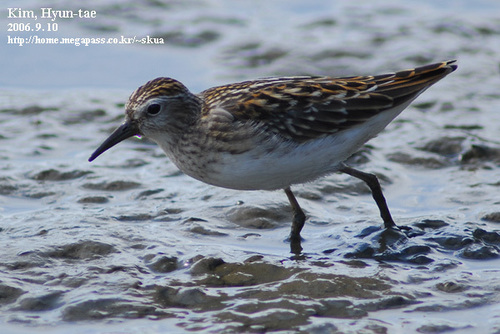
Long-toed Stint (Calidris subminuta) Long-toed Stint
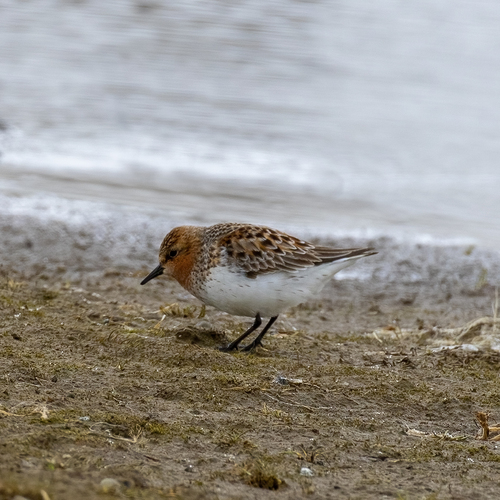
Red-necked Stint (Calidris ruficollis) Red-necked Stint

Media

Loading…

In short

The most reliable field mark to separate Long-toed Stint from Red-necked Stint is leg color: Long-toed Stint has distinctly yellow legs, while Red-necked Stint's legs are dark. This difference is visible at all ages and seasons and is usually clear even at a distance. Juvenile and non-breeding birds of both species can look extremely similar in body plumage, but Long-toed Stint is more finely built, with a longer neck, longer toes, and a more delicate stance. In flight or at rest, focus first on the legs and then on subtle differences in structure and plumage pattern. Both species are tiny, active waders often found together, so careful, repeated views are essential.

Identification tips

  1. Leg color is the most reliable field mark: Long-toed Stint always has yellow legs; Red-necked Stint's legs are dark. Check this first, especially in good light and when birds are standing or wading.
  2. Structure and stance: Long-toed Stint is more finely built, with a longer neck and a slender, delicate look. Its legs are set further back on the body, and the toes—especially the middle one—are noticeably long and slender. Red-necked Stint is more compact, short-legged, and appears 'busier' in movement.
  3. Toe length: Long-toed Stint's toes are longer, often projecting beyond the tail when perched or in the hand. This is subtle but can be seen in close views or photos.
  4. Bill: Both have fine, straight, dark bills, but Long-toed Stint's is slightly shorter and more delicate. Not a strong field mark unless seen side by side.
  5. Juvenile upperparts: Juvenile Long-toed Stint is brightly patterned above with rufous tones and clear white mantle stripes. Juvenile Red-necked Stint also has a contrasting mantle but with weaker white lines. Look for the brightness and clarity of the mantle stripes in fresh juveniles (late summer/autumn).
  6. Breeding plumage: Red-necked Stint shows a clean, unstreaked orange (rufous) breast and a white 'V' on the back. Long-toed Stint has a brown crown, pale supercilium, and speckled pale brown breast, lacking the strong rufous and white 'V'.
  7. Non-breeding plumage: Both become greyer above and paler below, but Long-toed Stint keeps a finer, more delicate look. Leg color remains diagnostic.
  8. Wingbar: Red-necked Stint has a stronger wingbar in flight; Long-toed Stint's wingbar is weaker. This is subtle and best seen in flight or on spread-wing photos.
  9. Primary projection: Red-necked Stint is described as longer-winged than Little Stint, but direct comparison with Long-toed Stint is not specified. Both have primaries reaching to or just beyond the tail.
  10. Supercilium and crown: Both have a pale supercilium and brown crown, but Long-toed Stint's facial pattern is slightly finer and more delicate.
  11. Behavior: Red-necked Stint is often more active and quick-moving, while Long-toed Stint may appear more measured and upright. Use only as a supporting clue.
  12. Voice: Red-necked Stint gives a hoarse 'stit' call. Long-toed Stint's call is distinctive but not described here; use with caution unless familiar.
  13. Habitat and context: Both species can occur together in the same habitat and flocks. Do not rely on location or flock composition for separation.
  14. Size: Both are tiny, but Long-toed Stint is marginally smaller and lighter built. Only useful in direct comparison.
  15. Pitfalls: Mud or poor light can obscure leg color. Juvenile and winter birds are especially tricky—use a combination of leg color, structure, and plumage pattern for best results.

Size

Long-toed Stint is slightly heavier (30.5 g vs 26.0 g [wikidata]), but both are among the smallest waders and overlap in length (Long-toed: 13–16 cm; Red-necked: 13–17 cm [wikipedia]). In the field, size alone is not a reliable separator, as both can appear equally diminutive. However, Long-toed Stint may look a touch more slender and fine-billed, while Red-necked Stint can seem a bit more compact and short-legged.

Plumage

Juvenile and non-breeding plumages are the main sources of confusion. Juvenile Long-toed Stint is brightly patterned above with rufous tones and clear white mantle stripes, while juvenile Red-necked Stint also shows contrasting mantle pattern but with weaker white lines. In breeding plumage, Red-necked Stint shows a distinctive unstreaked orange (rufous) breast and a white 'V' on the back, which Long-toed Stint lacks. In winter, both become duller and greyer above, but Long-toed Stint retains a finer, more delicate look and yellow legs. The wingbar is weaker in Long-toed Stint than in Red-necked Stint. Both have a pale supercilium and brown crown, but Long-toed Stint is more finely built and slightly smaller overall.

Behaviour

Both species are active, picking food from mudflats and shallow water, often in mixed flocks. Long-toed Stint may appear more delicate and slightly more upright due to its longer neck and legs set well back. Red-necked Stint is noted for quicker movements and a compact, busy feeding style. Both species forage visually and probe for small invertebrates.

Habitat

Both species share similar habitats, frequenting mudflats, shallow wetlands, and coastal areas during migration and winter. They often occur together in mixed flocks, especially in Southeast Asia and Australasia. Habitat is not a reliable separator between these two species.

Voice

Red-necked Stint gives a hoarse 'stit' call, while Long-toed Stint is said to have a distinctive flight call, but the notes do not specify its quality. Voice is not the most reliable separator unless the call is well known to the observer.

Submit a better description

Use the same sections as the comparison. Your text is published immediately.

The most reliable field mark to separate Long-toed Stint from Red-necked Stint is leg color: Long-toed Stint has distinctly yellow legs, while Red-necked Stint's legs are dark. This difference is visible at all ages and seasons and is usually clear even at a distance. Juvenile and non-breeding birds of both species can look extremely similar in body plumage, but Long-toed Stint is more finely built, with a longer neck, longer toes, and a more delicate stance. In flight or at rest, focus first on the legs and then on subtle differences in structure and plumage pattern. Both species are tiny, active waders often found together, so careful, repeated views are essential.

  1. Leg color is the most reliable field mark: Long-toed Stint always has yellow legs; Red-necked Stint's legs are dark. Check this first, especially in good light and when birds are standing or wading.
  2. Structure and stance: Long-toed Stint is more finely built, with a longer neck and a slender, delicate look. Its legs are set further back on the body, and the toes—especially the middle one—are noticeably long and slender. Red-necked Stint is more compact, short-legged, and appears 'busier' in movement.
  3. Toe length: Long-toed Stint's toes are longer, often projecting beyond the tail when perched or in the hand. This is subtle but can be seen in close views or photos.
  4. Bill: Both have fine, straight, dark bills, but Long-toed Stint's is slightly shorter and more delicate. Not a strong field mark unless seen side by side.
  5. Juvenile upperparts: Juvenile Long-toed Stint is brightly patterned above with rufous tones and clear white mantle stripes. Juvenile Red-necked Stint also has a contrasting mantle but with weaker white lines. Look for the brightness and clarity of the mantle stripes in fresh juveniles (late summer/autumn).
  6. Breeding plumage: Red-necked Stint shows a clean, unstreaked orange (rufous) breast and a white 'V' on the back. Long-toed Stint has a brown crown, pale supercilium, and speckled pale brown breast, lacking the strong rufous and white 'V'.
  7. Non-breeding plumage: Both become greyer above and paler below, but Long-toed Stint keeps a finer, more delicate look. Leg color remains diagnostic.
  8. Wingbar: Red-necked Stint has a stronger wingbar in flight; Long-toed Stint's wingbar is weaker. This is subtle and best seen in flight or on spread-wing photos.
  9. Primary projection: Red-necked Stint is described as longer-winged than Little Stint, but direct comparison with Long-toed Stint is not specified. Both have primaries reaching to or just beyond the tail.
  10. Supercilium and crown: Both have a pale supercilium and brown crown, but Long-toed Stint's facial pattern is slightly finer and more delicate.
  11. Behavior: Red-necked Stint is often more active and quick-moving, while Long-toed Stint may appear more measured and upright. Use only as a supporting clue.
  12. Voice: Red-necked Stint gives a hoarse 'stit' call. Long-toed Stint's call is distinctive but not described here; use with caution unless familiar.
  13. Habitat and context: Both species can occur together in the same habitat and flocks. Do not rely on location or flock composition for separation.
  14. Size: Both are tiny, but Long-toed Stint is marginally smaller and lighter built. Only useful in direct comparison.
  15. Pitfalls: Mud or poor light can obscure leg color. Juvenile and winter birds are especially tricky—use a combination of leg color, structure, and plumage pattern for best results.

Long-toed Stint is slightly heavier (30.5 g vs 26.0 g [wikidata]), but both are among the smallest waders and overlap in length (Long-toed: 13–16 cm; Red-necked: 13–17 cm [wikipedia]). In the field, size alone is not a reliable separator, as both can appear equally diminutive. However, Long-toed Stint may look a touch more slender and fine-billed, while Red-necked Stint can seem a bit more compact and short-legged.

Juvenile and non-breeding plumages are the main sources of confusion. Juvenile Long-toed Stint is brightly patterned above with rufous tones and clear white mantle stripes, while juvenile Red-necked Stint also shows contrasting mantle pattern but with weaker white lines. In breeding plumage, Red-necked Stint shows a distinctive unstreaked orange (rufous) breast and a white 'V' on the back, which Long-toed Stint lacks. In winter, both become duller and greyer above, but Long-toed Stint retains a finer, more delicate look and yellow legs. The wingbar is weaker in Long-toed Stint than in Red-necked Stint. Both have a pale supercilium and brown crown, but Long-toed Stint is more finely built and slightly smaller overall.

Both species are active, picking food from mudflats and shallow water, often in mixed flocks. Long-toed Stint may appear more delicate and slightly more upright due to its longer neck and legs set well back. Red-necked Stint is noted for quicker movements and a compact, busy feeding style. Both species forage visually and probe for small invertebrates.

Both species share similar habitats, frequenting mudflats, shallow wetlands, and coastal areas during migration and winter. They often occur together in mixed flocks, especially in Southeast Asia and Australasia. Habitat is not a reliable separator between these two species.

Red-necked Stint gives a hoarse 'stit' call, while Long-toed Stint is said to have a distinctive flight call, but the notes do not specify its quality. Voice is not the most reliable separator unless the call is well known to the observer.

Discard your changes?

You have unsaved edits. If you leave now, those changes will be lost.

Long-toed Stint · Red-necked Stint · My Tricky Birds