

Motmot

Long-tailed Duck vs Smew

Clangula hyemalis versus Mergellus albellus

Play a quiz with Long-tailed Duck and Smew
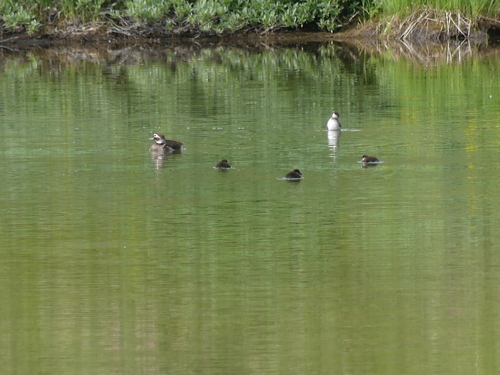
Long-tailed Duck (Clangula hyemalis) Long-tailed Duck
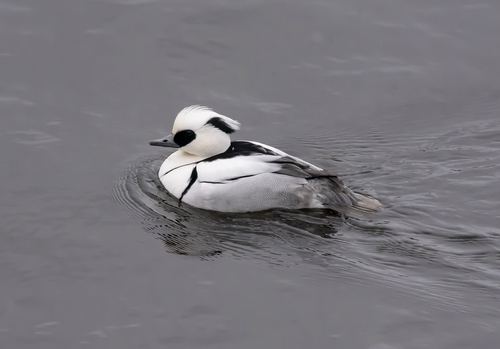
Smew (Mergellus albellus) Smew

Media

Loading…

In short

The most reliable field mark between Long-tailed Duck and Smew is the male Long-tailed Duck’s extremely long, pointed tail, which is never matched by Smew of any age or sex. In flight, Smew of all ages show distinctive oval white wing patches, while Long-tailed Duck lacks these and instead shows more muted wing patterning. Female and immature Smew are mostly grey with a chestnut crown and white face, contrasting with the browner, less sharply marked Long-tailed Duck females and juveniles. Structure also differs: Long-tailed Duck is more compact with a short bill and, in males, a striking tail; Smew is sleeker with a thin, hooked bill. Both species can occur together in winter on northern coasts or large lakes, but their habitat preferences and flocking behavior often differ.

Identification tips

  1. Long-tailed Duck adult male has an extremely long, pointed tail (10–15 cm), visible both at rest and in flight; Smew never shows this feature.
  2. Smew of all ages and sexes show oval white wing patches in flight; Long-tailed Duck lacks these, instead showing a more subdued upperwing pattern. Use this mark especially for birds in flight or at a distance.
  3. Female and juvenile Smew are grey with a chestnut crown and white cheek/chin, giving a sharp, 'redhead' look; Long-tailed Duck females/juveniles are browner, with a less distinct pale cheek and a shorter tail.
  4. Adult male Smew in breeding plumage is strikingly black-and-white ('cracked ice' or 'panda'), with no brown tones; Long-tailed Duck males are never this crisply patterned, and always have a dark cheek patch in winter or a white cheek in summer.
  5. Bill shape differs: Smew has a thin, hooked, serrated bill (adapted for catching fish); Long-tailed Duck has a short, thick bill with a pink band in males.
  6. Long-tailed Duck in winter (male) shows a white head with a dark cheek patch and a dark breast, not matched by any Smew plumage.
  7. Long-tailed Duck in summer (male) is dark on head, neck, and back with a white cheek patch; Smew males never show this combination.
  8. Juvenile Long-tailed Duck resembles adult female but with a lighter, less distinct cheek patch; juvenile Smew always shows the sharp white face and chestnut crown.
  9. Smew is shyer and more likely to flush when approached, often seen near lake edges or under trees; Long-tailed Duck is more tolerant of close approach in large flocks on open water.
  10. Long-tailed Duck forms large, dense winter flocks; Smew is usually in small groups or singly.
  11. Habitat can help: Smew prefers wooded lakes and rivers, especially with overhanging trees; Long-tailed Duck prefers open, often coastal waters.
  12. Vocalizations: Only Long-tailed Duck is likely to be heard, with its distinctive yodelling call; Smew is usually silent.
  13. In eclipse (late summer/autumn), adult male Smew resembles female but retains more white in the wing; Long-tailed Duck males in eclipse still show tail difference and lack white wing patches.
  14. Both species dive for food, but Smew’s dives are usually shorter and in shallower water near cover; Long-tailed Duck can dive very deep, often far from shore.
  15. If both species are present, look for the combination of tail length, wing patch, and facial pattern to separate even distant birds.

Size

Smew is slightly heavier on average (adult body mass about 610 g [wikidata]), but both are medium-sized ducks and can appear similar in size at a distance. Smew measures 38–44 cm in length with a 56–69 cm wingspan [wikipedia]. Long-tailed Duck’s length varies with tail: males with full tails appear longer, but females and immatures are closer to Smew in overall size. In the field, size is rarely diagnostic unless seen side-by-side; focus on structure and plumage.

Plumage

Juvenile and female Smew are mostly grey with a clear white cheek and chin, a chestnut crown and forehead, and black lores, giving a sharp 'redhead' look. In flight, all Smew show prominent oval white wing patches, a key mark for all ages and sexes. Young males resemble females until their first winter, when they gradually acquire more white. Adult male Smew in breeding plumage is strikingly black-and-white ('cracked ice' or 'panda'), unmistakable if seen well. Long-tailed Duck females and juveniles are browner overall, with a less distinct pale cheek patch and a shorter, pointed tail. Males are highly variable: in winter, they show a mostly white head with a dark cheek patch and a very long black tail; in summer, the head and neck are dark with a white cheek. Juveniles resemble females but with paler, less distinct facial markings. In flight, Long-tailed Duck lacks the bold white wing patch of Smew, and instead shows more muted, less contrasting upperwing patterning.

Behaviour

Long-tailed Duck is highly gregarious, forming large flocks in winter, especially on open sea or large lakes. They dive deeply for food, often using their wings underwater. Smew is shyer and more likely to flush when disturbed, often seen singly or in small groups, usually near the edges of lakes or slow rivers, sometimes under overhanging trees. Both species dive for food, but Smew specializes in catching fish with its serrated, hooked bill, while Long-tailed Duck takes a wider range of aquatic prey.

Habitat

Long-tailed Duck winters along northern coastlines and large inland lakes, often in exposed, open water, and breeds in tundra pools or arctic lakes. Smew breeds in the northern taiga, requiring trees for nesting (often in old woodpecker holes), and winters on sheltered coasts or inland lakes, especially those with wooded margins. In winter, both can overlap on large lakes or sheltered coastal waters, but Smew is more likely near vegetated edges, while Long-tailed Duck prefers open water.

Voice

Long-tailed Duck males are notably vocal, with a musical yodelling call ('ow, ow, owal-ow'), especially in winter flocks. Smew is generally quiet and shy; its calls are rarely heard and not a useful field mark in most situations.

Submit a better description

Use the same sections as the comparison. Your text is published immediately.

The most reliable field mark between Long-tailed Duck and Smew is the male Long-tailed Duck’s extremely long, pointed tail, which is never matched by Smew of any age or sex. In flight, Smew of all ages show distinctive oval white wing patches, while Long-tailed Duck lacks these and instead shows more muted wing patterning. Female and immature Smew are mostly grey with a chestnut crown and white face, contrasting with the browner, less sharply marked Long-tailed Duck females and juveniles. Structure also differs: Long-tailed Duck is more compact with a short bill and, in males, a striking tail; Smew is sleeker with a thin, hooked bill. Both species can occur together in winter on northern coasts or large lakes, but their habitat preferences and flocking behavior often differ.

  1. Long-tailed Duck adult male has an extremely long, pointed tail (10–15 cm), visible both at rest and in flight; Smew never shows this feature.
  2. Smew of all ages and sexes show oval white wing patches in flight; Long-tailed Duck lacks these, instead showing a more subdued upperwing pattern. Use this mark especially for birds in flight or at a distance.
  3. Female and juvenile Smew are grey with a chestnut crown and white cheek/chin, giving a sharp, 'redhead' look; Long-tailed Duck females/juveniles are browner, with a less distinct pale cheek and a shorter tail.
  4. Adult male Smew in breeding plumage is strikingly black-and-white ('cracked ice' or 'panda'), with no brown tones; Long-tailed Duck males are never this crisply patterned, and always have a dark cheek patch in winter or a white cheek in summer.
  5. Bill shape differs: Smew has a thin, hooked, serrated bill (adapted for catching fish); Long-tailed Duck has a short, thick bill with a pink band in males.
  6. Long-tailed Duck in winter (male) shows a white head with a dark cheek patch and a dark breast, not matched by any Smew plumage.
  7. Long-tailed Duck in summer (male) is dark on head, neck, and back with a white cheek patch; Smew males never show this combination.
  8. Juvenile Long-tailed Duck resembles adult female but with a lighter, less distinct cheek patch; juvenile Smew always shows the sharp white face and chestnut crown.
  9. Smew is shyer and more likely to flush when approached, often seen near lake edges or under trees; Long-tailed Duck is more tolerant of close approach in large flocks on open water.
  10. Long-tailed Duck forms large, dense winter flocks; Smew is usually in small groups or singly.
  11. Habitat can help: Smew prefers wooded lakes and rivers, especially with overhanging trees; Long-tailed Duck prefers open, often coastal waters.
  12. Vocalizations: Only Long-tailed Duck is likely to be heard, with its distinctive yodelling call; Smew is usually silent.
  13. In eclipse (late summer/autumn), adult male Smew resembles female but retains more white in the wing; Long-tailed Duck males in eclipse still show tail difference and lack white wing patches.
  14. Both species dive for food, but Smew’s dives are usually shorter and in shallower water near cover; Long-tailed Duck can dive very deep, often far from shore.
  15. If both species are present, look for the combination of tail length, wing patch, and facial pattern to separate even distant birds.

Smew is slightly heavier on average (adult body mass about 610 g [wikidata]), but both are medium-sized ducks and can appear similar in size at a distance. Smew measures 38–44 cm in length with a 56–69 cm wingspan [wikipedia]. Long-tailed Duck’s length varies with tail: males with full tails appear longer, but females and immatures are closer to Smew in overall size. In the field, size is rarely diagnostic unless seen side-by-side; focus on structure and plumage.

Juvenile and female Smew are mostly grey with a clear white cheek and chin, a chestnut crown and forehead, and black lores, giving a sharp 'redhead' look. In flight, all Smew show prominent oval white wing patches, a key mark for all ages and sexes. Young males resemble females until their first winter, when they gradually acquire more white. Adult male Smew in breeding plumage is strikingly black-and-white ('cracked ice' or 'panda'), unmistakable if seen well. Long-tailed Duck females and juveniles are browner overall, with a less distinct pale cheek patch and a shorter, pointed tail. Males are highly variable: in winter, they show a mostly white head with a dark cheek patch and a very long black tail; in summer, the head and neck are dark with a white cheek. Juveniles resemble females but with paler, less distinct facial markings. In flight, Long-tailed Duck lacks the bold white wing patch of Smew, and instead shows more muted, less contrasting upperwing patterning.

Long-tailed Duck is highly gregarious, forming large flocks in winter, especially on open sea or large lakes. They dive deeply for food, often using their wings underwater. Smew is shyer and more likely to flush when disturbed, often seen singly or in small groups, usually near the edges of lakes or slow rivers, sometimes under overhanging trees. Both species dive for food, but Smew specializes in catching fish with its serrated, hooked bill, while Long-tailed Duck takes a wider range of aquatic prey.

Long-tailed Duck winters along northern coastlines and large inland lakes, often in exposed, open water, and breeds in tundra pools or arctic lakes. Smew breeds in the northern taiga, requiring trees for nesting (often in old woodpecker holes), and winters on sheltered coasts or inland lakes, especially those with wooded margins. In winter, both can overlap on large lakes or sheltered coastal waters, but Smew is more likely near vegetated edges, while Long-tailed Duck prefers open water.

Long-tailed Duck males are notably vocal, with a musical yodelling call ('ow, ow, owal-ow'), especially in winter flocks. Smew is generally quiet and shy; its calls are rarely heard and not a useful field mark in most situations.

Discard your changes?

You have unsaved edits. If you leave now, those changes will be lost.

Long-tailed Duck · Smew · My Tricky Birds