

Motmot

Little Ringed Plover vs Common Redpoll

Thinornis dubius versus Acanthis flammea

Play a quiz with Little Ringed Plover and Common Redpoll

Little Ringed Plover (Thinornis dubius) Little Ringed Plover
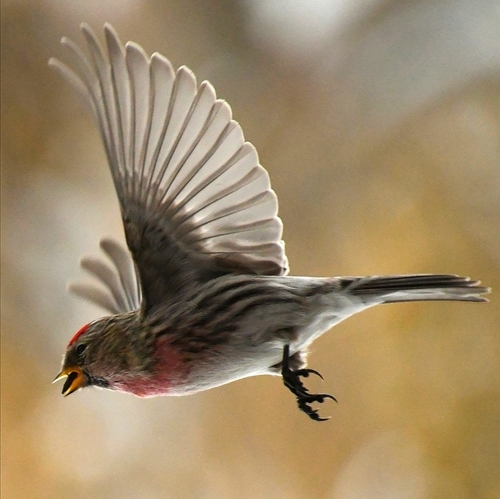
Common Redpoll (Acanthis flammea) Common Redpoll

Media

Loading…

In short

The most reliable field mark to separate Little Ringed Plover from Common Redpoll is the Little Ringed Plover’s bold yellow eyering and black facial mask, which are never shown by redpolls. In flight or perched, the plover’s single black neckband and clean white underparts contrast with the redpoll’s streaky, brownish body and small red forehead patch. Bill shape and leg color are also strong clues: plovers have a short, straight, dark bill and flesh-colored legs, while redpolls show a conical, yellowish bill and brown legs. Habitat is a strong context clue—plovers are found near water on open ground, while redpolls frequent trees and shrubs, especially in boreal or temperate zones.

Identification tips

  1. Yellow eyering (plover only): The Little Ringed Plover’s bright yellow eyering is unique and diagnostic at any age or season; redpolls never show this.
  2. Black facial mask (plover only): The plover has a bold black mask around the eye, contrasting with white above and below; redpolls lack any facial mask.
  3. Red forehead patch (redpoll only): All redpolls have a small, bright red patch on the forehead, never present on plovers.
  4. Neckband vs bib: Plovers show a single, crisp black neckband across the white breast; redpolls have a small black bib under the bill, but no neckband.
  5. Underparts: Plovers have clean white underparts except for the neckband; redpolls are streaked below, often with a dark vent streak and (in males) a pinkish breast wash.
  6. Wing pattern: Redpolls show two pale wingbars and streaked upperparts; plovers’ wings are plain brown with no wingbars or streaks.
  7. Bill shape and color: Plovers have a short, straight, dark bill suited for picking at the ground; redpolls have a conical, yellowish bill with a dark tip, typical of seed-eating finches.
  8. Leg color: Plovers have flesh-colored legs; redpolls’ legs are brown.
  9. Leg length and stance: Plovers stand tall and upright on long legs, often running on open ground. Redpolls perch or feed in trees and have short legs.
  10. Habitat context: Plovers are almost always on bare, open ground near water; redpolls are in trees, shrubs, or weedy fields, rarely near water.
  11. Behavior: Plovers run and pause, sometimes bobbing; redpolls are active, often in flocks, and may hang upside down while feeding.
  12. Sex/age pitfalls: Male redpolls may show a pinkish breast, but never a neckband or mask. Juvenile/immature plumages are not described as confusing between these species.
  13. Size/jizz: Both are small, but plovers appear longer-legged and more horizontal; redpolls are compact, short-legged, and more rounded in posture.
  14. Flight: In flight, plovers show plain brown wings and white underparts; redpolls show pale wingbars and a streaky, finch-like appearance.
  15. Voice: Not diagnostic with the available information, but in the field, plovers give sharp, whistled calls, while redpolls have twittering, finch-like calls.

Size

Little Ringed Plover is a small shorebird, but still slightly larger and longer-legged than the Common Redpoll. Redpolls measure 11.5–14 cm in length with a wingspan of 19–22 cm and weigh 12–16 grams [wikipedia]. Little Ringed Plover is similar in length but appears longer-legged and more upright, with a different overall jizz. In hand or at close range, the plover’s proportions are more horizontal and its legs are notably longer than the redpoll’s short, perching finch legs.

Plumage

No age-specific wing pattern is described for either species, so focus falls on adult and general plumage. Little Ringed Plover (all ages) shows plain grey-brown upperparts, a clean white forehead and belly, a single black neckband, and a striking black mask with a yellow eyering. Its legs are flesh-colored. In contrast, Common Redpoll (all ages) is streaky brownish-grey above with dark streaks, a red forehead patch, and a black bib; it has two pale wingbars and a streaked rump. Males may show a pinkish wash on the breast, but all redpolls lack the plover’s facial mask, yellow eyering, and neckband. The plover’s underparts are clean white except for the neckband, while redpolls are streaked below and have a dark vent streak. In flight, the plover’s wings are plain brown, while redpolls show pale wingbars and a generally streaky appearance.

Behaviour

Little Ringed Plovers are typically seen running and pausing on open ground near water, often making short dashes and stopping abruptly. They may bob their heads or crouch low when alarmed. Common Redpolls are active, often in flocks, and spend much of their time feeding acrobatically in trees or shrubs, sometimes hanging upside down. Redpolls may also forage on the ground for seeds, but their movements are more fluttery and less direct than the plover’s purposeful runs.

Habitat

Habitat is a major separator. Little Ringed Plovers are found on open, often bare ground near freshwater—such as gravel pits, riverbanks, or lakeshores. They avoid wooded areas. Common Redpolls inhabit boreal forests, taiga, and shrubby areas, especially where birch and alder are present. They are rarely found near open water or on bare ground, and are much more likely in trees or bushes, especially outside the breeding season.

Submit a better description

Use the same sections as the comparison. Your text is published immediately.

The most reliable field mark to separate Little Ringed Plover from Common Redpoll is the Little Ringed Plover’s bold yellow eyering and black facial mask, which are never shown by redpolls. In flight or perched, the plover’s single black neckband and clean white underparts contrast with the redpoll’s streaky, brownish body and small red forehead patch. Bill shape and leg color are also strong clues: plovers have a short, straight, dark bill and flesh-colored legs, while redpolls show a conical, yellowish bill and brown legs. Habitat is a strong context clue—plovers are found near water on open ground, while redpolls frequent trees and shrubs, especially in boreal or temperate zones.

  1. Yellow eyering (plover only): The Little Ringed Plover’s bright yellow eyering is unique and diagnostic at any age or season; redpolls never show this.
  2. Black facial mask (plover only): The plover has a bold black mask around the eye, contrasting with white above and below; redpolls lack any facial mask.
  3. Red forehead patch (redpoll only): All redpolls have a small, bright red patch on the forehead, never present on plovers.
  4. Neckband vs bib: Plovers show a single, crisp black neckband across the white breast; redpolls have a small black bib under the bill, but no neckband.
  5. Underparts: Plovers have clean white underparts except for the neckband; redpolls are streaked below, often with a dark vent streak and (in males) a pinkish breast wash.
  6. Wing pattern: Redpolls show two pale wingbars and streaked upperparts; plovers’ wings are plain brown with no wingbars or streaks.
  7. Bill shape and color: Plovers have a short, straight, dark bill suited for picking at the ground; redpolls have a conical, yellowish bill with a dark tip, typical of seed-eating finches.
  8. Leg color: Plovers have flesh-colored legs; redpolls’ legs are brown.
  9. Leg length and stance: Plovers stand tall and upright on long legs, often running on open ground. Redpolls perch or feed in trees and have short legs.
  10. Habitat context: Plovers are almost always on bare, open ground near water; redpolls are in trees, shrubs, or weedy fields, rarely near water.
  11. Behavior: Plovers run and pause, sometimes bobbing; redpolls are active, often in flocks, and may hang upside down while feeding.
  12. Sex/age pitfalls: Male redpolls may show a pinkish breast, but never a neckband or mask. Juvenile/immature plumages are not described as confusing between these species.
  13. Size/jizz: Both are small, but plovers appear longer-legged and more horizontal; redpolls are compact, short-legged, and more rounded in posture.
  14. Flight: In flight, plovers show plain brown wings and white underparts; redpolls show pale wingbars and a streaky, finch-like appearance.
  15. Voice: Not diagnostic with the available information, but in the field, plovers give sharp, whistled calls, while redpolls have twittering, finch-like calls.

Little Ringed Plover is a small shorebird, but still slightly larger and longer-legged than the Common Redpoll. Redpolls measure 11.5–14 cm in length with a wingspan of 19–22 cm and weigh 12–16 grams [wikipedia]. Little Ringed Plover is similar in length but appears longer-legged and more upright, with a different overall jizz. In hand or at close range, the plover’s proportions are more horizontal and its legs are notably longer than the redpoll’s short, perching finch legs.

No age-specific wing pattern is described for either species, so focus falls on adult and general plumage. Little Ringed Plover (all ages) shows plain grey-brown upperparts, a clean white forehead and belly, a single black neckband, and a striking black mask with a yellow eyering. Its legs are flesh-colored. In contrast, Common Redpoll (all ages) is streaky brownish-grey above with dark streaks, a red forehead patch, and a black bib; it has two pale wingbars and a streaked rump. Males may show a pinkish wash on the breast, but all redpolls lack the plover’s facial mask, yellow eyering, and neckband. The plover’s underparts are clean white except for the neckband, while redpolls are streaked below and have a dark vent streak. In flight, the plover’s wings are plain brown, while redpolls show pale wingbars and a generally streaky appearance.

Little Ringed Plovers are typically seen running and pausing on open ground near water, often making short dashes and stopping abruptly. They may bob their heads or crouch low when alarmed. Common Redpolls are active, often in flocks, and spend much of their time feeding acrobatically in trees or shrubs, sometimes hanging upside down. Redpolls may also forage on the ground for seeds, but their movements are more fluttery and less direct than the plover’s purposeful runs.

Habitat is a major separator. Little Ringed Plovers are found on open, often bare ground near freshwater—such as gravel pits, riverbanks, or lakeshores. They avoid wooded areas. Common Redpolls inhabit boreal forests, taiga, and shrubby areas, especially where birch and alder are present. They are rarely found near open water or on bare ground, and are much more likely in trees or bushes, especially outside the breeding season.

Discard your changes?

You have unsaved edits. If you leave now, those changes will be lost.

Little Ringed Plover · Common Redpoll · My Tricky Birds