

Motmot

Lesser Flamingo vs Great Crested Grebe

Phoeniconaias minor versus Podiceps cristatus

Play a quiz with Lesser Flamingo and Great Crested Grebe
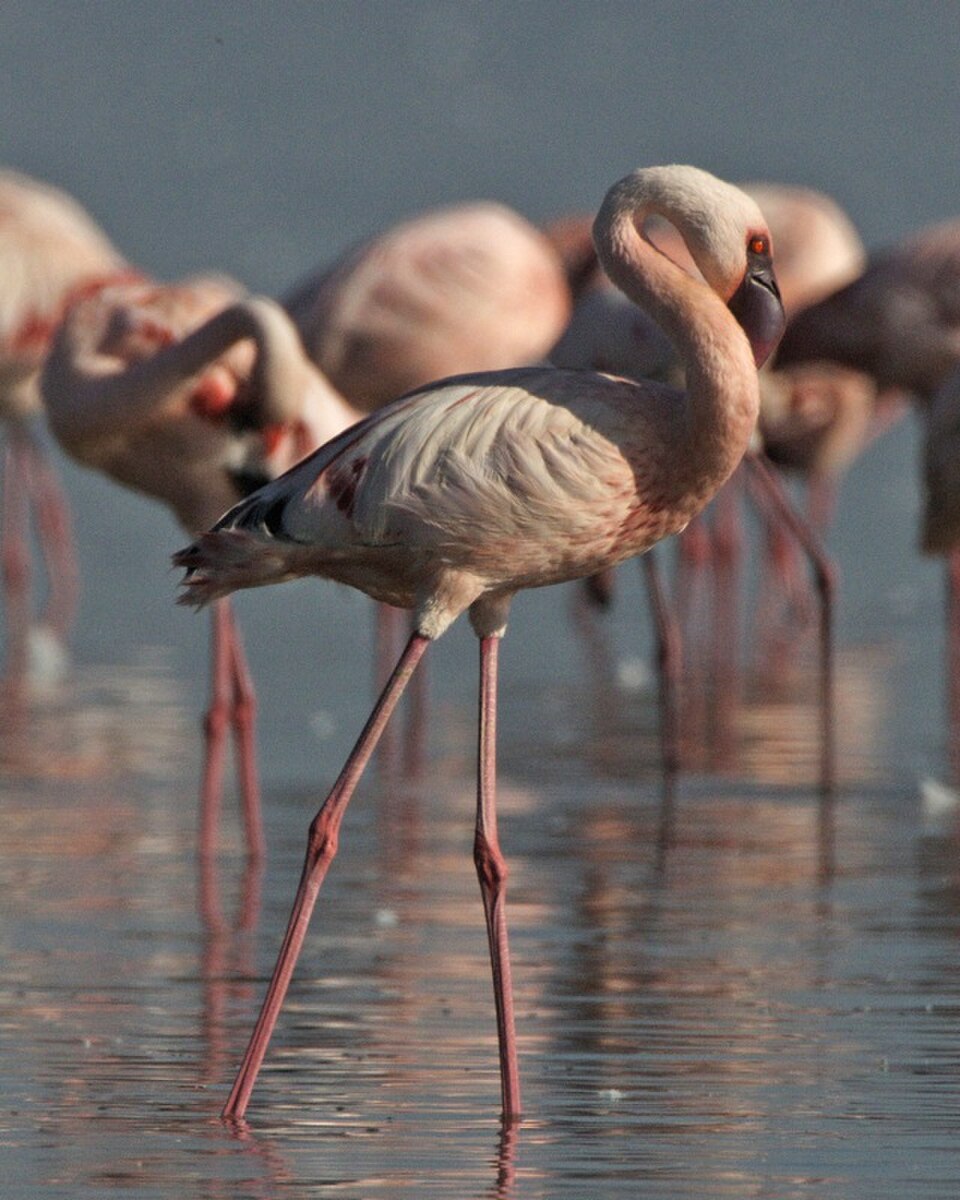
Lesser Flamingo (Phoeniconaias minor) Lesser Flamingo
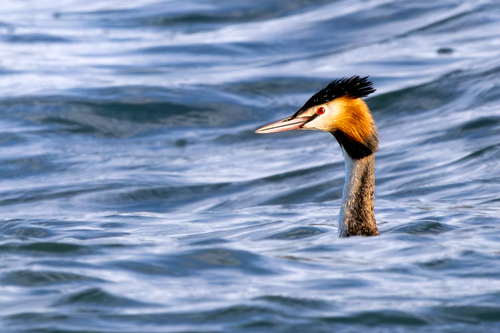
Great Crested Grebe (Podiceps cristatus) Great Crested Grebe

Media

Loading…

In short

The most reliable field mark to separate Lesser Flamingo from Great Crested Grebe is overall structure and bill shape: Lesser Flamingo is a tall, long-legged wader with a strongly downcurved, mostly black bill, while Great Crested Grebe is a swimming/diving waterbird with a slender, pointed pinkish bill and no visible legs when afloat. In flight or at rest, Lesser Flamingo shows pinkish-white plumage with long neck and legs, whereas Great Crested Grebe is compact, with a striking head pattern (especially in breeding adults) and lacks any pink tones. Juvenile grebes are boldly striped on the head, which is never seen in flamingos. If you see a bird standing in shallow water with long legs and a deep, curved bill, it's a flamingo; if it's floating or diving with a sharp bill and ornate head plumes (in season), it's a grebe.

Identification tips

  1. Leg length and position: Lesser Flamingo stands on very long, visible legs; Great Crested Grebe's legs are not visible when afloat and are set far back on the body.
  2. Bill shape and color: Flamingo has a deep, strongly downcurved bill with extensive black; grebe has a slender, straight, pointed bill that is pinkish in winter and lacks any black tip.
  3. Plumage color: Flamingo is pinkish-white overall with no dark head markings; grebe is never pink, and adults in breeding plumage have striking black and orange-brown head plumes.
  4. Juvenile pattern: Juvenile grebes have bold black-and-white head stripes ('humbug' pattern); flamingo juveniles are pale and never striped.
  5. Flight silhouette: Flamingo in flight shows long neck and legs trailing behind, with broad pink wings; grebe has short neck, no trailing legs, and compact wings.
  6. Posture and jizz: Flamingos are upright, often in tight flocks, and walk or wade; grebes are horizontal, floating low, and rarely seen on land.
  7. Habitat: Flamingos are in open, alkaline or saline lakes with little vegetation; grebes are in vegetated freshwater lakes and reservoirs.
  8. Feeding behavior: Flamingos sweep their bills side-to-side in shallow water; grebes dive underwater for fish.
  9. Group size: Flamingos are often in thousands; grebes are solitary or in small family groups.
  10. Head pattern (adult): Breeding grebes have ornate head plumes; flamingos never do.
  11. Head pattern (non-breeding/winter): Winter grebes have white above the eye and a pink bill; flamingos' head and bill pattern does not change seasonally.
  12. Chick behavior: Grebe chicks ride on parent's backs; flamingo chicks join huge creches and walk to water.
  13. Bill use: Flamingos filter-feed on algae; grebes spear or grab fish.
  14. Context: If the bird is walking or standing in shallow water, it's a flamingo; if it's diving or floating, it's a grebe.
  15. Confusion risk: Only possible at extreme distance or in poor light; structure and habitat are usually enough to separate.

Size

Lesser Flamingo is much larger in standing height (80–90 cm) and total length (90–105 cm), and heavier (1.2–2.7 kg, though no AVONET figure) than Great Crested Grebe, which is 46–51 cm long with a 59–73 cm wingspan and weighs 0.9–1.5 kg [wikipedia][wikidata]. However, size alone is not always diagnostic unless both are seen together, as there is some overlap in mass and length, and sex differences within each species. The flamingo's tall, upright stance and long legs make it appear much larger and more elongated than the grebe, which is compact and sits low in the water.

Plumage

Juvenile Great Crested Grebe is boldly striped on the head with alternating black and white, a unique pattern not found in flamingos of any age. Adult breeding grebes have ornate black, orange-brown, and white head plumes, while in winter they show white above the eye and a pink bill. Lesser Flamingo of all ages is pinkish-white overall, with no head stripes or ornate plumes, and the most distinctive feature is the extensive black on the bill. In flight, flamingos show long pink wings and trailing legs; grebes have short wings, no pink, and lack trailing legs. The flamingo's plumage is consistent year-round, while the grebe's head pattern changes with season and age.

Behaviour

Lesser Flamingo is almost always seen standing or wading in shallow alkaline lakes, often in large flocks, feeding by sweeping its bill through the water. It rarely swims deeply and never dives. Great Crested Grebe is an expert diver and swimmer, usually seen floating on the water, diving for fish, and performing elaborate courtship displays. Grebes nest on floating platforms and carry chicks on their backs, while flamingos nest on mud mounds and lead chicks in massive creches. Flamingos are rarely seen alone, while grebes are often in pairs or small family groups.

Habitat

Lesser Flamingo is found in highly alkaline or saline lakes, often in large groups, and is an indicator of sodic, non-irrigable water. Great Crested Grebe prefers vegetated freshwater lakes and reservoirs, sometimes moving to coastal waters in winter. The two species rarely overlap in preferred habitat: flamingos avoid vegetated freshwater and are tied to open, caustic lakes, while grebes avoid highly alkaline lakes and are tied to clear, fish-rich water. If you see a bird in a lush, vegetated freshwater lake, it's almost certainly a grebe; in a barren, salty pan, it's a flamingo.

Submit a better description

Use the same sections as the comparison. Your text is published immediately.

The most reliable field mark to separate Lesser Flamingo from Great Crested Grebe is overall structure and bill shape: Lesser Flamingo is a tall, long-legged wader with a strongly downcurved, mostly black bill, while Great Crested Grebe is a swimming/diving waterbird with a slender, pointed pinkish bill and no visible legs when afloat. In flight or at rest, Lesser Flamingo shows pinkish-white plumage with long neck and legs, whereas Great Crested Grebe is compact, with a striking head pattern (especially in breeding adults) and lacks any pink tones. Juvenile grebes are boldly striped on the head, which is never seen in flamingos. If you see a bird standing in shallow water with long legs and a deep, curved bill, it's a flamingo; if it's floating or diving with a sharp bill and ornate head plumes (in season), it's a grebe.

  1. Leg length and position: Lesser Flamingo stands on very long, visible legs; Great Crested Grebe's legs are not visible when afloat and are set far back on the body.
  2. Bill shape and color: Flamingo has a deep, strongly downcurved bill with extensive black; grebe has a slender, straight, pointed bill that is pinkish in winter and lacks any black tip.
  3. Plumage color: Flamingo is pinkish-white overall with no dark head markings; grebe is never pink, and adults in breeding plumage have striking black and orange-brown head plumes.
  4. Juvenile pattern: Juvenile grebes have bold black-and-white head stripes ('humbug' pattern); flamingo juveniles are pale and never striped.
  5. Flight silhouette: Flamingo in flight shows long neck and legs trailing behind, with broad pink wings; grebe has short neck, no trailing legs, and compact wings.
  6. Posture and jizz: Flamingos are upright, often in tight flocks, and walk or wade; grebes are horizontal, floating low, and rarely seen on land.
  7. Habitat: Flamingos are in open, alkaline or saline lakes with little vegetation; grebes are in vegetated freshwater lakes and reservoirs.
  8. Feeding behavior: Flamingos sweep their bills side-to-side in shallow water; grebes dive underwater for fish.
  9. Group size: Flamingos are often in thousands; grebes are solitary or in small family groups.
  10. Head pattern (adult): Breeding grebes have ornate head plumes; flamingos never do.
  11. Head pattern (non-breeding/winter): Winter grebes have white above the eye and a pink bill; flamingos' head and bill pattern does not change seasonally.
  12. Chick behavior: Grebe chicks ride on parent's backs; flamingo chicks join huge creches and walk to water.
  13. Bill use: Flamingos filter-feed on algae; grebes spear or grab fish.
  14. Context: If the bird is walking or standing in shallow water, it's a flamingo; if it's diving or floating, it's a grebe.
  15. Confusion risk: Only possible at extreme distance or in poor light; structure and habitat are usually enough to separate.

Lesser Flamingo is much larger in standing height (80–90 cm) and total length (90–105 cm), and heavier (1.2–2.7 kg, though no AVONET figure) than Great Crested Grebe, which is 46–51 cm long with a 59–73 cm wingspan and weighs 0.9–1.5 kg [wikipedia][wikidata]. However, size alone is not always diagnostic unless both are seen together, as there is some overlap in mass and length, and sex differences within each species. The flamingo's tall, upright stance and long legs make it appear much larger and more elongated than the grebe, which is compact and sits low in the water.

Juvenile Great Crested Grebe is boldly striped on the head with alternating black and white, a unique pattern not found in flamingos of any age. Adult breeding grebes have ornate black, orange-brown, and white head plumes, while in winter they show white above the eye and a pink bill. Lesser Flamingo of all ages is pinkish-white overall, with no head stripes or ornate plumes, and the most distinctive feature is the extensive black on the bill. In flight, flamingos show long pink wings and trailing legs; grebes have short wings, no pink, and lack trailing legs. The flamingo's plumage is consistent year-round, while the grebe's head pattern changes with season and age.

Lesser Flamingo is almost always seen standing or wading in shallow alkaline lakes, often in large flocks, feeding by sweeping its bill through the water. It rarely swims deeply and never dives. Great Crested Grebe is an expert diver and swimmer, usually seen floating on the water, diving for fish, and performing elaborate courtship displays. Grebes nest on floating platforms and carry chicks on their backs, while flamingos nest on mud mounds and lead chicks in massive creches. Flamingos are rarely seen alone, while grebes are often in pairs or small family groups.

Lesser Flamingo is found in highly alkaline or saline lakes, often in large groups, and is an indicator of sodic, non-irrigable water. Great Crested Grebe prefers vegetated freshwater lakes and reservoirs, sometimes moving to coastal waters in winter. The two species rarely overlap in preferred habitat: flamingos avoid vegetated freshwater and are tied to open, caustic lakes, while grebes avoid highly alkaline lakes and are tied to clear, fish-rich water. If you see a bird in a lush, vegetated freshwater lake, it's almost certainly a grebe; in a barren, salty pan, it's a flamingo.

Discard your changes?

You have unsaved edits. If you leave now, those changes will be lost.

Lesser Flamingo · Great Crested Grebe · My Tricky Birds