

Motmot

Lapland Bunting vs Western Meadowlark

Calcarius lapponicus versus Sturnella neglecta

Play a quiz with Lapland Bunting and Western Meadowlark
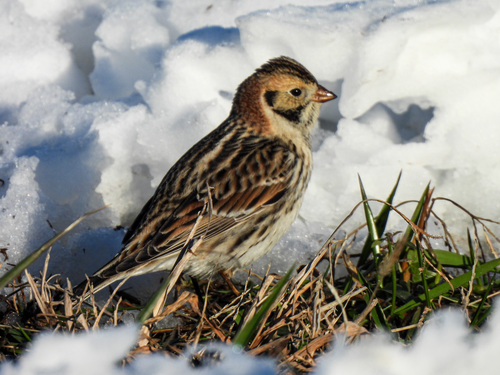
Lapland Bunting (Calcarius lapponicus) Lapland Bunting
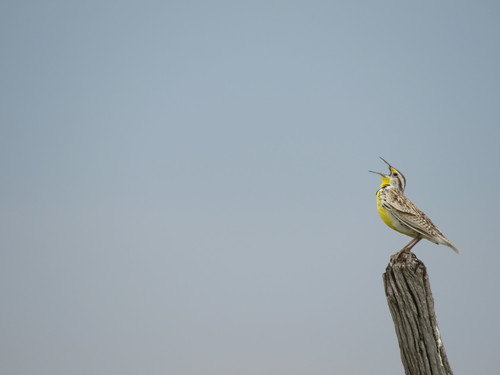
Western Meadowlark (Sturnella neglecta) Western Meadowlark

Media

Loading…

In short

The most reliable field mark between Lapland Bunting and Western Meadowlark is overall size and structure: Western Meadowlark is much larger and heavier-bodied, with a long, pointed bill and a boldly patterned, bright yellow breast, while Lapland Bunting is a compact, robust finch-like bird with a much smaller, conical bill. In flight or at rest, Lapland Bunting never shows the striking yellow below or the white outer tail feathers of a meadowlark. Immature and non-breeding Lapland Buntings can appear drab, but never approach the size, shape, or bold coloration of a Western Meadowlark. If you see a chunky, sparrow-sized bird with a chestnut nape and streaked back, it's a Lapland Bunting; a larger, starling-sized bird with a vivid yellow breast and black 'V' is a Western Meadowlark.

Identification tips

  1. Size is the first check: Western Meadowlark is more than twice as heavy and noticeably longer than Lapland Bunting. If the bird looks starling-sized, it's not a Lapland Bunting.
  2. Bill shape: Lapland Bunting has a short, thick, conical bill (finch-like), yellowish in color; Western Meadowlark has a long, pointed, straight bill (icterid/blackbird-like), much longer than the head is deep.
  3. Underparts color: Lapland Bunting is white or buffy below, sometimes with fine streaking; Western Meadowlark is bright yellow below with a bold black 'V' on the chest (all ages and sexes).
  4. Tail pattern in flight: Western Meadowlark shows white outer tail feathers in flight; Lapland Bunting does not.
  5. Back and nape: Lapland Bunting has a streaked back and a chestnut nape (even in non-breeding plumage); Western Meadowlark has a streaked brown back but lacks the chestnut nape.
  6. Head pattern: Breeding male Lapland Bunting has a black face and throat with a white supercilium and chestnut nape; Western Meadowlark never shows this combination.
  7. Perched posture: Western Meadowlark often stands upright on posts or fence wires; Lapland Bunting is more likely to be seen crouched on the ground or in low vegetation.
  8. Habitat context: In Eurasia or the high Arctic, expect Lapland Bunting; in North American prairies and grasslands, especially west of the Great Lakes, expect Western Meadowlark.
  9. Flock size: Lapland Buntings often form flocks in winter; Western Meadowlarks are usually seen singly or in small groups.
  10. Song: If you hear a loud, melodious, flute-like song, it's a Western Meadowlark; Lapland Bunting is much quieter and less musical.
  11. Seasonal context: Lapland Bunting is a winter visitor in much of its range, often in open, weedy fields; Western Meadowlark is resident or migratory but always in grassland habitats.
  12. Leg color and length: Western Meadowlark has longer legs, often visible when walking in grass; Lapland Bunting's legs are shorter and less obvious.
  13. Behavior: Watch for feeding style—Lapland Bunting picks seeds from the ground, often moving quickly in short hops; Western Meadowlark walks or runs, probing with its bill.
  14. Juvenile confusion: Even juvenile Lapland Buntings, which are plainer, never show yellow below or white in the tail—these are always Western Meadowlark marks.
  15. Overall impression ('jizz'): Lapland Bunting is a compact, chunky, sparrow-like bird; Western Meadowlark is a large, long-bodied, upright bird with a striking color pattern.

Size

Western Meadowlark is dramatically larger and heavier: about 20 cm (7.9 in) long and nearly 100 g in mass, compared to Lapland Bunting's 15–16 cm (5.9–6.3 in) and 22–33 g. The meadowlark is more than twice as heavy and noticeably longer, with a bulkier body and longer legs. Even at a distance, the size gap is obvious: Lapland Bunting is sparrow-sized, while Western Meadowlark is closer to a small thrush or starling.

Plumage

No age or wing pattern in either species is likely to cause confusion in flight: Lapland Bunting, even in juvenile or winter plumage, lacks any bold white outer tail or bright yellow underparts. Instead, it shows a streaked brown back, chestnut nape, and (in males) a black face and throat in summer. Immature and non-breeding Lapland Buntings are plainer, with an orange-brown head and chestnut nape, but always with a streaked back and no yellow. Western Meadowlark of all ages shows a bright yellow breast and belly with a black 'V' across the chest, and white outer tail feathers visible in flight. The back is brown and streaked, but the underparts and tail pattern are always distinctive. In summary: Lapland Bunting is streaky and earth-toned above, white below, never yellow; Western Meadowlark is boldly yellow below with a black chest mark and white in the tail.

Behaviour

Lapland Bunting forages mainly on the ground, picking seeds and insects, often in flocks, and tends to move in short flights between feeding areas. It is restless and often seen in open, low vegetation or on bare ground. Western Meadowlark also forages on the ground but is more likely to be seen walking or running in open grassland, often standing upright and singing from posts or shrubs. Meadowlarks are more conspicuous, often perching in the open and singing loudly, while Lapland Buntings are more secretive and less vocal in winter.

Habitat

Lapland Bunting is found in open tundra or arctic/alpine habitats during breeding, and in winter, frequents open fields, stubble, and weedy areas—often in flocks. Western Meadowlark is a classic bird of open grasslands, prairies, and agricultural fields in western and central North America. While both may occur in open country, Lapland Bunting favors colder, more northern or Eurasian settings, and is rarely found in the core range of Western Meadowlark. Overlap is unlikely except in migration or vagrancy.

Voice

No direct comparison is available in the notes, but Western Meadowlark is famous for its rich, flute-like song, often delivered from a perch. Lapland Bunting's calls are more sparrow-like and less musical, with no loud, melodious song. If you hear a loud, complex song from an open perch, it's almost certainly a meadowlark.

Submit a better description

Use the same sections as the comparison. Your text is published immediately.

The most reliable field mark between Lapland Bunting and Western Meadowlark is overall size and structure: Western Meadowlark is much larger and heavier-bodied, with a long, pointed bill and a boldly patterned, bright yellow breast, while Lapland Bunting is a compact, robust finch-like bird with a much smaller, conical bill. In flight or at rest, Lapland Bunting never shows the striking yellow below or the white outer tail feathers of a meadowlark. Immature and non-breeding Lapland Buntings can appear drab, but never approach the size, shape, or bold coloration of a Western Meadowlark. If you see a chunky, sparrow-sized bird with a chestnut nape and streaked back, it's a Lapland Bunting; a larger, starling-sized bird with a vivid yellow breast and black 'V' is a Western Meadowlark.

  1. Size is the first check: Western Meadowlark is more than twice as heavy and noticeably longer than Lapland Bunting. If the bird looks starling-sized, it's not a Lapland Bunting.
  2. Bill shape: Lapland Bunting has a short, thick, conical bill (finch-like), yellowish in color; Western Meadowlark has a long, pointed, straight bill (icterid/blackbird-like), much longer than the head is deep.
  3. Underparts color: Lapland Bunting is white or buffy below, sometimes with fine streaking; Western Meadowlark is bright yellow below with a bold black 'V' on the chest (all ages and sexes).
  4. Tail pattern in flight: Western Meadowlark shows white outer tail feathers in flight; Lapland Bunting does not.
  5. Back and nape: Lapland Bunting has a streaked back and a chestnut nape (even in non-breeding plumage); Western Meadowlark has a streaked brown back but lacks the chestnut nape.
  6. Head pattern: Breeding male Lapland Bunting has a black face and throat with a white supercilium and chestnut nape; Western Meadowlark never shows this combination.
  7. Perched posture: Western Meadowlark often stands upright on posts or fence wires; Lapland Bunting is more likely to be seen crouched on the ground or in low vegetation.
  8. Habitat context: In Eurasia or the high Arctic, expect Lapland Bunting; in North American prairies and grasslands, especially west of the Great Lakes, expect Western Meadowlark.
  9. Flock size: Lapland Buntings often form flocks in winter; Western Meadowlarks are usually seen singly or in small groups.
  10. Song: If you hear a loud, melodious, flute-like song, it's a Western Meadowlark; Lapland Bunting is much quieter and less musical.
  11. Seasonal context: Lapland Bunting is a winter visitor in much of its range, often in open, weedy fields; Western Meadowlark is resident or migratory but always in grassland habitats.
  12. Leg color and length: Western Meadowlark has longer legs, often visible when walking in grass; Lapland Bunting's legs are shorter and less obvious.
  13. Behavior: Watch for feeding style—Lapland Bunting picks seeds from the ground, often moving quickly in short hops; Western Meadowlark walks or runs, probing with its bill.
  14. Juvenile confusion: Even juvenile Lapland Buntings, which are plainer, never show yellow below or white in the tail—these are always Western Meadowlark marks.
  15. Overall impression ('jizz'): Lapland Bunting is a compact, chunky, sparrow-like bird; Western Meadowlark is a large, long-bodied, upright bird with a striking color pattern.

Western Meadowlark is dramatically larger and heavier: about 20 cm (7.9 in) long and nearly 100 g in mass, compared to Lapland Bunting's 15–16 cm (5.9–6.3 in) and 22–33 g. The meadowlark is more than twice as heavy and noticeably longer, with a bulkier body and longer legs. Even at a distance, the size gap is obvious: Lapland Bunting is sparrow-sized, while Western Meadowlark is closer to a small thrush or starling.

No age or wing pattern in either species is likely to cause confusion in flight: Lapland Bunting, even in juvenile or winter plumage, lacks any bold white outer tail or bright yellow underparts. Instead, it shows a streaked brown back, chestnut nape, and (in males) a black face and throat in summer. Immature and non-breeding Lapland Buntings are plainer, with an orange-brown head and chestnut nape, but always with a streaked back and no yellow. Western Meadowlark of all ages shows a bright yellow breast and belly with a black 'V' across the chest, and white outer tail feathers visible in flight. The back is brown and streaked, but the underparts and tail pattern are always distinctive. In summary: Lapland Bunting is streaky and earth-toned above, white below, never yellow; Western Meadowlark is boldly yellow below with a black chest mark and white in the tail.

Lapland Bunting forages mainly on the ground, picking seeds and insects, often in flocks, and tends to move in short flights between feeding areas. It is restless and often seen in open, low vegetation or on bare ground. Western Meadowlark also forages on the ground but is more likely to be seen walking or running in open grassland, often standing upright and singing from posts or shrubs. Meadowlarks are more conspicuous, often perching in the open and singing loudly, while Lapland Buntings are more secretive and less vocal in winter.

Lapland Bunting is found in open tundra or arctic/alpine habitats during breeding, and in winter, frequents open fields, stubble, and weedy areas—often in flocks. Western Meadowlark is a classic bird of open grasslands, prairies, and agricultural fields in western and central North America. While both may occur in open country, Lapland Bunting favors colder, more northern or Eurasian settings, and is rarely found in the core range of Western Meadowlark. Overlap is unlikely except in migration or vagrancy.

No direct comparison is available in the notes, but Western Meadowlark is famous for its rich, flute-like song, often delivered from a perch. Lapland Bunting's calls are more sparrow-like and less musical, with no loud, melodious song. If you hear a loud, complex song from an open perch, it's almost certainly a meadowlark.

Discard your changes?

You have unsaved edits. If you leave now, those changes will be lost.

Lapland Bunting · Western Meadowlark · My Tricky Birds