
Lanner Falcon vs Saker Falcon
Falco biarmicus versus Falco cherrug
Play a quiz with Lanner Falcon and Saker Falcon
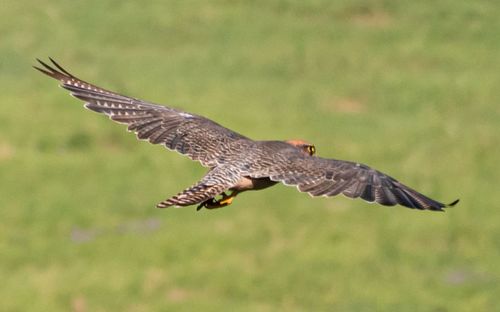 Lanner Falcon
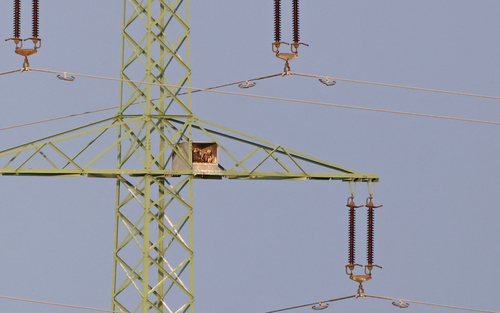 Saker Falcon
In short
The most reliable field mark between Lanner and Saker Falcons is overall structure and head pattern: Saker is distinctly bulkier and heavier, with a paler crown and less defined head markings, while Lanner shows a reddish nape and clearer facial contrast. Immature birds are especially confusing, as young Lanners can closely resemble Sakers in their brown tones and streaked underparts, but Sakers are always larger and more robust. In flight, Saker’s wings are broader and more powerful, while Lanner is more slender and agile. Careful attention to head color, size, and flight style is key, especially for juveniles.
Identification tips
- Size and bulk: Saker is always larger, heavier, and more powerfully built than Lanner. If you see a falcon that looks especially big and chunky, especially in the chest and wings, suspect Saker.
- Head pattern (all ages): Lanner shows a reddish nape and a more sharply defined facial pattern, especially a clear moustachial stripe and pale cheek. Saker’s crown is paler, blending into the nape, and the face is less contrasting.
- Juvenile confusion: Young Lanners can look very similar to Sakers, being brown and streaked, but look for the reddish nape (even if faint) and a more defined head pattern for Lanner. Saker juveniles are darker, more heavily streaked, and have a paler, less marked head.
- Upperparts color: Lanner (Eurasian) is slate or brown-grey above; African birds are paler blue-grey. Saker is browner and less bluish, with more variable tones but never as blue-grey as some Lanners.
- Breast and underparts: Both can be streaked, but Saker is usually more heavily streaked below, especially as a juvenile. Lanner’s streaking is finer and less extensive.
- Flight silhouette: Saker’s wings are broader and more paddle-shaped, with a heavier, more powerful flight. Lanner is more slender, with narrower wings and a more agile, buoyant flight style.
- Perched jizz: Saker looks bulkier, with a thicker chest and heavier bill. Lanner is more elegant and lightly built, with a longer tail relative to the body.
- Sex differences: Both sexes are similar in plumage, but female Sakers are especially large and imposing, sometimes rivaling a small Gyrfalcon in size.
- Voice: If heard, Lanner gives a harsh "wray-e"; Saker gives a sharper, repeated "kiy-ee" or "kyak-kyak-kyak".
- Habitat and range: In Africa, a large falcon is almost certainly a Lanner. In Central Asia or eastern Europe, both may occur, but Saker is more likely in open steppe and drier regions, Lanner in savannah or grassland.
- Migration: Saker is more likely to be seen on migration or in winter far from breeding areas; Lanner is usually resident or locally dispersive.
- Plumage variability: Saker is more variable in color, but never shows the reddish nape of Lanner. Beware pale Sakers and dark Lanners, especially among juveniles.
- Falconry birds: Hybrids and escaped falconry birds can complicate ID, especially in Europe and the Middle East. Look for structural clues and head pattern first.
- Contextual clues: If seen with other large falcons, compare size and head pattern directly. When alone, use a combination of size, structure, and head color.
- When in doubt: For distant or brief views, prioritize overall bulk (Saker) versus elegance (Lanner), and look for the reddish nape and facial contrast for Lanner, paler crown and bulk for Saker.
Size
Saker Falcon is noticeably larger and heavier than Lanner Falcon. Saker measures 45–57 cm in length with a wingspan of 97–126 cm and an average adult mass of about 1000 g, while Lanner is smaller at 43–50 cm length and a 95–105 cm wingspan (no mass data, but consistently lighter in the hand and in the field). Saker’s build is bulkier and more powerful, especially in the chest and wings, while Lanner is more slender and lightly built. This difference is most apparent when both species are seen together or with a size reference.
Plumage
- Juveniles/immatures: Both species have brownish upperparts and streaked underparts, but juvenile Lanners are generally paler and have a reddish nape, while Sakers are darker, more heavily streaked, and lack the reddish tones. Saker juveniles have a paler crown and less distinct head markings, whereas Lanner juveniles show a more defined facial pattern and reddish back to the head. In flight, no unique upperwing panel or 'W' pattern is described for either, but Saker’s overall wing is broader and more solidly colored, while Lanner’s is narrower and more agile.
- Adults: Adult Lanners (especially Eurasian birds) have slate or brown-grey upperparts and a reddish nape, with streaked breasts in northern forms. Sakers are browner overall, with variable but generally heavier streaking below and a paler, less marked head. Lanner’s head pattern is sharper and more contrasting, while Saker’s is washed out and pale. Both sexes are similar in each species, but Saker’s size difference between sexes is more pronounced.
Behaviour
Lanner Falcons are agile, swift hunters, often seen in open country making fast, low chases after prey. Their flight is more buoyant and flexible, with frequent flapping and gliding. Saker Falcons are more powerful and direct, using strong, steady wingbeats and soaring flight, often appearing heavier and less maneuverable. Sakers are partial migrants, with some populations moving long distances, while Lanners are mostly resident with local dispersal. Both species are used in falconry, but Saker’s bulk and strength are favored for larger quarry.
Habitat
Lanner Falcons prefer open habitats such as savannah, grasslands, and semi-desert, mainly in Africa and parts of southern Europe and Asia. They are most often found in open country, sometimes near forest edges but rarely deep in woodland. Saker Falcons breed across Central Europe to Manchuria, favoring open steppe, grassland, and semi-arid regions, and are more likely to be found in continental, drier habitats. Saker is partial migrant, with some populations wintering far from breeding areas, while Lanner is more sedentary. Overlap can occur in southeastern Europe and parts of Asia, but Saker is absent from most of Africa.
Voice
Lanner Falcon gives a harsh "wray-e" call, which is quite different from Saker’s sharp "kiy-ee" or repeated "kyak-kyak-kyak". Both are loud and harsh, but Saker’s call is more piercing and repeated, while Lanner’s is rougher and less regular. Voice is rarely diagnostic at distance but can help if birds are vocalizing near the nest or in display.