
Motmot

Lanceolated Warbler vs Savi's Warbler

Locustella lanceolata versus Locustella luscinioides

Play a quiz with Lanceolated Warbler and Savi's Warbler
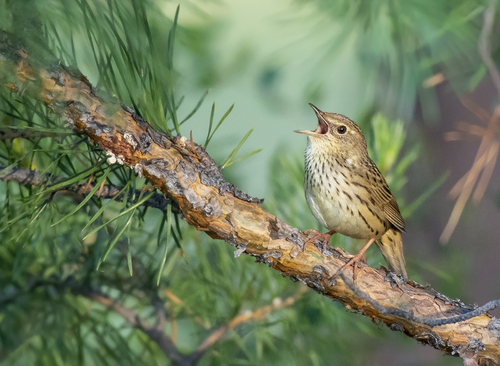
Lanceolated Warbler (Locustella lanceolata) Lanceolated Warbler
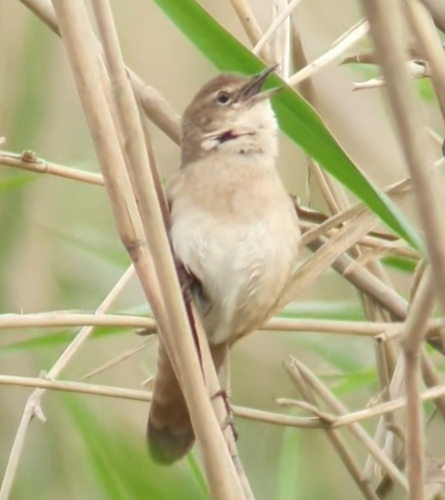
Savi's Warbler (Locustella luscinioides) Savi's Warbler

Media

Loading…

In short

The most reliable field mark to separate Lanceolated Warbler from Savi's Warbler is the presence of fine, dark streaks on the underparts and undertail of Lanceolated, which are completely absent in Savi's. Savi's Warbler is larger and has uniform, unstreaked reddish-brown upperparts and sandy-buff underparts, while Lanceolated is smaller, with a streaked brown back and distinctly streaked white or greyish underparts. Juvenile Lanceolated Warblers are yellower below but still show streaking, unlike Savi's. Both species can be elusive in dense vegetation, but Savi's is more often seen singing from exposed reed stems. Structure, habitat, and song provide further clues, but underpart streaking remains the most consistent field mark.

Identification tips

  1. Underpart streaking: Lanceolated Warbler always shows fine, dark streaks on the whitish-grey (or yellowish in juveniles) underparts and undertail coverts. Savi's Warbler never shows any streaking below—its underparts are plain whitish-buff to sandy brown. This is the single most reliable mark at all ages and seasons.
  2. Upperpart pattern: Lanceolated has a streaked brown back, while Savi's is a uniform, rich reddish-brown above, sometimes with a greenish tinge. Absence of upperpart streaking points to Savi's.
  3. Facial pattern: Savi's shows an indistinct buff eye-stripe, dark lores, and pale brown ear-coverts. Lanceolated's facial pattern is less distinct, but this is a minor mark compared to underpart streaking.
  4. Juvenile plumage: Young Lanceolated Warblers are yellower below but still show streaking. Juvenile Savi's are plain below, matching adults in lack of streaking.
  5. Size and structure: Savi's is larger (14 cm), bulkier, and longer-tailed. Lanceolated is smaller and more delicate. This is subtle unless both species are seen together.
  6. Tail and wing shape: No specific differences are described, but Savi's may appear longer-tailed and more robust in the field.
  7. Perched behavior: Savi's often sings from the top of reeds in full view, especially during territory establishment. Lanceolated is more secretive and rarely perches openly.
  8. Habitat: Savi's is almost always in dense reedbeds or marshes with tall vegetation. Lanceolated prefers grassy marshes, wet meadows, or shrubby areas, often away from large reedbeds.
  9. Song: Savi's song is a continuous, lower-pitched trill, often with introductory ticks, delivered from exposed perches. Lanceolated's song is a reeling trill, usually from cover. If you hear a Locustella trill from a visible bird atop reeds, Savi's is more likely.
  10. Seasonal context: Savi's arrives earlier in southern Europe (mid-April) and later in the north (late May), while Lanceolated's breeding range is further east and north. Out of range, check for vagrancy.
  11. Feeding behavior: Both are insectivorous, but Savi's may also take small worms and is more likely to feed in small flocks after breeding.
  12. Flight views: No distinctive wing or flight pattern differences are described; rely on underpart streaking if seen in flight.
  13. Sex differences: Both species are sexually monomorphic; do not use sex for ID.
  14. Moult and seasonal plumage: Savi's moults into breeding plumage before returning to breeding grounds, becoming slightly paler, but always remains unstreaked below. Lanceolated's streaking is present year-round.
  15. Pitfalls: Never rely on overall brown coloration or habitat alone—always check for underpart streaking and overall size. Juvenile Lanceolated may appear yellower but will still show streaks; Savi's never does.

Size

Savi's Warbler is notably larger, measuring about 14 cm in length, while Lanceolated Warbler is smaller (exact length not given, but consistently described as a small warbler) [wikipedia]. Savi's also appears bulkier and longer-tailed in the field. This size difference is most apparent when seen side-by-side or when familiar with both species, but can be subtle in isolation.

Plumage

Juvenile and adult Lanceolated Warblers always show fine, dark streaks on the whitish-grey underparts and on the undertail coverts—this is diagnostic at all ages and seasons. Even young birds, though yellower below, retain the streaks. The back is also streaked brown. In contrast, Savi's Warbler of all ages has uniform, unstreaked upperparts (rich reddish-brown, sometimes with a greenish tinge) and underparts that are whitish-buff to sandy brown, with no streaking at all. Savi's shows only an indistinct buff eye-stripe, dark lores, and pale brown ear-coverts, but the underparts are always plain. In breeding plumage, Savi's is slightly paler above and below, but still lacks any streaking. The undertail is also plain. Thus, underpart and undertail streaking (present only in Lanceolated) is the most reliable plumage feature for all ages and seasons.

Behaviour

Both species are skulking and prefer dense vegetation, but Savi's Warbler is more likely to climb up reed stems and sing from exposed positions, especially during territory establishment. Lanceolated Warbler tends to remain hidden in grass or low shrubs and is less often seen in the open. Both flit through tangled growth, but Savi's may be more visible when singing. Feeding behavior is similar, with both primarily insectivorous.

Habitat

Lanceolated Warbler breeds in wet meadows, grassy marshes, and shrubby areas from northwest Russia across the Palearctic to Japan, preferring grassier, less aquatic habitats. Savi's Warbler is more tightly associated with reed beds, marshes, and lagoons with dense stands of reeds and sedges, often with scattered bushes. Savi's is rarely seen away from extensive reedbeds, while Lanceolated is more likely in grassland or bushy marsh margins. In winter, Savi's may use fens or even cornfields, but always favors wetland habitats.

Voice

Savi's Warbler produces a continuous, mechanical trill similar to Grasshopper Warbler but lower-pitched and less prolonged, often preceded by low ticking notes. Both sexes sing, often from prominent reed stems. Lanceolated Warbler's song is not described in detail here, but is generally a reeling or insect-like trill typical of Locustella warblers. In the field, Savi's song is more likely to be heard from an exposed perch, while Lanceolated sings from cover. Song alone can be confusing, but Savi's is slightly lower and less sustained.

Submit a better description

Use the same sections as the comparison. Your text is published immediately.

The most reliable field mark to separate Lanceolated Warbler from Savi's Warbler is the presence of fine, dark streaks on the underparts and undertail of Lanceolated, which are completely absent in Savi's. Savi's Warbler is larger and has uniform, unstreaked reddish-brown upperparts and sandy-buff underparts, while Lanceolated is smaller, with a streaked brown back and distinctly streaked white or greyish underparts. Juvenile Lanceolated Warblers are yellower below but still show streaking, unlike Savi's. Both species can be elusive in dense vegetation, but Savi's is more often seen singing from exposed reed stems. Structure, habitat, and song provide further clues, but underpart streaking remains the most consistent field mark.

  1. Underpart streaking: Lanceolated Warbler always shows fine, dark streaks on the whitish-grey (or yellowish in juveniles) underparts and undertail coverts. Savi's Warbler never shows any streaking below—its underparts are plain whitish-buff to sandy brown. This is the single most reliable mark at all ages and seasons.
  2. Upperpart pattern: Lanceolated has a streaked brown back, while Savi's is a uniform, rich reddish-brown above, sometimes with a greenish tinge. Absence of upperpart streaking points to Savi's.
  3. Facial pattern: Savi's shows an indistinct buff eye-stripe, dark lores, and pale brown ear-coverts. Lanceolated's facial pattern is less distinct, but this is a minor mark compared to underpart streaking.
  4. Juvenile plumage: Young Lanceolated Warblers are yellower below but still show streaking. Juvenile Savi's are plain below, matching adults in lack of streaking.
  5. Size and structure: Savi's is larger (14 cm), bulkier, and longer-tailed. Lanceolated is smaller and more delicate. This is subtle unless both species are seen together.
  6. Tail and wing shape: No specific differences are described, but Savi's may appear longer-tailed and more robust in the field.
  7. Perched behavior: Savi's often sings from the top of reeds in full view, especially during territory establishment. Lanceolated is more secretive and rarely perches openly.
  8. Habitat: Savi's is almost always in dense reedbeds or marshes with tall vegetation. Lanceolated prefers grassy marshes, wet meadows, or shrubby areas, often away from large reedbeds.
  9. Song: Savi's song is a continuous, lower-pitched trill, often with introductory ticks, delivered from exposed perches. Lanceolated's song is a reeling trill, usually from cover. If you hear a Locustella trill from a visible bird atop reeds, Savi's is more likely.
  10. Seasonal context: Savi's arrives earlier in southern Europe (mid-April) and later in the north (late May), while Lanceolated's breeding range is further east and north. Out of range, check for vagrancy.
  11. Feeding behavior: Both are insectivorous, but Savi's may also take small worms and is more likely to feed in small flocks after breeding.
  12. Flight views: No distinctive wing or flight pattern differences are described; rely on underpart streaking if seen in flight.
  13. Sex differences: Both species are sexually monomorphic; do not use sex for ID.
  14. Moult and seasonal plumage: Savi's moults into breeding plumage before returning to breeding grounds, becoming slightly paler, but always remains unstreaked below. Lanceolated's streaking is present year-round.
  15. Pitfalls: Never rely on overall brown coloration or habitat alone—always check for underpart streaking and overall size. Juvenile Lanceolated may appear yellower but will still show streaks; Savi's never does.

Savi's Warbler is notably larger, measuring about 14 cm in length, while Lanceolated Warbler is smaller (exact length not given, but consistently described as a small warbler) [wikipedia]. Savi's also appears bulkier and longer-tailed in the field. This size difference is most apparent when seen side-by-side or when familiar with both species, but can be subtle in isolation.

Juvenile and adult Lanceolated Warblers always show fine, dark streaks on the whitish-grey underparts and on the undertail coverts—this is diagnostic at all ages and seasons. Even young birds, though yellower below, retain the streaks. The back is also streaked brown. In contrast, Savi's Warbler of all ages has uniform, unstreaked upperparts (rich reddish-brown, sometimes with a greenish tinge) and underparts that are whitish-buff to sandy brown, with no streaking at all. Savi's shows only an indistinct buff eye-stripe, dark lores, and pale brown ear-coverts, but the underparts are always plain. In breeding plumage, Savi's is slightly paler above and below, but still lacks any streaking. The undertail is also plain. Thus, underpart and undertail streaking (present only in Lanceolated) is the most reliable plumage feature for all ages and seasons.

Both species are skulking and prefer dense vegetation, but Savi's Warbler is more likely to climb up reed stems and sing from exposed positions, especially during territory establishment. Lanceolated Warbler tends to remain hidden in grass or low shrubs and is less often seen in the open. Both flit through tangled growth, but Savi's may be more visible when singing. Feeding behavior is similar, with both primarily insectivorous.

Lanceolated Warbler breeds in wet meadows, grassy marshes, and shrubby areas from northwest Russia across the Palearctic to Japan, preferring grassier, less aquatic habitats. Savi's Warbler is more tightly associated with reed beds, marshes, and lagoons with dense stands of reeds and sedges, often with scattered bushes. Savi's is rarely seen away from extensive reedbeds, while Lanceolated is more likely in grassland or bushy marsh margins. In winter, Savi's may use fens or even cornfields, but always favors wetland habitats.

Savi's Warbler produces a continuous, mechanical trill similar to Grasshopper Warbler but lower-pitched and less prolonged, often preceded by low ticking notes. Both sexes sing, often from prominent reed stems. Lanceolated Warbler's song is not described in detail here, but is generally a reeling or insect-like trill typical of Locustella warblers. In the field, Savi's song is more likely to be heard from an exposed perch, while Lanceolated sings from cover. Song alone can be confusing, but Savi's is slightly lower and less sustained.

Discard your changes?

You have unsaved edits. If you leave now, those changes will be lost.

Lanceolated Warbler · Savi's Warbler · My Tricky Birds