
Motmot

Kittlitz's Plover vs White-fronted Plover

Anarhynchus pecuarius versus Anarhynchus marginatus

Play a quiz with Kittlitz's Plover and White-fronted Plover
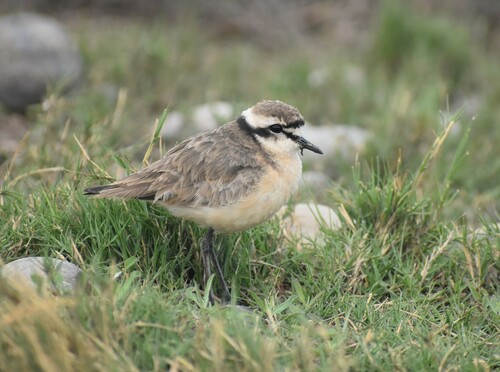
Kittlitz's Plover (Anarhynchus pecuarius) Kittlitz's Plover
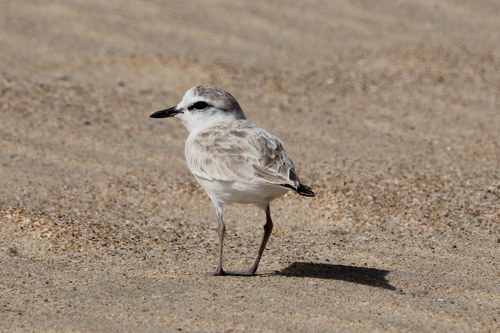
White-fronted Plover (Anarhynchus marginatus) White-fronted Plover

Media

Loading…

In short

The most reliable field mark between Kittlitz's Plover and White-fronted Plover is the face and crown pattern, especially in adults: Kittlitz's shows a black frontal bar and a black stripe from the bill through the eye, while White-fronted has a white forecrown and supercilium with a dark crown band (often less distinct in females and absent in juveniles). Juvenile separation is tricky, but Kittlitz's lacks all black on the head, while White-fronted juveniles have brown lores and no crown band. Both are small African plovers with similar structure, but White-fronted is slightly heavier on average. In flight or at a distance, focus on head and breast pattern, as upperwing differences are not highlighted in the notes. Habitat overlap is broad, but White-fronted prefers sandy beaches and dunes, while Kittlitz's is more often seen on muddy or grassy flats.

Identification tips

  1. Adult male face pattern: In breeding plumage, Kittlitz's Plover has a blackish frontal bar and a black stripe from the bill through the eye to the neck, separated from the brown crown by a white supercilium. White-fronted Plover has a white forecrown and supercilium, with a dark (not black) band across the mid-crown and a mostly white face. This is the single best field mark for adults.
  2. Adult female face pattern: Female Kittlitz's is similar to the male but with a narrower black band; female White-fronted may have a faint or absent crown band, but the white forecrown and supercilium remain.
  3. Juvenile head pattern: Juvenile Kittlitz's lacks all black on the head and has a buff hindneck collar; juvenile White-fronted also lacks a crown band and black, but has brown lores and a variable pale breast patch. Both can appear plain, but look for the buff collar in Kittlitz's.
  4. Breast and underparts: Kittlitz's usually shows yellowish or pale underparts with a white face and chin; White-fronted is white below, sometimes with a faint chestnut wash on the lower breast and upper belly, and a variable dusky lateral breast patch.
  5. Tail pattern: Both have blackish central tail feathers and white outer feathers, but in Kittlitz's the outermost one or two pairs are always completely white. This can be seen in flight or when the tail is spread.
  6. Leg color: Both species have dark to greenish or grey legs, but this is variable and not a strong separator.
  7. Bill color: Both have black bills; bill shape and length are not distinctly different in the field.
  8. Crown band: The presence of a dark (not black) crown band in White-fronted (especially males) versus a blackish frontal bar and black eye-stripe in Kittlitz's is a key distinction in adults. In females and juveniles, this mark is weaker or absent.
  9. Supercilium: White-fronted's supercilium is broad and white, running from the bill above the eye; Kittlitz's has a narrower white supercilium separating the black eye-stripe from the crown.
  10. Habitat context: On sandy beaches and dunes, especially near the coast, White-fronted is more likely; on muddy or grassy flats, alkaline grasslands, or riverbanks, Kittlitz's is more likely. However, both can occur together, so use plumage first.
  11. Behavior: Both species use run-stop-search feeding and distraction displays; behavior alone is not diagnostic.
  12. Size: White-fronted is slightly heavier, but this is not a reliable field mark due to overlap.
  13. Seasonal change: Kittlitz's loses the black frontal bar and the eye-stripe becomes browner in non-breeding plumage; White-fronted's crown band may fade, but the white forecrown and supercilium persist.
  14. Sex differences: Both species are only subtly sexually dimorphic in plumage, with females showing less distinct crown/forehead markings.
  15. Flight views: No distinctive upperwing or flight pattern differences are described in the sources; rely on head and tail pattern even in flight.

Size

White-fronted Plover averages slightly heavier (45–50 g, mean 48 g [wikidata]) than Kittlitz's Plover (35–40 g [wikipedia]), but both are small plovers and size overlap is considerable in the field. Wing and tarsus lengths are similar and not reliably diagnostic at a distance. Structure is not a strong separator between these two species.

Plumage

Juvenile and immature birds: Kittlitz's Plover juveniles lack any black on the head, have brown upperparts, a buff hindneck collar, and white underparts. White-fronted Plover juveniles also lack a crown band and black on the head, but their lores are brown and the lateral breast patch is variable. Both can appear rather plain, but Kittlitz's tends to have a buffier neck and more contrast between the white face and brown upperparts.

Adult breeding plumage: Kittlitz's Plover males show a blackish frontal bar, a black stripe from the bill through the eye to the neck, and a white supercilium separating this from the brown crown. Females are similar but with a narrower black band. White-fronted Plover males have a white forecrown and supercilium, a dark mid-crown band, and a mostly white face with a dark stripe behind the eye to the ear coverts. Females are similar but the crown band is less distinct or absent. Underparts are white in White-fronted, yellowish to pale in Kittlitz's. Both species have blackish central tail feathers with white outer feathers, but Kittlitz's outermost tail feathers are always completely white. Non-breeding Kittlitz's loses the black frontal bar and the eye stripe becomes browner, while White-fronted's crown band may fade but the white forecrown remains.

Upperwing pattern is not described as diagnostic for either species in the sources.

Behaviour

Both species perform distraction displays when chicks are threatened, including injury-feigning and 'rodent running.' White-fronted Plovers are monogamous and long-lived, often retaining mates and territories for years, while Kittlitz's is mainly polygamous. Both species lead chicks to foraging areas soon after hatching, but White-fronted may lead them farther (up to 2.2 km vs. 1 km for Kittlitz's). Foraging behavior is similar, with both using run-stop-search techniques typical of plovers.

Habitat

Both species are widespread in sub-Saharan Africa and Madagascar, often occurring in the same regions. Kittlitz's Plover is more likely on muddy or sandy riverbanks, saltmarshes, and alkaline grasslands with short vegetation. White-fronted Plover favors sandy beaches, dunes, and mudflats, often close to the coast but also at inland lakes and rivers. While there is overlap, White-fronted is more strictly associated with sandy open habitats, whereas Kittlitz's is more flexible and often found in grassy or muddy areas.

Submit a better description

Use the same sections as the comparison. Your text is published immediately.

The most reliable field mark between Kittlitz's Plover and White-fronted Plover is the face and crown pattern, especially in adults: Kittlitz's shows a black frontal bar and a black stripe from the bill through the eye, while White-fronted has a white forecrown and supercilium with a dark crown band (often less distinct in females and absent in juveniles). Juvenile separation is tricky, but Kittlitz's lacks all black on the head, while White-fronted juveniles have brown lores and no crown band. Both are small African plovers with similar structure, but White-fronted is slightly heavier on average. In flight or at a distance, focus on head and breast pattern, as upperwing differences are not highlighted in the notes. Habitat overlap is broad, but White-fronted prefers sandy beaches and dunes, while Kittlitz's is more often seen on muddy or grassy flats.

  1. Adult male face pattern: In breeding plumage, Kittlitz's Plover has a blackish frontal bar and a black stripe from the bill through the eye to the neck, separated from the brown crown by a white supercilium. White-fronted Plover has a white forecrown and supercilium, with a dark (not black) band across the mid-crown and a mostly white face. This is the single best field mark for adults.
  2. Adult female face pattern: Female Kittlitz's is similar to the male but with a narrower black band; female White-fronted may have a faint or absent crown band, but the white forecrown and supercilium remain.
  3. Juvenile head pattern: Juvenile Kittlitz's lacks all black on the head and has a buff hindneck collar; juvenile White-fronted also lacks a crown band and black, but has brown lores and a variable pale breast patch. Both can appear plain, but look for the buff collar in Kittlitz's.
  4. Breast and underparts: Kittlitz's usually shows yellowish or pale underparts with a white face and chin; White-fronted is white below, sometimes with a faint chestnut wash on the lower breast and upper belly, and a variable dusky lateral breast patch.
  5. Tail pattern: Both have blackish central tail feathers and white outer feathers, but in Kittlitz's the outermost one or two pairs are always completely white. This can be seen in flight or when the tail is spread.
  6. Leg color: Both species have dark to greenish or grey legs, but this is variable and not a strong separator.
  7. Bill color: Both have black bills; bill shape and length are not distinctly different in the field.
  8. Crown band: The presence of a dark (not black) crown band in White-fronted (especially males) versus a blackish frontal bar and black eye-stripe in Kittlitz's is a key distinction in adults. In females and juveniles, this mark is weaker or absent.
  9. Supercilium: White-fronted's supercilium is broad and white, running from the bill above the eye; Kittlitz's has a narrower white supercilium separating the black eye-stripe from the crown.
  10. Habitat context: On sandy beaches and dunes, especially near the coast, White-fronted is more likely; on muddy or grassy flats, alkaline grasslands, or riverbanks, Kittlitz's is more likely. However, both can occur together, so use plumage first.
  11. Behavior: Both species use run-stop-search feeding and distraction displays; behavior alone is not diagnostic.
  12. Size: White-fronted is slightly heavier, but this is not a reliable field mark due to overlap.
  13. Seasonal change: Kittlitz's loses the black frontal bar and the eye-stripe becomes browner in non-breeding plumage; White-fronted's crown band may fade, but the white forecrown and supercilium persist.
  14. Sex differences: Both species are only subtly sexually dimorphic in plumage, with females showing less distinct crown/forehead markings.
  15. Flight views: No distinctive upperwing or flight pattern differences are described in the sources; rely on head and tail pattern even in flight.

White-fronted Plover averages slightly heavier (45–50 g, mean 48 g [wikidata]) than Kittlitz's Plover (35–40 g [wikipedia]), but both are small plovers and size overlap is considerable in the field. Wing and tarsus lengths are similar and not reliably diagnostic at a distance. Structure is not a strong separator between these two species.

Juvenile and immature birds: Kittlitz's Plover juveniles lack any black on the head, have brown upperparts, a buff hindneck collar, and white underparts. White-fronted Plover juveniles also lack a crown band and black on the head, but their lores are brown and the lateral breast patch is variable. Both can appear rather plain, but Kittlitz's tends to have a buffier neck and more contrast between the white face and brown upperparts.

Adult breeding plumage: Kittlitz's Plover males show a blackish frontal bar, a black stripe from the bill through the eye to the neck, and a white supercilium separating this from the brown crown. Females are similar but with a narrower black band. White-fronted Plover males have a white forecrown and supercilium, a dark mid-crown band, and a mostly white face with a dark stripe behind the eye to the ear coverts. Females are similar but the crown band is less distinct or absent. Underparts are white in White-fronted, yellowish to pale in Kittlitz's. Both species have blackish central tail feathers with white outer feathers, but Kittlitz's outermost tail feathers are always completely white. Non-breeding Kittlitz's loses the black frontal bar and the eye stripe becomes browner, while White-fronted's crown band may fade but the white forecrown remains.

Upperwing pattern is not described as diagnostic for either species in the sources.

Both species perform distraction displays when chicks are threatened, including injury-feigning and 'rodent running.' White-fronted Plovers are monogamous and long-lived, often retaining mates and territories for years, while Kittlitz's is mainly polygamous. Both species lead chicks to foraging areas soon after hatching, but White-fronted may lead them farther (up to 2.2 km vs. 1 km for Kittlitz's). Foraging behavior is similar, with both using run-stop-search techniques typical of plovers.

Both species are widespread in sub-Saharan Africa and Madagascar, often occurring in the same regions. Kittlitz's Plover is more likely on muddy or sandy riverbanks, saltmarshes, and alkaline grasslands with short vegetation. White-fronted Plover favors sandy beaches, dunes, and mudflats, often close to the coast but also at inland lakes and rivers. While there is overlap, White-fronted is more strictly associated with sandy open habitats, whereas Kittlitz's is more flexible and often found in grassy or muddy areas.

Discard your changes?

You have unsaved edits. If you leave now, those changes will be lost.

Kittlitz's Plover · White-fronted Plover · My Tricky Birds