
Motmot

King Eider vs Surf Scoter

Somateria spectabilis versus Melanitta perspicillata

Play a quiz with King Eider and Surf Scoter
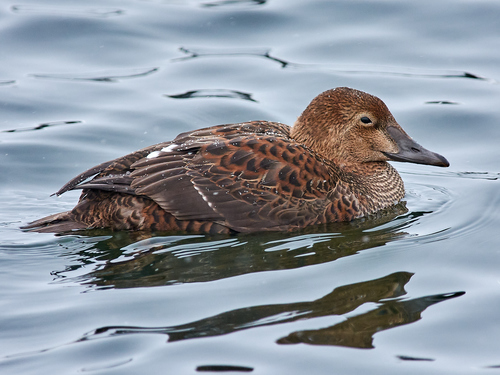
King Eider (Somateria spectabilis) King Eider
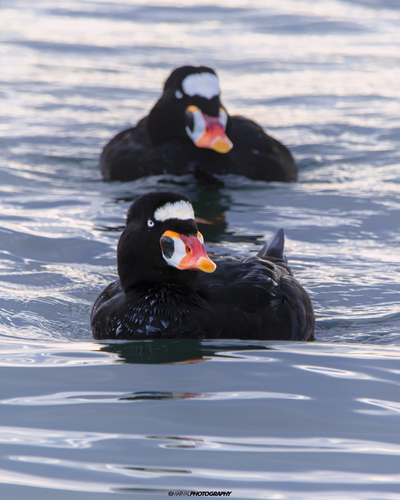
Surf Scoter (Melanitta perspicillata) Surf Scoter

Media

Loading…

In short

The most reliable field mark between King Eider and Surf Scoter is the adult male's head pattern: King Eider males show a multicolored head with a large orange knob above the bill, while Surf Scoter males are velvety black with distinctive white patches on the forehead and nape. For females and immatures, separation is trickier: King Eider females are warm brown with fine chevrons and a buffy eye stripe, while Surf Scoter females are browner and plainer, with paler cheek patches and a squarer, bulkier bill. In flight, Surf Scoter of all ages has completely dark wings, while King Eider shows paler underwings and lacks the scoter's uniformity. King Eider is also noticeably larger and bulkier, with a heavier build and longer bill. Careful attention to head shape, bill color, and wing pattern (especially in flight or among juveniles) is key.

Identification tips

  1. Adult male head pattern is the most definitive mark: King Eider males have a pale blue-grey head, green cheek, and a large orange/yellow knob above the bill; Surf Scoter males are all black with crisp white patches on the forehead and nape.
  2. Bill shape and color: King Eider's bill is long, sloping, and red with a white nail and a prominent yellow knob (male); Surf Scoter's bill is swollen, with a squarish base, and appears orange at a distance but is patterned with white, red, yellow, and a black spot (male). Female Surf Scoter has a black bill with green or blue tones.
  3. Female and immature head pattern: King Eider females show a buffy spot at the bill base and a buffy eye ring curving behind the eye; Surf Scoter females have paler cheek patches below the eye and sometimes a whitish nape patch, but lack the buffy eye stripe and chevrons.
  4. Body and flank pattern in females: King Eider females are warm brown with blackish chevrons on the flanks and upperparts, and fine streaks on the head and neck; Surf Scoter females are plainer brown, slightly darker above, and lack chevrons or streaks.
  5. Juvenile/immature plumage: Juvenile King Eiders are greyish brown; young males in first autumn show white on the breast and rump, but full adult plumage takes up to three years. Juvenile Surf Scoters are paler and browner than females, with whitish underparts.
  6. Wing pattern in flight (all ages): Surf Scoter shows completely dark wings, unique among scoters; King Eider does not have all-dark wings, so any paler underwing or contrast rules out Surf Scoter.
  7. Size and bulk: King Eider is noticeably larger and heavier than Surf Scoter; in mixed flocks or side-by-side, King Eider stands out as bulkier with a longer body and broader wingspan.
  8. Leg and foot color: King Eider females have greenish grey legs and feet; this is rarely visible but can help at close range.
  9. Jizz and posture: King Eider sits higher in the water and appears more robust; Surf Scoter is lower, more buoyant, and often in tight flocks.
  10. Habitat and range: In North America, Surf Scoter is common along both coasts in winter; King Eider is rare except in the far north and Arctic.
  11. Flock composition: Surf Scoters often form large, dense flocks; King Eiders may mix with other eiders but are less likely to be in large scoter flocks.
  12. Seasonal context: If observed in southern coastal waters in winter, Surf Scoter is far more likely; King Eider is a rare vagrant in these areas.
  13. Bill profile in females/immatures: Surf Scoter females and immatures have a bulkier bill with a squarer base and a more flattened head profile than King Eider.
  14. Male tertials (King Eider): Adult male King Eider shows curved up tertials forming 'spurs' along the back, a subtle but distinctive feature at close range.
  15. **When in doubt, focus on head and bill shape, wing pattern in flight, and overall size—these are the most reliable field clues for all ages and sexes."

Size

King Eider is substantially larger and heavier than Surf Scoter. Adult King Eiders average around 1617 g, while Surf Scoters average 950 g. King Eider also has a longer body (50–70 cm vs. 44–48 cm for Surf Scoter) and a broader wingspan (86–102 cm vs. 76–77 cm). In the field, King Eider appears bulkier and more robust, especially in direct comparison or mixed flocks.

Plumage

For adult males, plumage is distinctive: King Eider males have a striking multicolored head (pale blue-grey, green cheek, orange knob, red bill), black body, and buff-tinged white breast. Surf Scoter males are all black with crisp white patches on the forehead and nape, and a swollen, multicolored bill (orange at a distance, with white, red, yellow, and a black spot).

Females and immatures are more challenging. King Eider females are warm brown with blackish chevrons on the flanks and upperparts, fine streaks on the head and neck, a buffy spot at the bill base, and a buffy eye ring extending into a downward stripe. Surf Scoter females are browner, with paler cheek patches below the eye and sometimes a whitish nape patch; their plumage is more uniform and lacks the chevrons and streaks of King Eider. Juvenile Surf Scoters are even paler and browner, with whitish underparts.

In flight, Surf Scoter (all ages) shows completely dark wings, which is unique among scoters and contrasts with King Eider, which does not have this feature. King Eider juveniles are greyish brown, and young males in their first autumn start to show white on the breast and rump, but take up to three years to reach full adult plumage.

Behaviour

Both species are sea ducks and often seen diving for food in coastal waters. King Eider tends to be more robust and sits higher in the water, while Surf Scoter may appear lower and more buoyant. During molt, both species become flightless, but this is not a useful field mark unless observed in late summer. Flock composition can help: Surf Scoters often gather in large, tight flocks, while King Eiders may mix with other eiders.

Habitat

Both species are found in coastal marine environments, especially outside the breeding season. King Eider breeds in high Arctic tundra and winters along northern coasts, often in colder, more northerly waters. Surf Scoter breeds in northern Canada and Alaska, wintering along both Pacific and Atlantic coasts of North America. In North America, Surf Scoter is much more likely in southern coastal areas, while King Eider is rare away from the far north.

Submit a better description

Use the same sections as the comparison. Your text is published immediately.

The most reliable field mark between King Eider and Surf Scoter is the adult male's head pattern: King Eider males show a multicolored head with a large orange knob above the bill, while Surf Scoter males are velvety black with distinctive white patches on the forehead and nape. For females and immatures, separation is trickier: King Eider females are warm brown with fine chevrons and a buffy eye stripe, while Surf Scoter females are browner and plainer, with paler cheek patches and a squarer, bulkier bill. In flight, Surf Scoter of all ages has completely dark wings, while King Eider shows paler underwings and lacks the scoter's uniformity. King Eider is also noticeably larger and bulkier, with a heavier build and longer bill. Careful attention to head shape, bill color, and wing pattern (especially in flight or among juveniles) is key.

  1. Adult male head pattern is the most definitive mark: King Eider males have a pale blue-grey head, green cheek, and a large orange/yellow knob above the bill; Surf Scoter males are all black with crisp white patches on the forehead and nape.
  2. Bill shape and color: King Eider's bill is long, sloping, and red with a white nail and a prominent yellow knob (male); Surf Scoter's bill is swollen, with a squarish base, and appears orange at a distance but is patterned with white, red, yellow, and a black spot (male). Female Surf Scoter has a black bill with green or blue tones.
  3. Female and immature head pattern: King Eider females show a buffy spot at the bill base and a buffy eye ring curving behind the eye; Surf Scoter females have paler cheek patches below the eye and sometimes a whitish nape patch, but lack the buffy eye stripe and chevrons.
  4. Body and flank pattern in females: King Eider females are warm brown with blackish chevrons on the flanks and upperparts, and fine streaks on the head and neck; Surf Scoter females are plainer brown, slightly darker above, and lack chevrons or streaks.
  5. Juvenile/immature plumage: Juvenile King Eiders are greyish brown; young males in first autumn show white on the breast and rump, but full adult plumage takes up to three years. Juvenile Surf Scoters are paler and browner than females, with whitish underparts.
  6. Wing pattern in flight (all ages): Surf Scoter shows completely dark wings, unique among scoters; King Eider does not have all-dark wings, so any paler underwing or contrast rules out Surf Scoter.
  7. Size and bulk: King Eider is noticeably larger and heavier than Surf Scoter; in mixed flocks or side-by-side, King Eider stands out as bulkier with a longer body and broader wingspan.
  8. Leg and foot color: King Eider females have greenish grey legs and feet; this is rarely visible but can help at close range.
  9. Jizz and posture: King Eider sits higher in the water and appears more robust; Surf Scoter is lower, more buoyant, and often in tight flocks.
  10. Habitat and range: In North America, Surf Scoter is common along both coasts in winter; King Eider is rare except in the far north and Arctic.
  11. Flock composition: Surf Scoters often form large, dense flocks; King Eiders may mix with other eiders but are less likely to be in large scoter flocks.
  12. Seasonal context: If observed in southern coastal waters in winter, Surf Scoter is far more likely; King Eider is a rare vagrant in these areas.
  13. Bill profile in females/immatures: Surf Scoter females and immatures have a bulkier bill with a squarer base and a more flattened head profile than King Eider.
  14. Male tertials (King Eider): Adult male King Eider shows curved up tertials forming 'spurs' along the back, a subtle but distinctive feature at close range.
  15. **When in doubt, focus on head and bill shape, wing pattern in flight, and overall size—these are the most reliable field clues for all ages and sexes."

King Eider is substantially larger and heavier than Surf Scoter. Adult King Eiders average around 1617 g, while Surf Scoters average 950 g. King Eider also has a longer body (50–70 cm vs. 44–48 cm for Surf Scoter) and a broader wingspan (86–102 cm vs. 76–77 cm). In the field, King Eider appears bulkier and more robust, especially in direct comparison or mixed flocks.

For adult males, plumage is distinctive: King Eider males have a striking multicolored head (pale blue-grey, green cheek, orange knob, red bill), black body, and buff-tinged white breast. Surf Scoter males are all black with crisp white patches on the forehead and nape, and a swollen, multicolored bill (orange at a distance, with white, red, yellow, and a black spot).

Females and immatures are more challenging. King Eider females are warm brown with blackish chevrons on the flanks and upperparts, fine streaks on the head and neck, a buffy spot at the bill base, and a buffy eye ring extending into a downward stripe. Surf Scoter females are browner, with paler cheek patches below the eye and sometimes a whitish nape patch; their plumage is more uniform and lacks the chevrons and streaks of King Eider. Juvenile Surf Scoters are even paler and browner, with whitish underparts.

In flight, Surf Scoter (all ages) shows completely dark wings, which is unique among scoters and contrasts with King Eider, which does not have this feature. King Eider juveniles are greyish brown, and young males in their first autumn start to show white on the breast and rump, but take up to three years to reach full adult plumage.

Both species are sea ducks and often seen diving for food in coastal waters. King Eider tends to be more robust and sits higher in the water, while Surf Scoter may appear lower and more buoyant. During molt, both species become flightless, but this is not a useful field mark unless observed in late summer. Flock composition can help: Surf Scoters often gather in large, tight flocks, while King Eiders may mix with other eiders.

Both species are found in coastal marine environments, especially outside the breeding season. King Eider breeds in high Arctic tundra and winters along northern coasts, often in colder, more northerly waters. Surf Scoter breeds in northern Canada and Alaska, wintering along both Pacific and Atlantic coasts of North America. In North America, Surf Scoter is much more likely in southern coastal areas, while King Eider is rare away from the far north.

Discard your changes?

You have unsaved edits. If you leave now, those changes will be lost.

King Eider · Surf Scoter · My Tricky Birds