

Indian Robin vs Paddyfield Pipit
Copsychus fulicatus versus Anthus rufulus
Play a quiz with Indian Robin and Paddyfield Pipit
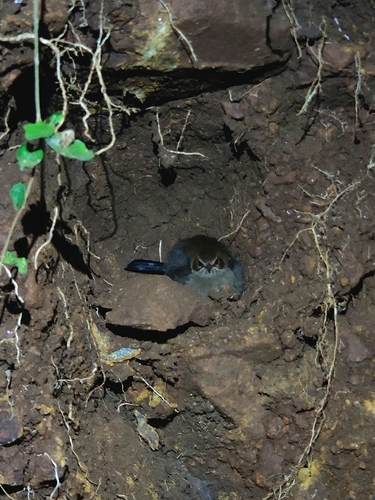 Indian Robin
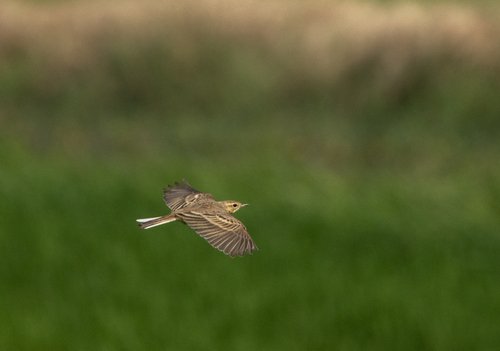 Paddyfield Pipit
In short
The most reliable field mark is overall structure: Indian Robin is compact and upright with a short bill and often cocked tail, while Paddyfield Pipit is slender, long-legged, and has a longer tail and bill. Indian Robin males (especially in the south) are glossy black with a white shoulder patch, while females and juveniles are brownish but still bulkier and darker than the pipit. Paddyfield Pipit is always streaked brown above and pale below, with obvious breast streaking and a more horizontal stance. In flight, the robin shows rich chestnut undertail coverts, often flashed with the tail held up, while the pipit’s flight is weaker and more fluttery. Confusion is most likely with female or juvenile robins, but even then, the robin’s structure and lack of strong streaking set it apart.
Identification tips
- Structure is key: Indian Robin is compact, upright, and short-legged, with a short bill and often cocked tail. Paddyfield Pipit is slender, long-legged, and has a longer, more pointed bill and tail. This difference is visible even at a distance.
- Tail behavior: Indian Robin frequently cocks and fans its tail upright, flashing rich chestnut undertail coverts. Paddyfield Pipit rarely cocks its tail and does not show chestnut below.
- Plumage in males: Male Indian Robins (especially in the south) are glossy black with a white shoulder patch. Paddyfield Pipit is never black, always streaked brown above and pale below.
- Plumage in females/juveniles: Female and juvenile robins are brownish above and greyish below, lacking strong streaking. Juvenile pipits are streaked above and below, with prominent breast spotting and pale feather edges.
- Breast streaking: Paddyfield Pipit always shows clear breast streaking at all ages; Indian Robin (any sex or age) does not show streaked underparts, only some throat mottling in juveniles.
- Undertail coverts: Indian Robin of all ages has rich chestnut undertail coverts, paler in females, which are often visible due to tail posture. Paddyfield Pipit’s undertail is pale and never chestnut.
- Shoulder patch: Male Indian Robin shows a white shoulder patch (variable in extent), absent in pipit and all female/juvenile robins.
- Flight style: Indian Robin flies directly from perch to perch, often low and with slow wingbeats. Paddyfield Pipit’s flight is weaker, fluttery, and undulating, often flushing from grass.
- Perching habits: Indian Robin often perches on rocks, walls, or low posts; pipit is almost always on the ground in open grass or fields.
- Bill shape: Robin’s bill is shorter and stubbier; pipit’s is longer and more pointed, aiding in separation at close range.
- Leg length: Pipit’s legs are longer and more prominent, giving it a taller, more upright gait when walking or running.
- Habitat context: Indian Robin is more likely near rocks, walls, or human habitation; pipit is more likely in open, grassy, or cultivated fields.
- Vocalizations: Listen for the pipit’s repeated 'chip-chip-chip' call, especially when flushed. Robin’s song is more varied and less likely to be heard outside breeding season.
- Seasonal confusion: In winter, beware of juvenile robins (brownish, mottled throat) and juvenile pipits (richly colored, heavy breast spotting), but the robin will still lack the pipit’s streaked breast and will show chestnut undertail.
- Pitfalls: Female/juvenile robins can look superficially like pipits at a distance, but structure, lack of streaking, and tail behavior will separate them. Pipits never show chestnut undertail or white shoulder patch, and always have streaked underparts.
Size
Indian Robin is slightly smaller and stockier than Paddyfield Pipit, with a noticeably shorter tail and legs. Paddyfield Pipit is about 15 cm long and appears longer and slimmer, especially in the field, due to its elongated tail and legs. Indian Robin’s tail is 6–8 cm but looks shorter relative to its body, and the bird is more compact overall. The robin’s bill is shorter and stubbier, while the pipit’s bill is longer and more pointed. These differences are apparent when both species are seen side by side or in similar habitats.
Plumage
Juvenile and female Indian Robins are brownish above and greyish below, with a paler chestnut vent and no streaking on the breast—juveniles may show some mottling on the throat but never the crisp streaking of a pipit. Males (especially southern) are glossy black with a white shoulder patch (variable in extent), while northern males have brownish backs. The robin’s rich chestnut undertail coverts are visible in all ages and sexes, especially when the tail is cocked. Paddyfield Pipit of all ages is streaked grey-brown above, with pale underparts and distinct breast streaking. Juvenile pipits are more richly colored below, with even more prominent spotting on the breast and pale edges to the upperpart feathers. The pipit never shows a white shoulder patch or chestnut vent, and its streaking is a reliable mark at all ages. In flight, the robin’s dark body and chestnut vent contrast with the pipit’s paler, streaked appearance.
Behaviour
Indian Robin is often seen perched upright on low rocks, walls, or posts, frequently flicking and cocking its tail to display the chestnut undertail. It moves with short hops and is territorial, especially during breeding, sometimes strutting and fluffing its undertail coverts. Paddyfield Pipit walks or runs on the ground with a more horizontal posture, often in open grass or cultivated fields, and rarely perches high. Its flight is weak and fluttery, with short, undulating bursts, while the robin’s flight is more direct and purposeful between perches. The robin is bolder and more conspicuous in its movements, while the pipit is more secretive and blends into grassy backgrounds.
Habitat
Both species can occur in open country, but Indian Robin favors rocky ground, scrub, village edges, and walls, often near human habitation. Paddyfield Pipit is more strictly associated with open grassland, cultivated fields, and scrubby plains, and is less likely to be seen on rocks or walls. The robin is more likely in drier, stony, or semi-urban habitats, while the pipit prefers grassy or agricultural areas.
Voice
Paddyfield Pipit gives a characteristic 'chip-chip-chip' call, which is different from the robin’s vocalizations. Indian Robin’s song is more varied, with calls used for mate attraction and territory defense, but these are less likely to be heard outside the breeding season. The pipit’s call is a useful field clue, especially when flushed, as it is distinct from the robin’s more complex and less repetitive vocalizations.