

Motmot

Hooded Crow vs Common Raven

Corvus cornix versus Corvus corax

Play a quiz with Hooded Crow and Common Raven
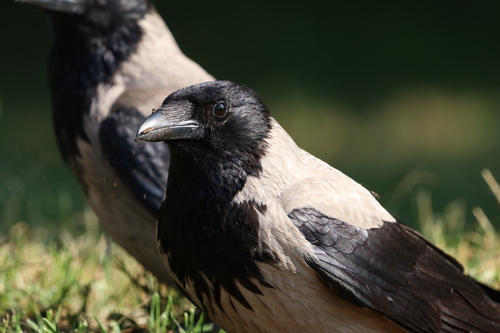
Hooded Crow (Corvus cornix) Hooded Crow
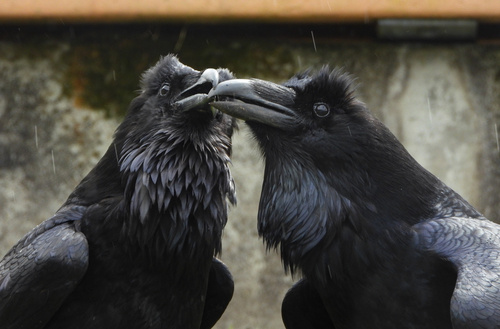
Common Raven (Corvus corax) Common Raven

Media

Loading…

In short

The most reliable way to separate Hooded Crow from Common Raven is by overall coloration and structure: Hooded Crow shows a distinctive two-tone pattern with ashy-grey body and contrasting black head, wings, and tail, while Common Raven is entirely black with a heavy, shaggy-throated appearance. Ravens are much larger, with a thicker, more arched bill and a wedge-shaped tail, especially obvious in flight. Juvenile plumages are similar to adults for both species, but young Hooded Crows are duller and young Ravens have a blue-grey iris and pink gape. In flight, Raven's longer wings and wedge-shaped tail stand out, while Hooded Crow appears more compact and straight-winged. Voice is also a strong separator: Raven's deep croak is very different from the crow's typical caw.

Identification tips

  1. Plumage contrast: Hooded Crow always shows a clear two-tone pattern—ash-grey body with black head, wings, and tail. Common Raven is entirely black, with no pale areas at any age or season.
  2. Tail shape in flight: Look for the wedge-shaped tail of the Raven, especially when it fans the tail during soaring or gliding. Hooded Crow's tail is squarer and shorter.
  3. Bill structure: Raven's bill is much heavier, longer, and more arched, with a noticeable 'beard' of shaggy feathers at the throat. Hooded Crow's bill is slimmer and straight, lacking shaggy throat feathers.
  4. Size and bulk: Ravens are much larger and bulkier, with a longer wingspan and heavier body. If seen together, the size difference is striking, but beware of lone birds where size can be hard to judge.
  5. Flight style: Ravens soar and glide frequently, often with minimal wingbeats and acrobatic rolls. Hooded Crows fly with steady, direct wingbeats and rarely soar for long.
  6. Juvenile features: Young Hooded Crows are duller but still show the two-tone pattern; their eyes are bluish or greyish. Juvenile Ravens are all-black like adults but have a blue-grey iris and a pink gape when just fledged.
  7. Voice: Listen for the deep, resonant croak of the Raven versus the higher, harsher caw of the Crow. This is often the easiest clue when visibility is poor.
  8. Habitat context: In cities, parks, and farmland, Hooded Crow is far more likely. In remote uplands, cliffs, or large forests, expect Raven.
  9. Perched posture: Ravens often appear more hunched and heavy, with a thicker neck and bill, and the shaggy throat feathers are often visible even at rest.
  10. Wing shape: In flight, Raven's wings are longer and broader, giving a more 'fingered' look at the tips. Hooded Crow's wings are shorter and less broad.
  11. Group size: Hooded Crows are often in small flocks or loose groups, especially outside the breeding season. Ravens are usually solitary or in pairs, except at large food sources.
  12. Feeding behavior: Both scavenge, but Ravens are more likely to be seen at large carcasses in wild areas, while Crows are more urban and opportunistic.
  13. Iris color in young: If close enough, note that juvenile Hooded Crows have bluish or greyish eyes, while young Ravens have blue-grey irises.
  14. Mouth color in fledglings: Very young Hooded Crows may show a red mouth, while young Ravens have a pinkish gape.
  15. Seasonal variation: Both species have little seasonal change in plumage, so these marks work year-round.

Size

Common Raven is substantially larger and heavier than Hooded Crow. Ravens average about 66 cm in length and nearly 950 g in mass, with a wingspan up to 153 cm; Hooded Crow is smaller, typically 48–52 cm long and around 510 g, with a wingspan of about 105 cm. The Raven's bill is much more massive and arched, and its tail is longer and wedge-shaped, compared to the Crow's more modest, straight-edged tail.

Plumage

Plumage is the most straightforward field mark. Adult Hooded Crows have a striking ash-grey body with glossy black head, throat, wings, tail, and thighs, giving a clear two-tone look. This pattern is visible in all seasons and both sexes. Juvenile Hooded Crows are duller and more uniformly dark, but still show some contrast, with bluish or greyish eyes and a red mouth when very young. Common Ravens of all ages are entirely black, with a slight iridescent sheen and shaggy throat feathers. Juvenile Ravens are also all-black but appear duller, with blue-grey eyes and a pinkish gape at first. In flight, the Raven's tail is distinctly wedge-shaped, while the Crow's is more squared-off. No age-specific upperwing patterns are noted for either species, so focus on overall color and tail shape.

Behaviour

Ravens often soar and glide with little wing-flapping, showing off their long wings and wedge-shaped tail, and can perform acrobatic maneuvers. They are more solitary or seen in pairs, especially when foraging. Hooded Crows have a slower, heavier, and more direct flight, and are more likely to be seen in small groups or loose flocks. Both are highly intelligent and opportunistic, but the Raven's behavior is often more secretive and less urban than the Crow's.

Habitat

Hooded Crows are widespread across northern and eastern Europe and parts of the Middle East, often in open countryside, farmland, and urban areas. They are adaptable and commonly seen near people. Common Ravens have a broader range across the Northern Hemisphere but tend to prefer wilder, less disturbed habitats—mountains, forests, moorland, and coastal cliffs. While both species can overlap in some regions, Ravens are less likely in dense urban settings.

Voice

The vocalizations are quite distinct. Hooded Crow gives a typical crow-like caw, which is higher-pitched and less resonant. Common Raven has a much deeper, more sonorous croak, often described as guttural or echoing. Even at a distance, the difference in tone and quality is usually obvious.

Submit a better description

Use the same sections as the comparison. Your text is published immediately.

The most reliable way to separate Hooded Crow from Common Raven is by overall coloration and structure: Hooded Crow shows a distinctive two-tone pattern with ashy-grey body and contrasting black head, wings, and tail, while Common Raven is entirely black with a heavy, shaggy-throated appearance. Ravens are much larger, with a thicker, more arched bill and a wedge-shaped tail, especially obvious in flight. Juvenile plumages are similar to adults for both species, but young Hooded Crows are duller and young Ravens have a blue-grey iris and pink gape. In flight, Raven's longer wings and wedge-shaped tail stand out, while Hooded Crow appears more compact and straight-winged. Voice is also a strong separator: Raven's deep croak is very different from the crow's typical caw.

  1. Plumage contrast: Hooded Crow always shows a clear two-tone pattern—ash-grey body with black head, wings, and tail. Common Raven is entirely black, with no pale areas at any age or season.
  2. Tail shape in flight: Look for the wedge-shaped tail of the Raven, especially when it fans the tail during soaring or gliding. Hooded Crow's tail is squarer and shorter.
  3. Bill structure: Raven's bill is much heavier, longer, and more arched, with a noticeable 'beard' of shaggy feathers at the throat. Hooded Crow's bill is slimmer and straight, lacking shaggy throat feathers.
  4. Size and bulk: Ravens are much larger and bulkier, with a longer wingspan and heavier body. If seen together, the size difference is striking, but beware of lone birds where size can be hard to judge.
  5. Flight style: Ravens soar and glide frequently, often with minimal wingbeats and acrobatic rolls. Hooded Crows fly with steady, direct wingbeats and rarely soar for long.
  6. Juvenile features: Young Hooded Crows are duller but still show the two-tone pattern; their eyes are bluish or greyish. Juvenile Ravens are all-black like adults but have a blue-grey iris and a pink gape when just fledged.
  7. Voice: Listen for the deep, resonant croak of the Raven versus the higher, harsher caw of the Crow. This is often the easiest clue when visibility is poor.
  8. Habitat context: In cities, parks, and farmland, Hooded Crow is far more likely. In remote uplands, cliffs, or large forests, expect Raven.
  9. Perched posture: Ravens often appear more hunched and heavy, with a thicker neck and bill, and the shaggy throat feathers are often visible even at rest.
  10. Wing shape: In flight, Raven's wings are longer and broader, giving a more 'fingered' look at the tips. Hooded Crow's wings are shorter and less broad.
  11. Group size: Hooded Crows are often in small flocks or loose groups, especially outside the breeding season. Ravens are usually solitary or in pairs, except at large food sources.
  12. Feeding behavior: Both scavenge, but Ravens are more likely to be seen at large carcasses in wild areas, while Crows are more urban and opportunistic.
  13. Iris color in young: If close enough, note that juvenile Hooded Crows have bluish or greyish eyes, while young Ravens have blue-grey irises.
  14. Mouth color in fledglings: Very young Hooded Crows may show a red mouth, while young Ravens have a pinkish gape.
  15. Seasonal variation: Both species have little seasonal change in plumage, so these marks work year-round.

Common Raven is substantially larger and heavier than Hooded Crow. Ravens average about 66 cm in length and nearly 950 g in mass, with a wingspan up to 153 cm; Hooded Crow is smaller, typically 48–52 cm long and around 510 g, with a wingspan of about 105 cm. The Raven's bill is much more massive and arched, and its tail is longer and wedge-shaped, compared to the Crow's more modest, straight-edged tail.

Plumage is the most straightforward field mark. Adult Hooded Crows have a striking ash-grey body with glossy black head, throat, wings, tail, and thighs, giving a clear two-tone look. This pattern is visible in all seasons and both sexes. Juvenile Hooded Crows are duller and more uniformly dark, but still show some contrast, with bluish or greyish eyes and a red mouth when very young. Common Ravens of all ages are entirely black, with a slight iridescent sheen and shaggy throat feathers. Juvenile Ravens are also all-black but appear duller, with blue-grey eyes and a pinkish gape at first. In flight, the Raven's tail is distinctly wedge-shaped, while the Crow's is more squared-off. No age-specific upperwing patterns are noted for either species, so focus on overall color and tail shape.

Ravens often soar and glide with little wing-flapping, showing off their long wings and wedge-shaped tail, and can perform acrobatic maneuvers. They are more solitary or seen in pairs, especially when foraging. Hooded Crows have a slower, heavier, and more direct flight, and are more likely to be seen in small groups or loose flocks. Both are highly intelligent and opportunistic, but the Raven's behavior is often more secretive and less urban than the Crow's.

Hooded Crows are widespread across northern and eastern Europe and parts of the Middle East, often in open countryside, farmland, and urban areas. They are adaptable and commonly seen near people. Common Ravens have a broader range across the Northern Hemisphere but tend to prefer wilder, less disturbed habitats—mountains, forests, moorland, and coastal cliffs. While both species can overlap in some regions, Ravens are less likely in dense urban settings.

The vocalizations are quite distinct. Hooded Crow gives a typical crow-like caw, which is higher-pitched and less resonant. Common Raven has a much deeper, more sonorous croak, often described as guttural or echoing. Even at a distance, the difference in tone and quality is usually obvious.

Discard your changes?

You have unsaved edits. If you leave now, those changes will be lost.

Hooded Crow · Common Raven · My Tricky Birds