

Motmot

Herring Gull vs Yellow-legged Gull

Larus argentatus versus Larus michahellis

Play a quiz with Herring Gull and Yellow-legged Gull
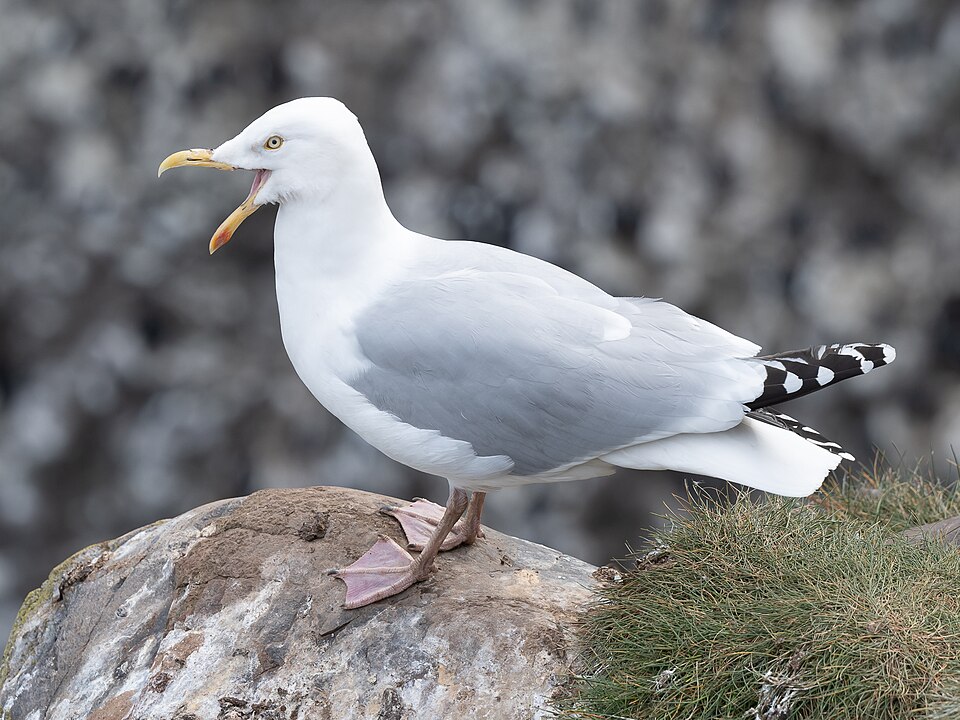
Herring Gull (Larus argentatus) Herring Gull
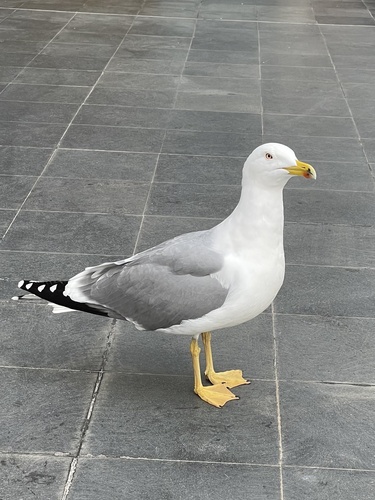
Yellow-legged Gull (Larus michahellis) Yellow-legged Gull

Media

Loading…

In short

Leg color is the most reliable field mark for adults: Herring Gull usually has pink legs, while Yellow-legged Gull has yellow legs. For immature birds, focus on the head and underpart color: first-year Yellow-legged Gulls are paler below than Herring Gulls. In flight, Yellow-legged Gulls have more extensive black on the wingtips and a well-defined black tail band as juveniles. Both species are large, pale-backed gulls with overlapping size and structure, so careful attention to leg color, head streaking, and wingtip pattern is essential for confident separation, especially outside the breeding season or with immatures.

Identification tips

  1. Leg color (adults): Herring Gull usually has pink legs at all ages, while Yellow-legged Gull has yellow legs as an adult. Rare Baltic Herring Gulls may show yellowish legs, so use with caution in that region.
  2. Juvenile/first-winter underparts: First-year Yellow-legged Gulls are paler on the head, rump, and underparts than Herring Gulls, which are more uniformly brown and streaked. This is most useful when viewing birds at rest or on the ground.
  3. Tail pattern (juveniles): Juvenile Yellow-legged Gulls have a well-defined black tail band, contrasting with paler uppertail coverts. Herring Gulls show a less sharply defined tail band and more diffuse patterning.
  4. Flight feathers (immatures): Yellow-legged Gulls have darker flight feathers and a more contrasting upperwing pattern as juveniles, while Herring Gulls are more uniformly brown above.
  5. Adult mantle color: Yellow-legged Gull has a slightly darker grey back than Herring Gull, but this is subtle and best judged in direct comparison.
  6. Wingtip pattern (adults): Yellow-legged Gulls have more extensive black on the wingtips with fewer and smaller white 'mirrors' than Herring Gulls, which have more white in the primaries.
  7. Head streaking (non-breeding adults): Herring Gulls develop brown streaks on the head and neck in winter, while Yellow-legged Gulls remain whiter-headed at this season.
  8. Orbital ring color: Herring Gull has a yellow orbital ring around the pale eye; Yellow-legged Gull has a red orbital ring. This is subtle and requires close views.
  9. Bill: Both have a yellow bill with a red spot as adults. Bill size and shape are not reliably different in the field.
  10. Eye color: Herring Gull adults have pale eyes; Yellow-legged Gull may have darker eyes, especially in younger birds.
  11. Leg color (immatures): Immature Yellow-legged Gulls have pinkish-grey or light yellow-flesh legs, while Herring Gulls are pinker; this is subtle and variable.
  12. Structure: Both are robust, large gulls with similar proportions. Structural differences are not reliable for separation.
  13. Habitat and range: Where both species occur, do not rely on habitat or location alone for identification.
  14. Voice: No diagnostic differences described in the sources provided.
  15. Beware overlap: Both species can show intermediate features, especially in immature plumages and in regions where their ranges overlap. Use a combination of marks for confident identification, especially with young birds.

Size

Both species are large gulls with considerable overlap in size. Herring Gull (Larus argentatus) males measure 60–67 cm in length and females 55–62 cm, with a wingspan of 125–155 cm and weight ranging from 710–1,525 g. Yellow-legged Gull (Larus michahellis) ranges from 52–68 cm in length, wingspan 120–155 cm, and weight 550–1,600 g. The largest Yellow-legged Gulls can match or exceed Herring Gulls, but on average, Herring Gulls are slightly heavier. Size is not a reliable field mark for separating these two in the field.

Plumage

Juvenile and first-winter birds are the most challenging. First-year Yellow-legged Gulls are paler on the head, rump, and underparts than Herring Gulls of the same age, which are overall darker and more streaked brown. Yellow-legged Gulls show a well-defined black tail band and dark flight feathers, with pinkish-grey legs and a dark bill and eye; Herring Gulls are more uniformly brown with less contrast and have pink legs. By second winter, Yellow-legged Gulls become much lighter below and on the head, with only some patterned wing coverts remaining, while Herring Gulls still show more streaking and brown in the wings. Adults of both species have a grey back and white head and underparts, but Yellow-legged Gulls have a slightly darker grey mantle and much more black in the wingtips with fewer white spots ('mirrors') compared to Herring Gulls. Adult Herring Gulls have pink legs (rarely yellowish in the Baltic), a yellow bill with a red spot, and pale eyes with a yellow orbital ring; Yellow-legged Gulls have yellow legs, a similar bill, and a red orbital ring. In non-breeding plumage, Herring Gulls show brown streaks on the head and neck, while Yellow-legged Gulls remain whiter-headed.

Behaviour

Both species are omnivorous and opportunistic, often seen scavenging at rubbish tips, harbors, and urban areas, as well as foraging along coasts and in fields. Both will steal food from other birds and exploit human refuse. There are no strong behavioral differences in foraging or flight style that are reliable for field identification.

Habitat

Both species occur in similar habitats: coasts, estuaries, urban areas, and inland water bodies. Herring Gull is widespread across northern and western Europe, often resident but with some migration south in winter. Yellow-legged Gull is more southern, common around the Mediterranean, parts of the Middle East, and North Africa, but increasingly overlaps with Herring Gull in western Europe, especially in urban and coastal settings. Habitat alone does not reliably separate them where ranges overlap.

Submit a better description

Use the same sections as the comparison. Your text is published immediately.

Leg color is the most reliable field mark for adults: Herring Gull usually has pink legs, while Yellow-legged Gull has yellow legs. For immature birds, focus on the head and underpart color: first-year Yellow-legged Gulls are paler below than Herring Gulls. In flight, Yellow-legged Gulls have more extensive black on the wingtips and a well-defined black tail band as juveniles. Both species are large, pale-backed gulls with overlapping size and structure, so careful attention to leg color, head streaking, and wingtip pattern is essential for confident separation, especially outside the breeding season or with immatures.

  1. Leg color (adults): Herring Gull usually has pink legs at all ages, while Yellow-legged Gull has yellow legs as an adult. Rare Baltic Herring Gulls may show yellowish legs, so use with caution in that region.
  2. Juvenile/first-winter underparts: First-year Yellow-legged Gulls are paler on the head, rump, and underparts than Herring Gulls, which are more uniformly brown and streaked. This is most useful when viewing birds at rest or on the ground.
  3. Tail pattern (juveniles): Juvenile Yellow-legged Gulls have a well-defined black tail band, contrasting with paler uppertail coverts. Herring Gulls show a less sharply defined tail band and more diffuse patterning.
  4. Flight feathers (immatures): Yellow-legged Gulls have darker flight feathers and a more contrasting upperwing pattern as juveniles, while Herring Gulls are more uniformly brown above.
  5. Adult mantle color: Yellow-legged Gull has a slightly darker grey back than Herring Gull, but this is subtle and best judged in direct comparison.
  6. Wingtip pattern (adults): Yellow-legged Gulls have more extensive black on the wingtips with fewer and smaller white 'mirrors' than Herring Gulls, which have more white in the primaries.
  7. Head streaking (non-breeding adults): Herring Gulls develop brown streaks on the head and neck in winter, while Yellow-legged Gulls remain whiter-headed at this season.
  8. Orbital ring color: Herring Gull has a yellow orbital ring around the pale eye; Yellow-legged Gull has a red orbital ring. This is subtle and requires close views.
  9. Bill: Both have a yellow bill with a red spot as adults. Bill size and shape are not reliably different in the field.
  10. Eye color: Herring Gull adults have pale eyes; Yellow-legged Gull may have darker eyes, especially in younger birds.
  11. Leg color (immatures): Immature Yellow-legged Gulls have pinkish-grey or light yellow-flesh legs, while Herring Gulls are pinker; this is subtle and variable.
  12. Structure: Both are robust, large gulls with similar proportions. Structural differences are not reliable for separation.
  13. Habitat and range: Where both species occur, do not rely on habitat or location alone for identification.
  14. Voice: No diagnostic differences described in the sources provided.
  15. Beware overlap: Both species can show intermediate features, especially in immature plumages and in regions where their ranges overlap. Use a combination of marks for confident identification, especially with young birds.

Both species are large gulls with considerable overlap in size. Herring Gull (Larus argentatus) males measure 60–67 cm in length and females 55–62 cm, with a wingspan of 125–155 cm and weight ranging from 710–1,525 g. Yellow-legged Gull (Larus michahellis) ranges from 52–68 cm in length, wingspan 120–155 cm, and weight 550–1,600 g. The largest Yellow-legged Gulls can match or exceed Herring Gulls, but on average, Herring Gulls are slightly heavier. Size is not a reliable field mark for separating these two in the field.

Juvenile and first-winter birds are the most challenging. First-year Yellow-legged Gulls are paler on the head, rump, and underparts than Herring Gulls of the same age, which are overall darker and more streaked brown. Yellow-legged Gulls show a well-defined black tail band and dark flight feathers, with pinkish-grey legs and a dark bill and eye; Herring Gulls are more uniformly brown with less contrast and have pink legs. By second winter, Yellow-legged Gulls become much lighter below and on the head, with only some patterned wing coverts remaining, while Herring Gulls still show more streaking and brown in the wings. Adults of both species have a grey back and white head and underparts, but Yellow-legged Gulls have a slightly darker grey mantle and much more black in the wingtips with fewer white spots ('mirrors') compared to Herring Gulls. Adult Herring Gulls have pink legs (rarely yellowish in the Baltic), a yellow bill with a red spot, and pale eyes with a yellow orbital ring; Yellow-legged Gulls have yellow legs, a similar bill, and a red orbital ring. In non-breeding plumage, Herring Gulls show brown streaks on the head and neck, while Yellow-legged Gulls remain whiter-headed.

Both species are omnivorous and opportunistic, often seen scavenging at rubbish tips, harbors, and urban areas, as well as foraging along coasts and in fields. Both will steal food from other birds and exploit human refuse. There are no strong behavioral differences in foraging or flight style that are reliable for field identification.

Both species occur in similar habitats: coasts, estuaries, urban areas, and inland water bodies. Herring Gull is widespread across northern and western Europe, often resident but with some migration south in winter. Yellow-legged Gull is more southern, common around the Mediterranean, parts of the Middle East, and North Africa, but increasingly overlaps with Herring Gull in western Europe, especially in urban and coastal settings. Habitat alone does not reliably separate them where ranges overlap.

Discard your changes?

You have unsaved edits. If you leave now, those changes will be lost.

Herring Gull · Yellow-legged Gull · My Tricky Birds