

Herring Gull vs Armenian Gull
Larus argentatus versus Larus armenicus
Play a quiz with Herring Gull and Armenian Gull
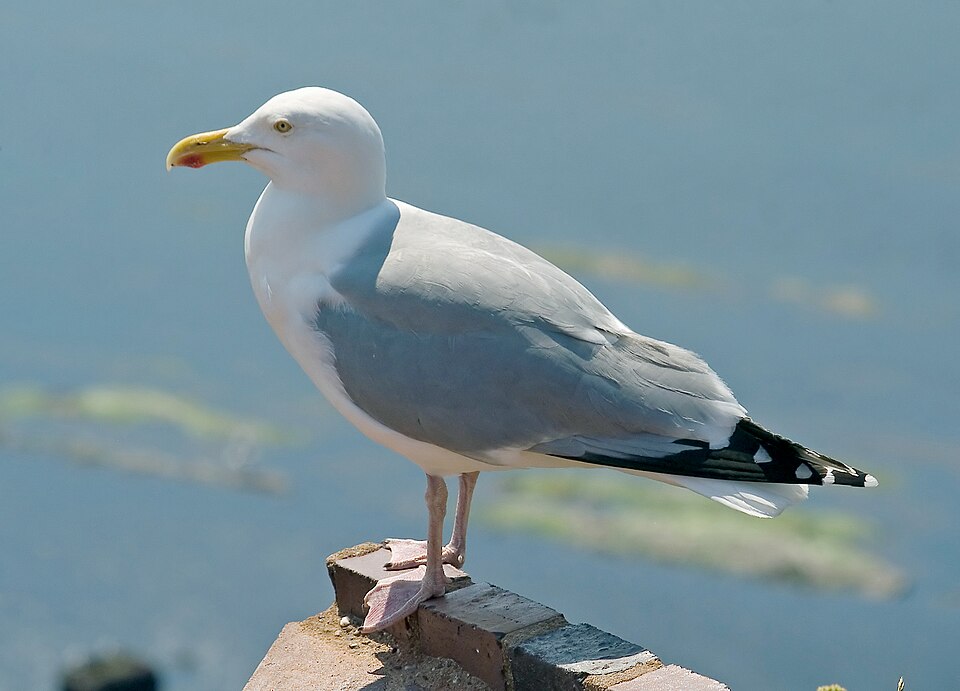 Herring Gull
 Armenian Gull
In short
The most reliable field mark for separating Herring Gull from Armenian Gull is the combination of bill pattern and eye color in adults, and the tail and wing pattern in first-winter birds. Herring Gulls (Larus argentatus) are larger overall, with a pale eye and a mostly yellow bill with a red spot, while Armenian Gulls (Larus armenicus) are smaller, have a dark eye, and show a distinctive black subterminal band on the bill. In first-winter plumage, Armenian Gulls have a sharply defined black tail band and pale inner primaries, while Herring Gulls show a more diffuse tail pattern and less contrast on the wing. These differences are most apparent in close views or good flight looks; beware of overlap in size and general coloration, especially with immature birds.
Identification tips
- First-winter tail pattern: Armenian Gull shows a sharply defined, narrow black tail band with a whitish rump; Herring Gull’s tail band is broader and more mottled. This is the single most reliable mark on flying juveniles and first-winters.
- First-winter wing pattern: Armenian Gull has pale inner primaries and a more contrasting wing pattern; Herring Gull’s wing is more uniformly brown and less contrasting. Look for this in flight or spread wing photos.
- Adult eye color: Herring Gull adults have a pale (often yellowish) eye, while Armenian Gull adults have a dark eye. This is visible at moderate range in good light.
- Adult bill pattern: Herring Gull has a long yellow bill with a single red spot near the tip; Armenian Gull’s bill is shorter and stubbier, with both a red spot and a black subterminal band. The black band is diagnostic for Armenian Gull.
- Adult mantle color: Armenian Gull’s mantle is slightly darker grey than Herring Gull’s, but this is subtle and can be affected by light and wear.
- Wingtip pattern (adult): Armenian Gull has more extensive black on the wingtips with smaller white mirrors; Herring Gull’s wingtips are black with larger white mirrors. This is best seen in spread wing or flight photos.
- Leg color: Both species usually have pink legs, but some Herring Gulls (especially in the Baltic) may show yellowish legs. Leg color is not fully reliable between these two.
- Bill structure: Herring Gull’s bill is longer and more robust; Armenian Gull’s is shorter and more delicate, especially obvious in profile.
- Overall size and jizz: Herring Gull is bulkier and longer-winged; Armenian Gull is more compact and slightly shorter-legged. Use this only with experience and in direct comparison.
- Head streaking (non-breeding): Herring Gull adults in winter show brown streaks on the head and neck; Armenian Gull’s head is generally cleaner in winter, but this is variable.
- Second-winter birds: Armenian Gull keeps a dark eye and a short bill with a black band; Herring Gull develops a paler eye and loses the black band, gaining a red spot instead.
- Habitat and range: Armenian Gull is found in the Caucasus and Middle East, Herring Gull in northern and western Europe. Out-of-range records should be scrutinized with all marks.
- Sex and age: Both species are sexually monomorphic in plumage, but male Herring Gulls are often noticeably larger than females or Armenian Gulls of any sex.
- Plumage pitfalls: Both species are brown and streaky as juveniles, but Armenian Gull’s tail and wing contrast is more pronounced. Beware of faded or worn birds, which can obscure these marks.
- Bill color in immatures: Armenian Gull immatures often show a blackish bill with a paler base; Herring Gull immatures have a dark bill that gradually becomes paler with age, but never shows a sharp black subterminal band like Armenian.
Size
Herring Gull is the larger of the two, with males reaching up to 67 cm in length and a wingspan up to 155 cm, while Armenian Gull is smaller, ranging from 52–62 cm in length and a wingspan up to 145 cm. Herring Gulls are also heavier, with females weighing 710–1,525 g, compared to Armenian Gulls at 600–960 g (average ~1000 g). Bill and tarsus are both longer and stouter in Herring Gull, but there is overlap. In the field, Armenian Gull often appears more compact and slightly shorter-legged, but this is subtle and can be misleading at distance or in mixed-age flocks.
Plumage
Juvenile and first-winter birds are the most reliably separated by tail and wing pattern in flight: Armenian Gull shows a sharply defined, narrow black tail band and pale inner primaries, with a whitish rump, while Herring Gull has a more mottled or diffuse tail band and less contrast between inner and outer primaries. Both species are mostly brown overall at this age, but Armenian Gull’s tail band is cleaner and more contrasting. By second winter, Armenian Gull develops a whiter head and underparts, a darker mantle, and retains a dark eye and a short bill with a black subterminal band. Herring Gull at this age has a paler mantle, pale eye, and a longer bill with a red spot (no black band). Adults: Herring Gull has a light grey back, white head and underparts, black wingtips with large white mirrors, yellow bill with a red spot, pale eye, and pink legs (sometimes yellowish in Baltic birds). Armenian Gull adult is slightly darker-mantled, has a dark eye, a short yellow bill with both red and black near the tip, and pinkish legs. The black on the wingtips is more extensive in Armenian Gull, with smaller white mirrors.
Behaviour
Both species are omnivorous and opportunistic, feeding on refuse, small prey, and sometimes stealing from other birds. Herring Gulls are known for dropping shelled prey to break them open and may rinse food in water. No unique behavioral differences are noted in the sources that would reliably separate these two species in the field.
Habitat
Herring Gull breeds and winters along northern and western European coasts, often seen inland at landfills and urban areas. Armenian Gull is restricted to the Caucasus and Middle East, breeding around large inland lakes and reservoirs. Their ranges do not overlap, so location is a strong clue—any Armenian Gull in western Europe would be a major rarity. Both species use similar habitats where they occur: open water, shorelines, and human-altered environments.