

Motmot

Hazel Grouse vs Western Capercaillie

Tetrastes bonasia versus Tetrao urogallus

Play a quiz with Hazel Grouse and Western Capercaillie
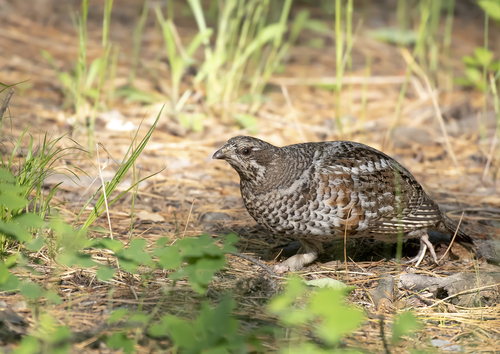
Hazel Grouse (Tetrastes bonasia) Hazel Grouse
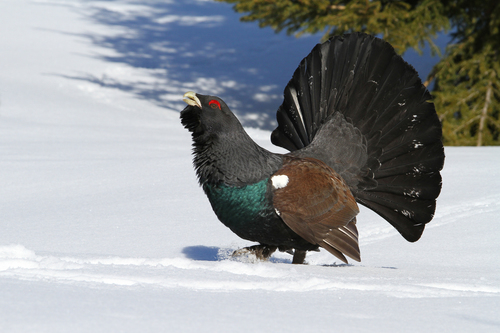
Western Capercaillie (Tetrao urogallus) Western Capercaillie

Media

Loading…

In short

The most reliable way to separate Hazel Grouse from Western Capercaillie is by size: even a female Capercaillie dwarfs the Hazel Grouse, and males are truly massive. In flight, Hazel Grouse shows a black-tipped grey tail and brown wings, while Capercaillie (especially males) appears much bulkier with broad, rounded wings and a long, rounded tail. Capercaillie males are dark with a metallic green breast, while Hazel Grouse is finely patterned grey and brown. Both species are shy and often hard to see, but their structure, size, and plumage differences are striking when seen well.

Identification tips

  1. Size is the single most decisive clue: Capercaillie (even females) are vastly larger than Hazel Grouse. If the bird looks chicken-sized or larger, it is not Hazel Grouse.
  2. Flight silhouette: Hazel Grouse is compact with short, rounded wings and a short tail with a black tip. Capercaillie is heavy, with broad, rounded wings and a long, rounded tail—males especially show a huge, fanned tail in display.
  3. Plumage—males: Hazel Grouse males have a short crest and a white-bordered black throat; Capercaillie males are dark with a metallic green breast and no white throat border.
  4. Plumage—females: Hazel Grouse females are finely barred and lack the black throat. Capercaillie females are larger, brown with black and silver barring above and buffish below, and have a white spot on the wing bow.
  5. Tail pattern in flight: Hazel Grouse shows a black-tipped grey tail; Capercaillie’s tail is dark and rounded, often fanned in display (male).
  6. Crest: Hazel Grouse has a short crest (longer in males); Capercaillie lacks a true crest but males have a thick neck and can raise head feathers slightly in display.
  7. Red eye spot: Capercaillie of both sexes has a bright red spot above the eye; Hazel Grouse lacks this feature.
  8. White wing spot: Capercaillie of both sexes shows a white spot on the wing bow; Hazel Grouse does not.
  9. Habitat: Hazel Grouse is almost always in dense, damp woodland with spruce; Capercaillie prefers larger, mature forests with open spaces for display.
  10. Behavior: Hazel Grouse is extremely shy and rarely seen in the open; Capercaillie, especially males in display, may be seen in more open forest clearings.
  11. Vocalizations: Hazel Grouse gives high-pitched, repetitive whistles (male) or liquid calls (female); Capercaillie males give a unique, multi-part display song with clicks and pops.
  12. Sexual dimorphism: Capercaillie shows extreme size difference between sexes; Hazel Grouse sexes are similar in size but differ in throat pattern and crest length.
  13. Legs and feet: Capercaillie has feathered legs and distinctive 'snowshoe' toes, leaving large tracks; Hazel Grouse’s legs are less conspicuously feathered.
  14. Juvenile confusion: Juvenile Capercaillie resemble females but are still much larger than Hazel Grouse; no detailed notes on juvenile Hazel Grouse, but size remains diagnostic.
  15. Context: If you see a displaying male with a fanned tail and elaborate song, it is Capercaillie. Hazel Grouse is much less conspicuous and rarely displays openly.

Size

Hazel Grouse is a small, plump grouse weighing around 369 g and measuring 35–39 cm in length. Western Capercaillie is the largest grouse in the world: males are 74–100 cm long and weigh 3.6–6.7 kg, while even females are 54–64 cm and 1.5–2.5 kg. In the field, Capercaillie—of either sex—appears several times larger than Hazel Grouse, with a much longer body, heavier build, and broader wings. Even their footprints differ in size, with Capercaillie leaving much larger tracks.

Plumage

There are no detailed notes on juvenile or immature wing patterns for either species, but adults are distinctive. Hazel Grouse is finely patterned with grey upperparts, brown wings, and chestnut-flecked white underparts. Males have a short erectile crest and a white-bordered black throat; females lack the black throat and have a shorter crest. In flight, Hazel Grouse shows a black-tipped grey tail. Capercaillie males are dark grey to brown with a metallic green breast, black to white belly/undertail, and a prominent fanned tail during display; females are brown with black and silver barring above and buffy below. Both sexes of Capercaillie have a white spot on the wing bow and a red spot above the eye. Capercaillie chicks resemble the female but quickly molt toward adult plumage by late summer.

Behaviour

Hazel Grouse is extremely shy and usually stays hidden in dense, damp woodland, only betraying its presence by its call or the whir of its wings. Capercaillie is also wary but is best known for its elaborate male courtship displays, which involve fanned tails, drooped wings, and unique vocalizations. Capercaillie spends much time on the ground but may perch in trees, especially during display. Hazel Grouse is more strictly tied to dense cover and is less likely to be seen in open areas.

Habitat

Both species inhabit forests, but Hazel Grouse prefers dense, damp, mixed coniferous woodland with spruce, often in smaller, more enclosed patches. Capercaillie favors larger tracts of mature coniferous or mixed forest with open ground for display leks. If you find a grouse in a small, dense thicket, Hazel Grouse is more likely; in a spacious, mature forest with open clearings, Capercaillie is more probable.

Voice

Hazel Grouse males give a high-pitched 'ti-ti-ti-ti-ti' call, while females have a liquid 'tettettettettet.' Capercaillie males produce a complex courtship song: a series of double-clicks accelerating into a popping sound and ending with scraping noises. The vocalizations are quite different, and Capercaillie’s display song is unique among European birds.

Submit a better description

Use the same sections as the comparison. Your text is published immediately.

The most reliable way to separate Hazel Grouse from Western Capercaillie is by size: even a female Capercaillie dwarfs the Hazel Grouse, and males are truly massive. In flight, Hazel Grouse shows a black-tipped grey tail and brown wings, while Capercaillie (especially males) appears much bulkier with broad, rounded wings and a long, rounded tail. Capercaillie males are dark with a metallic green breast, while Hazel Grouse is finely patterned grey and brown. Both species are shy and often hard to see, but their structure, size, and plumage differences are striking when seen well.

  1. Size is the single most decisive clue: Capercaillie (even females) are vastly larger than Hazel Grouse. If the bird looks chicken-sized or larger, it is not Hazel Grouse.
  2. Flight silhouette: Hazel Grouse is compact with short, rounded wings and a short tail with a black tip. Capercaillie is heavy, with broad, rounded wings and a long, rounded tail—males especially show a huge, fanned tail in display.
  3. Plumage—males: Hazel Grouse males have a short crest and a white-bordered black throat; Capercaillie males are dark with a metallic green breast and no white throat border.
  4. Plumage—females: Hazel Grouse females are finely barred and lack the black throat. Capercaillie females are larger, brown with black and silver barring above and buffish below, and have a white spot on the wing bow.
  5. Tail pattern in flight: Hazel Grouse shows a black-tipped grey tail; Capercaillie’s tail is dark and rounded, often fanned in display (male).
  6. Crest: Hazel Grouse has a short crest (longer in males); Capercaillie lacks a true crest but males have a thick neck and can raise head feathers slightly in display.
  7. Red eye spot: Capercaillie of both sexes has a bright red spot above the eye; Hazel Grouse lacks this feature.
  8. White wing spot: Capercaillie of both sexes shows a white spot on the wing bow; Hazel Grouse does not.
  9. Habitat: Hazel Grouse is almost always in dense, damp woodland with spruce; Capercaillie prefers larger, mature forests with open spaces for display.
  10. Behavior: Hazel Grouse is extremely shy and rarely seen in the open; Capercaillie, especially males in display, may be seen in more open forest clearings.
  11. Vocalizations: Hazel Grouse gives high-pitched, repetitive whistles (male) or liquid calls (female); Capercaillie males give a unique, multi-part display song with clicks and pops.
  12. Sexual dimorphism: Capercaillie shows extreme size difference between sexes; Hazel Grouse sexes are similar in size but differ in throat pattern and crest length.
  13. Legs and feet: Capercaillie has feathered legs and distinctive 'snowshoe' toes, leaving large tracks; Hazel Grouse’s legs are less conspicuously feathered.
  14. Juvenile confusion: Juvenile Capercaillie resemble females but are still much larger than Hazel Grouse; no detailed notes on juvenile Hazel Grouse, but size remains diagnostic.
  15. Context: If you see a displaying male with a fanned tail and elaborate song, it is Capercaillie. Hazel Grouse is much less conspicuous and rarely displays openly.

Hazel Grouse is a small, plump grouse weighing around 369 g and measuring 35–39 cm in length. Western Capercaillie is the largest grouse in the world: males are 74–100 cm long and weigh 3.6–6.7 kg, while even females are 54–64 cm and 1.5–2.5 kg. In the field, Capercaillie—of either sex—appears several times larger than Hazel Grouse, with a much longer body, heavier build, and broader wings. Even their footprints differ in size, with Capercaillie leaving much larger tracks.

There are no detailed notes on juvenile or immature wing patterns for either species, but adults are distinctive. Hazel Grouse is finely patterned with grey upperparts, brown wings, and chestnut-flecked white underparts. Males have a short erectile crest and a white-bordered black throat; females lack the black throat and have a shorter crest. In flight, Hazel Grouse shows a black-tipped grey tail. Capercaillie males are dark grey to brown with a metallic green breast, black to white belly/undertail, and a prominent fanned tail during display; females are brown with black and silver barring above and buffy below. Both sexes of Capercaillie have a white spot on the wing bow and a red spot above the eye. Capercaillie chicks resemble the female but quickly molt toward adult plumage by late summer.

Hazel Grouse is extremely shy and usually stays hidden in dense, damp woodland, only betraying its presence by its call or the whir of its wings. Capercaillie is also wary but is best known for its elaborate male courtship displays, which involve fanned tails, drooped wings, and unique vocalizations. Capercaillie spends much time on the ground but may perch in trees, especially during display. Hazel Grouse is more strictly tied to dense cover and is less likely to be seen in open areas.

Both species inhabit forests, but Hazel Grouse prefers dense, damp, mixed coniferous woodland with spruce, often in smaller, more enclosed patches. Capercaillie favors larger tracts of mature coniferous or mixed forest with open ground for display leks. If you find a grouse in a small, dense thicket, Hazel Grouse is more likely; in a spacious, mature forest with open clearings, Capercaillie is more probable.

Hazel Grouse males give a high-pitched 'ti-ti-ti-ti-ti' call, while females have a liquid 'tettettettettet.' Capercaillie males produce a complex courtship song: a series of double-clicks accelerating into a popping sound and ending with scraping noises. The vocalizations are quite different, and Capercaillie’s display song is unique among European birds.

Discard your changes?

You have unsaved edits. If you leave now, those changes will be lost.

Hazel Grouse · Western Capercaillie · My Tricky Birds