

Motmot

Green Parakeet vs Pacific Parakeet

Psittacara holochlorus versus Psittacara strenuus

Play a quiz with Green Parakeet and Pacific Parakeet
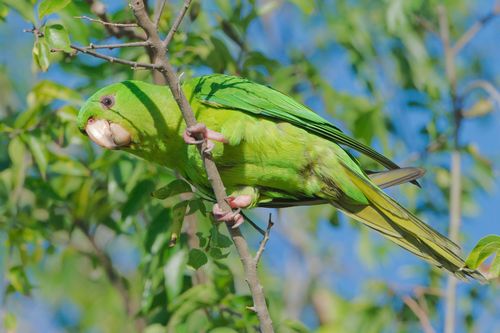
Green Parakeet (Psittacara holochlorus) Green Parakeet
Pacific Parakeet (Psittacara strenuus) Pacific Parakeet

Media

Loading…

In short

The most reliable field mark between Green Parakeet and Pacific Parakeet is the overall tone of green: Green Parakeet is a brighter, paler green, especially below, while Pacific Parakeet is a deeper olive green with a yellowish cast on the underparts. Both species can show red speckling on the face or neck, but this is variable and not always present. Size is a secondary clue: Pacific Parakeet is slightly larger. In the field, focus on overall color impression and subtle differences in tone, as structural and bare-part features are extremely similar. Range is also a strong separator, with little overlap.

Identification tips

  1. Overall green tone: Green Parakeet is a brighter, paler green, especially on the underparts, while Pacific Parakeet is a deeper olive green with a yellowish tinge below. Use this as your primary field mark, especially in good light.
  2. Red speckling: Both species can show red speckles on the face or neck, but the amount and exact location vary individually and overlap between species. Do not rely on this mark alone.
  3. Underwing color: Green Parakeet has yellowish green underwing coverts; Pacific Parakeet's are olive-yellow. This difference is subtle and often not visible unless the bird is overhead in good light.
  4. Flight feather and tail underside: Both species have olive-yellow undersides to the flight feathers and tail, so this is not a separator.
  5. Bare parts: Both have orange-red irises with bare pale beige skin around the eye, horn-colored bills, and brownish legs/feet. These features are not useful for separation.
  6. Size: Pacific Parakeet is slightly larger (about 32 cm vs. 28–30.5 cm for Green Parakeet), but this is difficult to judge unless birds are side by side.
  7. Sex and age: Sexes are alike in both species. No distinctive juvenile or immature plumage marks are described, so assume adult-like appearance for all ages in the field.
  8. Range: Use range as a strong clue: Green Parakeet is expected in southern Texas and northern/central Mexico; Pacific Parakeet is found further south from southern Mexico through Central America. In southern Mexico, both may occur, so rely on plumage tone.
  9. Behavior and flocking: Both species behave similarly, often in noisy flocks. Flocking style and feeding behavior are not diagnostic.
  10. Habitat: No major habitat differences are noted where ranges overlap. Both use a variety of wooded and semi-open habitats.
  11. Voice: No distinguishing vocal differences are described in the available notes; do not use voice for separation.
  12. Pitfalls: Beware of lighting conditions that can alter the perceived green tone. Overcast or shaded conditions may make both species appear duller and more similar.
  13. Subspecies variation: Green Parakeet subspecies P. h. brewsteri is slightly darker with a glaucous (bluish) cast on the head, but this is subtle and not a reliable field mark for most observers.
  14. Quiz context: If you are unsure and the bird is outside southern Texas or northern/central Mexico, Pacific Parakeet is more likely. In southern Texas, only Green Parakeet is expected.
  15. Summary tip: In direct comparison, prioritize overall green tone (brighter/yellower for Green, deeper olive for Pacific) and use range as a backup.

Size

Green Parakeet is 28–30.5 cm long and weighs about 230 g, while Pacific Parakeet is slightly longer at about 32 cm. Both are medium-sized Psittacara parakeets, but the Pacific Parakeet averages a bit larger and longer-tailed. In direct comparison, Pacific Parakeet may appear bulkier, but this is subtle and not always reliable at a distance or in flight.

Plumage

Both species are generally green with paler, yellower underparts, but Green Parakeet is distinctly brighter and more yellow-toned below, while Pacific Parakeet is a deeper olive green overall with a yellowish tinge to the underparts. Both can show red speckling on the face or neck, but the location and extent are variable and overlap. Underwing coverts are yellowish green in Green Parakeet, while Pacific Parakeet's underwings are olive-yellow; the difference is subtle and hard to judge in the field. The undersides of flight feathers and tail are olive-yellow in both. No age-specific wing pattern differences are described for immatures or juveniles in the available notes, so adult-like plumage is assumed from a field perspective.

Behaviour

Both species are typically seen in noisy, active flocks, often flying in tight groups or feeding in trees. Green Parakeet is non-migratory but may make local food-driven movements; Pacific Parakeet's behavior is similar, with no major differences noted in flocking, feeding, or flight style. Both can be crop pests and nest in cavities or cliffs. Behavior is not a reliable separator.

Habitat

Green Parakeet is native to Mexico and southern Texas (Rio Grande Valley), while Pacific Parakeet is found from southern Mexico south through Guatemala, El Salvador, Honduras, and Nicaragua. In areas of range overlap (southern Mexico), habitat preferences are not described as different, so context is mainly useful for excluding one species outside its known range.

Submit a better description

Use the same sections as the comparison. Your text is published immediately.

The most reliable field mark between Green Parakeet and Pacific Parakeet is the overall tone of green: Green Parakeet is a brighter, paler green, especially below, while Pacific Parakeet is a deeper olive green with a yellowish cast on the underparts. Both species can show red speckling on the face or neck, but this is variable and not always present. Size is a secondary clue: Pacific Parakeet is slightly larger. In the field, focus on overall color impression and subtle differences in tone, as structural and bare-part features are extremely similar. Range is also a strong separator, with little overlap.

  1. Overall green tone: Green Parakeet is a brighter, paler green, especially on the underparts, while Pacific Parakeet is a deeper olive green with a yellowish tinge below. Use this as your primary field mark, especially in good light.
  2. Red speckling: Both species can show red speckles on the face or neck, but the amount and exact location vary individually and overlap between species. Do not rely on this mark alone.
  3. Underwing color: Green Parakeet has yellowish green underwing coverts; Pacific Parakeet's are olive-yellow. This difference is subtle and often not visible unless the bird is overhead in good light.
  4. Flight feather and tail underside: Both species have olive-yellow undersides to the flight feathers and tail, so this is not a separator.
  5. Bare parts: Both have orange-red irises with bare pale beige skin around the eye, horn-colored bills, and brownish legs/feet. These features are not useful for separation.
  6. Size: Pacific Parakeet is slightly larger (about 32 cm vs. 28–30.5 cm for Green Parakeet), but this is difficult to judge unless birds are side by side.
  7. Sex and age: Sexes are alike in both species. No distinctive juvenile or immature plumage marks are described, so assume adult-like appearance for all ages in the field.
  8. Range: Use range as a strong clue: Green Parakeet is expected in southern Texas and northern/central Mexico; Pacific Parakeet is found further south from southern Mexico through Central America. In southern Mexico, both may occur, so rely on plumage tone.
  9. Behavior and flocking: Both species behave similarly, often in noisy flocks. Flocking style and feeding behavior are not diagnostic.
  10. Habitat: No major habitat differences are noted where ranges overlap. Both use a variety of wooded and semi-open habitats.
  11. Voice: No distinguishing vocal differences are described in the available notes; do not use voice for separation.
  12. Pitfalls: Beware of lighting conditions that can alter the perceived green tone. Overcast or shaded conditions may make both species appear duller and more similar.
  13. Subspecies variation: Green Parakeet subspecies P. h. brewsteri is slightly darker with a glaucous (bluish) cast on the head, but this is subtle and not a reliable field mark for most observers.
  14. Quiz context: If you are unsure and the bird is outside southern Texas or northern/central Mexico, Pacific Parakeet is more likely. In southern Texas, only Green Parakeet is expected.
  15. Summary tip: In direct comparison, prioritize overall green tone (brighter/yellower for Green, deeper olive for Pacific) and use range as a backup.

Green Parakeet is 28–30.5 cm long and weighs about 230 g, while Pacific Parakeet is slightly longer at about 32 cm. Both are medium-sized Psittacara parakeets, but the Pacific Parakeet averages a bit larger and longer-tailed. In direct comparison, Pacific Parakeet may appear bulkier, but this is subtle and not always reliable at a distance or in flight.

Both species are generally green with paler, yellower underparts, but Green Parakeet is distinctly brighter and more yellow-toned below, while Pacific Parakeet is a deeper olive green overall with a yellowish tinge to the underparts. Both can show red speckling on the face or neck, but the location and extent are variable and overlap. Underwing coverts are yellowish green in Green Parakeet, while Pacific Parakeet's underwings are olive-yellow; the difference is subtle and hard to judge in the field. The undersides of flight feathers and tail are olive-yellow in both. No age-specific wing pattern differences are described for immatures or juveniles in the available notes, so adult-like plumage is assumed from a field perspective.

Both species are typically seen in noisy, active flocks, often flying in tight groups or feeding in trees. Green Parakeet is non-migratory but may make local food-driven movements; Pacific Parakeet's behavior is similar, with no major differences noted in flocking, feeding, or flight style. Both can be crop pests and nest in cavities or cliffs. Behavior is not a reliable separator.

Green Parakeet is native to Mexico and southern Texas (Rio Grande Valley), while Pacific Parakeet is found from southern Mexico south through Guatemala, El Salvador, Honduras, and Nicaragua. In areas of range overlap (southern Mexico), habitat preferences are not described as different, so context is mainly useful for excluding one species outside its known range.

Discard your changes?

You have unsaved edits. If you leave now, those changes will be lost.

Green Parakeet · Pacific Parakeet · My Tricky Birds