
Greater Flameback vs Himalayan Flameback
Chrysocolaptes guttacristatus versus Dinopium shorii
Play a quiz with Greater Flameback and Himalayan Flameback
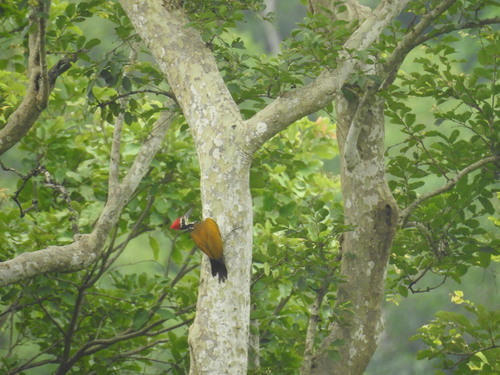 Greater Flameback
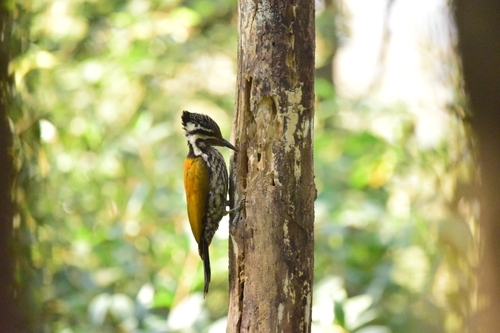 Himalayan Flameback
In short
The most reliable field mark to separate Greater Flameback from Himalayan Flameback is the color and pattern of the hindneck: Greater Flameback shows a white (not black) hindneck, while Himalayan Flameback has a distinctly black hindneck. Structure also helps: Greater Flameback is noticeably larger and has a longer, heavier bill with four toes, while Himalayan Flameback is smaller, with a shorter bill and only three toes. In addition, the Himalayan Flameback shows a brownish throat patch and reddish or brown eyes, whereas Greater Flameback has a pale throat and yellowish or whitish eyes. Both species can look very similar at a distance, especially in their golden backs and red crests (in males), but careful attention to these details will separate them.
Identification tips
- Hindneck color: Greater Flameback has a white hindneck; Himalayan Flameback has a black hindneck. This is the single most reliable field mark for all ages and sexes.
- Throat and breast: Himalayan Flameback shows a brownish throat center, sometimes extending onto the breast and bordered by irregular black spotting. Greater Flameback has a pale (white or light brown) throat with dark chevrons or stripes, lacking the brown center.
- Bill size and shape: Greater Flameback has a longer, heavier, straight-pointed bill that is longer than the head; Himalayan Flameback's bill is shorter and finer. This is easiest to judge with experience or direct comparison.
- Toe count: Greater Flameback has four toes (zygodactyl), Himalayan Flameback only three (tridactyl). This is rarely visible in the field but is diagnostic if seen.
- Eye color: Greater Flameback has yellowish to whitish irises (adults); Himalayan Flameback has reddish or brown eyes. Juvenile Greater Flamebacks have brown irises, which can overlap with Himalayan, so use with caution in young birds.
- Crown and crest (sex differences): Adult male Greater Flameback always has a red crown; female crown varies by subspecies (black with white spots, yellow, or brown with pale dots). Himalayan Flameback males have a yellowish-red to red forehead and crest; females have a black crest streaked with white. Both species have crests bordered by white and black bands, so focus on color and pattern.
- Moustachial stripe: Both have divided moustachial stripes, but Himalayan Flameback's is indistinct with a brownish (sometimes reddish) center; Greater Flameback's is divided by white, making it less conspicuous at a distance.
- Back and wing color: Both show golden-yellow to coppery backs and wings, with a red rump and black tail. This is not diagnostic between the two.
- Underpart pattern: Greater Flameback's underparts are white with dark chevrons, stripes, or bands; Himalayan Flameback's breast is irregularly streaked with black or, less commonly, plain white.
- Size and jizz: Greater Flameback is noticeably larger and bulkier, with a longer neck and bill; Himalayan Flameback is smaller and more compact. Use this with caution unless you have direct comparison or experience.
- Habitat context: Greater Flameback is more likely in mangroves and open forests; Himalayan Flameback prefers mature hill forests and sal woodland. Use as supporting evidence, not primary ID.
- Voice: Greater Flameback gives a faster, louder call; Himalayan Flameback's call is slower and softer. Useful if familiar with both, but not always diagnostic.
- Juvenile confusion: Young Greater Flamebacks resemble duller females and have brown irises, potentially overlapping with Himalayan Flameback. In such cases, rely on hindneck and throat color.
- Pitfalls: At a distance, both can look similar due to golden backs and red crests (in males). Always check hindneck and throat pattern before relying on size or general impression.
- Subspecies variation: Female Greater Flameback crown color varies by subspecies, but hindneck and throat marks remain reliable separators across the range.
Size
Greater Flameback is a large woodpecker, about 33 cm in length, and appears robust with a long neck and a bill longer than the head. Himalayan Flameback is smaller overall, with a proportionally shorter and finer bill. The difference is often striking when seen side by side or with experience: Greater Flameback looks bulkier and more powerful, while Himalayan Flameback is more slender and compact. Toe count is also diagnostic: Greater Flameback has four toes (zygodactyl), while Himalayan Flameback has only three toes (tridactyl), though this is rarely visible without a clear view of the feet.
Plumage
No distinctive age-specific upperwing or flight marks are described for either species, so focus is on head, neck, and underpart patterns. For all ages and sexes, Greater Flameback has a white (not black) hindneck and a pale throat with dark chevrons or streaks on the underparts; the back is always golden-yellow to dark brown, with a red rump and black tail. Adult males have a red crown, while females have a variable crown color (black with white spots, yellow, or brown with pale dots), and juveniles resemble duller females. Himalayan Flameback, by contrast, always shows a black hindneck and a brownish throat center, sometimes extending onto the breast and bordered by irregular black spotting. The moustachial stripe is divided and indistinct, with a brownish center (sometimes reddish in males). The breast may be irregularly streaked with black or, less commonly, plain white. Males have a yellowish-red to red crest, females a black-and-white streaked crest. Himalayan Flameback's eyes are reddish or brown, while Greater Flameback's are yellowish to whitish. Both have golden to coppery upperparts and black tails, but the combination of hindneck and throat color is the most reliable plumage separator.
Behaviour
Both species forage in similar woodpecker fashion, using their bills to dig for insects and their stiff tails and feet for support. Greater Flameback is often solitary or in pairs, while Himalayan Flameback sometimes flocks or feeds with other woodpeckers, including Greater Flameback. Toe count (four in Greater, three in Himalayan) is a structural difference but rarely observed in the field. Both species nest in tree holes and are active, conspicuous woodpeckers.
Habitat
Greater Flameback is more of a habitat specialist, favoring open forests, foothills, mangroves, and particular tall tree species (such as Avicennia in mangroves). Himalayan Flameback is found mainly in mature tropical and subtropical deciduous or semi-evergreen forests, especially in the Himalayan foothills and sal forest regions, and sometimes in lowland Ficus and Bombax forests. While their ranges can overlap, Greater Flameback is more likely in mangroves and open forests, Himalayan Flameback in hill forests and mature woodlands. This can help in context but is not always diagnostic.
Voice
Both species give series of repeated calls, but Himalayan Flameback's call is a slower, softer 'klak-klak-klak' compared to the faster, louder call of Greater Flameback. If you hear a rapid, sharp call, suspect Greater Flameback; a slower, more subdued series points to Himalayan Flameback. However, voice alone is not always sufficient for separation unless you are familiar with both.