
Motmot

Great Spotted Cuckoo vs Common Cuckoo

Clamator glandarius versus Cuculus canorus

Play a quiz with Great Spotted Cuckoo and Common Cuckoo
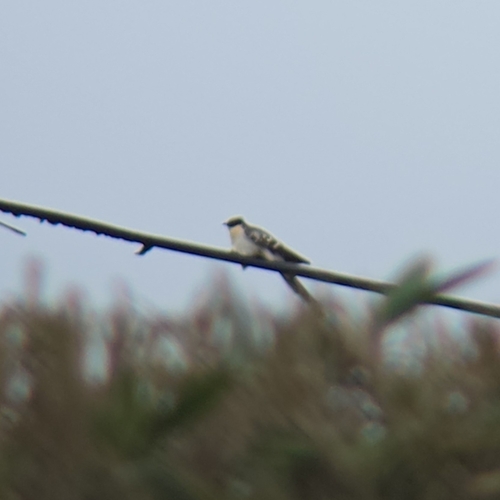
Great Spotted Cuckoo (Clamator glandarius) Great Spotted Cuckoo
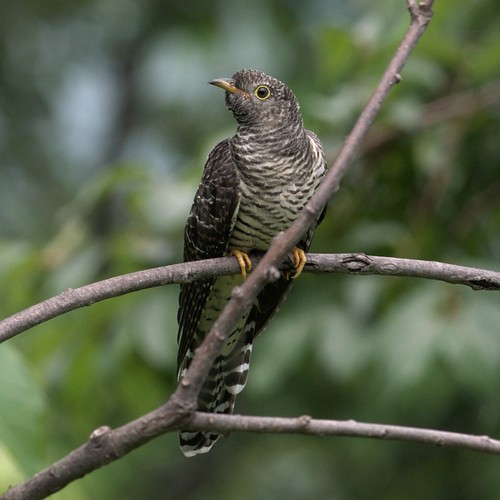
Common Cuckoo (Cuculus canorus) Common Cuckoo

Media

Loading…

In short

Juvenile Great Spotted Cuckoos show a unique combination of blackish upperparts, blackish cap, and rich chestnut primary feathers—this is never matched by Common Cuckoo of any age. For adults, look for the Great Spotted’s yellowish face and upper breast, white underparts, and overall grey above, versus the Common Cuckoo’s clean slate-grey upperparts and sharply demarcated, finely barred underparts. In flight, Great Spotted Cuckoo appears bulkier and more magpie-like, with broader wings and a longer, narrower tail, while Common Cuckoo is slimmer, with a sparrowhawk-like jizz. Both are similar in overall shape, but careful attention to wing and tail structure, as well as facial color, will resolve most confusion.

Identification tips

  1. Juvenile upperwing pattern: Juvenile Great Spotted Cuckoo has blackish upperparts and cap, with rich chestnut primary feathers—this is unique and diagnostic. Juvenile Common Cuckoo never shows this combination; instead, look for a white nape patch and white feather fringes, with variable chestnut barring on the upperparts and secondaries.
  2. Adult facial color: Great Spotted Cuckoo adults have a yellowish face and upper breast, contrasting with grey above and white below. Common Cuckoo adults always have a clean grey face and throat, with no yellowish wash.
  3. Underparts: Great Spotted Cuckoo shows plain white underparts in adults, while Common Cuckoo always has finely barred underparts with a sharp demarcation from the grey throat.
  4. Cap color: Great Spotted Cuckoo has a grey (adult) or blackish (juvenile) cap; Common Cuckoo’s head is always grey (adults) or variable in juveniles, but never as dark as Great Spotted’s juvenile cap.
  5. Flight jizz: In flight, Great Spotted Cuckoo is bulkier, with broad wings and a long, narrow tail, giving a magpie-like impression. Common Cuckoo is slimmer, with a more pointed, sparrowhawk-like flight profile.
  6. Tail shape: Great Spotted Cuckoo’s tail is longer and narrower relative to its body, accentuating its size in flight. Common Cuckoo’s tail is shorter and less conspicuous.
  7. Sexual dimorphism: Both species are similar between sexes, except for the rufous morph in female Common Cuckoo, which shows reddish-brown upperparts with dark bars. Great Spotted Cuckoo does not have a rufous morph.
  8. Juvenile nape patch: Only juvenile Common Cuckoo shows a white nape patch and white feather fringes—never seen in Great Spotted Cuckoo.
  9. Primary feather color: Chestnut primaries in juvenile Great Spotted Cuckoo are a key field mark; Common Cuckoo juveniles may have chestnut barring on secondaries/coverts but not on primaries.
  10. Perched posture: Common Cuckoo often perches with drooped wings and raised tail, especially when singing; Great Spotted Cuckoo is more upright.
  11. Size impression: Great Spotted Cuckoo is heavier and appears larger, especially in flight, but size overlap means this is a supporting mark only.
  12. Host association: If seen near magpie nests or in magpie-rich areas, Great Spotted Cuckoo is more likely, but this is not diagnostic on its own.
  13. Vocalization: Only Common Cuckoo gives the classic 'goo-ko' song; Great Spotted Cuckoo’s voice is not detailed here, so use caution with this mark.
  14. Seasonal confusion: Both species are migratory and can overlap in range and season; rely on plumage and structure rather than timing.
  15. Barred vs plain underparts: Remember, only Common Cuckoo (all ages) shows barred underparts; Great Spotted Cuckoo is always plain white below.

Size

Great Spotted Cuckoo is noticeably heavier (average 153.5g vs 111.5g) and slightly longer (35–39 cm vs 32–34 cm), but the difference in field is most obvious in its broader wings and longer, narrower tail, making it look even larger than the measurements suggest. Common Cuckoo is slimmer, with a shorter tail and a more streamlined, falcon-like appearance. Both have long tails and slender bodies, but Great Spotted’s proportions are more robust and magpie-like, especially in flight.

Plumage

Juvenile Great Spotted Cuckoo is distinctive: it has blackish upperparts and cap, with rich chestnut primary wing feathers—these chestnut primaries are not found in Common Cuckoo of any age. Juvenile Common Cuckoo is variable but always shows a white nape patch and white feather fringes, with upperparts that may be barred chestnut-brown or plain grey, and secondaries/coverts with chestnut bars or spots. Adult Great Spotted Cuckoo is grey above with a grey cap, yellowish face and upper breast, and white underparts; sexes are similar. Adult Common Cuckoo males are slate-grey above and on the throat, with a sharp boundary to the finely barred underparts; females may be similar or show a rufous morph with reddish-brown and dark bars. The yellowish face and upper breast of Great Spotted is never matched by Common Cuckoo, which always has a clean grey face and throat. The Common Cuckoo’s underparts are always barred, while Great Spotted’s are plain white. Great Spotted Cuckoo juveniles never show the white nape patch or white feather fringes of juvenile Common Cuckoo.

Behaviour

In flight, Great Spotted Cuckoo is magpie-like, with broad wings and a long, narrow tail, often giving a more lumbering, buoyant impression. Common Cuckoo’s flight is more sparrowhawk-like, with regular wingbeats and a slimmer, more direct profile. When perched, Common Cuckoo often droops its wings and raises its tail, especially when singing, while Great Spotted Cuckoo tends to look more upright and robust. Both species are brood parasites, but their host choices differ (not field-diagnostic).

Habitat

Both species can occur in similar open country, woodland edges, and scrub, especially in the Mediterranean and Africa. Great Spotted Cuckoo is more closely associated with corvid hosts (especially magpies), so may be seen in areas with abundant magpies. Common Cuckoo is more widespread in Europe and Asia, using a broader range of hosts, and is not as tightly linked to magpie-rich habitats. However, habitat alone is rarely diagnostic between these two.

Voice

Common Cuckoo is famous for its two-note 'goo-ko' song, given from an open perch, with a regular rhythm and a bubbling female call. Great Spotted Cuckoo’s vocalizations are not described in the provided notes, so voice is not a reliable separator based on this information.

Submit a better description

Use the same sections as the comparison. Your text is published immediately.

Juvenile Great Spotted Cuckoos show a unique combination of blackish upperparts, blackish cap, and rich chestnut primary feathers—this is never matched by Common Cuckoo of any age. For adults, look for the Great Spotted’s yellowish face and upper breast, white underparts, and overall grey above, versus the Common Cuckoo’s clean slate-grey upperparts and sharply demarcated, finely barred underparts. In flight, Great Spotted Cuckoo appears bulkier and more magpie-like, with broader wings and a longer, narrower tail, while Common Cuckoo is slimmer, with a sparrowhawk-like jizz. Both are similar in overall shape, but careful attention to wing and tail structure, as well as facial color, will resolve most confusion.

  1. Juvenile upperwing pattern: Juvenile Great Spotted Cuckoo has blackish upperparts and cap, with rich chestnut primary feathers—this is unique and diagnostic. Juvenile Common Cuckoo never shows this combination; instead, look for a white nape patch and white feather fringes, with variable chestnut barring on the upperparts and secondaries.
  2. Adult facial color: Great Spotted Cuckoo adults have a yellowish face and upper breast, contrasting with grey above and white below. Common Cuckoo adults always have a clean grey face and throat, with no yellowish wash.
  3. Underparts: Great Spotted Cuckoo shows plain white underparts in adults, while Common Cuckoo always has finely barred underparts with a sharp demarcation from the grey throat.
  4. Cap color: Great Spotted Cuckoo has a grey (adult) or blackish (juvenile) cap; Common Cuckoo’s head is always grey (adults) or variable in juveniles, but never as dark as Great Spotted’s juvenile cap.
  5. Flight jizz: In flight, Great Spotted Cuckoo is bulkier, with broad wings and a long, narrow tail, giving a magpie-like impression. Common Cuckoo is slimmer, with a more pointed, sparrowhawk-like flight profile.
  6. Tail shape: Great Spotted Cuckoo’s tail is longer and narrower relative to its body, accentuating its size in flight. Common Cuckoo’s tail is shorter and less conspicuous.
  7. Sexual dimorphism: Both species are similar between sexes, except for the rufous morph in female Common Cuckoo, which shows reddish-brown upperparts with dark bars. Great Spotted Cuckoo does not have a rufous morph.
  8. Juvenile nape patch: Only juvenile Common Cuckoo shows a white nape patch and white feather fringes—never seen in Great Spotted Cuckoo.
  9. Primary feather color: Chestnut primaries in juvenile Great Spotted Cuckoo are a key field mark; Common Cuckoo juveniles may have chestnut barring on secondaries/coverts but not on primaries.
  10. Perched posture: Common Cuckoo often perches with drooped wings and raised tail, especially when singing; Great Spotted Cuckoo is more upright.
  11. Size impression: Great Spotted Cuckoo is heavier and appears larger, especially in flight, but size overlap means this is a supporting mark only.
  12. Host association: If seen near magpie nests or in magpie-rich areas, Great Spotted Cuckoo is more likely, but this is not diagnostic on its own.
  13. Vocalization: Only Common Cuckoo gives the classic 'goo-ko' song; Great Spotted Cuckoo’s voice is not detailed here, so use caution with this mark.
  14. Seasonal confusion: Both species are migratory and can overlap in range and season; rely on plumage and structure rather than timing.
  15. Barred vs plain underparts: Remember, only Common Cuckoo (all ages) shows barred underparts; Great Spotted Cuckoo is always plain white below.

Great Spotted Cuckoo is noticeably heavier (average 153.5g vs 111.5g) and slightly longer (35–39 cm vs 32–34 cm), but the difference in field is most obvious in its broader wings and longer, narrower tail, making it look even larger than the measurements suggest. Common Cuckoo is slimmer, with a shorter tail and a more streamlined, falcon-like appearance. Both have long tails and slender bodies, but Great Spotted’s proportions are more robust and magpie-like, especially in flight.

Juvenile Great Spotted Cuckoo is distinctive: it has blackish upperparts and cap, with rich chestnut primary wing feathers—these chestnut primaries are not found in Common Cuckoo of any age. Juvenile Common Cuckoo is variable but always shows a white nape patch and white feather fringes, with upperparts that may be barred chestnut-brown or plain grey, and secondaries/coverts with chestnut bars or spots. Adult Great Spotted Cuckoo is grey above with a grey cap, yellowish face and upper breast, and white underparts; sexes are similar. Adult Common Cuckoo males are slate-grey above and on the throat, with a sharp boundary to the finely barred underparts; females may be similar or show a rufous morph with reddish-brown and dark bars. The yellowish face and upper breast of Great Spotted is never matched by Common Cuckoo, which always has a clean grey face and throat. The Common Cuckoo’s underparts are always barred, while Great Spotted’s are plain white. Great Spotted Cuckoo juveniles never show the white nape patch or white feather fringes of juvenile Common Cuckoo.

In flight, Great Spotted Cuckoo is magpie-like, with broad wings and a long, narrow tail, often giving a more lumbering, buoyant impression. Common Cuckoo’s flight is more sparrowhawk-like, with regular wingbeats and a slimmer, more direct profile. When perched, Common Cuckoo often droops its wings and raises its tail, especially when singing, while Great Spotted Cuckoo tends to look more upright and robust. Both species are brood parasites, but their host choices differ (not field-diagnostic).

Both species can occur in similar open country, woodland edges, and scrub, especially in the Mediterranean and Africa. Great Spotted Cuckoo is more closely associated with corvid hosts (especially magpies), so may be seen in areas with abundant magpies. Common Cuckoo is more widespread in Europe and Asia, using a broader range of hosts, and is not as tightly linked to magpie-rich habitats. However, habitat alone is rarely diagnostic between these two.

Common Cuckoo is famous for its two-note 'goo-ko' song, given from an open perch, with a regular rhythm and a bubbling female call. Great Spotted Cuckoo’s vocalizations are not described in the provided notes, so voice is not a reliable separator based on this information.

Discard your changes?

You have unsaved edits. If you leave now, those changes will be lost.

Great Spotted Cuckoo · Common Cuckoo · My Tricky Birds