

Motmot

Great Elaenia vs Small-billed Elaenia

Elaenia dayi versus Elaenia parvirostris

Play a quiz with Great Elaenia and Small-billed Elaenia
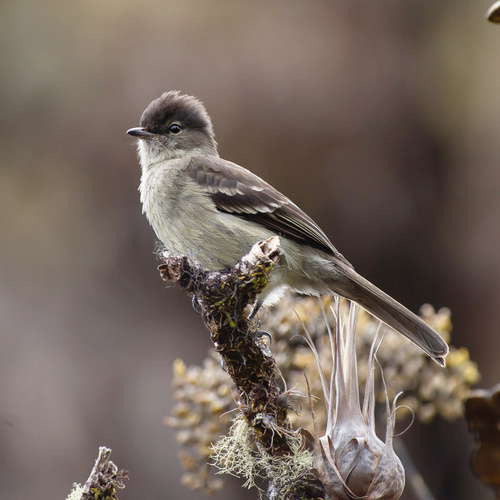
Great Elaenia (Elaenia dayi) Great Elaenia
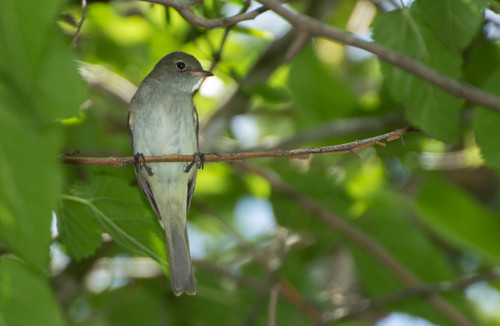
Small-billed Elaenia (Elaenia parvirostris) Small-billed Elaenia

Media

Loading…

In short

The most reliable way to separate Great Elaenia from Small-billed Elaenia in the field is by size and overall color: Great Elaenia is much larger and bulkier, with a long tail and dark sooty-brown upperparts and head, while Small-billed Elaenia is distinctly smaller, more compact, and bright olive-green above with a pale belly. Both species show wing bars, but Great Elaenia has two whitish bars on a dark wing, whereas Small-billed Elaenia has three, usually brighter, wing bars. Bill size and shape are also key: Great Elaenia’s bill is proportionally larger and stouter, while Small-billed Elaenia’s is short, stubby, and delicate. If seen together, the size difference is striking; if not, focus on the head and wing pattern.

Identification tips

  1. Size is the most immediate clue: Great Elaenia is much larger and bulkier than Small-billed Elaenia. If you see a notably big, long-tailed elaenia, suspect Great.
  2. Bill size and shape: Great Elaenia has a proportionally larger, stouter bill; Small-billed Elaenia’s bill is short, stubby, and delicate—this is especially clear with good binocular views.
  3. Upperpart color: Great Elaenia is dark sooty brown above, including the head and back; Small-billed Elaenia is bright olive-green above, with a more vibrant appearance.
  4. Crown pattern: Small-billed Elaenia shows a partially visible white crown stripe on a bright olive-green crown, while Great Elaenia’s crown is blackish and lacks a crown stripe.
  5. Eyering: Both have a whitish eyering, but in Great Elaenia it is thin and broken, while in Small-billed Elaenia it is thin but more distinct and complete.
  6. Wing bars: Great Elaenia has two subtle whitish wing bars; Small-billed Elaenia has three brighter, crisper wing bars—this is a useful field mark in perched birds.
  7. Flight feather edges: Both have pale edges to the flight feathers, but these are more conspicuous in Small-billed Elaenia, adding to its brighter-winged look.
  8. Underparts: Great Elaenia is dull olive-gray below with a pale yellowish belly; Small-billed Elaenia is gray on the throat and breast (sometimes with an olive wash) and whitish on the belly and undertail.
  9. Tail: Both have dusky tails, but Great Elaenia’s is longer and contributes to its overall bigger appearance.
  10. Crest: Great Elaenia has a very small or absent crest; Small-billed Elaenia lacks a crest entirely. This is not a strong separator, but can help if a crest is visible.
  11. Behavior: Small-billed Elaenia is more active, often joining mixed flocks and foraging by gleaning or hovering; Great Elaenia is likely slower and more solitary.
  12. Habitat and range: Outside Brazil and Venezuela, Great Elaenia is very unlikely; in open, disturbed, or urban habitats, Small-billed Elaenia is much more likely.
  13. Sex and age: Both species are sexually monomorphic and no age-specific field marks are described, so these tips apply to all plumages.
  14. Plumage pitfalls: In poor light, Small-billed Elaenia’s olive-green can appear duller, and Great Elaenia’s sooty brown may look grayish—rely on size, bill, and wing bars if color is ambiguous.
  15. Direct comparison: If both species are present, the size and color difference is dramatic; if not, use a combination of size, bill, upperpart color, and wing bar count for best results.

Size

Great Elaenia is by far the largest elaenia, reaching about 20 cm in length and weighing 29–40 g. It appears long-tailed and robust. Small-billed Elaenia is much smaller at 13–15 cm, with a noticeably more compact and delicate build. In direct comparison or with experience, Great Elaenia will look nearly twice the bulk of Small-billed Elaenia. Size alone can be diagnostic if both are known from the area.

Plumage

No age-specific juvenile or immature wing panel or flight mark is described for either species, so focus is on adult plumage. Great Elaenia adults are dark sooty brown above with a blackish crown, lighter cheeks, and a thin, broken whitish eyering. Their wings are dark sooty brown with two subtle whitish wing bars formed by the tips of the coverts, and the flight feathers are edged pale but not strikingly so. The underparts are dull olive-gray with a pale yellowish belly. Small-billed Elaenia adults are bright olive-green above with a partially visible white crown stripe, whitish lores, and a thin but distinct white eyering. The wings are dusky with three crisp whitish wing bars and narrow pale edges to the flight feathers. The underparts are gray on the throat and breast (sometimes with an olive wash), and the belly and undertail are whitish. The contrast in upperpart color (dark sooty brown vs. bright olive-green) and the number and brightness of wing bars (two faint vs. three bright) are key. Both have dark tails and similar iris, bill, and leg colors, but Small-billed Elaenia’s bill is notably smaller and more delicate.

Behaviour

Small-billed Elaenia is often active, foraging singly or in small groups, sometimes joining mixed-species flocks, and is frequently seen gleaning insects or fruit while perched or briefly hovering. Great Elaenia’s behavior is less detailed in the notes, but as a larger, heavier bird, it is likely to appear slower and more deliberate, often perching upright and sallying for insects. In mixed flocks or edge habitats, Small-billed Elaenia is more likely to be seen moving quickly and associating with other small birds.

Habitat

Great Elaenia is restricted to Brazil and Venezuela, typically in more localized or specific habitats (details not given). Small-billed Elaenia is widespread across nearly all of South America (except Chile), found in a wide range of open and edge habitats including forest edges, secondary growth, riparian zones, parks, gardens, and even savanna and river islands in winter. If you are outside Brazil and Venezuela, Great Elaenia is unlikely. In disturbed or urban habitats, Small-billed Elaenia is much more probable.

Submit a better description

Use the same sections as the comparison. Your text is published immediately.

The most reliable way to separate Great Elaenia from Small-billed Elaenia in the field is by size and overall color: Great Elaenia is much larger and bulkier, with a long tail and dark sooty-brown upperparts and head, while Small-billed Elaenia is distinctly smaller, more compact, and bright olive-green above with a pale belly. Both species show wing bars, but Great Elaenia has two whitish bars on a dark wing, whereas Small-billed Elaenia has three, usually brighter, wing bars. Bill size and shape are also key: Great Elaenia’s bill is proportionally larger and stouter, while Small-billed Elaenia’s is short, stubby, and delicate. If seen together, the size difference is striking; if not, focus on the head and wing pattern.

  1. Size is the most immediate clue: Great Elaenia is much larger and bulkier than Small-billed Elaenia. If you see a notably big, long-tailed elaenia, suspect Great.
  2. Bill size and shape: Great Elaenia has a proportionally larger, stouter bill; Small-billed Elaenia’s bill is short, stubby, and delicate—this is especially clear with good binocular views.
  3. Upperpart color: Great Elaenia is dark sooty brown above, including the head and back; Small-billed Elaenia is bright olive-green above, with a more vibrant appearance.
  4. Crown pattern: Small-billed Elaenia shows a partially visible white crown stripe on a bright olive-green crown, while Great Elaenia’s crown is blackish and lacks a crown stripe.
  5. Eyering: Both have a whitish eyering, but in Great Elaenia it is thin and broken, while in Small-billed Elaenia it is thin but more distinct and complete.
  6. Wing bars: Great Elaenia has two subtle whitish wing bars; Small-billed Elaenia has three brighter, crisper wing bars—this is a useful field mark in perched birds.
  7. Flight feather edges: Both have pale edges to the flight feathers, but these are more conspicuous in Small-billed Elaenia, adding to its brighter-winged look.
  8. Underparts: Great Elaenia is dull olive-gray below with a pale yellowish belly; Small-billed Elaenia is gray on the throat and breast (sometimes with an olive wash) and whitish on the belly and undertail.
  9. Tail: Both have dusky tails, but Great Elaenia’s is longer and contributes to its overall bigger appearance.
  10. Crest: Great Elaenia has a very small or absent crest; Small-billed Elaenia lacks a crest entirely. This is not a strong separator, but can help if a crest is visible.
  11. Behavior: Small-billed Elaenia is more active, often joining mixed flocks and foraging by gleaning or hovering; Great Elaenia is likely slower and more solitary.
  12. Habitat and range: Outside Brazil and Venezuela, Great Elaenia is very unlikely; in open, disturbed, or urban habitats, Small-billed Elaenia is much more likely.
  13. Sex and age: Both species are sexually monomorphic and no age-specific field marks are described, so these tips apply to all plumages.
  14. Plumage pitfalls: In poor light, Small-billed Elaenia’s olive-green can appear duller, and Great Elaenia’s sooty brown may look grayish—rely on size, bill, and wing bars if color is ambiguous.
  15. Direct comparison: If both species are present, the size and color difference is dramatic; if not, use a combination of size, bill, upperpart color, and wing bar count for best results.

Great Elaenia is by far the largest elaenia, reaching about 20 cm in length and weighing 29–40 g. It appears long-tailed and robust. Small-billed Elaenia is much smaller at 13–15 cm, with a noticeably more compact and delicate build. In direct comparison or with experience, Great Elaenia will look nearly twice the bulk of Small-billed Elaenia. Size alone can be diagnostic if both are known from the area.

No age-specific juvenile or immature wing panel or flight mark is described for either species, so focus is on adult plumage. Great Elaenia adults are dark sooty brown above with a blackish crown, lighter cheeks, and a thin, broken whitish eyering. Their wings are dark sooty brown with two subtle whitish wing bars formed by the tips of the coverts, and the flight feathers are edged pale but not strikingly so. The underparts are dull olive-gray with a pale yellowish belly. Small-billed Elaenia adults are bright olive-green above with a partially visible white crown stripe, whitish lores, and a thin but distinct white eyering. The wings are dusky with three crisp whitish wing bars and narrow pale edges to the flight feathers. The underparts are gray on the throat and breast (sometimes with an olive wash), and the belly and undertail are whitish. The contrast in upperpart color (dark sooty brown vs. bright olive-green) and the number and brightness of wing bars (two faint vs. three bright) are key. Both have dark tails and similar iris, bill, and leg colors, but Small-billed Elaenia’s bill is notably smaller and more delicate.

Small-billed Elaenia is often active, foraging singly or in small groups, sometimes joining mixed-species flocks, and is frequently seen gleaning insects or fruit while perched or briefly hovering. Great Elaenia’s behavior is less detailed in the notes, but as a larger, heavier bird, it is likely to appear slower and more deliberate, often perching upright and sallying for insects. In mixed flocks or edge habitats, Small-billed Elaenia is more likely to be seen moving quickly and associating with other small birds.

Great Elaenia is restricted to Brazil and Venezuela, typically in more localized or specific habitats (details not given). Small-billed Elaenia is widespread across nearly all of South America (except Chile), found in a wide range of open and edge habitats including forest edges, secondary growth, riparian zones, parks, gardens, and even savanna and river islands in winter. If you are outside Brazil and Venezuela, Great Elaenia is unlikely. In disturbed or urban habitats, Small-billed Elaenia is much more probable.

Discard your changes?

You have unsaved edits. If you leave now, those changes will be lost.

Great Elaenia · Small-billed Elaenia · My Tricky Birds