

Fujian Niltava vs Rufous-bellied Niltava
Niltava davidi versus Niltava sundara
Play a quiz with Fujian Niltava and Rufous-bellied Niltava
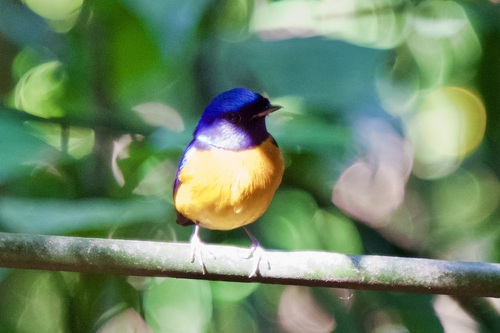 Fujian Niltava
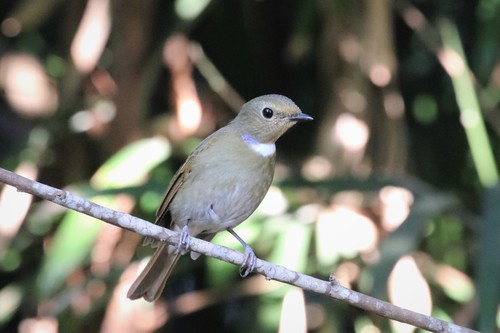 Rufous-bellied Niltava
In short
The most reliable field mark between Fujian Niltava and Rufous-bellied Niltava is the presence of strong rufous coloration on the underparts of Rufous-bellied Niltava, which is absent in Fujian Niltava. Both species are robust, short-tailed niltavas found in overlapping forest habitats in Southeast Asia and southern China, but Rufous-bellied Niltava is larger and more brightly colored overall. Subtle differences in female and immature plumage can be challenging, but careful attention to underpart color, tail tone, and overall size will usually separate them. Structural differences are minor but can help in combination with plumage, especially when birds are perched.
Identification tips
- Rufous underparts (male): Only Rufous-bellied Niltava males show extensive rufous-orange on the belly and flanks; Fujian Niltava males never show rufous below. This is the single most reliable field mark for adult males.
- Female tail and mantle color: Female Rufous-bellied Niltava has rufous tones on the tail, uppertail-coverts, and sometimes the mantle, with a buffy forehead and more olive-brown crown/nape. Fujian Niltava females lack these rufous or buffy tones, appearing plainer and more uniform brown or greyish-olive.
- Size and structure: Rufous-bellied Niltava is noticeably larger and bulkier, with a broader-based bill and a more robust appearance. This is most apparent when seen alongside other niltavas or flycatchers.
- Subspecies variation (Rufous-bellied): Some subspecies (e.g., denotata) show more violet-blue in males and more olive-brown or rufous in females. Always check for rufous on tail and underparts in all plumages.
- No strong age-specific flight marks: Neither species is described as having distinctive juvenile or immature upperwing patterns or flight marks in available sources. Focus on perched birds for best separation.
- Underpart tone (female/immature): Female and immature Rufous-bellied Niltava may show more greyish-olive or olive-brown on the underparts, while Fujian Niltava is more uniformly brownish or greyish-olive without rufous or buff.
- Tail color (female/immature): Rufous-bellied Niltava females have a paler, more rufous tail; Fujian Niltava females have a plainer, darker tail.
- Habitat overlap: Both species can occur in the same forests in southern China and northern Indochina, so do not rely on habitat alone for identification.
- Bill shape: Rufous-bellied Niltava has a broader-based bill, but this is subtle and best used in combination with other marks.
- No diagnostic vocal differences provided: If heard, vocalizations may help, but no details are available in the provided sources.
- Seasonal confusion: Non-breeding and immature birds can be especially tricky; always look for any hint of rufous on the underparts or tail for Rufous-bellied Niltava.
- Contextual clues: In the Himalayas and far western range, only Rufous-bellied Niltava is expected; in Cambodia and Hong Kong, only Fujian Niltava is likely. In overlap zones, use plumage and size.
- Lighting pitfalls: Rufous tones can be muted in poor light; always double-check underparts and tail in good viewing conditions.
- Avoid confusion with other niltavas: Both species can be confused with other blue niltavas; always confirm the presence or absence of rufous on underparts and tail.
Size
Rufous-bellied Niltava is distinctly larger, measuring 15–18 cm and weighing 19–24 g [wikipedia]. Fujian Niltava is smaller, but the exact measurements are not provided in the sources; field experience and community reports confirm the Rufous-bellied is the bulkier, more robust niltava. This size difference is most apparent when the two are seen side by side or when comparing to familiar flycatchers.
Plumage
Adult male Rufous-bellied Niltava is unmistakable with its bright rufous-orange belly and flanks, contrasting with deep blue upperparts and head. Fujian Niltava males lack any rufous below, instead showing blue upperparts and a more subdued, non-rufous belly. Female and immature plumages are more subtle: female Rufous-bellied Niltava shows rufous tones on the tail, uppertail-coverts, and sometimes the mantle, with more olive-brown on the crown and nape, and a buffy forehead. Fujian Niltava females are plainer, lacking strong rufous tones, with more uniform brownish or greyish-olive underparts and tail. Subspecies of Rufous-bellied Niltava add variation: some males are more violet-blue, and some females have even paler tails and upperparts. No age-specific upperwing or flight pattern differences are described for either species in the available sources.
Behaviour
Both species are typical niltavas: they perch upright in the midstory or lower canopy, sallying for insects and sometimes dropping to the ground. Rufous-bellied Niltava, being larger, may appear more robust and less active, but overall jizz is similar. Both can be secretive and are often detected by movement or brief views as they move through dense forest.
Habitat
Both species inhabit subtropical or tropical moist lowland and montane forests. Their ranges overlap in southern China, northern Vietnam, Laos, and Thailand, but Rufous-bellied Niltava has a broader range, extending west into the Himalayas (Nepal, India, Bhutan, Pakistan, Bangladesh, Myanmar) and further north. Fujian Niltava is more restricted to Southeast Asia and southern China, including Hong Kong and Cambodia. In areas of overlap, habitat preference is not strongly diagnostic, but Rufous-bellied may occur at slightly higher elevations or in more montane forest in some regions.