

Fluffy-backed Tit-Babbler vs Chestnut-winged Babbler
Macronus ptilosus versus Cyanoderma erythropterum
Play a quiz with Fluffy-backed Tit-Babbler and Chestnut-winged Babbler
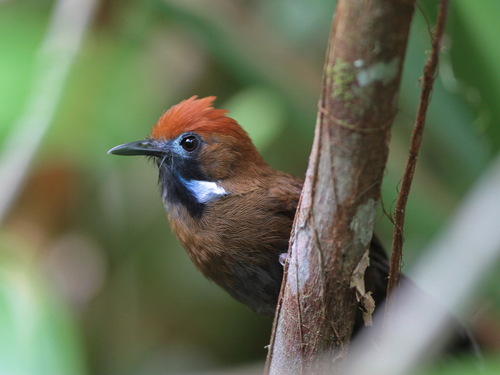 Fluffy-backed Tit-Babbler
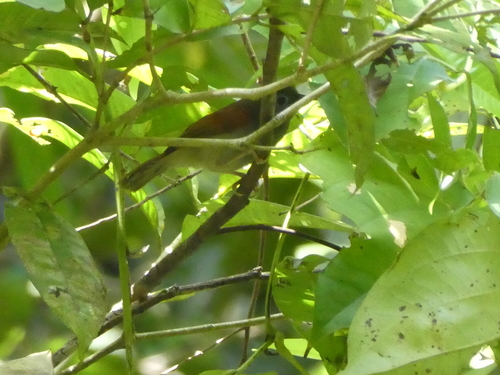 Chestnut-winged Babbler
In short
The most reliable field mark between Fluffy-backed Tit-Babbler and Chestnut-winged Babbler is overall size and structure: Fluffy-backed is much bulkier, nearly double the mass of Chestnut-winged. In the field, Chestnut-winged Babbler shows a distinctive chestnut-brown wing with a greyish face and underparts, while Fluffy-backed Tit-Babbler lacks this combination and appears more uniformly colored. Both species can occur together in lowland forests of the Malay Peninsula and Sumatra, so careful attention to size and plumage is essential. Immature or juvenile-specific wing patterns are not described for either species, so focus on adult structure and coloration.
Identification tips
- Size is the most reliable separator: Fluffy-backed Tit-Babbler is nearly double the mass of Chestnut-winged Babbler. Use this when birds are seen together or with experience.
- Chestnut wing panel: Chestnut-winged Babbler shows a rich chestnut-brown color on the wings, contrasting with the rest of the body. Fluffy-backed lacks this chestnut coloration entirely.
- Greyish face and underparts: Chestnut-winged Babbler has a clear greyish face and paler underparts, providing contrast with the chestnut wings. Fluffy-backed is more uniform and lacks this grey/chestnut contrast.
- Uniform vs. contrasting plumage: Fluffy-backed Tit-Babbler appears more evenly colored, without strong contrasts between face, wings, and underparts.
- Bulk and jizz: Fluffy-backed Tit-Babbler looks heavier and more robust, with a thicker body and possibly a slightly longer tail. Chestnut-winged is compact and agile.
- No distinctive juvenile/immature wing pattern: Neither species is described as having age-specific upperwing or flight marks, so do not rely on these for separation.
- Habitat overlap: Both species can occur in the same lowland forest habitats, so do not use habitat as a primary separator unless at higher elevations (above 800m, where Chestnut-winged is more likely).
- Behavior: Chestnut-winged Babbler is active and often seen gleaning insects in shrubbery. Fluffy-backed may move more slowly and methodically, but this is subtle.
- Bill and structure: No specific bill differences are described, but Fluffy-backed's larger size may make its bill appear proportionally heavier.
- Sex and season: No sexual dimorphism or seasonal plumage changes are described for either species; these marks are reliable year-round.
- Voice: No vocal differences are provided in the sources, so do not rely on calls or song for separation.
- Context in mixed flocks: If seen in a mixed babbler flock, use size and plumage contrast to pick out Chestnut-winged among larger, more uniform babblers.
- Pitfalls: Beware of poor light or quick views that obscure the chestnut wing or grey face of Chestnut-winged; in such cases, rely on size and overall jizz if possible.
- Photographic review: In photos, check for the chestnut wing and grey face of Chestnut-winged; Fluffy-backed will lack these and appear more monotone.
- Local abundance: Both species can be locally common in suitable habitat, so do not assume one is rarer than the other in the field.
Size
Fluffy-backed Tit-Babbler is substantially heavier (26.0g) than Chestnut-winged Babbler (12.6g) [wikidata]. This difference is obvious in the field: Fluffy-backed appears noticeably bulkier and more robust, with a larger body and heavier jizz. Chestnut-winged Babbler is compact and light, with a smaller, more delicate appearance. If seen side by side or with experience, this size gap is a strong separator.
Plumage
No age-specific (juvenile or immature) wing or flight patterns are documented for either species, so focus on adult plumage. Chestnut-winged Babbler is distinctive for its chestnut-brown wings, greyish face, and paler underparts. The contrast between the chestnut wings and grey face is a key field mark. Fluffy-backed Tit-Babbler, in contrast, lacks the chestnut tones and is more uniformly colored overall, with no strong contrast between wing, face, and underparts. The 'fluffy' back is not described in detail but may give a slightly scruffy or soft-edged look compared to the smooth, neat plumage of Chestnut-winged. Both are typical babblers in overall pattern, but Chestnut-winged's combination of chestnut and grey is unique in this pair.
Behaviour
Chestnut-winged Babbler forages by gleaning insects from foliage and is often active and agile, moving quickly through shrubbery and lower forest layers. Fluffy-backed Tit-Babbler's behavior is not detailed in the sources, but as a typical tit-babbler, it may also forage in groups and move through dense vegetation. In mixed flocks, Chestnut-winged may appear more restless and acrobatic, while Fluffy-backed may seem heavier and slower, but this is subtle and not always diagnostic.
Habitat
Both species overlap in lowland forests of the Malay Peninsula and Sumatra. Fluffy-backed Tit-Babbler also occurs in Brunei and Indonesia more broadly, and is found in subtropical or tropical moist lowland forest and swampland [wikipedia]. Chestnut-winged Babbler prefers forests and shrublands up to 800m elevation. In practice, both can be found in similar habitats, so habitat alone is not a reliable separator except at higher elevations, where Fluffy-backed is less likely.
Fluffy-backed Tit-Babbler · Chestnut-winged Babbler · My Tricky Birds