

Motmot

Fawn-coloured Lark vs Miombo Rock Thrush

Calendulauda africanoides versus Monticola angolensis

Play a quiz with Fawn-coloured Lark and Miombo Rock Thrush
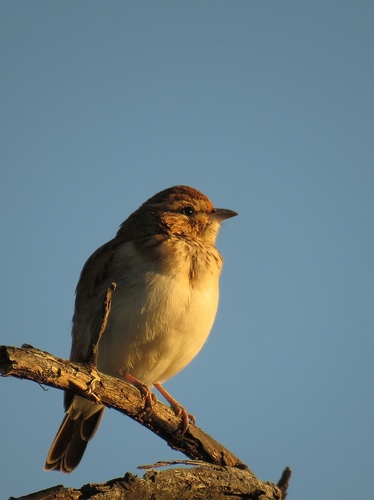
Fawn-coloured Lark (Calendulauda africanoides) Fawn-coloured Lark
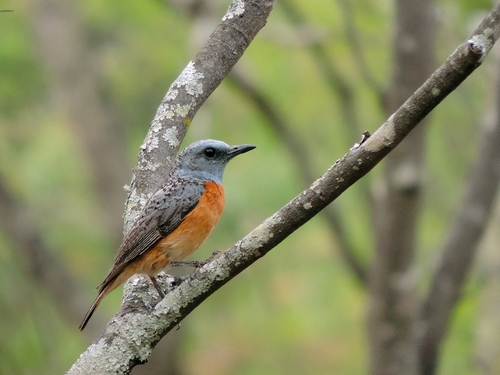
Miombo Rock Thrush (Monticola angolensis) Miombo Rock Thrush

Media

Loading…

In short

The most reliable way to separate Fawn-coloured Lark from Miombo Rock Thrush is by overall structure and context: the lark is a small, compact ground-dweller with a short bill and sandy tones, while the thrush is a more upright, medium-sized bird often seen perched higher, with a more robust, thrush-like shape. If you see a bird in open, grassy or bushy ground, especially in south-central Africa, think lark; if it's in miombo woodland and perching on rocks or branches, consider the thrush. Plumage differences are subtle at a distance, but the lark is uniformly pale and sandy, while the thrush shows richer coloration and a more contrasting pattern. Size and behavior in the field are often more useful than plumage alone.

Identification tips

  1. Habitat is often decisive: Fawn-coloured Lark sticks to open, grassy or bushy ground, while Miombo Rock Thrush prefers miombo woodland and perches on rocks or trees. If you see a bird on the ground in open country, lark is more likely; if perched in woodland, think thrush.
  2. Structure and stance: The lark is compact, with a short bill and tail, and a crouched, ground-hugging posture. The thrush is more upright, with a longer bill and tail, and a bulkier, thrush-like build.
  3. Plumage tone: Fawn-coloured Lark is uniformly pale, sandy or fawn, with little contrast. Miombo Rock Thrush is richer in color, with blue-grey or rufous tones and more contrast between upperparts and underparts.
  4. Face pattern: The lark lacks strong facial markings, while the thrush often shows a more distinct face pattern, sometimes with a pale supercilium or mask.
  5. Perching behavior: Larks rarely perch high, while thrushes are often seen on rocks, branches, or termite mounds.
  6. Flight style: Larks flush low and drop quickly back to the ground. Thrushes may fly up to higher perches or sally out for insects.
  7. Size impression: The lark is significantly smaller and lighter than the thrush. If the bird looks medium-sized or robust, it's likely the thrush.
  8. Bill shape: The lark's bill is short and conical, suited for seeds; the thrush's is longer and more slender, suited for insects and fruit.
  9. Tail length: The lark has a relatively short tail; the thrush's tail is longer and more prominent.
  10. Upperwing pattern: No strong age-specific wing pattern differences are documented for these species, so rely on structure and context.
  11. Juvenile confusion: If you see a very plain, pale bird on the ground, it's likely a young lark; a more colorful or patterned juvenile in woodland is likely a young thrush.
  12. Sexual dimorphism: Miombo Rock Thrush may show sex differences (males more colorful), while the lark is similar in both sexes.
  13. Local abundance: In miombo woodland, expect the thrush; in open bush or grassland, expect the lark [ebird].
  14. Voice: No diagnostic vocal differences are available in the provided notes; do not rely on song for separation here.
  15. When in doubt: Use a combination of habitat, structure, and overall color to separate these two—plumage pattern alone is rarely enough.

Size

Fawn-coloured Lark is a small bird (body mass 23g [wikidata]), typical for a lark, and noticeably lighter and more compact than the Miombo Rock Thrush, which is a medium-sized thrush (exact mass not given, but all Monticola are substantially larger than small larks). Expect the lark to appear daintier, with a proportionally shorter bill and tail, while the thrush will look bulkier and more robust.

Plumage

There is no detailed age-specific wing or flight pattern information available for either species in the provided sources. For adults, Fawn-coloured Lark is overall pale, sandy or fawn-colored, with little contrast and no strong patterning. Miombo Rock Thrush, by contrast, has a richer, more colorful appearance, typically with blue-grey or rufous tones (depending on sex and age), and more obvious contrast between upperparts and underparts. The lark lacks any strong face or wing markings, while the thrush often shows a more marked face and sometimes a pale wing panel or more colorful underparts. These differences are most apparent when the birds are perched and in good light.

Behaviour

Fawn-coloured Lark is almost always seen on the ground, running or walking in open, grassy or bushy areas, and rarely perches high. It often feeds by picking at the ground and may flush low and drop back quickly. Miombo Rock Thrush is more arboreal or scansorial, often seen perching on rocks, branches, or termite mounds, and may sally out to catch insects. Its upright stance and tendency to perch in view are distinctive behaviors compared to the lark's skulking, ground-based habits.

Habitat

Fawn-coloured Lark is found in open, often arid or semi-arid grassland and bushland in south-central Africa [wikipedia]. It avoids dense woodland and is rarely seen far from open ground. Miombo Rock Thrush is native to miombo woodland, a specific type of open woodland dominated by Brachystegia trees [wikipedia], and is typically found in or near these woodlands, often using rocks or trees as perches. If you are in classic miombo woodland, the thrush is far more likely; if in open, grassy or bushy country, expect the lark.

Submit a better description

Use the same sections as the comparison. Your text is published immediately.

The most reliable way to separate Fawn-coloured Lark from Miombo Rock Thrush is by overall structure and context: the lark is a small, compact ground-dweller with a short bill and sandy tones, while the thrush is a more upright, medium-sized bird often seen perched higher, with a more robust, thrush-like shape. If you see a bird in open, grassy or bushy ground, especially in south-central Africa, think lark; if it's in miombo woodland and perching on rocks or branches, consider the thrush. Plumage differences are subtle at a distance, but the lark is uniformly pale and sandy, while the thrush shows richer coloration and a more contrasting pattern. Size and behavior in the field are often more useful than plumage alone.

  1. Habitat is often decisive: Fawn-coloured Lark sticks to open, grassy or bushy ground, while Miombo Rock Thrush prefers miombo woodland and perches on rocks or trees. If you see a bird on the ground in open country, lark is more likely; if perched in woodland, think thrush.
  2. Structure and stance: The lark is compact, with a short bill and tail, and a crouched, ground-hugging posture. The thrush is more upright, with a longer bill and tail, and a bulkier, thrush-like build.
  3. Plumage tone: Fawn-coloured Lark is uniformly pale, sandy or fawn, with little contrast. Miombo Rock Thrush is richer in color, with blue-grey or rufous tones and more contrast between upperparts and underparts.
  4. Face pattern: The lark lacks strong facial markings, while the thrush often shows a more distinct face pattern, sometimes with a pale supercilium or mask.
  5. Perching behavior: Larks rarely perch high, while thrushes are often seen on rocks, branches, or termite mounds.
  6. Flight style: Larks flush low and drop quickly back to the ground. Thrushes may fly up to higher perches or sally out for insects.
  7. Size impression: The lark is significantly smaller and lighter than the thrush. If the bird looks medium-sized or robust, it's likely the thrush.
  8. Bill shape: The lark's bill is short and conical, suited for seeds; the thrush's is longer and more slender, suited for insects and fruit.
  9. Tail length: The lark has a relatively short tail; the thrush's tail is longer and more prominent.
  10. Upperwing pattern: No strong age-specific wing pattern differences are documented for these species, so rely on structure and context.
  11. Juvenile confusion: If you see a very plain, pale bird on the ground, it's likely a young lark; a more colorful or patterned juvenile in woodland is likely a young thrush.
  12. Sexual dimorphism: Miombo Rock Thrush may show sex differences (males more colorful), while the lark is similar in both sexes.
  13. Local abundance: In miombo woodland, expect the thrush; in open bush or grassland, expect the lark [ebird].
  14. Voice: No diagnostic vocal differences are available in the provided notes; do not rely on song for separation here.
  15. When in doubt: Use a combination of habitat, structure, and overall color to separate these two—plumage pattern alone is rarely enough.

Fawn-coloured Lark is a small bird (body mass 23g [wikidata]), typical for a lark, and noticeably lighter and more compact than the Miombo Rock Thrush, which is a medium-sized thrush (exact mass not given, but all Monticola are substantially larger than small larks). Expect the lark to appear daintier, with a proportionally shorter bill and tail, while the thrush will look bulkier and more robust.

There is no detailed age-specific wing or flight pattern information available for either species in the provided sources. For adults, Fawn-coloured Lark is overall pale, sandy or fawn-colored, with little contrast and no strong patterning. Miombo Rock Thrush, by contrast, has a richer, more colorful appearance, typically with blue-grey or rufous tones (depending on sex and age), and more obvious contrast between upperparts and underparts. The lark lacks any strong face or wing markings, while the thrush often shows a more marked face and sometimes a pale wing panel or more colorful underparts. These differences are most apparent when the birds are perched and in good light.

Fawn-coloured Lark is almost always seen on the ground, running or walking in open, grassy or bushy areas, and rarely perches high. It often feeds by picking at the ground and may flush low and drop back quickly. Miombo Rock Thrush is more arboreal or scansorial, often seen perching on rocks, branches, or termite mounds, and may sally out to catch insects. Its upright stance and tendency to perch in view are distinctive behaviors compared to the lark's skulking, ground-based habits.

Fawn-coloured Lark is found in open, often arid or semi-arid grassland and bushland in south-central Africa [wikipedia]. It avoids dense woodland and is rarely seen far from open ground. Miombo Rock Thrush is native to miombo woodland, a specific type of open woodland dominated by Brachystegia trees [wikipedia], and is typically found in or near these woodlands, often using rocks or trees as perches. If you are in classic miombo woodland, the thrush is far more likely; if in open, grassy or bushy country, expect the lark.

Discard your changes?

You have unsaved edits. If you leave now, those changes will be lost.

Fawn-coloured Lark · Miombo Rock Thrush · My Tricky Birds