
European Robin vs Common Redstart
Erithacus rubecula versus Phoenicurus phoenicurus
Play a quiz with European Robin and Common Redstart
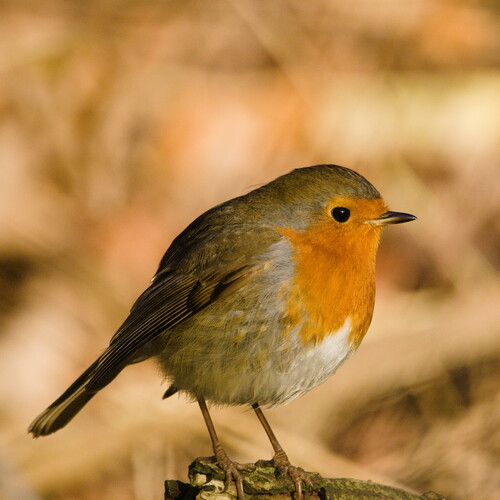 European Robin
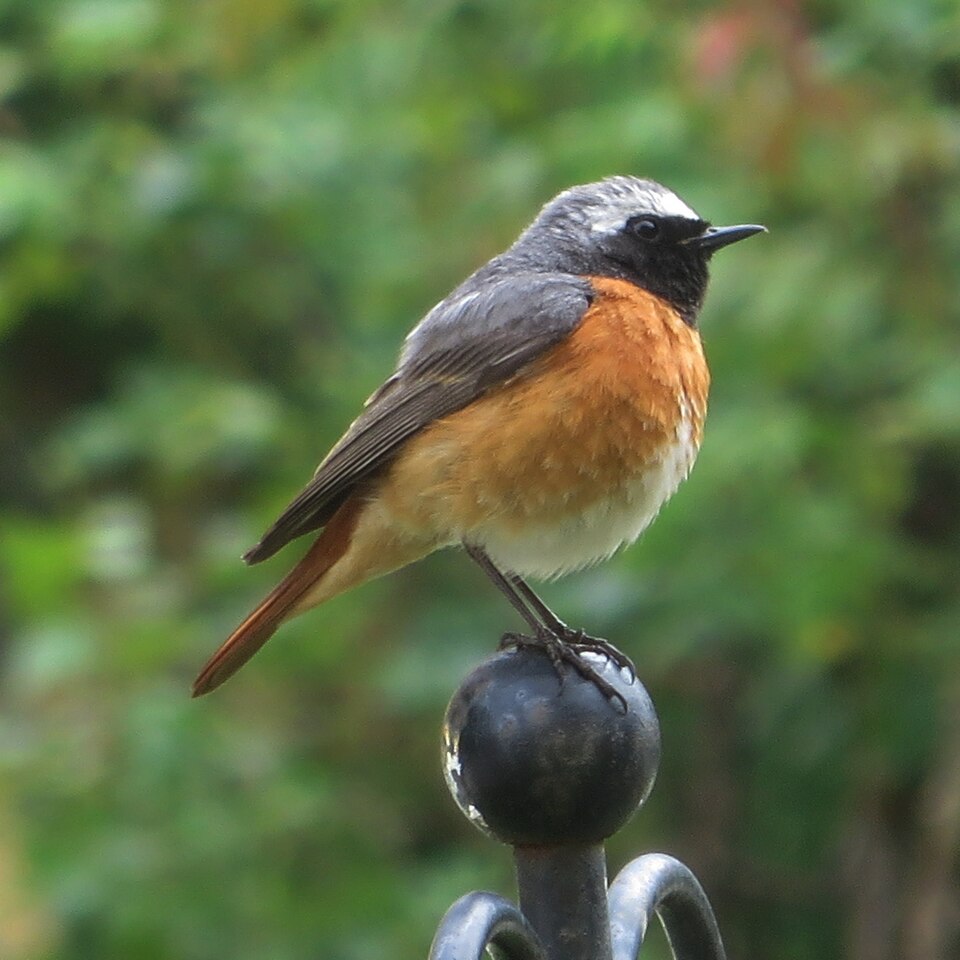 Common Redstart
In short
The most reliable way to separate European Robin from Common Redstart is by focusing on the tail and wing pattern: redstarts of all ages show a bright orange-red tail that is frequently quivered, while robins have a plain brown tail and never show this behavior. In flight or perched, male redstarts (and some females/immatures) show a pale wing panel, absent in robins. Juvenile robins are brown and heavily spotted, lacking any orange, while juvenile redstarts already show a hint of orange in the tail. Adult robins have an orange-red face and breast bordered by grey, while redstarts confine orange to the breast and tail, with a white or dark throat and a clear white forehead in males. Both are similar in size, but redstarts are slimmer and more upright. If you see a bird with a bright orange tail, it's a redstart; if the orange is on the face and breast with a brown tail, it's a robin.
Identification tips
- Tail color and behavior: Redstarts of all ages have a bright orange-red tail, often flicked or quivered; robins have a plain brown tail and never flick it. This is the single best field mark.
- Juvenile plumage: Juvenile robins are brown and heavily spotted with no orange; juvenile redstarts are plainer brown above, pale below, and already show orange in the tail.
- First-winter robin wing coverts: Young robins (first-winter) have yellow-brown tips to the wing coverts, sometimes visible at close range; redstarts lack this feature.
- Adult male redstart head pattern: Adult male redstarts have a slate-grey head and upperparts, white forehead, black face and throat, and orange breast; robins have an orange-red face and breast bordered by grey, with brown upperparts and no black or white on the head.
- Female/immature redstart: Female and immature redstarts are grey-brown above, pale below, with an orange tail and sometimes a faint pale wing panel; female robins look like males but lack the wing panel and have the orange face and breast.
- Wing panel: Some male (and a few female/immature) redstarts show a pale or whitish wing panel, especially in P. p. samamisicus; robins never show a pale wing panel.
- Orange location: In robins, orange covers the face and breast; in redstarts, orange is limited to the breast and tail, never the face.
- Body shape and posture: Redstarts are slimmer, more upright, and longer-tailed; robins are rounder, shorter-tailed, and more compact.
- Flight style: Redstarts often sally out after insects and show the orange tail in flight; robins fly more directly and do not sally or show the tail as prominently.
- Song: Robin song is rich and melodious, often heard in gardens; redstart song is softer, more melancholic, and less likely in urban areas.
- Call: Robin's 'tick' call is sharp and familiar; redstart's 'huid' or 'heed' call is softer and more musical.
- Habitat: Robins are common in gardens and parks; redstarts prefer open woodland and forest edges, rarely in urban gardens.
- Seasonal appearance: In autumn, male redstarts appear duller but retain the orange tail; robins look similar year-round except for juvenile and first-winter birds.
- Migration context: Redstarts are strictly migratory and absent in winter; robins are present year-round in much of their range, with only northern birds migrating.
- Pitfalls: Female and immature redstarts can be confused with robins, but always check for the orange tail and lack of orange on the face.
Size
Both species are very close in length: European Robin is 12.5–14.0 cm long and weighs 16–22 g, while Common Redstart is 13–14.5 cm and weighs 11–23 g. However, redstarts are slightly slimmer and lighter on average, with a more elongated, upright posture compared to the robin's rounder, more compact shape. In the field, this difference is subtle and not usually diagnostic on its own.
Plumage
Juvenile robins are distinctive: they are brown and heavily spotted, lacking any orange or red in the plumage, while juvenile redstarts already show some orange in the tail and lack the robin's heavy spotting. First-winter robins resemble adults but have yellow-brown tips to the wing coverts, which are absent in redstarts. Adult robins of both sexes have a bright orange-red face and breast bordered by grey, brown upperparts, and a whitish belly; the orange extends up to the face. In contrast, adult male redstarts have a slate-grey head and upperparts, a white forehead, black face and throat, orange breast and flanks, and a bright orange-red tail and rump. Females and immatures are grey-brown above, paler below, with an orange tail and sometimes a faint pale wing panel. The redstart's orange is restricted to the breast and tail, never reaching the face. In flight, male redstarts (especially P. p. samamisicus) show a pale or whitish wing panel, which is absent in robins. In autumn, male redstarts appear duller due to pale feather fringes, but the tail remains orange.
Behaviour
Redstarts often quiver or flick their tails, especially when perched, and frequently sally out to catch insects in flycatcher fashion. Robins are more likely to hop on the ground or perch low, foraging in leaf litter or low vegetation, and do not flick or quiver their tails. Both species can be confiding, but robins are more likely to be seen in gardens and close to people, while redstarts are more active and upright.
Habitat
European Robins are common in parks, gardens, woodland edges, and hedgerows, often in close proximity to humans. Common Redstarts prefer open woodland, forest edges, clearings, and sometimes orchards, but are less likely to be seen in urban gardens. During migration, redstarts may turn up in a wider range of habitats, but robins are much more likely in built-up or heavily managed areas.
Voice
Robins have a rich, melodious song and a sharp 'tick' call, which is very familiar in Europe. Redstarts have a soft, melancholic song with a distinctive structure (introduction, repetitive section, variable end), and their main call is a rising 'huid' or monosyllabic 'heed' depending on region. The redstart's call is less sharp and more musical than the robin's 'tick'. In the field, song is usually diagnostic, but calls can be confusing if not well known.