

Eurasian/Green-winged Teal vs Common Goldeneye
Anas crecca versus Bucephala clangula
Play a quiz with Eurasian/Green-winged Teal and Common Goldeneye
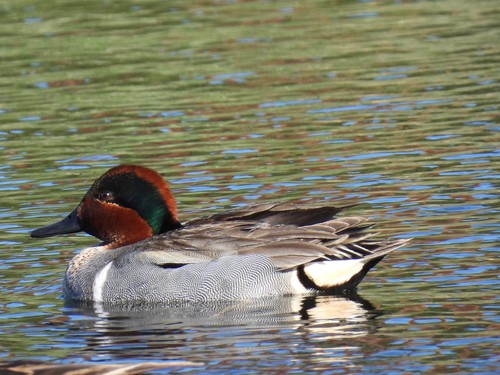 Eurasian/Green-winged Teal
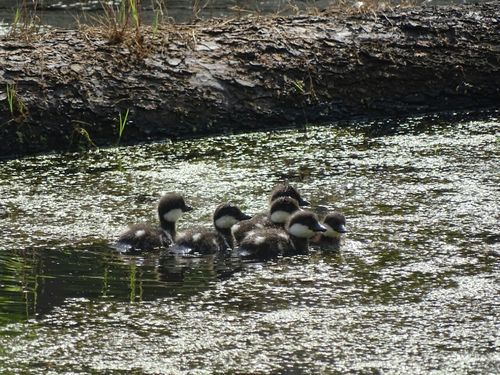 Common Goldeneye
In short
The most reliable field mark to separate Eurasian/Green-winged Teal from Common Goldeneye is size and structure: Goldeneye is much larger and bulkier, with a noticeably big, rounded head and a short, thick bill, while Teal is a tiny, delicate duck with a slim bill. In flight, Goldeneye shows a striking white patch on the inner wing (secondaries) in all ages and sexes, whereas Teal has a green speculum bordered by white, but never a large white panel. Adult male Goldeneye have a dark green-glossed head with a round white spot at the base of the bill, while male Teal have a chestnut head with a green eye-stripe. Females and immatures of both can be confusing, but Goldeneye always looks much larger and heavier, with a more upright posture and a golden eye. Teal is much more likely on small, shallow wetlands; Goldeneye favors deeper lakes and rivers.
Identification tips
- Size and bulk: Goldeneye is much larger and heavier than Teal; if you see them together, the difference is unmistakable. Teal is tiny and light, Goldeneye is robust and bull-headed.
- Head shape: Goldeneye has a large, rounded head with a steep forehead and short, thick bill, giving a 'bull-headed' look. Teal has a small, rounded head and a slim, straight bill.
- Bill color and shape: Teal's bill is dark grey (males) or pinkish/yellowish at the base (females/immatures), always slender. Goldeneye's bill is short, thick, and dark, with some subspecies showing a longer, thicker bill.
- Eye color: Goldeneye of all ages and sexes have a golden-yellow eye, which stands out at close range. Teal's eye is always brown.
- Male plumage (breeding): Male Teal has a chestnut head with a green crescent from eye to nape, a white vertical bar on the side, and a yellowish triangle at the tail. Male Goldeneye has a dark green-glossed head with a round white spot at the base of the bill, white underparts, and a black back.
- Female/immature plumage: Female Teal is mottled brown with a dark eye-stripe, looking like a miniature Mallard. Female Goldeneye is gray-bodied with a brown head and orange-yellow legs and feet.
- In-flight upperwing pattern: Goldeneye (all ages/sexes) show a bold white patch across the inner wing (secondaries and coverts), visible from above and below. Teal (all ages/sexes) show a green speculum bordered by white, but never a large white panel.
- Tail and rump: Teal shows a yellowish or yellowish-buff triangle at the tail sides (especially males), which Goldeneye lacks.
- Leg and foot color: Female Goldeneye have orange-yellow legs and feet, visible when perched or preening; Teal's legs are dark grey (males) or greyish-olive/brown (females/immatures).
- Feeding behavior: Teal dabble and rarely dive; Goldeneye are frequent divers, often disappearing underwater for long periods.
- Flock structure: Teal are often in tight, active flocks, especially in flight. Goldeneye are more solitary or in loose groups.
- Flight style: Goldeneye fly with rapid, stiff wingbeats and make a loud whistling sound with their wings. Teal have a quicker, more fluttery flight, often erupting in tight, twisting flocks.
- Habitat: Teal are found on shallow, vegetated wetlands and small lakes; Goldeneye prefer deeper lakes, rivers, and coastal waters.
- Vocalizations: Teal are more vocal, with clear whistles and quacks; Goldeneye are generally quiet, but the wing-whistle is a good clue.
- Seasonal confusion: In eclipse (summer) plumage, male Teal resemble females but remain much smaller and slimmer than any Goldeneye. Juvenile Goldeneye still show the white wing patch and golden eye.
Size
Common Goldeneye is dramatically larger: adult Goldeneye average around 900 g (with males up to 1,000 g), and are 40–51 cm long with a 77–83 cm wingspan. Eurasian/Green-winged Teal is one of the smallest dabbling ducks, at 34–43 cm length and 340–360 g, with a wingspan of 53–59 cm. In the field, Goldeneye appears chunky and bull-headed, while Teal is compact, light, and dainty. Even at a distance, the size gap is obvious when both are present.
Plumage
Juvenile and female Teal are mottled brown and look like tiny Mallards, with a green speculum bordered by white in the wing, and no extensive white on the upperwing. Immature and female Goldeneye are much grayer, with a brown head, and in flight show a bold white patch across the inner wing (secondaries and coverts) that is visible from above and below. Adult male Teal in breeding plumage have a chestnut head with a green crescent from eye to nape, a white vertical bar on the side, and a yellowish triangle at the tail. Male Goldeneye have a dark, green-glossed head with a round white spot at the base of the bill, white underparts, and a black back. Female Goldeneye have a brown head, gray body, and orange-yellow legs and feet; female Teal are more uniformly brown and lack the bright foot color. In eclipse (summer) plumage, male Teal resemble females but retain a smaller, darker bill and sometimes faint facial markings; Goldeneye males in eclipse are not described in detail here, but retain the large size and white wing patch.
Behaviour
Goldeneye often dive for food, disappearing underwater for long periods and resurfacing some distance away. Their posture is upright and alert, and they often hold their tails low. Teal are dabbling ducks, feeding by tipping up or picking at the surface, rarely diving. Teal are more likely to be seen in tight, active flocks, often nervously flying up together. Goldeneye are more solitary or in loose groups, and their flight is strong and direct, with rapid wingbeats and audible whistling from the wings.
Habitat
Eurasian/Green-winged Teal prefer shallow, vegetated wetlands, marshes, and small lakes, especially during migration and winter. They rarely use deep, open water. Common Goldeneye are found on deeper lakes, rivers, and coastal waters, especially in winter. If you see a small duck on a shallow pond, it's likely Teal; if it's on a deep river or large lake, especially diving, it's more likely Goldeneye.
Voice
Teal are relatively vocal for a duck: males give a clear, whistled "cryc" or "creelycc," while females have a "keh" or "neeh" quack. Goldeneye are generally quieter, but their wings make a distinctive whistling sound in flight. No detailed calls are provided for Goldeneye here, but the wing-whistle is a good clue when birds flush.
Eurasian/Green-winged Teal · Common Goldeneye · My Tricky Birds