

Eurasian Tree Sparrow vs White-winged Snowfinch
Passer montanus versus Montifringilla nivalis
Play a quiz with Eurasian Tree Sparrow and White-winged Snowfinch
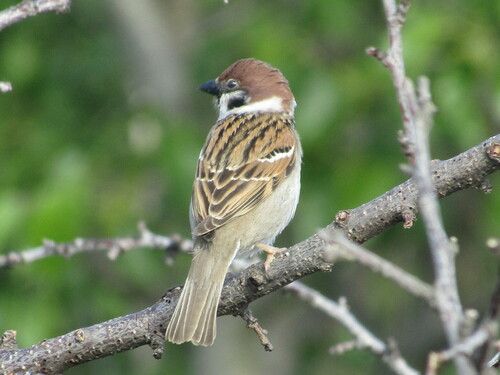 Eurasian Tree Sparrow
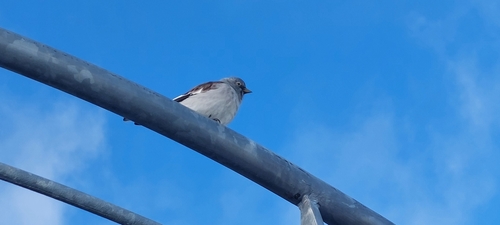 White-winged Snowfinch
In short
The most reliable field mark to separate Eurasian Tree Sparrow from White-winged Snowfinch is the presence of a bold, rich chestnut crown and black cheek spot on the sparrow, versus the snowfinch’s grey head and striking white wing panels visible in flight. If you see a bird with a white cheek patch and chestnut cap, it is a tree sparrow; if you see a large, stocky bird with a grey head and broad white wing panels flashing in flight, it is a snowfinch. Juvenile and adult tree sparrows look similar, while snowfinch shows a dramatic wing pattern at all ages. Structure and size also differ: snowfinch is notably larger and bulkier than the tree sparrow. Both species have similar sexes, so focus on these plumage and structural cues.
Identification tips
- Face pattern: Tree Sparrow always shows a rich chestnut crown and nape, with a bold black spot on each white cheek. Snowfinch has a plain grey head with no cheek spot or chestnut.
- Wing pattern in flight: Snowfinch shows a broad, long white wing panel on otherwise black wings, visible in all ages and seasons. Tree Sparrow never shows a white wing panel—only two narrow white wing bars on brown wings.
- Size and structure: Snowfinch is much larger and bulkier than Tree Sparrow. If you see both together, the difference is obvious. Even singly, snowfinch looks stocky and long-bodied, tree sparrow petite and compact.
- Bill color and bib (seasonal): In summer, snowfinch has a black bill and a black bib; in winter, the bill turns yellow and the bib fades. Tree Sparrow’s bill is lead-blue in summer and nearly black in winter, but always lacks a bib.
- Underparts: Snowfinch has clean white underparts, contrasting with brown upperparts. Tree Sparrow’s underparts are less contrasting and not pure white.
- Tail pattern: In flight, snowfinch shows a white-edged black tail. Tree Sparrow has a plain brown tail with no strong contrast.
- Habitat: Tree Sparrow is found in lowland farmland, parks, and villages; snowfinch is restricted to high-altitude open country, usually above 1,000 meters.
- Behavior: Snowfinch is often seen foraging on the ground in open, rocky, or snowy areas, sometimes near ski resorts, and is less wary of people. Tree Sparrow is more likely to be seen perching on wires or shrubs, or foraging in mixed flocks in fields.
- Juvenile confusion: Juvenile tree sparrows are duller but still show the chestnut crown and cheek spot. Juvenile snowfinches look like adults but always show the white wing panel and grey head.
- Sexes: Both species have similar plumage in males and females, so do not rely on sex for identification.
- Vocalizations: If you hear a chattering, trilling song in high mountains, it is likely snowfinch. Tree Sparrow’s calls are not distinctive for this comparison.
- Seasonal changes: Only snowfinch shows a marked change in bill color and bib between summer and winter. Tree Sparrow’s seasonal changes are subtle and not useful for separation.
- Plumage variability: Tree Sparrow is consistent across its range, with only slight subspecific variation. Snowfinch’s key field marks (white wing panel, grey head) are consistent in all subspecies.
- Common pitfalls: Do not confuse snowfinch’s white wing panel with the narrow white wing bars of tree sparrow; the snowfinch’s panel is much broader and more obvious, especially in flight.
- Context: Always consider location and altitude—if you are in the mountains above the treeline, expect snowfinch; in lowland villages and fields, expect tree sparrow.
Size
Eurasian Tree Sparrow is a small passerine, about 12.5–14 cm in length and weighing around 26 g, making it roughly 10% smaller than a House Sparrow. In contrast, the White-winged Snowfinch is much larger and more robust, measuring 16.5–19 cm in length. The snowfinch’s bulk and longer body are apparent even at a distance, especially when perched or foraging on the ground. If you are judging size relative to nearby birds, the snowfinch will look noticeably bigger and stockier than any sparrow.
Plumage
- Juvenile and adult Eurasian Tree Sparrow: Both ages show a rich chestnut crown and nape, a black patch on each white cheek, and two narrow white wing bars on brown wings. Juveniles are duller but maintain the same face pattern. There is no seasonal or sex-based variation in plumage.
- White-winged Snowfinch (all ages): Shows brown upperparts, white underparts, and a grey head. In summer, adults have a black bib and black bill, which are lost in winter (bill becomes yellow, bib fades). The most distinctive mark is the long, narrow white wing panel, which is especially obvious in flight, contrasting with otherwise black wings and a white-edged black tail. This bold wing pattern is present year-round and in all plumages.
- Key contrast: Tree Sparrow never shows a white wing panel or grey head; Snowfinch never shows a chestnut crown or black cheek spot.
Behaviour
Eurasian Tree Sparrows are agile, often seen in small flocks, perching on wires, shrubs, or foraging on the ground in open country, farmland, or near human habitation. They are quick and active, with a light, fluttery flight. White-winged Snowfinches are stockier and more terrestrial, often foraging in open alpine meadows or around ski resorts, sometimes showing little fear of people. Their flight is strong and direct, with the white wing panels flashing conspicuously. Snowfinches rarely descend below 1,000 meters, even in harsh winter weather.
Habitat
Eurasian Tree Sparrows are widespread in lowland and temperate habitats, including farmland, woodland edges, parks, and villages. They nest in cavities and are often associated with human settlements. White-winged Snowfinches are strictly birds of high-altitude open country, typically above 1,000 meters, and are most often seen in alpine meadows, rocky slopes, and around mountain resorts. If you are in lowland farmland or a village, you are almost certainly seeing a tree sparrow; if you are above the treeline in the mountains, especially near snowfields or ski lifts, you are likely seeing a snowfinch.
Voice
The White-winged Snowfinch has a chattering song with many trills and a variety of rolling or creaky calls. Eurasian Tree Sparrow’s vocalizations are not described in the provided notes, so voice is less useful for separation here. However, if you hear a complex, trilling chatter in high alpine areas, it is likely the snowfinch.
Eurasian Tree Sparrow · White-winged Snowfinch · My Tricky Birds