

Eurasian Blackcap vs Dartford Warbler
Sylvia atricapilla versus Curruca undata
Play a quiz with Eurasian Blackcap and Dartford Warbler
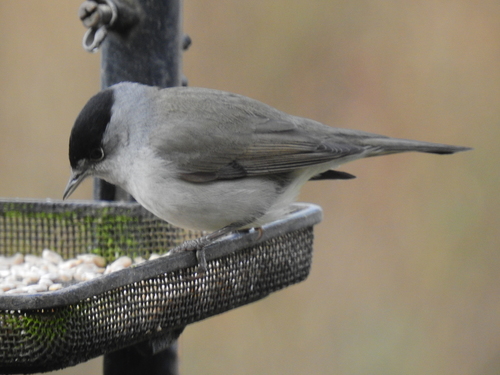 Eurasian Blackcap
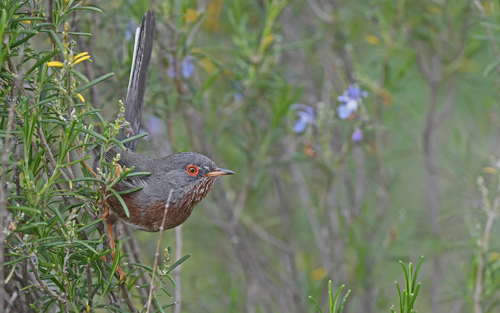 Dartford Warbler
In short
The most reliable field mark to separate Eurasian Blackcap from Dartford Warbler is the cap color: Blackcap males have a neat black cap, females and juveniles a warm brown cap, while Dartford Warbler never shows a sharply defined cap and instead has a plain grey or brownish head. Dartford Warbler is also notably longer-tailed and more slender, with a thin pointed bill and reddish underparts, compared to the Blackcap's compact, round-bodied look and pale grey underparts. Juvenile and female Blackcaps can be confused with Dartford Warbler at a distance, but the cap and overall structure remain good separators. In flight, Dartford Warbler's long, floppy tail is a strong clue, while Blackcap appears short-tailed and more even-winged. Both species can be found in overlapping regions, but habitat and behavior also help: Dartford Warbler prefers heathland and scrub, often low in cover, while Blackcap is more at home in woodland and gardens.
Identification tips
- Cap color is key: Blackcap males have a sharply defined black cap; females and juveniles have a warm or dark brown cap. Dartford Warbler never has a distinct cap—its head is plain grey or brownish-grey. This is the single most reliable field mark in all ages and seasons.
- Tail structure: Dartford Warbler has a long, thin, floppy tail, often held cocked or fanned. Blackcap's tail is shorter, straighter, and not as prominent in silhouette. This is especially useful in flight or when the bird is agitated.
- Body shape: Blackcap appears round-bodied and robust, with a thick neck and compact build. Dartford Warbler is slender, elongated, and daintier, with a more delicate, thin bill.
- Underparts color: Dartford Warbler males have dull reddish underparts with a dirty white belly patch and white-speckled throat. Blackcap underparts are pale grey to silvery white, with little or no rufous or reddish tone.
- Eye color: Dartford Warbler has a noticeable red eye and red eye-ring, especially in males. Blackcap's iris is reddish brown but less striking, and lacks a strong eye-ring.
- Throat pattern: Dartford Warbler shows white speckling on the reddish throat in both sexes (more marked in males). Blackcap's throat is plain pale grey or white, with no spotting.
- Bill shape: Dartford Warbler has a thin, pointed bill, suited to picking insects from foliage. Blackcap's bill is stouter and more robust.
- Juvenile confusion: Juvenile Blackcaps can appear browner and more olive, but still show a cap (brownish), while Dartford Warbler juveniles lack a cap and are overall paler below, with a less contrasting head.
- Habitat context: In heathland, gorse, or open scrub, especially in southern/western Europe, suspect Dartford Warbler. In woodland, parks, or gardens, Blackcap is far more likely.
- Behavior: Dartford Warbler is restless, often flicking its tail and moving low in cover. Blackcap is more deliberate, foraging higher and rarely flicking its tail.
- Perched posture: Dartford Warbler often perches with its tail cocked up; Blackcap sits more horizontally, with tail level or slightly drooped.
- Sexual dimorphism: Both species show male/female differences, but only Blackcap has a clear cap color difference (black vs brown). Dartford Warbler females are paler and browner, but still lack a cap.
- Flight jizz: Dartford Warbler's flight is weak and fluttery, with the long tail trailing. Blackcap's flight is stronger and more direct, with a compact outline.
- Seasonal variation: Blackcap undergoes a complete moult after breeding, but cap color remains diagnostic. Dartford Warbler is resident and does not show marked seasonal plumage change.
- Pitfalls: At a distance or in poor light, a female or juvenile Blackcap may seem plain-headed, but look for even a faint brown cap. Dartford Warbler never shows a cap, and the combination of long tail and reddish underparts is unique among small warblers in its range.
Size
Both species are similar in overall length (about 13 cm), but the Eurasian Blackcap is heavier and more compact, with a typical body mass of 18.1 g [wikidata]. Dartford Warbler is lighter and more slender, with a much longer, thinner tail relative to body size. Blackcap gives a round, robust impression, while Dartford Warbler looks daintier and more elongated, especially when the tail is cocked or fanned.
Plumage
-
Juveniles and Females: Juvenile and female Blackcaps have a warm brown (female) or darker brown (young male) cap, with olive-grey upperparts and pale grey underparts. Juveniles may show a rufous tinge above and olive on the flanks. Dartford Warbler juveniles and females lack any cap; instead, they have a plain brownish-grey head and back, with paler, less reddish underparts than adult males. Both sexes of Dartford Warbler show a reddish, lightly spotted throat and a dirty white belly patch, but never a sharply defined cap.
-
Adult Males: Blackcap males are unmistakable with their neat black cap, pale grey underparts, and olive-grey upperparts. Dartford Warbler males have a grey head and back (sometimes bluish- or brownish-grey), dull reddish underparts, and a red eye-ring, with white speckling on the throat. The contrast between the cap and the rest of the head is much sharper in Blackcap.
-
In Flight: Dartford Warbler's long, floppy tail is obvious in flight and when perched, while Blackcap's tail is shorter and more squared. No distinctive upperwing pattern is noted for either species in juvenile or adult plumage, so cap color and tail structure are more useful than wing pattern.
Behaviour
Dartford Warbler is often seen low in heathland or scrub, moving mouse-like through dense cover, frequently flicking and fanning its long tail. It may perch atop gorse or heather to sing, but rarely ventures high into trees. Blackcap is more arboreal, often foraging in mid-levels or canopy of woodland, parks, and gardens, and is less likely to skulk low in open scrub. Blackcap's movements are more purposeful and less nervous than Dartford Warbler's, and it does not display the same tail-flicking behavior.
Habitat
Dartford Warbler is strongly associated with dry heathland, gorse, and low scrub in western and southern Europe, especially in areas with sunny, open vegetation. It is rarely found in dense woodland or urban parks. Eurasian Blackcap is much more flexible, occurring in a wide range of wooded habitats, including mature forests, secondary growth, gardens, and parks. If you see a small warbler in dense gorse or heather, especially in southern Britain or western Europe, Dartford Warbler is more likely; in leafy woodland or suburban gardens, Blackcap is the default.