

Motmot

Eleonora's Falcon vs Saker Falcon

Falco eleonorae versus Falco cherrug

Play a quiz with Eleonora's Falcon and Saker Falcon
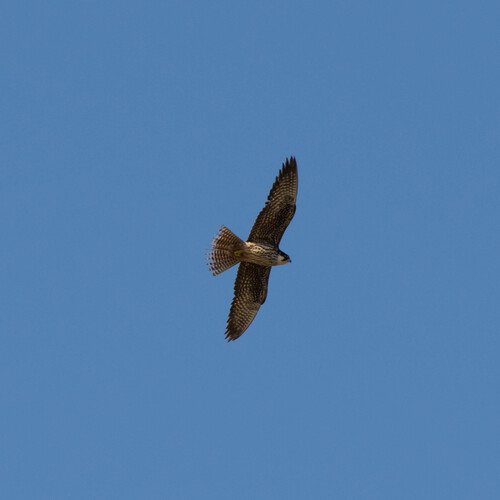
Eleonora's Falcon (Falco eleonorae) Eleonora's Falcon
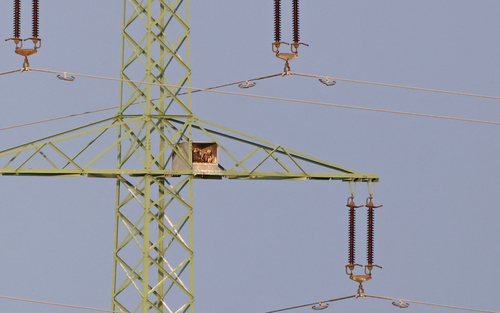
Saker Falcon (Falco cherrug) Saker Falcon

Media

Loading…

In short

The most reliable field mark to separate Eleonora's Falcon from Saker Falcon is overall structure and size: Eleonora's is a slim, long-winged, medium-sized falcon with pointed wings and a long tail, while Saker is much bulkier, larger, and broader-winged, with a heavier build. In flight, Eleonora's (especially juveniles and light morph adults) shows a sharp contrast between pale underparts and dark wingtips/coverts, whereas Saker is generally brownish above and below, with heavier streaking and lacks the sharply contrasting underwing pattern. Both species can show variable plumage, but Eleonora's is never as large or as powerfully built as Saker. Voice, habitat, and context can help, but structure and flight style are the most consistent clues.

Identification tips

  1. Size and Structure: Saker is much larger, bulkier, and broader-winged than Eleonora's. If the bird looks slim, long-tailed, and elegant, suspect Eleonora's; if it looks massive and heavy, suspect Saker.
  2. Wing Shape in Flight: Eleonora's has long, narrow, pointed wings and a long tail, giving a rakish, hobby-like silhouette. Saker's wings are broader and less pointed, and the tail is shorter relative to the body.
  3. Underwing Pattern (Juveniles and Light Morph Eleonora's): Juvenile and light morph Eleonora's show pale underparts with a strong contrast to blackish underwing coverts and dark wingtips. Saker never shows this pattern; its underwings are more uniformly brownish with streaking.
  4. Dark Morph Eleonora's: Entirely sooty brown, but still slim and long-winged. Saker is never this uniformly dark and is always bulkier.
  5. Upperparts: Saker is brown above, with variable streaking; Eleonora's (light morph and juveniles) is paler below and more uniform above, while dark morph is all sooty.
  6. Streaking: Saker (especially juveniles) is heavily streaked below; Eleonora's (light morph) is cleaner with less streaking, more buffy.
  7. Flight Style: Eleonora's is agile, buoyant, and aerobatic, often catching insects or birds in the air. Saker is powerful, with deep wingbeats and a more direct flight.
  8. Habitat: Eleonora's is almost always coastal or on Mediterranean islands in breeding season; Saker is a bird of open inland steppe, plains, or semi-desert.
  9. Seasonality: Eleonora's breeds late (late summer/early autumn) to coincide with bird migration; Saker breeds earlier in the year.
  10. Colony Nesting: Eleonora's may be found in colonies on cliffs; Saker is solitary or in pairs.
  11. Bill and Head: Saker has a heavier bill and a bulkier head, but this is subtle at distance.
  12. Voice: Eleonora's gives a 'kek-kek-kek'; Saker a harsher 'kiy-ee' or 'kyak-kyak-kyak', but both are usually silent away from the nest.
  13. Plumage Variability: Both can be variable, but Saker is never as slim or as pointed-winged as Eleonora's, and Eleonora's never as massive as Saker.
  14. Perched Posture: Eleonora's appears slim and upright; Saker is bulkier, with a deeper chest and heavier build.
  15. Pitfalls: Juvenile Saker can appear paler below, but will still be much larger, bulkier, and lack the sharp underwing contrast of Eleonora's. Always assess size and structure first, then plumage.

Size

Saker Falcon is dramatically larger and heavier than Eleonora's Falcon. Saker measures 45–57 cm in length with a wingspan of 97–126 cm, and adults weigh around 1000 g (females up to 1300 g). Eleonora's is much lighter and smaller: 36–42 cm long, wingspan 87–104 cm, and body mass about 334 g. In the field, Saker appears broad-winged, deep-chested, and powerful, while Eleonora's is slim, long-tailed, and more elegant, closer to a large hobby or small peregrine in jizz.

Plumage

Juvenile and light morph Eleonora's Falcons show pale buff underparts with a strong contrast to dark wingtips and blackish underwing coverts, a pattern not seen in Saker of any age. Dark morph Eleonora's are uniformly sooty brown, but still noticeably slimmer and longer-winged than Saker. Saker Falcons, regardless of age, are brown above with variable streaking below (juveniles are darker and more heavily streaked), and never show the sharp underwing contrast of Eleonora's. Adult Sakers are browner overall, resembling a large, pale Gyrfalcon, and lack the black underwing coverts. Both species can show plumage variability, but Saker is always bulkier and more uniformly brownish.

Behaviour

Eleonora's Falcon is agile, buoyant, and aerobatic in flight, often seen cruising along coastal cliffs with steady wingbeats, catching insects or small birds on the wing. Saker Falcon is powerful, with deep, steady wingbeats and a more direct, purposeful flight; it often hunts over open country and appears heavier and less agile. Eleonora's may be seen in small breeding colonies, especially on Mediterranean islands, while Saker is more solitary or in pairs.

Habitat

Eleonora's Falcon breeds almost exclusively on Mediterranean islands, especially on coastal cliffs, and is rarely encountered inland except on migration. Saker Falcon breeds across open steppe, grassland, and semi-desert from Central Europe to East Asia, usually away from coasts. If seen on a rocky Mediterranean island in late summer, Eleonora's is likely; in open inland steppe or plains, Saker is far more probable.

Voice

Eleonora's Falcon gives a typical falcon 'kek-kek-kek' call. Saker Falcon's call is sharper and harsher, described as 'kiy-ee' or repeated 'kyak-kyak-kyak'. Both are generally silent away from the nest, so voice is rarely diagnostic in the field.

Submit a better description

Use the same sections as the comparison. Your text is published immediately.

The most reliable field mark to separate Eleonora's Falcon from Saker Falcon is overall structure and size: Eleonora's is a slim, long-winged, medium-sized falcon with pointed wings and a long tail, while Saker is much bulkier, larger, and broader-winged, with a heavier build. In flight, Eleonora's (especially juveniles and light morph adults) shows a sharp contrast between pale underparts and dark wingtips/coverts, whereas Saker is generally brownish above and below, with heavier streaking and lacks the sharply contrasting underwing pattern. Both species can show variable plumage, but Eleonora's is never as large or as powerfully built as Saker. Voice, habitat, and context can help, but structure and flight style are the most consistent clues.

  1. Size and Structure: Saker is much larger, bulkier, and broader-winged than Eleonora's. If the bird looks slim, long-tailed, and elegant, suspect Eleonora's; if it looks massive and heavy, suspect Saker.
  2. Wing Shape in Flight: Eleonora's has long, narrow, pointed wings and a long tail, giving a rakish, hobby-like silhouette. Saker's wings are broader and less pointed, and the tail is shorter relative to the body.
  3. Underwing Pattern (Juveniles and Light Morph Eleonora's): Juvenile and light morph Eleonora's show pale underparts with a strong contrast to blackish underwing coverts and dark wingtips. Saker never shows this pattern; its underwings are more uniformly brownish with streaking.
  4. Dark Morph Eleonora's: Entirely sooty brown, but still slim and long-winged. Saker is never this uniformly dark and is always bulkier.
  5. Upperparts: Saker is brown above, with variable streaking; Eleonora's (light morph and juveniles) is paler below and more uniform above, while dark morph is all sooty.
  6. Streaking: Saker (especially juveniles) is heavily streaked below; Eleonora's (light morph) is cleaner with less streaking, more buffy.
  7. Flight Style: Eleonora's is agile, buoyant, and aerobatic, often catching insects or birds in the air. Saker is powerful, with deep wingbeats and a more direct flight.
  8. Habitat: Eleonora's is almost always coastal or on Mediterranean islands in breeding season; Saker is a bird of open inland steppe, plains, or semi-desert.
  9. Seasonality: Eleonora's breeds late (late summer/early autumn) to coincide with bird migration; Saker breeds earlier in the year.
  10. Colony Nesting: Eleonora's may be found in colonies on cliffs; Saker is solitary or in pairs.
  11. Bill and Head: Saker has a heavier bill and a bulkier head, but this is subtle at distance.
  12. Voice: Eleonora's gives a 'kek-kek-kek'; Saker a harsher 'kiy-ee' or 'kyak-kyak-kyak', but both are usually silent away from the nest.
  13. Plumage Variability: Both can be variable, but Saker is never as slim or as pointed-winged as Eleonora's, and Eleonora's never as massive as Saker.
  14. Perched Posture: Eleonora's appears slim and upright; Saker is bulkier, with a deeper chest and heavier build.
  15. Pitfalls: Juvenile Saker can appear paler below, but will still be much larger, bulkier, and lack the sharp underwing contrast of Eleonora's. Always assess size and structure first, then plumage.

Saker Falcon is dramatically larger and heavier than Eleonora's Falcon. Saker measures 45–57 cm in length with a wingspan of 97–126 cm, and adults weigh around 1000 g (females up to 1300 g). Eleonora's is much lighter and smaller: 36–42 cm long, wingspan 87–104 cm, and body mass about 334 g. In the field, Saker appears broad-winged, deep-chested, and powerful, while Eleonora's is slim, long-tailed, and more elegant, closer to a large hobby or small peregrine in jizz.

Juvenile and light morph Eleonora's Falcons show pale buff underparts with a strong contrast to dark wingtips and blackish underwing coverts, a pattern not seen in Saker of any age. Dark morph Eleonora's are uniformly sooty brown, but still noticeably slimmer and longer-winged than Saker. Saker Falcons, regardless of age, are brown above with variable streaking below (juveniles are darker and more heavily streaked), and never show the sharp underwing contrast of Eleonora's. Adult Sakers are browner overall, resembling a large, pale Gyrfalcon, and lack the black underwing coverts. Both species can show plumage variability, but Saker is always bulkier and more uniformly brownish.

Eleonora's Falcon is agile, buoyant, and aerobatic in flight, often seen cruising along coastal cliffs with steady wingbeats, catching insects or small birds on the wing. Saker Falcon is powerful, with deep, steady wingbeats and a more direct, purposeful flight; it often hunts over open country and appears heavier and less agile. Eleonora's may be seen in small breeding colonies, especially on Mediterranean islands, while Saker is more solitary or in pairs.

Eleonora's Falcon breeds almost exclusively on Mediterranean islands, especially on coastal cliffs, and is rarely encountered inland except on migration. Saker Falcon breeds across open steppe, grassland, and semi-desert from Central Europe to East Asia, usually away from coasts. If seen on a rocky Mediterranean island in late summer, Eleonora's is likely; in open inland steppe or plains, Saker is far more probable.

Eleonora's Falcon gives a typical falcon 'kek-kek-kek' call. Saker Falcon's call is sharper and harsher, described as 'kiy-ee' or repeated 'kyak-kyak-kyak'. Both are generally silent away from the nest, so voice is rarely diagnostic in the field.

Discard your changes?

You have unsaved edits. If you leave now, those changes will be lost.

Eleonora's Falcon · Saker Falcon · My Tricky Birds