

Eastern Orphean Warbler vs Sardinian Warbler
Curruca crassirostris versus Curruca melanocephala
Play a quiz with Eastern Orphean Warbler and Sardinian Warbler
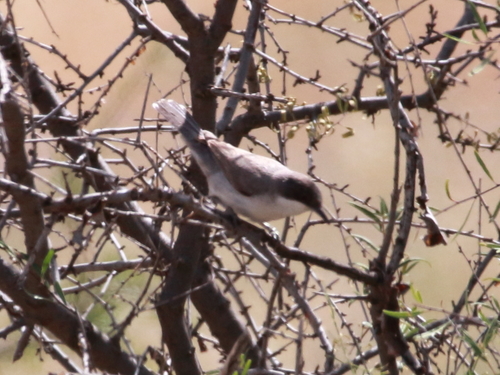 Eastern Orphean Warbler
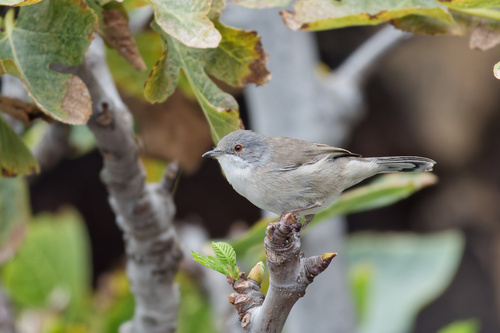 Sardinian Warbler
In short
The most reliable field mark to separate Eastern Orphean Warbler from Sardinian Warbler is size: Eastern Orphean is notably larger and bulkier, with a longer, more pointed bill and a paler, plainer grey back in adult males. Sardinian Warbler is smaller, more compact, and adult males show a striking black cap and red eye, while Orphean males have a dark grey head and white iris. Females and immatures of both species can be confusing, but Orphean Warbler is always larger and longer-billed, with less contrast between head and back. In flight, structure and size are often the best clues, as neither species shows a distinctive wing pattern in juvenile or immature plumage.
Identification tips
- Size is the most consistent clue: Eastern Orphean Warbler is significantly larger and bulkier than Sardinian Warbler. This is true for all ages and sexes.
- Bill shape: Orphean Warbler has a noticeably longer, more pointed bill, which can be seen well in profile. Sardinian's bill is shorter and more delicate.
- Adult male head pattern: Orphean males have a dark grey head with a blackish mask and a white iris, lacking the solid black cap of Sardinian males. Sardinian males have a striking black cap and a red eye-ring.
- Eye color: Adult Orphean Warbler males have a white iris, while Sardinian Warbler males have a red eye. Immature Orphean Warblers have a dark iris, so this mark is only reliable in adult males.
- Back and upperparts: Orphean Warbler males have a plain grey back, while Sardinian males are also grey but with a more contrasting black cap. Females and immatures of Orphean are paler and greyer than the browner, olive-toned Sardinian females.
- Underparts: Orphean Warbler females and immatures show reddish underparts with a brownish tinge to the grey back. Sardinian Warbler females and juveniles are browner or olive above, with whitish to rusty underparts, sometimes sandy in juveniles.
- Tail shape: Orphean Warbler has a longer, more pointed tail, especially obvious in flight. Sardinian's tail is shorter and squarer at the tip in some subspecies.
- Jizz in flight: Orphean Warbler looks longer and more powerful in flight, with a more direct, less fluttery action. Sardinian Warbler is smaller, more compact, and often flicks its tail.
- Habitat preference: Orphean Warbler is more likely in open woodland with scattered trees; Sardinian Warbler prefers dense Mediterranean scrub and maquis.
- Song: Orphean Warbler's song is richer and more varied, sometimes reminiscent of a Nightingale. Sardinian Warbler's song is a fast, rattling warble, less melodious.
- Call: Both species give harsh scolding calls, but Sardinian's is a distinctive 'tchack'. Calls alone are not always diagnostic.
- Seasonal context: Orphean Warbler is migratory, present in the Mediterranean mainly in summer; Sardinian Warbler is resident or short-distance migrant, and can be found year-round in many areas.
- Subspecies variation: Sardinian Warbler shows considerable variation in female and juvenile plumage across its range, but always remains smaller and more compact than Orphean.
- Pitfalls with immatures: Young Orphean Warblers have a dark iris and can show some reddish tones below, overlapping with Sardinian, but size and structure remain reliable.
- No distinctive wing pattern in flight: Neither species shows a strong wing panel or contrasting pattern in juvenile or immature plumage, so rely on structure and overall coloration.
Size
Eastern Orphean Warbler is one of the largest Curruca warblers, measuring 15–16 cm in length, and appears noticeably bigger and longer than Sardinian Warbler, which is medium-sized for the genus. Orphean Warbler has a longer, more pointed bill and a proportionally longer tail, giving it a rangier look both perched and in flight. Sardinian Warbler is more compact, with a shorter tail and smaller, rounder body. These differences are especially obvious when the two species are seen side by side, but even singly, Orphean Warbler's size and bulk stand out among Mediterranean warblers. [wikipedia]
Plumage
No distinctive juvenile or immature upperwing pattern is described for either species, so age-specific flight marks are not reliable here. Adult male Eastern Orphean Warbler has a plain grey back, dark grey head with a blackish mask, white throat, and a striking white iris. Sardinian Warbler adult males have a black cap, grey back, white throat, and a red eye-ring. Females and immatures of Orphean Warbler are paler-headed with reddish underparts and a brownish tinge to the grey back; their iris is dark. Female Sardinian Warblers are browner or olive-grey above, with variable tone depending on subspecies, and lack the black cap; their underparts are whitish to rusty, sometimes with a sandy cast in juveniles. Both species show some reddish or rusty tones in young birds, but Sardinian Warbler females and juveniles are generally browner and less grey overall. [wikipedia]
Behaviour
Both species are active, insectivorous warblers often found flitting through open woodland or scrub. Eastern Orphean Warbler tends to forage higher in trees and may appear more deliberate in its movements, befitting its larger size. Sardinian Warbler is more likely to be seen low in dense shrubs, moving quickly and often flicking its tail. In flight, Orphean Warbler's larger size and longer tail can make it look more powerful and less fluttery than the Sardinian. Both species can be elusive, but Sardinian Warbler is generally more skulking and often gives itself away by its harsh calls.
Habitat
Both species occur in Mediterranean regions and can overlap in range, especially in southeastern Europe and western Turkey. Eastern Orphean Warbler favors open deciduous woodland, often with scattered trees and bushes, and is more likely to be found in taller, less dense habitats. Sardinian Warbler is common in low Mediterranean scrub, maquis, and bushy areas, often near the coast. While both can be found in similar regions, Sardinian Warbler is more tolerant of dense, low vegetation and is generally more abundant and widespread in typical Mediterranean scrub. [wikipedia][ebird]
Voice
Eastern Orphean Warbler's song is a rich, varied warble with scolding notes, often compared to a Nightingale in complexity and richness. Sardinian Warbler's song is less varied, typically a fast, rattling warble, and its call is a harsh, scolding 'tchack'. While both can give scolding calls, Orphean Warbler's song is more melodious and less mechanical than Sardinian's. However, both can be difficult to separate by call alone unless the full song is heard. [wikipedia]
Eastern Orphean Warbler · Sardinian Warbler · My Tricky Birds